How to Put Engine Coolant in Your Car in 3 Easy Steps
If you’ve ever faced an overheating engine or noticed warning lights flashing on your dashboard, you’re not alone. Many people struggle with maintaining the right engine coolant level, which is crucial for keeping your car running smoothly and avoiding costly repairs.
Knowing how to put engine coolant in your car correctly can save you time, money, and stress.
To put engine coolant in your car, first choose the right type by checking your owner’s manual to avoid damage.
Next, locate the coolant reservoir near the radiator and make sure the engine is cool before checking the level against minimum and maximum marks.
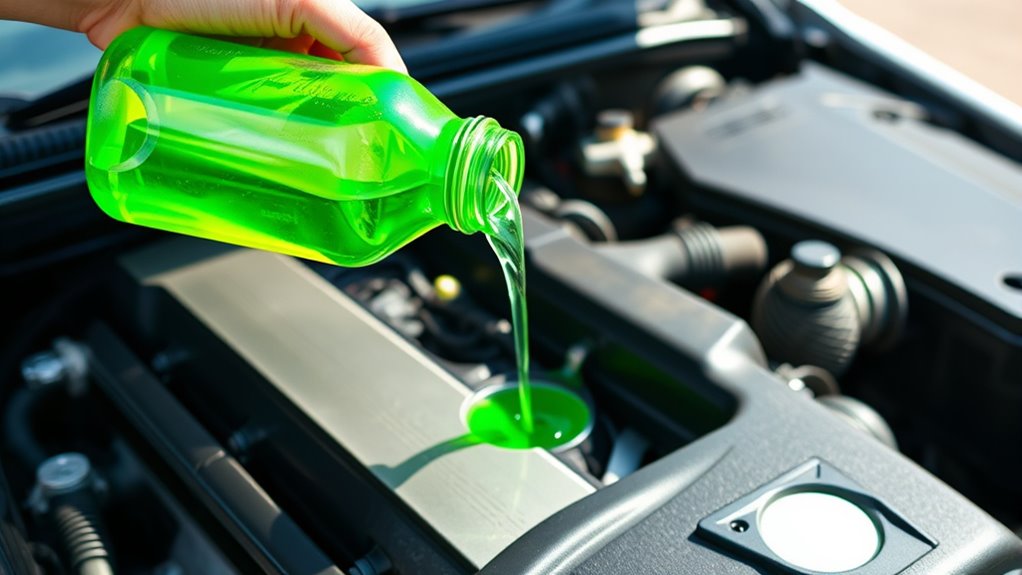
Finally, remove the cap carefully, pour in the correct coolant slowly without overfilling, then securely replace the cap.
If you want to guarantee proper safety and disposal, keep exploring these essential steps.
Key Takeaways
- Confirm the correct coolant type for your car using the owner’s manual or coolant label.
- Ensure the engine is cool. Wear safety gloves and eye protection before starting.
- Locate the coolant reservoir near the radiator. Check the coolant level against minimum and maximum marks.
- Carefully remove the reservoir cap. Add the correct coolant slowly and avoid overfilling.
- Securely replace the cap. Run the engine briefly to circulate coolant, then check for leaks or abnormal temperature.
Choose the Right Engine Coolant and Prepare Your Car
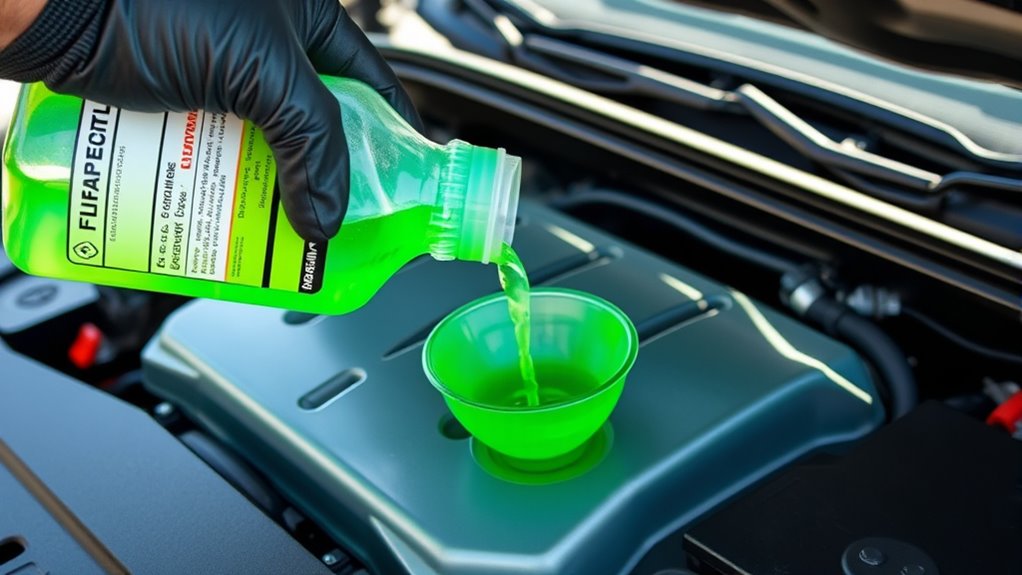
Before you add engine coolant, make sure you choose the right type for your car’s make and model. Different vehicles require specific coolant types, like ethylene glycol-based or organic acid technology (OAT) coolants. Check your owner’s manual or the coolant label to confirm compatibility. Mixing incompatible coolants can damage your engine, so don’t skip this step.
Next, follow essential safety precautions. Always work on a cool engine to avoid burns from hot coolant or steam. Wear gloves and eye protection to shield yourself from harmful chemicals. Avoid breathing in coolant fumes and clean any spills immediately to prevent accidents.
Preparing your car properly means parking on a level surface and ensuring the engine is off. This ensures accurate coolant level readings and safer handling. By selecting the correct coolant type and observing safety measures, you’ll protect your engine and yourself during the coolant top-up process.
Locate the Engine Coolant Reservoir and Check Levels
Where exactly do you find the engine coolant reservoir in your car? It’s usually a translucent plastic tank near the radiator, often marked with a bright cap or labeled “coolant.” Check your owner’s manual if you’re unsure.
Before checking levels, ensure the engine is cool to avoid burns. Look at the side of the reservoir to find minimum and maximum fill lines, which indicate the reservoir capacity. The coolant level should sit between these marks.
Always check coolant levels when the engine is cool, ensuring the fluid stays between minimum and maximum fill lines.
Also, observe the coolant color through the reservoir. Common colors include green, orange, or pink. If you notice a sudden change in color or cloudiness, it might signal contamination or the need for a flush.
Checking the reservoir capacity helps you determine how much coolant to add later. By identifying the reservoir location, assessing the coolant color, and verifying the level against reservoir capacity, you ensure your cooling system is ready for the next step.
Add Engine Coolant Safely and Complete the Process
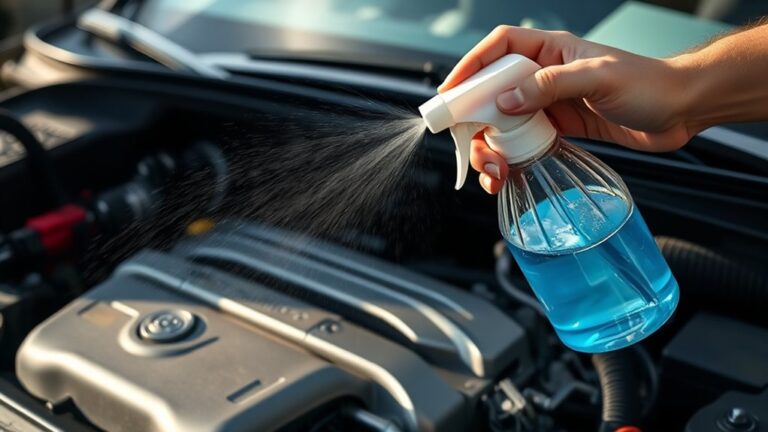
Once you’ve confirmed the coolant level is low, carefully remove the reservoir cap to add more coolant. Make sure the engine is cool before doing this to avoid burns. Use the correct type of coolant specified in your owner’s manual. If you’re mixing coolant with water, stick to the recommended ratio to guarantee peak engine performance and prevent damage. Pour the mixture slowly to avoid spills.
After filling, securely replace the reservoir cap. Start the engine and let it run for a few minutes while checking for leaks and ensuring the coolant circulates properly. Keep an eye on the temperature gauge to confirm the system is functioning well.
If you have leftover coolant, follow proper disposal procedures. Never pour it down drains or on the ground, as it’s toxic and harmful to the environment. Take it to a recycling center or hazardous waste facility. This way, you safely complete the coolant addition and protect your car and the planet.
Frequently Asked Questions
Can I Mix Different Brands of Engine Coolant?
You generally shouldn’t mix different brands of engine coolant because they might use different coolant types and chemical formulas. Mixing can cause chemical reactions that reduce your coolant’s effectiveness or even damage your engine.
Always check the mixing guidelines on the coolant labels or your car’s manual. If you need to top off, try to stick with the same brand and type to keep your cooling system running smoothly and avoid costly repairs.
How Often Should I Change My Engine Coolant?
You should change your engine coolant every 2 to 5 years, depending on the coolant type your car uses. Always check your owner’s manual for specific intervals.
Using the wrong coolant type or mixing incompatible coolants can cause compatibility issues, leading to corrosion or engine damage. To avoid problems, stick with the recommended coolant type and replace it on schedule.
This way, your engine stays protected and runs smoothly.
What Are the Symptoms of Low Engine Coolant?
If your car’s engine coolant is low, you’ll feel like you’re driving a rocket ready to explode! Watch for overheating symptoms like a rising temperature gauge or steam from under the hood.
You might notice coolant leaks pooling beneath your car or a sweet smell inside the cabin. Your engine could also run rough or the heater might stop working properly.
Don’t ignore these signs. Low coolant can seriously damage your engine.
Is It Safe to Drive Without Engine Coolant?
No, it’s not safe to drive without engine coolant. Your car’s cooling system relies on coolant to regulate temperature and prevent overheating.
Without it, the engine can quickly reach dangerous temperatures, causing severe damage like warped components or even engine failure. If you notice low coolant levels, top it up before driving.
Ignoring this can lead to costly repairs and leave you stranded, so always keep your cooling system properly maintained.
Can I Use Water Instead of Engine Coolant?
You can use water instead of engine coolant temporarily, but it’s not ideal. About 50% of engine failures are linked to poor coolant maintenance.
Water safety becomes an issue because plain water lacks the anti-corrosive and antifreeze properties coolant offers. While some coolant alternatives exist, they’re designed to protect your engine better than water.
Conclusion
Now that you know how to add engine coolant in just three simple steps, you’re ready to keep your car running smoothly. Imagine Sarah, who avoided an expensive overheating repair by topping off her coolant before a summer road trip.
Taking a few minutes to check and fill your reservoir can save you time and money. So, don’t wait, give your engine the care it deserves and drive with confidence by adding engine coolant regularly!