How Long Should You Warm Up Your Car Engine
If you’ve ever wondered how long you should warm up your car engine, you’re not alone. Many drivers struggle with the question of whether to idle for several minutes or just start driving right away. It’s a common concern, especially when the weather turns cold and you want to protect your engine without wasting time or fuel.
You should warm up your car engine for about 30 seconds to a minute before driving gently. Modern engines don’t need long idling because advanced technology circulates oil and manages fuel efficiently right away.
In cold weather, a brief warm-up helps protect the engine without wasting fuel or time. Avoid revving the engine during warm-up, and start driving slowly to guarantee proper lubrication. Keep going to find out how weather and engine type can affect these practices.
Key Takeaways
- Modern engines require only 30 seconds to 1 minute of idling before driving gently. Avoid prolonged idling to prevent fuel waste and engine wear.
- In extremely cold weather, use engine block heaters and allow slightly longer warm-up times.
- Drive gently immediately after starting to help oil circulate and lubricate engine parts.
- Adjust warm-up duration based on weather, with longer times in cold and minimal in mild conditions.
Why Does Warming Up Your Car Engine Matter?
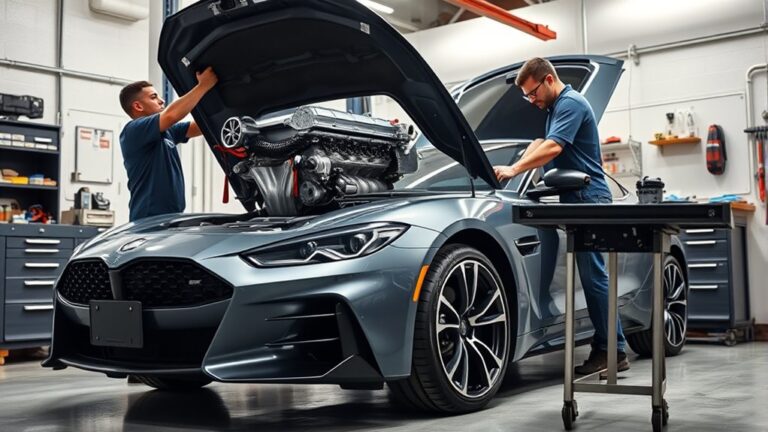
Although modern engines are designed to run efficiently from the start, warming up your car engine still matters because it guarantees peak performance and longevity. When you give your engine a moment to warm up, the oil thickens and circulates properly, reducing friction and wear on essential parts.
Warming up your engine ensures oil flows smoothly, minimizing wear and boosting performance from the start.
This directly impacts engine longevity by preventing premature damage. Cold engines also burn fuel less efficiently, so warming up helps improve fuel efficiency right from the start. You’ll notice smoother acceleration and less strain on your vehicle when the engine reaches an ideal temperature.
Skipping this step, especially in colder climates, can cause unnecessary wear and reduce your car’s overall lifespan. So, by taking a brief pause before driving off, you’re actively protecting your engine’s health and saving on fuel costs in the long run.
Warming up your car isn’t just a habit; it’s a smart move for maintaining your engine’s performance and durability.
How Do Modern Engines Reduce Warm-Up Time?
Because modern engines use advanced technology, they warm up much faster than older models did. You’ll notice that today’s engines use improved engine cooling systems that quickly regulate temperature, preventing overheating while allowing the engine to reach its ideal operating temperature sooner. This efficient cooling means you don’t have to idle for long before hitting the road.
Furthermore, modern fuel injection and computer-controlled ignition systems adjust fuel-air mixtures precisely during warm-up, ensuring better combustion and quicker temperature stabilization. These improvements also contribute to emission reduction by minimizing pollutants released during cold starts.
Catalytic converters in newer cars become effective faster, further cutting harmful emissions. So, you can start driving almost immediately without worrying about excessive engine wear or pollution. By understanding these advancements, you’ll know that lengthy warm-ups are largely unnecessary with modern engines, saving you time and fuel while supporting environmental responsibility.
How Do Weather Conditions Affect Warming Up Your Car Engine?
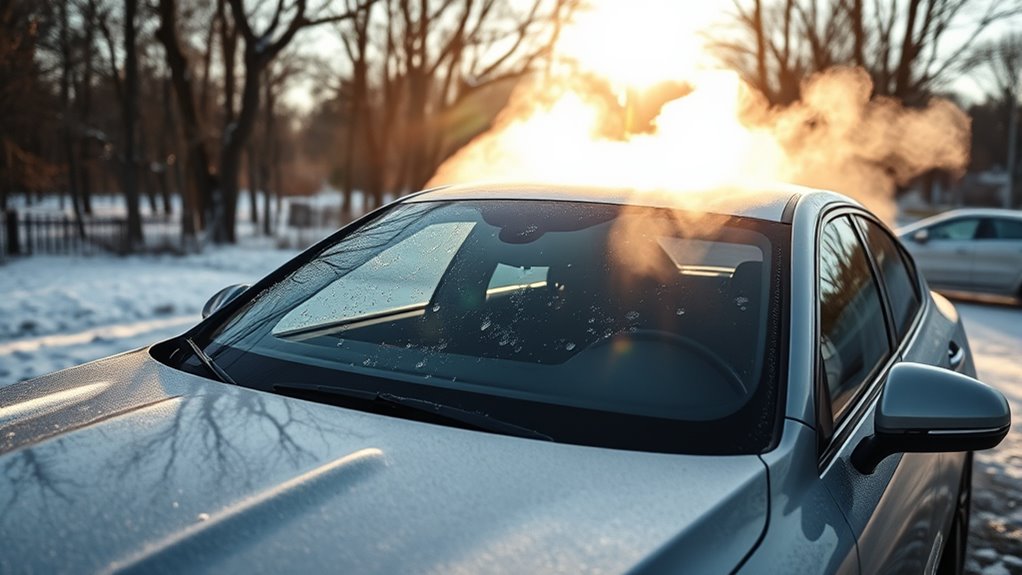
How much does the weather really impact how long you should warm up your car engine? Cold temperatures mean your engine oil thickens, making it harder for parts to move smoothly. This increases wear and tear and raises the risk of winter hazards like frozen fluids or battery failures.
Conversely, hot weather can cause summer overheating if your engine runs too long idling without airflow. So, the weather definitely changes how you approach warming up your car.
| Weather Condition | Impact on Engine Warm-Up |
|---|---|
| Cold (Winter) | Oil thickens; longer warm-up needed |
| Hot (Summer) | Risk of overheating with long idling |
| Rainy/Humid | Moisture affects ignition, moderate warm-up |
| Mild/Moderate | Minimal impact, short warm-up fine |
Adjust your warm-up time based on these conditions to protect your engine effectively without wasting fuel.
How Long Should You Warm Up Your Car Engine?
Weather conditions definitely influence how you should warm up your car engine, but knowing the right amount of time to spend warming it up depends on more than just the temperature outside. Generally, modern cars only need about 30 seconds to a minute of idling before you start driving gently.
This short warm-up period helps the oil circulate properly, supporting engine longevity without wasting fuel. Over-warming your engine by idling for too long can reduce fuel efficiency and cause unnecessary wear. Instead, after that brief warm-up, you should drive cautiously for the first few minutes, allowing the engine to reach its ideal operating temperature under light load.
This approach balances fuel efficiency with protecting your engine’s components. Remember, extended idling isn’t necessary and can actually harm your engine over time. By warming up your car this way, you guarantee better performance and extend your engine’s lifespan.
What Are the Best Ways to Warm Up Gasoline and Diesel Engines?
While gasoline and diesel engines both require warming up, the best methods for each differ due to their distinct mechanical and fuel characteristics. For gasoline engines, the fuel mixture adjusts automatically during a cold start to provide extra fuel, helping the engine run smoothly. You don’t need to idle for long; just start the engine and drive gently for the first few minutes. This approach warms the engine efficiently without wasting fuel.
Diesel engines, on the other hand, rely on compression to ignite the fuel, and they often need glow plugs to preheat the combustion chamber during a cold start. Before driving, let the glow plugs work for a few seconds until the indicator light turns off. After that, start the engine and allow it to idle briefly, about 30 seconds, before driving gently. This helps the fuel mixture atomize properly and protects the engine from wear.
What Signs Show Your Engine Needs More Warm-Up Time?
Wondering if your engine needs more warm-up time? You’ll notice when your car isn’t quite ready for the road. Proper engine cooling and oil circulation are essential before driving, and if these aren’t ideal, your engine will give you clear signs.
Watch out for these indicators:
- Unusual engine noises like knocking or ticking, which signal oil hasn’t fully circulated yet.
- Rough idling or stalling because the engine temperature isn’t stable, affecting combustion.
- Dashboard warning lights, especially the temperature or oil pressure indicators, signaling insufficient engine warming.
If you spot these signs, give your car more time to warm up. This guarantees oil reaches all moving parts smoothly and engine cooling systems are fully operational. Taking these extra moments protects your engine from wear and tear and improves performance right from the start.
What Happens If You Skip Warming Up Your Car Engine?
If you ignore the signs that your engine needs more warm-up time, you risk causing immediate and long-term damage. Skipping this step means engine oil stays thick and less effective, which leads to increased friction and wear on engine parts. Your fuel efficiency also takes a hit since the engine isn’t running ideally at cold temperatures.
Here’s what happens when you skip warming up your engine:
| Consequence | Effect |
|---|---|
| Thick engine oil | Poor lubrication, faster wear |
| Reduced fuel efficiency | Higher fuel consumption |
| Increased engine stress | Potential overheating and damage |
| Shortened engine life | Costly repairs and replacements |
What Are Common Myths About Warming Up Your Car Engine?
Many drivers believe warming up a car engine requires several minutes of idling, but this isn’t always true. Car engine myths like this often lead to unnecessary fuel waste and frustration. Understanding warm-up misconceptions helps you avoid outdated habits and protect your vehicle efficiently.
Here are common myths you should question:
- You must idle for 10+ minutes before driving: Modern engines need far less time to warm up.
- Warming up prevents engine damage: While a brief warm-up is helpful, excessive idling can actually cause wear.
- Cold weather means longer warm-up: Advances in engine technology reduce the need for extended warming, even in winter.
How Can You Warm Up Your Car Without Wasting Fuel?
You can warm up your car efficiently by using smart idling techniques that minimize fuel use. Instead of letting the engine run for long periods, try gentle driving right after starting. This helps your engine warm up faster without wasting fuel.
You might also consider options like engine block heaters. They get your car ready before you even start it, so you don’t have to idle for long and use extra gas. It’s a simple way to save fuel and still stay comfortable on cold mornings.
Efficient Idling Techniques
Although letting your car idle seems like the easiest way to warm it up, doing so for too long wastes fuel and can harm the engine. During a cold start, your engine oil is thicker and takes time to circulate properly.
Instead of excessive idling, try these efficient idling techniques:
Start your engine and let it idle just 30 seconds before driving gently. Avoid revving the engine; this stresses cold engine oil and components. Drive slowly for the first few minutes to help engine oil warm up and flow smoothly.
Using Engine Warm-Up Alternatives
When temperatures drop, turning to engine warm-up alternatives can help you save fuel while protecting your car. Instead of idling for long periods, start your engine and drive gently for the first few minutes. This approach warms up your engine oil faster, guaranteeing proper lubrication without wasting fuel.
You can also use a block heater if you live in extremely cold areas; it pre-warms the engine, reducing the need for extended idling. Monitoring your battery performance is vital too. Cold weather can reduce its efficiency, so keeping it charged guarantees reliable starts without relying on prolonged warm-ups.
How Can You Maintain Your Engine’s Health in Cold Weather?
Because cold weather puts extra strain on your engine, taking specific steps to maintain its health becomes essential. You want to protect your vehicle from harsh conditions while maximizing fuel efficiency and ensuring reliable performance. Regular car maintenance is key to preventing cold-weather damage.
To keep your engine in top shape during winter, focus on these vital practices:
- Use the right oil viscosity for low temperatures to reduce engine wear and improve fuel efficiency.
- Keep your battery fully charged and clean to avoid unexpected failures on chilly mornings.
- Check your coolant levels and antifreeze mixture to prevent freezing and overheating.
Frequently Asked Questions
Can Warming up My Car Engine Improve Fuel Efficiency?
Warming up your car engine in cold weather can slightly improve fuel economy at first, but only if you drive gently right after starting. Idling too long wastes fuel and actually reduces fuel economy.
Instead, start your engine, wait about 30 seconds, then drive carefully to let the engine reach ideal temperature. This approach balances fuel economy and engine performance without unnecessary fuel consumption.
Does Electric Engine Pre-Heating Affect Warm-Up Duration?
Electric pre-heating promptly powers peak performance. When you use electric pre-heating, you can cut down warm-up duration because it primes your engine and battery efficiency before you even start driving.
This preemptive power-up means your engine reaches ideal temperature faster, reducing fuel use and wear. So, by relying on electric pre-heating, you’ll enjoy smoother starts and shorter wait times while boosting your battery’s effectiveness and overall engine health.
How Do Hybrid Engines Handle Warm-Up Differently?
Hybrid technology lets your car’s electric motor assist during warm-up procedures, so you don’t need to idle as long as traditional engines. Your hybrid engine uses the electric motor to reduce wear and emissions while the gasoline engine quickly reaches ideal temperature.
This means you can start driving almost immediately without harming the engine, making warm-up procedures more efficient and eco-friendly compared to conventional vehicles.
Is It Safe to Warm up My Car Engine Indoors?
Imagine you start your car in a closed garage to warm it up, but the indoor ventilation is poor. That’s not safe because your car emits carbon monoxide, an odorless, deadly gas that can build up quickly.
You shouldn’t warm up your engine indoors unless you have excellent ventilation. To stay safe, always warm your car outside or in a well-ventilated area to avoid carbon monoxide poisoning.
What Impact Does Engine Oil Type Have on Warm-Up Time?
The type of engine oil you use directly affects warm-up time because oil viscosity determines how quickly it flows through the engine. Thicker oils take longer to circulate, slowing engine performance during cold starts.
If you choose a lower viscosity oil, especially synthetic types, it flows faster, reducing warm-up time and improving engine performance right away. So, selecting the right oil helps your engine reach ideal function faster.
Conclusion
You might think warming up your car engine means idling for minutes, but modern engines actually need only 30 seconds to a minute before driving gently. Skipping this can strain parts in cold weather, yet overdoing it wastes fuel and harms the environment.
So, trust your engine’s design, avoid myths, and warm up smartly. Finding this balance keeps your car healthy without unnecessary fuel waste or wear. Remember, knowing how long to warm up your car engine is key to maintaining its performance and longevity.