What Is a Push Behind Leaf Blower?
Clearing a large yard by hand can be exhausting, especially when leaves and grass clippings keep piling up. You’re not alone—many homeowners struggle to finish cleanup quickly without straining their backs.
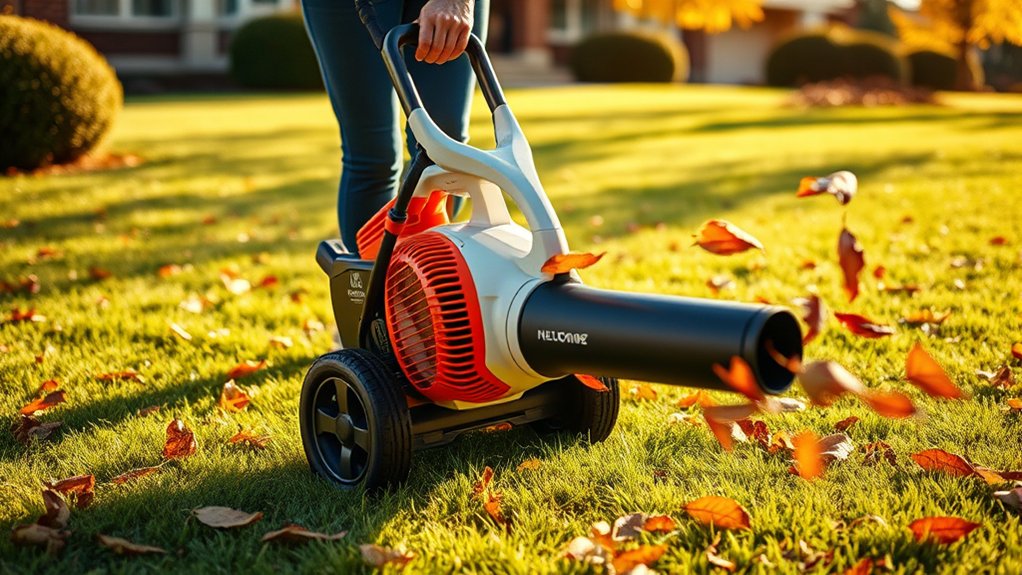
A push-behind leaf blower is a wheeled outdoor power tool that lets you clear leaves, grass clippings, pine needles, and light litter while walking behind and steering it. Its engine or electric motor drives an impeller, producing a focused stream of air through a wide nozzle.
Large wheels reduce strain and help you cover lawns, driveways, patios, and sidewalks efficiently. You’ll get the best results on dry, level ground, and the sections below explain how to choose and use one.
Key Takeaways
- A push-behind leaf blower is a wheeled outdoor power tool designed to clear leaves and debris with directed airflow.
- Users guide it by walking behind and steering its handle rather than carrying it.
- Its large wheels, sturdy frame, and wide clearing path make it effective for medium and large open areas.
- It typically uses a gas or electric motor to power an impeller that accelerates air through a nozzle.
- It works best on dry, level surfaces such as lawns, driveways, patios, and sidewalks.
What Is a Push-Behind Leaf Blower?
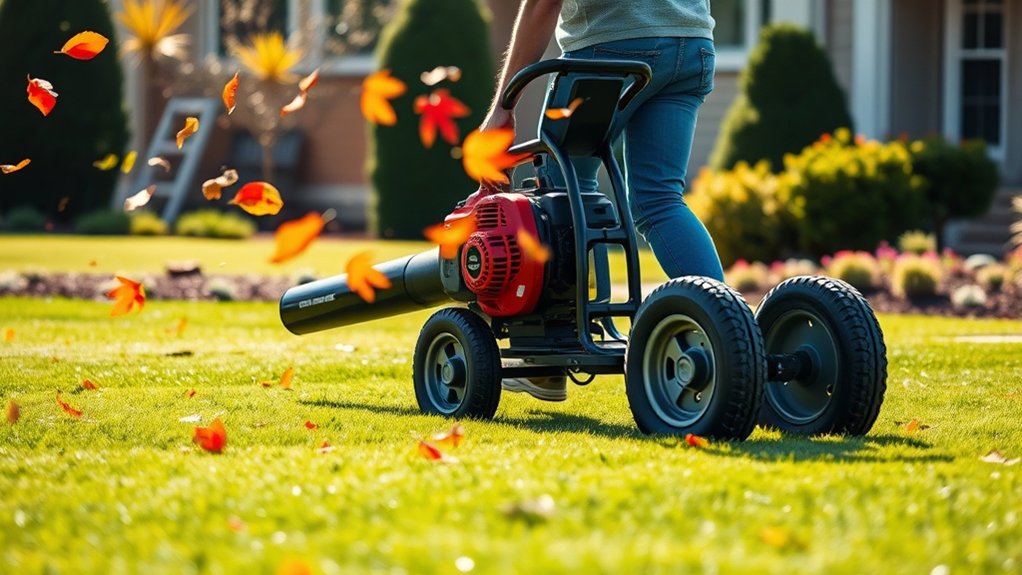
A push-behind leaf blower is a wheeled outdoor power tool that directs a strong stream of air across lawns, driveways, and walkways to clear leaves and other debris. You guide it by walking behind the unit and steering its handle, rather than carrying the motor and blower assembly.
A wheeled tool that clears leaves and debris with powerful airflow while you comfortably guide it from behind.
This format suits you when you need to clear large properties, broad paved areas, or heavy seasonal buildup with less lifting.
Unlike handheld models, a push-behind design typically provides a sturdy frame, larger wheels, and a wider clearing path. You can choose models with gas or electric power, depending on your property, maintenance preferences, and access to power.
Features such as ergonomic design can make extended sessions more comfortable by reducing awkward reaching and pushing. Silent operation isn’t typical for every model, but quieter electric options can help you work with less disruption.
How Does a Push-Behind Leaf Blower Work?
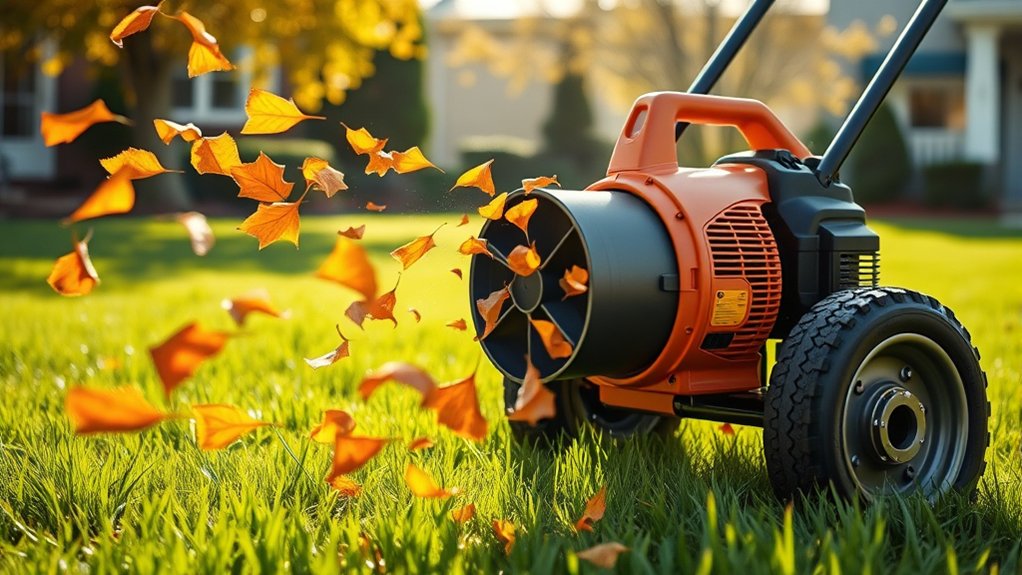
When you start the engine, it powers a fan that creates a strong stream of air to move leaves and debris. As you push the blower across your yard, you can direct the airflow wherever it’s needed.
Engine-Powered Airflow
The engine powers an impeller that draws in air and forces it through a directed outlet, creating the high-velocity stream that moves leaves and debris. As you operate the blower, fuel combustion turns the crankshaft, which spins the impeller inside its housing.
The housing’s shape helps concentrate pressure and maintain a steady discharge.
- Intake: A screen keeps large debris from reaching the impeller.
- Compression: Curved blades accelerate air as they rotate.
- Direction: The outlet nozzle focuses airflow into a controllable stream.
- Control: Airflow regulation lets you adjust force for different surfaces.
You’ll get consistent performance when you keep the intake clear and inspect belts, filters, and spark plugs regularly.
Proper engine maintenance supports efficient combustion, protects moving parts, and helps prevent power loss. Never block the outlet, since restricted airflow can strain the engine and reduce blowing effectiveness.
Push-Behind Operation
With the engine and impeller producing airflow, the push-behind design lets you direct that power across larger areas with less carrying effort. You guide the machine by its handle while sturdy wheels support its weight.
As you push forward, the blower’s nozzle sends a concentrated stream across lawns, paths, driveways, and planting beds. You can steer around trees, edging, and other features without carrying a heavy handheld unit.
Adjusting your pace helps you control debris movement. Walk slowly for damp leaves or packed piles, and move faster across open surfaces.
This setup suits broad Garden design layouts where leaves collect in corners and along borders. During Seasonal maintenance, you’ll clear debris efficiently, reduce back strain, and finish large cleanup tasks without repeatedly stopping to reposition the machine.
Why Choose a Push-Behind Leaf Blower?
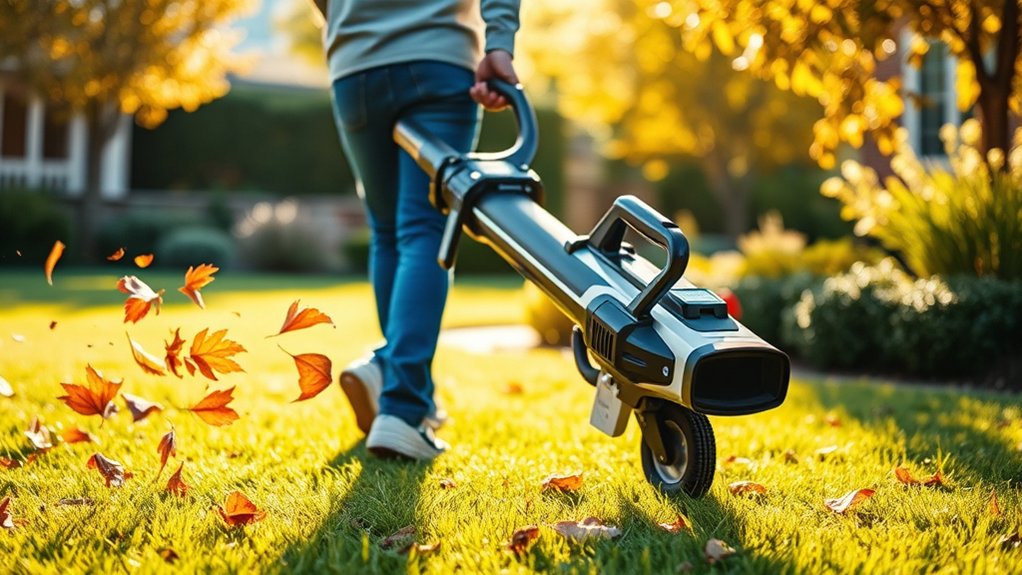
A push-behind leaf blower gives you the power to clear large areas quickly without carrying a handheld unit. Its wheeled design reduces arm strain, while strong airflow moves leaves efficiently and keeps your cleanup routine manageable.
You’ll also gain better control over longer sessions, especially when fatigue would make handheld equipment uncomfortable.
- Less physical effort: Push the machine instead of supporting its full weight, so your shoulders and back stay more comfortable.
- Faster cleanup: Clear thick leaf layers with fewer passes, helping you finish seasonal chores sooner.
- Improved garden aesthetics: Remove scattered leaves neatly, keeping paths, lawns, and planting beds looking orderly.
- Practical operation: Many models offer adjustable airflow, simple controls, and stable wheels for predictable movement.
You may appreciate the added noise reduction compared with some high-powered handheld models, particularly when you choose a quieter engine or electric design.
A push-behind blower also gives you a dedicated tool for demanding cleanup. This saves your handheld equipment for lighter tasks and reduces unnecessary wear over time.
Where Can You Use One?
You can use a push-behind leaf blower on lawns, driveways, patios, sidewalks, and other broad outdoor areas where leaves and debris collect. Its wheeled design helps you guide airflow across open spaces while you clear fallen leaves, grass clippings, pine needles, and light litter.
Use it around garden borders to move debris away from plants without disturbing your overall Garden design. You can also clear paths, outdoor entertaining areas, sports courts, and parking spaces after windy weather or routine yard work.
For seasonal maintenance, use the blower during autumn leaf fall, after pruning, or before winter storage to keep surfaces tidy. It works best on dry, relatively level ground, where you can steer it smoothly and maintain control.
Avoid using it near loose mulch, delicate seedlings, gravel, or dusty materials unless the blower’s settings allow gentle airflow. Check local rules, protect your hearing, and keep people and pets away from the discharge path while you operate it.
How Much Yard Can It Clear?
To figure out how much yard you can clear, start by considering the blower’s clearing capacity per pass. A wider clearing path moves more leaves at once, so you can finish large areas faster. Match that capacity to your yard’s size and the amount of leaves it typically collects to find the right fit.
Clearing Capacity Per Pass
Clearing capacity per pass depends on the blower’s air volume, nozzle design, and the type of debris on the ground. You’ll cover more area when dry leaves sit loosely on smooth turf.
Wet leaves, pine needles, gravel, and packed debris require slower passes or repeated sweeps.
- Aim the nozzle slightly downward so airflow lifts and moves debris instead of scattering it.
- Walk steadily, overlapping each pass by a few inches to prevent missed strips.
- Use higher power for heavy piles, but reduce it near flower beds, mulch, and loose soil.
- Keep the discharge path clear, and adjust your route as piles grow.
Regular leaf blower maintenance helps preserve consistent airflow and coverage. Clean the intake, inspect the nozzle, and replace worn parts.
For noise reduction, operate at the lowest effective setting and avoid reflecting airflow off walls or hard surfaces.
Ideal Yard Size
After judging how much debris the blower moves per pass, match its clearing capacity to your yard’s size and layout. A push-behind leaf blower suits medium to large, mostly open lawns where you can make long, uninterrupted passes.
You’ll clear expansive grass faster than with a handheld model, especially when leaves gather in thick layers. For a small yard, narrow side path, or landscape filled with trees, beds, and tight corners, its size may slow you down.
Check the blower’s rated air volume, working width, and expected runtime before buying. You’ll also need enough storage space and a route that accommodates its wheels.
During seasonal garden maintenance, use the machine to direct leaves toward one collection area, simplifying leaf collection and reducing repeated passes across your property.
Push-Behind vs. Handheld Leaf Blowers
Push-behind leaf blowers deliver greater power and longer runtime than handheld models, making them better suited to large yards and heavy, wet leaves. You’ll also benefit from wheels that support the machine, reducing arm fatigue during lengthy cleanup sessions.
Push-behind blowers offer powerful, extended performance for large yards, wet leaves, and less strenuous cleanup.
A handheld blower, however, costs less, stores easily, and gives you precise control around flower beds, steps, and tight spaces.
- Choose push-behind power when you regularly clear expansive lawns, thick leaf layers, or damp debris.
- Choose handheld convenience when your property is small or you need quick, spot-specific cleanup.
- Compare maneuverability: handheld models lift easily, while push-behind units roll steadily but need wider paths and more storage space.
- Plan upkeep and protection: follow Leaf blower maintenance instructions, inspect air filters, and use Safety precautions such as eye and hearing protection.
Your choice depends on yard size, debris volume, storage capacity, and how much physical effort you want during each cleanup.
Neither option suits every property equally.
Push-Behind vs. Backpack Leaf Blowers
When comparing push-behind and backpack leaf blowers, think about how each one affects your mobility and maneuverability. A push-behind model is stable and easy to guide, while a backpack blower gives you more freedom to move around obstacles. You’ll also want to balance each blower’s power with your long-term comfort.
Mobility and Maneuverability
If you’re clearing large, open areas, a push-behind leaf blower gives you steady mobility without carrying the machine on your back. Its wheels support the unit, so you can guide it across lawns, driveways, and broad paths with consistent control.
A backpack blower follows your body, making it easier to navigate tight corners, stairs, and landscaped spaces.
- Choose push-behind models for long, straight passes across expansive ground.
- Choose backpack models when you must weave around trees, beds, vehicles, or fences.
- Look for an aerodynamic design that helps the machine roll smoothly and turn predictably.
- Consider noise reduction features if you’ll work near neighbors or occupied buildings.
Push-behind blowers require more storage space and may struggle on uneven terrain. Backpacks offer greater directional freedom, while push-behind units reduce the need to carry equipment as you move.
Power and Comfort
Power and comfort depend on how much force you need and how long you’ll work. A push-behind leaf blower gives you strong airflow and rolling support, so you won’t carry the motor or fuel.
Choose it for large, open yards and heavy, wet leaves. However, steering and pushing can tire you on slopes or uneven ground.
A backpack blower distributes its weight across your shoulders and leaves both hands free. You’ll maneuver around trees, beds, and fences more easily, but extended use can strain your back and shoulders.
Compare airflow, weight, harness padding, and controls before buying. Consider noise levels, since powerful engines may disturb neighbors and affect your hearing.
For garden safety, wear eye and hearing protection, secure loose clothing, and keep people and pets away while you work.
Gas or Electric: Which Is Better?
Choosing between a gas or electric leaf blower depends on your yard, noise tolerance, and maintenance preferences. Each power source suits different cleanup habits, so consider where and when you’ll work.
- Gas power: Choose gas for large yards, long sessions, and freedom from charging. You’ll refill the tank, mix or buy fuel as required, and handle more routine upkeep.
- Corded electric: Pick a corded model for reliable, steady power near an outlet. You won’t manage fuel, but the cord can restrict your movement and requires careful placement.
- Battery electric: Select battery power for quick, quieter cleanup. Battery efficiency affects runtime, especially when you clear wet or heavy leaves. You’ll need to recharge between jobs or keep a spare battery ready.
- Noise and emissions: Electric models generally produce lower noise levels and no direct exhaust, making them friendlier for neighborhoods and enclosed storage areas. Gas blowers can deliver extended operation but sound louder and emit fumes.
For most small or medium yards, electric power offers convenience. Gas makes more sense when you prioritize long, uninterrupted work.
Features to Look for in a Push-Behind Leaf Blower
When you shop for a push-behind leaf blower, focus on features that make large-area cleanup faster and more comfortable. Choose adjustable airflow and speed controls so you can clear delicate Garden decoration without scattering mulch, then increase power for wet leaves. A wide clearing path reduces passes, while a durable impeller handles demanding Leaf collection.
| Feature | Benefit |
|---|---|
| Adjustable controls | Match power to each surface |
| Wide nozzle | Clear more ground per pass |
Look for large, balanced wheels that roll smoothly over grass, gravel, and uneven paths. A comfortable, height-adjustable handle helps you maintain control without straining your back.
Check the collection or discharge design, too. An easy-to-direct outlet lets you create neat piles, while a compatible bag or vacuum attachment simplifies Leaf collection.
If you choose a gas model, prioritize easy starting and accessible controls. For electric versions, inspect cord management or battery placement.
Finally, consider noise-reduction features, simple maintenance access, and a sturdy frame that resists corrosion. These details make routine cleanup more efficient and dependable.
Is a Push-Behind Leaf Blower Right for You?
A push-behind leaf blower makes sense if you regularly clear large lawns, long driveways, or extensive paths and want to reduce the effort of carrying a handheld model. Its wheels support the machine, so you’ll cover broad areas with less arm and shoulder strain.
Consider these factors before buying:
Consider property size, terrain, storage needs, maintenance demands, noise, and fuel use before choosing a push-behind leaf blower.
- Property size: Choose this design for expansive spaces, not a small patio or compact yard.
- Terrain: Smooth, level surfaces make pushing easier; steep slopes, loose gravel, or tight corners may create frustration.
- Storage: You’ll need a dry, accessible place for the blower, fuel, and accessories.
- Maintenance: Include filter cleaning, spark-plug checks, and seasonal servicing in your Garden maintenance routine.
A push-behind model can save time during heavy leaf seasons, but it may cost more than a handheld blower. Compare noise, starting effort, discharge control, and fuel use before deciding.
Check build quality and Equipment durability, especially if you’ll use it frequently. If your property is small, a lighter handheld or battery model might serve you better.
Frequently Asked Questions
How Loud Are Push-Behind Leaf Blowers During Operation?
Push-behind leaf blowers typically produce 85–100 decibels during operation, depending on the engine, model, and throttle setting. You’ll notice that larger commercial machines often reach the upper end of that range.
Noise levels can feel intense near the operator, so you should wear hearing protection and avoid prolonged exposure. Check the manufacturer’s decibel ratings before buying.
Also consider local regulations, nearby neighbors, and quieter electric options when choosing equipment for your property.
How Do You Maintain a Push-Behind Leaf Blower?
Treat maintenance like giving your blower a fresh set of lungs: clean it regularly, and it’ll work harder for you. Check and replace the air filter, inspect spark plugs, tighten loose fasteners, and clear debris from the impeller and housing.
Change the oil according to the manual, and use fresh fuel for better Fuel efficiency. For Storage tips, drain fuel, clean thoroughly, protect it from moisture, and cover it in a dry place.
Can Push-Behind Leaf Blowers Handle Wet Leaves?
Yes, push-behind leaf blowers can handle wet leaves, but you’ll need realistic expectations. Wet leaf handling requires stronger airflow and patience because moisture adds weight and makes leaves clump together.
Before starting, remove large piles with a rake to prevent clogging. For a blower power comparison, choose a high-CFM, high-MPH model with adjustable speed.
Don’t operate on saturated ground, and clean the impeller and housing afterward to prevent buildup and corrosion.
What Safety Precautions Should You Follow When Using One?
Wear Protective gear, including safety glasses, hearing protection, sturdy gloves, long pants, and nonslip footwear. Inspect the blower before each use, secure loose clothing, and keep children, pets, and bystanders away.
Use safe Operating techniques: maintain both hands on the controls, push at a controlled pace, avoid steep slopes, and never point the airflow toward people, traffic, or windows.
Shut off the engine before clearing jams, refueling, or performing maintenance, and watch for debris.
How Much Do Push-Behind Leaf Blowers Typically Cost?
You’ll typically pay $500–$1,500 for a push-behind leaf blower, while commercial models can exceed $2,000. You get what you pay for: higher-priced machines often offer stronger airflow, better fuel efficiency, and longer-lasting engines.
As you compare options, consider ergonomic design, warranty coverage, noise levels, and maintenance costs, not just the sticker price. A budget model may suit occasional cleanup, but frequent, large-property use justifies investing in durability and performance.
Conclusion
A push-behind leaf blower gives you powerful, efficient cleanup without carrying heavy equipment on your back. You’ll appreciate its wheeled design when clearing large lawns, driveways, or commercial areas.
Handheld blowers typically move around 400–700 CFM, while some push-behind models exceed 2,000 CFM. This extra power helps clear wet leaves and heavy debris more efficiently.
If you value speed, reduced strain, and wide coverage, a push-behind leaf blower could make seasonal yard work much easier.