Top 3 Essential Chainsaw Tools for Maintenance
Keeping a chainsaw in peak condition can feel like a chore, especially when sawdust builds up, the chain loosens, or cutting performance starts to drop. You’re not alone—many chainsaw owners struggle to keep up with routine care.
The right chainsaw maintenance tools make the job easier and safer.
The top three essential chainsaw maintenance tools are a chainsaw brush, scrench, and filing kit. Use the brush to clear sawdust from the bar, chain, sprocket, and air vents after shutting off and cooling the saw.
Use a scrench to adjust chain tension so the chain stays snug without binding.
Keep cutters sharp with a properly sized round file, guide, flat file, and depth-gauge tool.
Follow these steps, and you’ll uncover more ways to maintain your saw safely.
Key Takeaways
- Chainsaw brush: Removes sawdust and debris from the bar, chain, sprocket, cooling fins, and air vents.
- Scrench: Combines guide-bar nut and chain-tensioning functions for convenient, accurate adjustments.
- Sharpening kit: Includes a round file, guide, flat file, and depth-gauge tool for consistent chain sharpening.
- Protective equipment: Gloves and eye protection help prevent injuries during cleaning, adjustment, and sharpening.
- Maintenance cloth: Wipes away stubborn residue and filings after servicing without introducing unnecessary moisture.
Clean Sawdust and Debris With a Chainsaw Brush
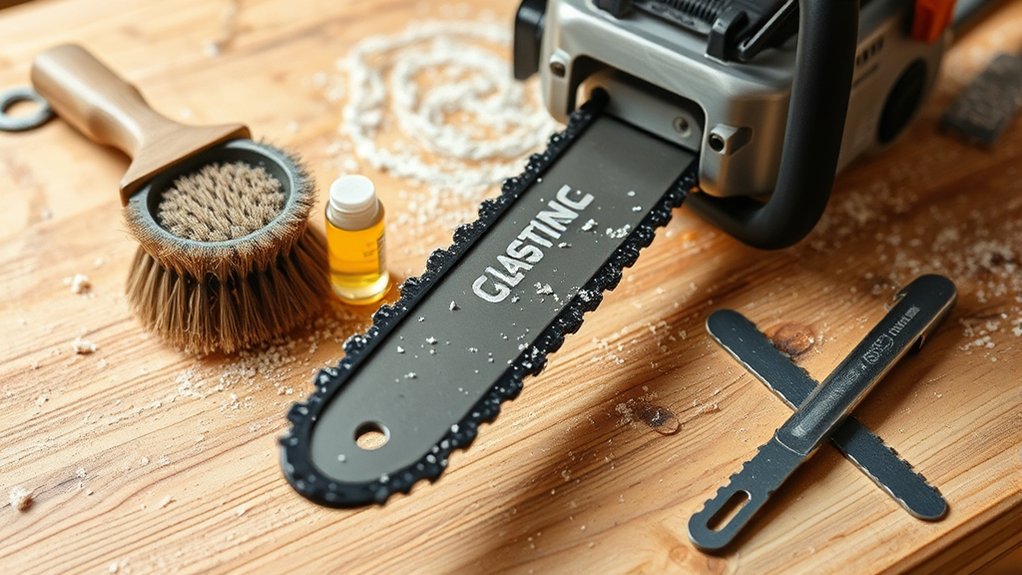
A chainsaw brush quickly removes sawdust, dirt, and debris from the bar, chain, sprocket, and air vents after use. Before cleaning, shut off the engine, let the saw cool, and disconnect its spark plug wire. Put on safety gear, including gloves and eye protection, so sharp cutters and flying particles don’t injure you.
A chainsaw brush clears debris from vital components, but always shut down, cool, and protect yourself before cleaning.
Hold the saw securely on a stable surface. Brush along the bar groove, moving away from the cutters, then clear packed debris around the sprocket and clutch cover.
Use short, firm strokes around air vents and cooling fins, but don’t force bristles into delicate openings. If residue remains, wipe surfaces with a clean, dry cloth.
Avoid water unless your manufacturer specifically permits it, since moisture can encourage corrosion. Inspect the brush for worn bristles, and replace it when cleaning becomes difficult.
Follow practical storage tips: keep the brush dry, clean, and separate from oily tools. Regular brushing improves airflow, protects components, and helps you spot damage early.
Adjust Chain Tension With a Scrench
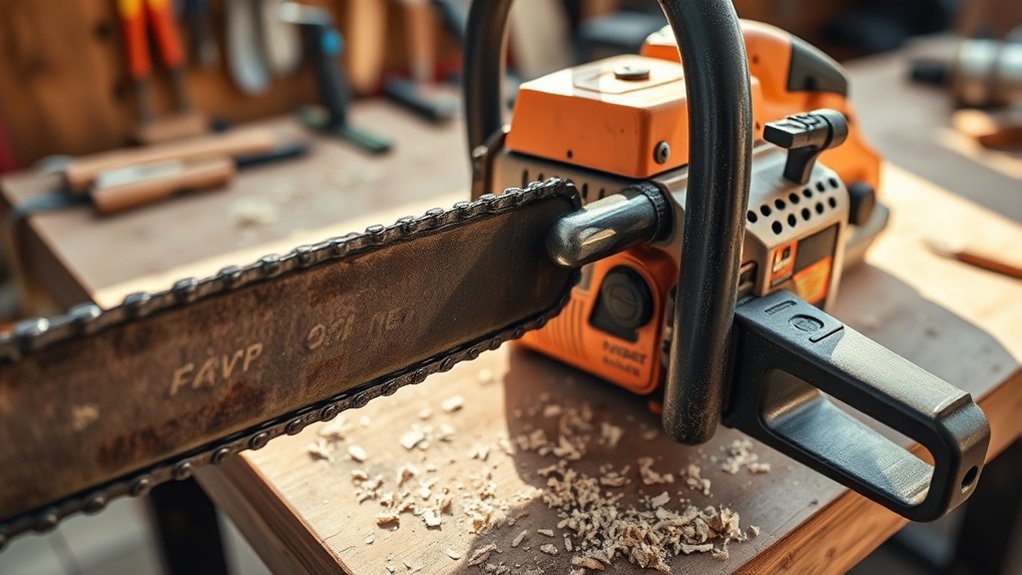
Keep the chain properly tensioned with a scrench, the combination tool that fits the guide-bar nuts and tensioning screw. Before starting, switch off the chainsaw, unplug it or remove its battery, and let the engine cool. Wear gloves to protect your hands from sharp cutters.
Loosen the guide-bar nuts slightly with the socket end of the scrench. Turn the tensioning screw with the screwdriver end, adjusting the bar until the chain sits snugly in the groove without binding.
For accurate chain tension adjustment, lift the chain midway along the bar. It should pull away slightly while the drive links remain engaged.
Retighten both guide-bar nuts firmly, then check that the chain moves smoothly by hand while wearing gloves. Don’t overtighten it; excessive tension increases wear and strains the bar.
Include scrench tool usage in your routine inspection, especially before cutting and after the chain warms up. Recheck tension after several cuts because heat can make the chain expand. Always follow your chainsaw manufacturer’s specifications.
Sharpen the Chain With a Filing Kit
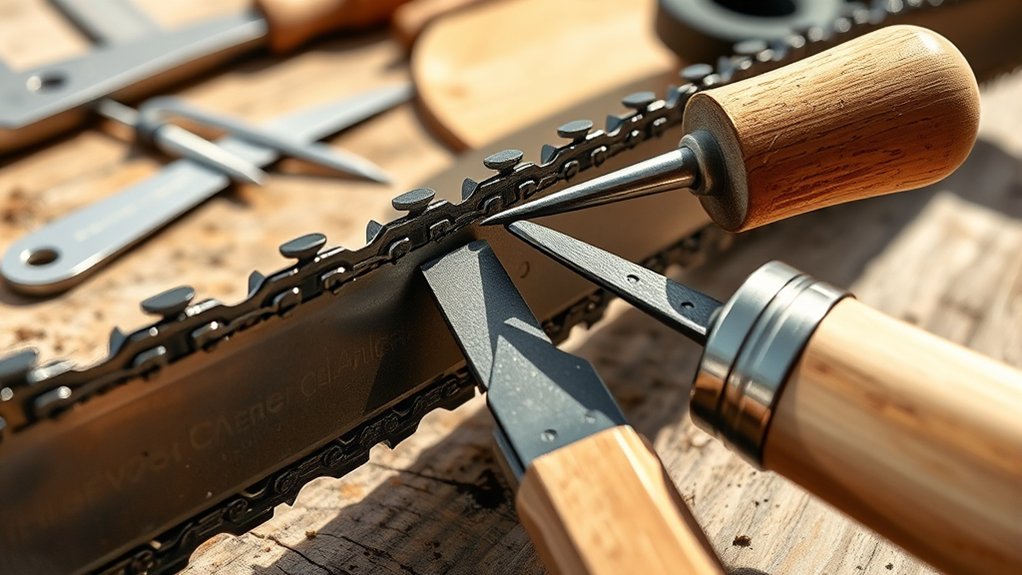
When the chain produces fine dust, cuts unevenly, or requires extra pressure, sharpen it with a filing kit. You’ll need the correct round file, a file guide, a flat file, and a depth-gauge tool. Secure the saw, engage the brake, and wear gloves before you begin.
Match the file diameter to your chain’s specification. Place the guide over the cutter, then push the file across each cutting edge at the recommended angle. Keep your strokes consistent, filing every cutter similarly.
Don’t pull the file backward under pressure. Lift it for the return stroke.
| Tool | Purpose |
|---|---|
| Round file | Shapes cutting edges |
| File guide | Maintains angle |
| Flat file | Levels tie straps |
| Depth gauge | Sets cutter height |
After sharpening, inspect each tooth and lower high depth gauges carefully. Chain grinding suits heavily damaged chains, but hand filing preserves control.
Finish with Chain lubrication to reduce friction, heat, and wear. Clean away filings, reinstall the cover, and test-cut cautiously before resuming work.
Frequently Asked Questions
How Often Should Chainsaw Safety Equipment Be Inspected or Replaced?
You should inspect your chainsaw safety equipment before every use, checking for cuts, cracks, loose fasteners, worn fabric, and damaged protective components. Replace any item immediately if it no longer fits securely or meets its protective purpose.
During regular safety gear maintenance, follow the manufacturer’s replacement schedule, even when damage isn’t visible. Your inspection frequency should also increase after heavy use, chemical exposure, or any incident that may have compromised the equipment.
What Type of Bar Oil Is Best for Different Chainsaw Operating Conditions?
Choose bar oil based on temperature and workload. In cold conditions, use a low-viscosity winter blend so oil flows freely.
In warm weather or during heavy cutting, select thicker summer-grade oil that clings to the chain and resists fling-off.
Bar oil viscosity affects lubrication, wear, and consumption. Use biodegradable vegetable-based oil near waterways.
Apply oil correctly: fill the reservoir, check the oiler, and confirm consistent coverage before cutting.
How Can You Identify When a Chainsaw Guide Bar Needs Replacement?
You can identify a chainsaw guide bar replacement by checking for severe rail wear, deep grooves, cracks, bending, or uneven rails that prevent the chain from sitting securely. Excessive nose-sprocket play, binding, and repeated chain derailment also signal damage.
Inspect the bar whenever you sharpen the chain. If Guide bar wear remains after filing burrs and completing Chain tension adjustment, replace the bar to maintain safe, straight cutting performance.
What Fuel Mixture Is Recommended for a Two-Stroke Chainsaw Engine?
Use a 50:1 gasoline-to-two-stroke oil mixture for most modern chainsaw engines, unless your owner’s manual specifies another ratio. Choose fresh, unleaded gasoline and high-quality air-cooled two-stroke oil.
Measure carefully to maintain fuel consistency, and don’t substitute automotive or outboard oil. Check the oil viscosity recommended by the manufacturer.
Mix fuel in an approved container, shake it thoroughly, and use it within the manufacturer’s recommended storage period.
How Should a Chainsaw Be Stored During the Off-Season?
Treat your chainsaw like a sleeping tool: prepare it carefully, and it’ll wake ready for work. Empty the fuel tank, run the engine until it stops, and clean the bar, chain, and air filter.
Apply chain lubrication to prevent rust, then loosen the chain tension slightly. Store the saw in a dry, cool place, away from sunlight, moisture, children, and ignition sources.
For storage safety, cover the chain and keep the manual nearby.
Conclusion
With three simple tools, you can keep your chainsaw safer, sharper, and ready for work. Brush away packed sawdust after each use, use a scrench to restore proper chain tension, and sharpen dull cutters with a filing kit.
For example, if you clear storm-damaged branches, cleaning debris and tightening the chain before the next cut can prevent sluggish performance and unnecessary wear. Make these chainsaw maintenance tools part of your routine, and your saw will serve you reliably longer.