How to Get Kittens Out of a Car Engine Safely
If you’ve ever heard strange noises coming from your car engine or found unexpected guests hiding under the hood, you’re not alone. Many people struggle with kittens seeking warmth and shelter in their car engines, especially during colder months. It can be worrying and tricky to get them out safely without causing harm to the kittens or yourself.
Before starting your car, always check under the hood for hiding kittens by tapping gently or honking to encourage them out. Use treats like wet food or soft toys to coax them safely, moving slowly and speaking calmly to avoid scaring them.
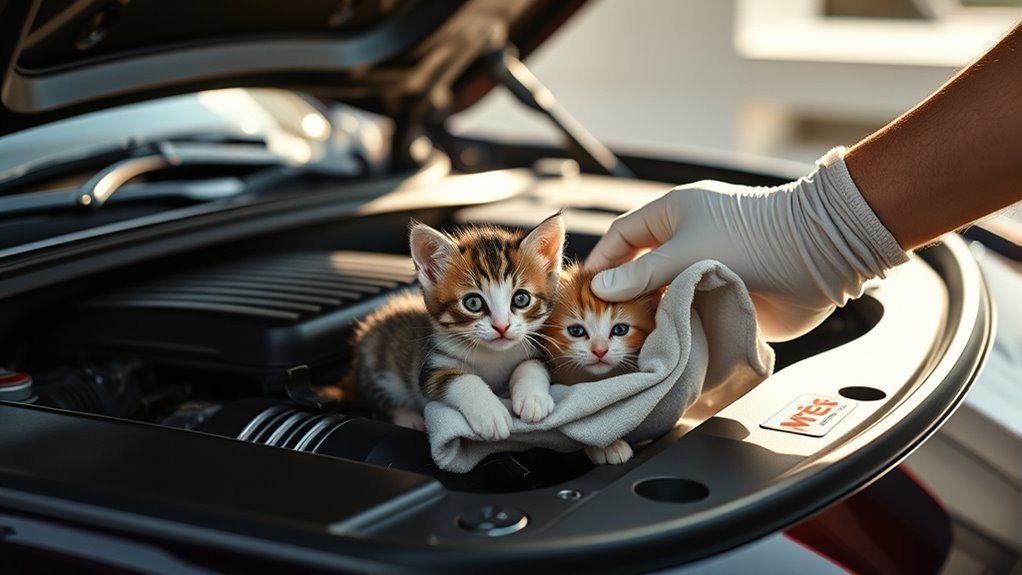
If needed, wear gloves and use long-nose tools for gentle extraction. After rescue, make sure they’re warm and inspect for injuries. Taking these steps protects both you and the kittens.
There’s more to learn about keeping them safe and preventing future visits.
Key Takeaways
- Always check under the hood and around the engine before starting the car to detect any hidden kittens.
- Use gentle coaxing with treats, soft toys, or warm food to lure kittens out calmly and safely.
- Wear protective gloves and use tools like long-nose pliers to carefully extract kittens without causing injury.
- Turn off the engine and disconnect the battery before starting rescue efforts to prevent accidents.
- Provide warmth, food, and a quiet safe space after removal, and seek veterinary care if kittens appear injured.
Why Kittens Hide in Car Engines
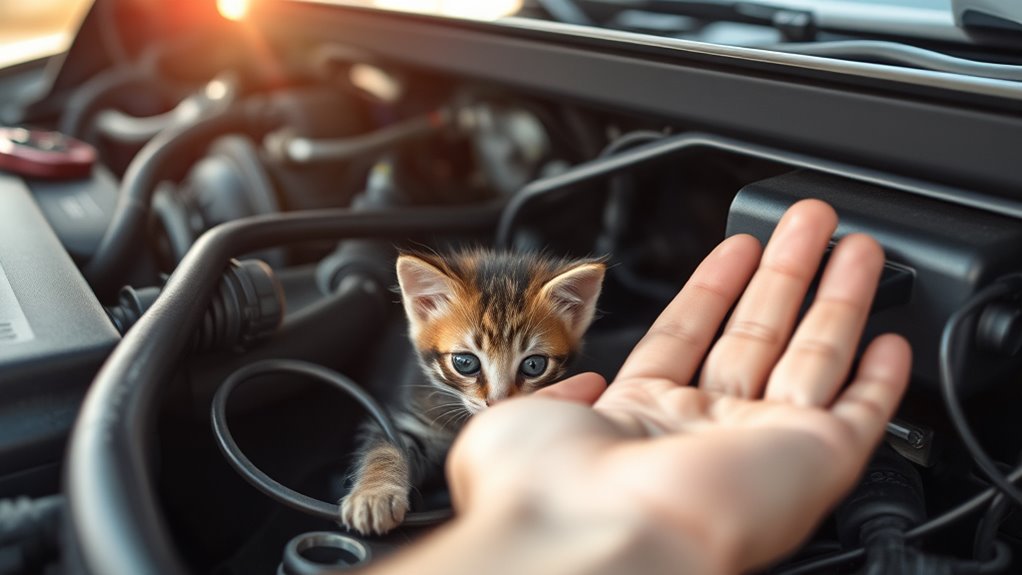
Because car engines provide warmth and shelter, kittens often hide there, especially during cold weather. When you think about it, a car engine’s heat is a cozy refuge for vulnerable kittens seeking comfort.
You should know that kittens are naturally curious and may see the engine compartment as a safe hiding spot away from predators and harsh elements. However, this behavior poses serious risks to car engine safety and to the kittens themselves.
Understanding kitten nutrition is essential, as young kittens need frequent feeding and warmth, which they can’t easily find outside. Their instinct drives them to search for warm places, sometimes leading them into dangerous spots like your car engine.
How to Check for Kittens Before Starting Your Car
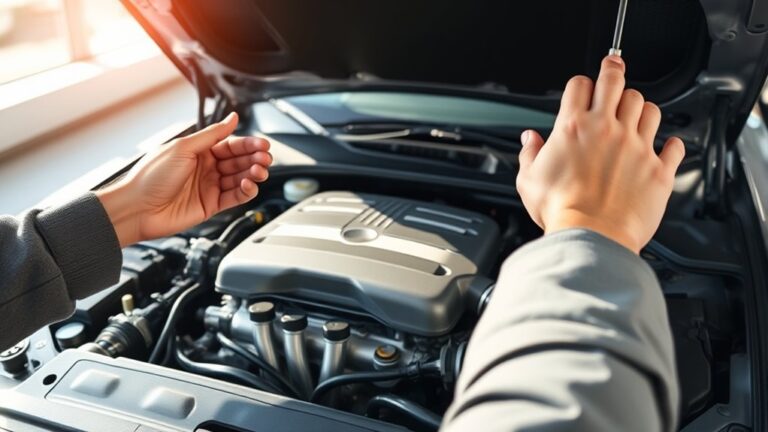
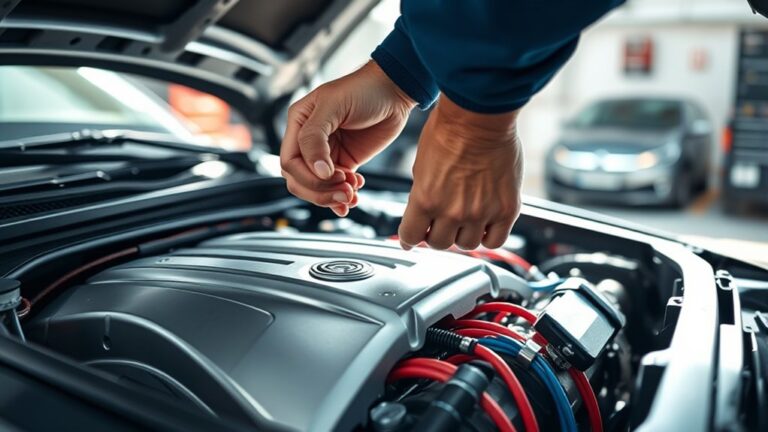
Before you start your car, take a moment to check under the hood and around the engine compartment for any signs of kittens. This quick step is crucial for both engine safety and the well-being of the kittens. Look for small movements, sounds, or visible fur near the engine or wheel wells. Kittens often seek warmth in hidden spots, especially during colder months.
As part of your regular car maintenance routine, make it a habit to visually inspect these areas before driving. Tap the hood lightly or honk the horn briefly to encourage any hiding kittens to move away. Avoid starting the engine if you suspect kittens are inside, as the moving parts can cause serious harm.
Essential Tools to Rescue Kittens From Your Car Engine
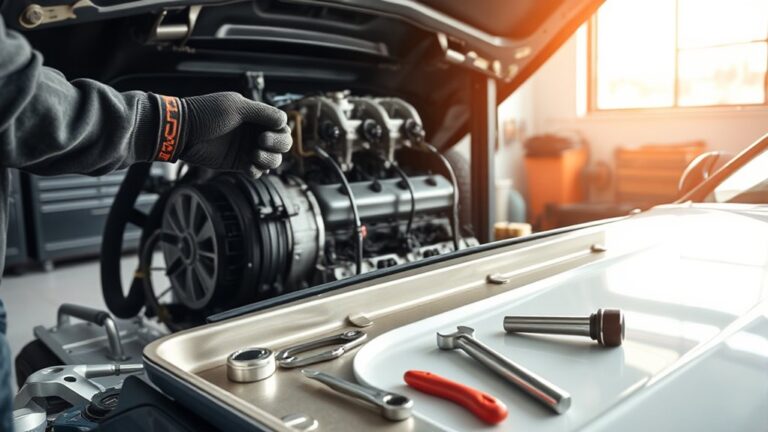
You’ll want to gear up with gloves and a long-sleeve shirt to protect yourself from scratches. It’s always better to be safe, right? Also, having a flashlight on hand can really help you see into those dark, tight spots. And don’t forget a pair of needle-nose pliers—they’re great for gently reaching in and coaxing the kittens out. These tools make the whole rescue process a lot safer and smoother, both for you and the little furballs.
Protective Gear Necessities
When approaching a car engine to rescue kittens, wearing protective gear is crucial to keep you safe from sharp edges, hot surfaces, and stray debris. Start by putting on sturdy gloves to protect your hands from cuts and burns.
Long sleeves and pants shield your skin from scratches and accidental contact with hot parts. Safety goggles are necessary to guard your eyes against dust or unexpected splashes of fluids.
Don’t forget closed-toe shoes to protect your feet if tools or parts fall. Taking these safety precautions not only keeps you safe but also allows you to focus on the rescue without hesitation.
Tools For Safe Extraction
Although the situation can be stressful, having the right tools on hand makes it much easier to safely extract kittens from your car engine. Start with a flashlight to clearly see inside the engine compartment, especially in low light.
Use long-nose pliers or a grabbing tool to gently reach and coax kittens without causing harm. To minimize engine noise, turn off the car and wait for it to cool down. This also guarantees your safety.
A soft towel or blanket can help you securely hold the kittens once they’re out. Regular vehicle maintenance helps prevent such surprises by checking for nesting spots.
Having these tools ready will streamline the rescue, reduce stress, and protect both you and the kittens during extraction.
How to Gently Coax Kittens Out of the Engine Bay
You’ll want to speak softly and stay calm so you don’t scare the kittens. Try offering some warm food near the engine bay—that usually encourages them to come out on their own. Just be sure to move slowly and avoid any sudden actions that might make them run back in.
Use Soft, Calm Voice
Softly speaking to kittens cradled in your car engine can ease their fear and encourage them to come out. When you use a calm, gentle voice, you create a sense of safety that helps kittens feel less threatened.
Avoid loud noises or sudden movements that might scare them deeper into the engine bay. This approach aligns with pet training principles, where patience and softness build trust.
As part of regular car maintenance, checking under the hood before starting the engine is crucial to prevent harm to hidden animals. By calmly coaxing kittens out, you not only protect their well-being but also maintain your vehicle’s safety.
Stay steady, speak softly, and give the kittens time to respond to your reassuring tone.
Offer Warm Food
Where can you find an effective way to encourage kittens to leave the engine bay? Offering warm food is a gentle method that taps into their natural instinct for kitten nutrition.
Place a small bowl of warm, soft food near the car, which will attract them without startling. This approach also supports your car maintenance efforts by reducing the risk of sudden kitten movements inside the engine.
Here’s a simple guide:
| Food Type | Temperature | Feeding Frequency |
|---|---|---|
| Wet kitten food | Warm (not hot) | Every 2-3 hours |
| Soft cooked chicken | Warm | Once daily |
| Kitten milk replacer | Warm | As needed |
Warm food tempts the kittens out safely, letting you check the engine without stress or harm.
Avoid Sudden Movements
Offering warm food helps lure kittens out safely, but once they’re near, it’s important to avoid sudden movements that might scare them back into the engine bay. Move slowly and calmly to keep the kittens comfortable and encourage them to come out on their own.
Quick gestures or loud noises can trigger their instinct to hide deeper, complicating your efforts and risking motor safety. Before starting any engine maintenance, verify all kittens are clear to prevent accidents.
If the kittens remain hesitant, stay patient and maintain a gentle tone. Remember, careful handling not only protects the kittens but also safeguards your vehicle during engine maintenance.
Creating a calm environment is key to coaxing them out without stress or harm.
How to Use Treats to Lure Kittens Out
How can you coax shy kittens out from under the hood without startling them? Understanding kitten behavior is key. They’re naturally cautious, especially around loud engine noise.
Start by turning off your car and stepping away to create a quiet environment. Then, use treats with a strong scent, like tuna or wet cat food, to lure them out. Place small piles of these treats near the engine but just outside their hiding spot.
Speak softly and avoid sudden movements to keep them calm. The enticing smell will gradually draw their curiosity, making them more willing to emerge. Be patient; kittens may take time to overcome fear.
Avoid shaking the car or banging on the hood, as this can amplify engine noise and frighten them further. Using treats taps into their natural instincts, helping you safely encourage them out without causing stress or harm.
Keeping Kittens and Your Car Safe During Rescue
Before you start, make sure you spot where the kittens are hiding so you don’t accidentally startle them. It’s important to be gentle and handle them securely. This way, you keep both the kittens and your car safe during the rescue. Taking these simple steps helps prevent any injuries or damage while you work.
Identifying Kitten Hiding Spots
Since kittens are small and curious, they can squeeze into tight, hard-to-see spots within your car engine. Look carefully around the battery, under the hood latch, near the radiator, and inside the wheel wells. These are common hiding places. Use a flashlight to spot shadows or movement.
Remember, a kitten’s safety depends on your gentle approach and awareness, especially since sudden engine use could harm them. While checking, keep in mind that poor car engine maintenance might attract stray animals searching for warmth.
If you find a kitten, guarantee it gets proper kitten nutrition soon after rescue, as stress and hunger can affect their health. Identifying these hiding spots quickly helps protect both your vehicle and the vulnerable kitten inside.
Safe Handling Techniques
Although rescuing a kitten from your car engine can be urgent, you’ll want to move slowly and carefully to avoid startling or injuring the animal. Prioritize both automotive safety and the kitten’s well-being during the rescue. Here’s how you can handle it safely:
- Turn off the engine and disconnect the battery to prevent accidental starts.
- Wear gloves to protect yourself and the kitten from scratches or bites.
- Use a soft cloth or towel to gently wrap the kitten, providing warmth and security.
- Place the kitten in a safe, quiet area away from the vehicle for observation.
Following these steps guarantees safe engine maintenance while protecting the kitten from harm during the rescue.
What to Do When Kittens Refuse to Come Out
If the kittens won’t come out despite your best efforts, don’t panic. Sometimes, they’re just scared and need gentle encouragement. Avoid forcing them, as this can cause injury or stress.
Instead, try using soft, safe toys to lure them out. Remember toy safety to prevent choking hazards. Also, make sure your car is off and cool for both your safety and theirs.
Here’s a quick guide to help:
| Action | Why It Helps |
|---|---|
| Use a soft toy | Provides comfort, encourages play |
| Check car maintenance | Prevents engine start, ensures safety |
| Speak calmly | Reduces kitten stress |
If they still refuse, leave a small opening and check frequently. With patience and care, you’ll get them out safely without risking harm or damaging your car.
How to Care for Kittens After Removing Them From the Engine
Once you’ve safely removed the kittens from the engine, your attention should turn to their immediate care. Ensuring they’re healthy and comfortable is essential before focusing back on your car maintenance. Follow these steps:
- Check for injuries: Gently examine each kitten for cuts or bruises caused by the engine’s heat or moving parts.
- Provide warmth: Kittens can get cold quickly after being in the engine. Use a soft blanket or heating pad set on low.
- Offer proper nutrition: Feed the kittens appropriate kitten nutrition, such as wet kitten food or formula if they’re very young.
- Create a safe space: Set up a quiet, secure area away from your car where they can rest without stress.
When to Call Animal Control or a Vet for Kitten Help
Knowing when to call animal control or a vet is essential to guarantee the kittens get the proper care they need. If you notice unusual cat behavior like excessive fear, aggression, or signs of injury after removing them from the engine, don’t hesitate to seek professional help.
Engine safety concerns also mean you shouldn’t try to handle injured or very young kittens alone, as they may be frightened or in shock.
Call a vet immediately if the kittens show signs of trauma, burns, or difficulty breathing. Animal control can assist if the kittens are feral, if you’re unsure how to safely remove them, or if you can’t care for them properly afterward.
Professionals have the tools and knowledge to handle these situations safely, protecting both you and the kittens. Remember, quick intervention helps ensure the kittens recover and stay safe from engine hazards.
How to Prevent Kittens From Returning to Your Car Engine
Although kittens may find car engines warm and inviting, you can take simple steps to discourage them from returning. Prioritizing engine safety and regular car maintenance will protect both your vehicle and the kittens. Here’s what you can do:
- Check under the hood before starting. Make it a habit to tap the hood or honk briefly to alert any hidden kittens.
- Create barriers. Use mesh or wire screens around the engine compartment to block access.
- Use deterrents. Place safe repellents like citrus peels or commercial animal repellents near the engine area.
- Provide alternative warmth. Set up a cozy shelter away from your car to attract the kittens elsewhere.
Frequently Asked Questions
Can Adult Cats Also Get Stuck in Car Engines?
Yes, adult cats can get stuck in car engines, especially in urban environments where wildlife interactions are common. You might not expect it, but cats seek warmth and shelter in engine compartments, regardless of age.
If you live in a city, you should always check under your hood before driving. This helps prevent harm to the cat and avoids potential damage to your vehicle. Staying vigilant protects both you and local wildlife.
What Are the Signs of Kittens Hiding in a Car Engine?
Think of your engine as a quiet forest suddenly alive with whispers and rustles. When you hear unusual engine noise, like faint scratching or mewing beneath the hood, that’s a clue.
Temperature changes, such as the engine running hotter or cooler than usual, also hint at tiny guests tucked inside. You’ll notice these subtle signs—odd sounds and shifting warmth—that signal kittens might be hiding in your car engine’s secret shelter.
Are Certain Car Models More Attractive to Kittens?
Yes, certain car models tend to be more attractive to kittens because of their engine noise and heat signatures. You’ll notice that quieter engines with steady heat output make a cozy spot for kittens seeking warmth and safety.
Older vehicles with larger engine compartments often provide more hiding spaces, while newer, louder models might deter them. So, pay attention to these factors if you want to keep kittens away from your car’s engine area.
Can Cold Weather Increase the Likelihood of Kittens in Engines?
When cold weather hits, kittens practically line up to sneak into your engine, craving that precious engine warmth like it’s a five-star spa. You can bet the chill outside makes your car’s cozy engine bay irresistible to them.
Is It Safe to Drive if You Suspect Kittens Inside the Engine?
You shouldn’t drive if you suspect kittens inside the engine. Engine noise might mask their cries, and moving parts can harm them. Radiator vents can also trap kittens, making it dangerous if you start the car.
Instead, check carefully under the hood, listen closely for any sounds, and gently encourage them out before driving. This keeps both you and the kittens safe from injury or damage.
Conclusion
Now that you know how to safely rescue kittens from your car engine, aren’t you ready to protect these little furballs and your vehicle? Checking your engine regularly, using gentle coaxing techniques, and knowing when to call for professional help can make all the difference.
With a little care and caution, you’ll keep kittens safe and prevent future surprises under your hood. Why not start making these simple checks part of your routine today to get kittens out of a car engine safely?