How to Fix a Car Engine in 3 Simple Steps
If you’ve ever faced a car engine that just won’t start or runs poorly, you’re not alone. Many people struggle with engine troubles and wish there was a simple way to fix things without a mechanic’s bill. Understanding the basics can save you time, money, and frustration.
To fix your car engine in three simple steps, start by checking your battery connections for corrosion, ensuring fuel levels are adequate, and inspecting spark plugs for damage.
Next, diagnose why the engine won’t start by identifying symptoms like no crank or clicking noises and testing ignition timing and coolant leaks.
Finally, fix or replace key parts such as spark plugs, belts, or the oil pump. Keep going to uncover detailed troubleshooting and maintenance tips for lasting engine health.
Key Takeaways
- Inspect battery terminals and test voltage to ensure proper electrical power supply.
- Check ignition timing and spark plugs to identify starting issues or misfires.
- Verify fuel level and inspect fuel pump and filter for blockages or damage.
- Examine coolant system for leaks or blockages to prevent overheating.
- Replace worn parts like spark plugs, oil filters, and belts to restore engine performance.
Check Your Battery, Fuel, and Spark First
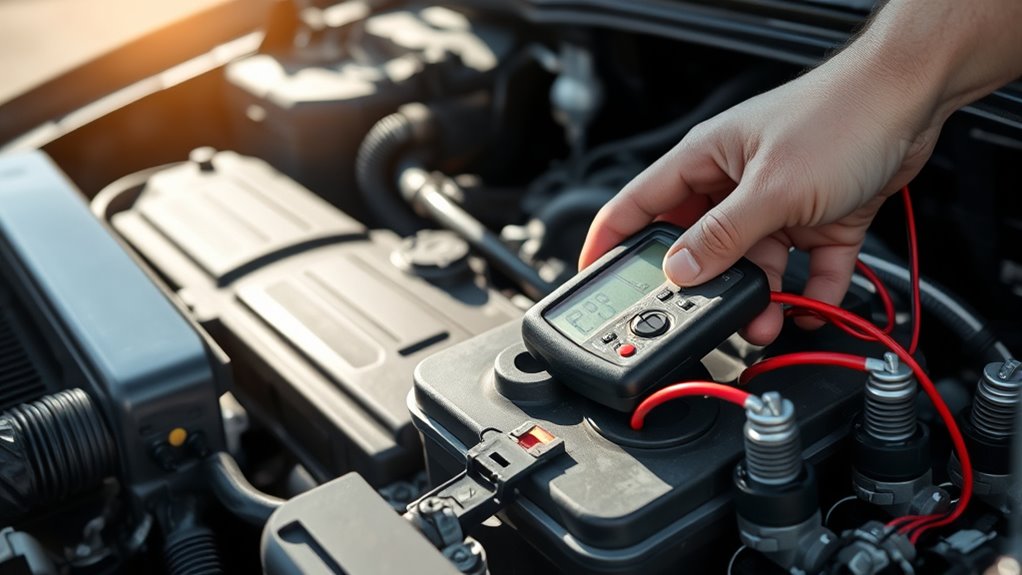
Before diving into complex repairs, make sure you check your battery, fuel, and spark first. Start with battery maintenance by inspecting the terminals for corrosion and ensuring the connections are tight. A weak or dead battery often causes engine troubles, so testing its voltage with a multimeter can save you time.
Check battery terminals for corrosion and tight connections before complex repairs to avoid engine troubles.
Next, assess the fuel system. Confirm you have enough fuel, and check the fuel pump and filter for blockages or damage. A clogged fuel filter can restrict flow, causing starting issues.
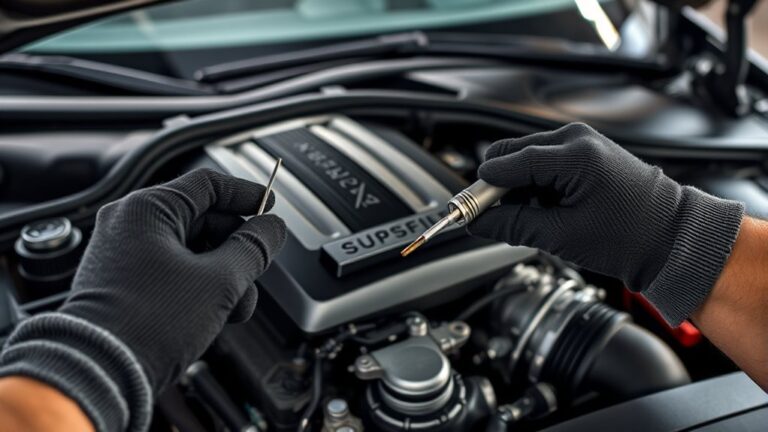
Finally, examine the spark plugs and ignition system. Faulty spark plugs or damaged wires mean your engine won’t ignite the fuel-air mixture properly. By focusing on these three basics: battery, fuel system, and spark, you can often solve engine problems without complicated diagnostics.
Taking these initial steps helps you identify simple fixes quickly, getting your car back on the road faster.
How to Diagnose Why Your Engine Won’t Start
Wondering why your engine won’t start? Begin by checking common issues like ignition timing and coolant leaks, which can prevent your engine from firing up. Ignition timing controls when the spark plug fires, and if it’s off, your engine won’t start properly.
Coolant leaks may not stop your engine immediately but can cause overheating and damage that lead to starting problems.
Use the table below to pinpoint likely causes:
| Symptom | Possible Cause |
|---|---|
| Engine cranks but won’t start | Ignition timing off |
| No crank, no start | Dead battery or starter |
| Engine overheats quickly | Coolant leaks |
| Clicking noise on start | Weak battery |
You’ll want to inspect ignition timing with a timing light and check for visible coolant leaks under the car or around the radiator. These steps help you identify why your engine won’t start before moving on to fixing or replacing parts.
Fix or Replace Key Engine Parts
If you’ve identified the problem with your engine, the next step is to decide whether to fix or replace the faulty parts. Start by inspecting critical components like the engine oil system and the cooling system.
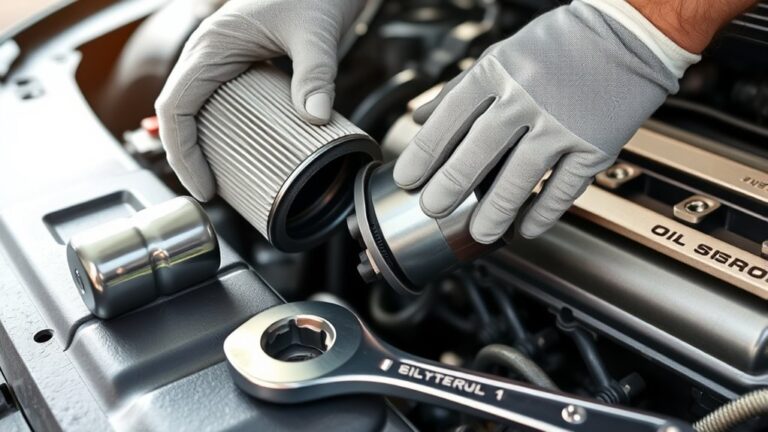
If the engine oil is dirty or leaking, replacing the oil filter and changing the oil might solve the issue. However, if the oil pump is damaged, you’ll need to replace it entirely.
For the cooling system, check hoses, the radiator, and the thermostat for leaks or blockages. Small leaks can often be fixed with sealants, but major damage requires part replacement.
Always weigh the cost and effort of repairs against replacement. For worn-out parts like spark plugs or belts, replacement is usually the best option.
Taking prompt action ensures your engine runs smoothly and prevents bigger problems. Remember, maintaining proper engine oil levels and a healthy cooling system is key to engine longevity.
Frequently Asked Questions
How Often Should I Change My Engine Oil?
You should change your engine oil every 3,000 to 7,500 miles, depending on your engine oil types and driving habits. Synthetic oils last longer, so they have longer oil change intervals, while conventional oils need more frequent changes.
Always check your owner’s manual for specific recommendations. Regular oil changes keep your engine running smoothly and prevent damage, so don’t skip them even if you’re using high-quality synthetic oils.
What Tools Do I Need for Basic Engine Repairs?
For basic engine repairs, you’ll need a solid tools overview to get started. Grab a basic repair kit that includes wrenches, screwdrivers, pliers, and a socket set.
Don’t forget a torque wrench for precision and a multimeter for electrical checks. Having a flashlight and gloves will also help.
These tools cover most simple fixes, making your repair process smoother and more efficient.
Can Bad Weather Affect My Engine’s Performance?
Bad weather can be like a sneaky thief, quietly stealing your engine’s power. Yes, weather impact plays a big role in engine performance.
Cold temperatures can thicken fluids, making your engine work harder, while extreme heat can cause overheating. Rain and humidity can affect spark plugs and electrical components, too.
To keep your engine running smoothly, you’ll want to monitor weather conditions and adjust maintenance accordingly.
How Do I Know if My Engine Needs a Tune-Up?
You’ll know your engine needs a tune-up if you notice decreased fuel efficiency, rough idling, or engine misfires. Running an engine diagnostic can pinpoint specific issues like faulty sensors or spark plugs.
If your check engine light comes on, don’t ignore it. That’s a clear sign your engine needs attention. Regular tune-ups keep your car running smoothly, improve fuel efficiency, and prevent costly repairs down the road.
Is It Safe to Drive With the Check Engine Light On?
You can drive with the check engine light on, but it’s not always safe. For example, a driver ignored the engine warning, which led to severe engine damage.
If the light flashes, it signals a serious problem, so you should stop immediately. If it’s steady, you can drive cautiously to a mechanic, but don’t delay.
Ignoring the check engine light risks costly repairs or breakdowns, so address the issue promptly to stay safe.
Conclusion
Fixing your car engine doesn’t have to be complicated. By checking your battery, fuel, and spark first, you can often spot the problem quickly.
Did you know that 70% of engine issues start with simple problems like a dead battery or bad spark plugs? Diagnosing and replacing key parts can save you time and money.
With these easy steps, you’ll get your engine running smoothly again in no time! Fixing a car engine can be straightforward when you know where to start.