Electric Vehicle Maintenance and Hybrid Vehicle Maintenance: The Best Guide
Introduction
Electric Vehicle Maintenance and Hybrid Vehicle Maintenance: As electric and hybrid vehicles continue to grow in popularity, many drivers making the switch from traditional gasoline cars find themselves with a lot of questions about upkeep. Electric vehicle maintenance and hybrid vehicle maintenance differ significantly from what most drivers are used to, with fewer moving parts in some areas, but new components and systems that require their own specific attention.
This guide covers everything you need to know about keeping your EV or hybrid running reliably, from the different maintenance categories to expect, to comparisons between EV and hybrid upkeep, practical tips, and common mistakes to avoid.
Why Electric Vehicle Maintenance and Hybrid Vehicle Maintenance Matter
Both electric vehicle maintenance and hybrid vehicle maintenance play a direct role in your car’s long-term reliability, safety, and resale value. While EVs and hybrids generally require less frequent maintenance than traditional gas-powered vehicles — thanks to fewer moving parts in the drivetrain and, for EVs, no traditional engine oil or exhaust system — the maintenance that is required often involves more specialized components, such as high-voltage battery systems, regenerative braking, and complex power electronics.
Neglecting proper maintenance on these vehicles doesn’t just risk a breakdown; it can also lead to reduced battery lifespan, decreased driving range over time, and costly repairs to specialized components that are far more expensive to replace than traditional engine parts. Understanding what your specific vehicle needs, and how it differs from conventional maintenance expectations, is essential for getting the most out of your investment.
Different Types of Maintenance for Electric and Hybrid Vehicles
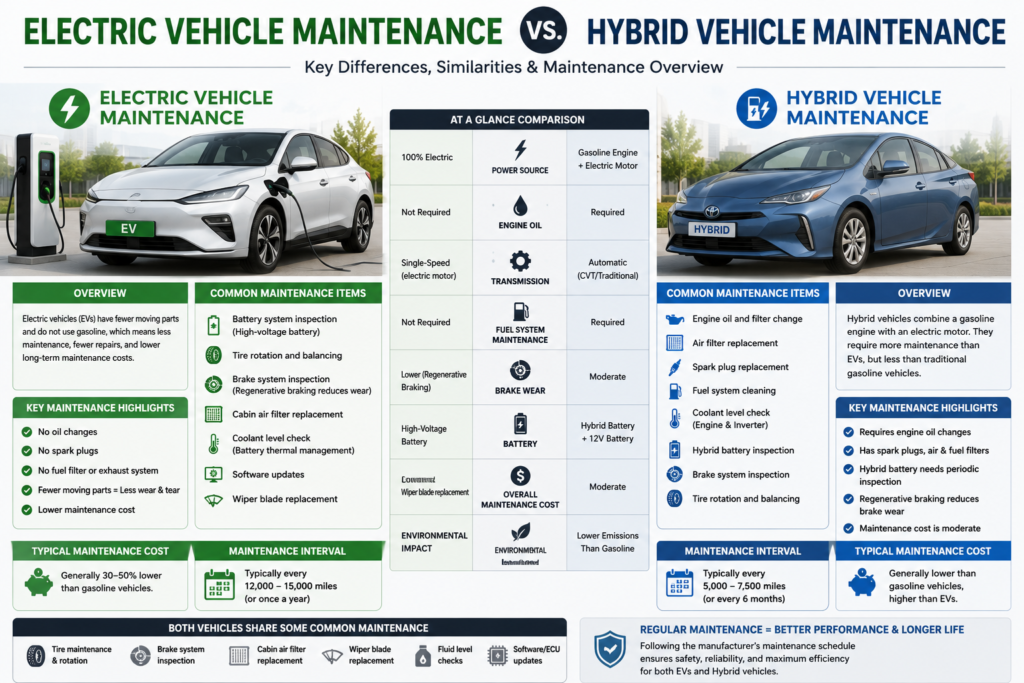
Both electric vehicle maintenance and hybrid vehicle maintenance encompass a range of distinct categories, each with its own schedule and considerations.
- High-Voltage Battery Maintenance: Monitoring battery health, state of charge habits, and thermal management systems that keep the battery operating within an optimal temperature range.
- Tire Rotation and Alignment: EVs and hybrids, often heavier due to battery weight, can experience faster or uneven tire wear, making regular rotation and alignment checks especially important.
- Brake System Maintenance: Thanks to regenerative braking, traditional brake pads often last significantly longer, but they still require periodic inspection to ensure proper function.
- Coolant System Service: Many EVs and hybrids use liquid cooling systems for the battery and power electronics, requiring periodic coolant checks and flushes separate from any engine cooling system in hybrids.
- Cabin Air Filter Replacement: Just like conventional vehicles, EVs and hybrids need regular cabin air filter changes to maintain air quality and HVAC performance.
- 12-Volt Auxiliary Battery Maintenance: Separate from the main high-voltage battery, a smaller 12-volt battery powers various accessories and electronics, requiring its own periodic inspection and eventual replacement.
- Software and Firmware Updates: Many EVs and hybrids rely on over-the-air or dealership-installed software updates to optimize battery performance, charging behavior, and vehicle systems.
- Charging Port and Cable Inspection: For EVs and plug-in hybrids, regularly inspecting the charging port and cable for damage or debris helps ensure safe, efficient charging.
- Internal Combustion Engine Maintenance (Hybrids Only): Traditional hybrids still require standard engine maintenance, including oil changes, spark plug replacement, and air filter service for the gasoline engine component.
- Transmission Fluid Service (Certain Hybrids): Some hybrid systems use a specialized transmission that requires periodic fluid checks and changes, depending on the specific hybrid drivetrain design.
- Suspension Component Checks: Given the additional weight of battery packs in many EVs and hybrids, suspension components can experience additional wear, warranting regular inspection.
- Wiper Blades and Fluid: A basic but often overlooked maintenance item applicable to any vehicle, including EVs and hybrids.
- Tire Pressure Monitoring: Proper tire pressure is especially important for EVs and hybrids, since it directly affects driving range and efficiency in addition to standard safety considerations.
Electric Vehicle Maintenance Comparison
Not all electric vehicle maintenance needs are created equal, and understanding how they compare helps prioritize your attention and budget.
Battery Health Monitoring vs. Physical Component Repair: Monitoring battery health through regular software diagnostics is a low-cost, ongoing process, while physical repairs to battery components (if ever needed) tend to be significantly more expensive and complex.
Tire Maintenance vs. Brake Maintenance: Because regenerative braking reduces wear on traditional brake components, tire maintenance often becomes a more frequent and impactful maintenance category for EV owners compared to brake-related service.
Software Updates vs. Physical Inspections: Software updates are often handled remotely or during routine service visits at minimal direct cost, while physical inspections of charging equipment, coolant systems, and suspension components require hands-on professional attention.
Scheduled Maintenance vs. Reactive Repair: Sticking to scheduled electric vehicle maintenance intervals, even though they’re less frequent than gas vehicles, helps avoid more costly reactive repairs down the line, particularly for battery thermal management and cooling systems.
Hybrid Vehicle Maintenance and Electric Vehicle Maintenance Explained
While electric vehicle maintenance and hybrid vehicle maintenance share several overlapping categories, hybrids introduce additional complexity due to their dual powertrain systems.
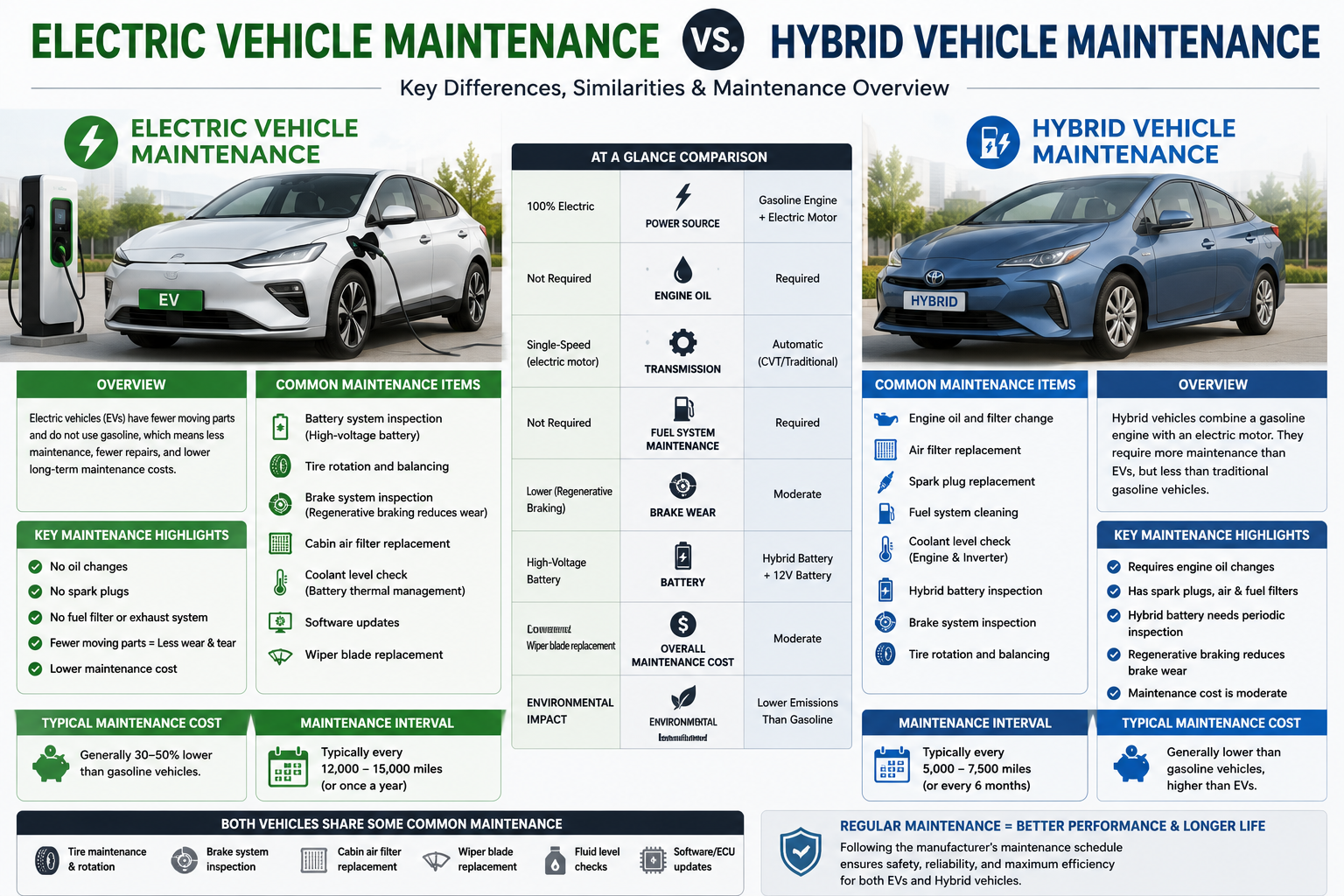
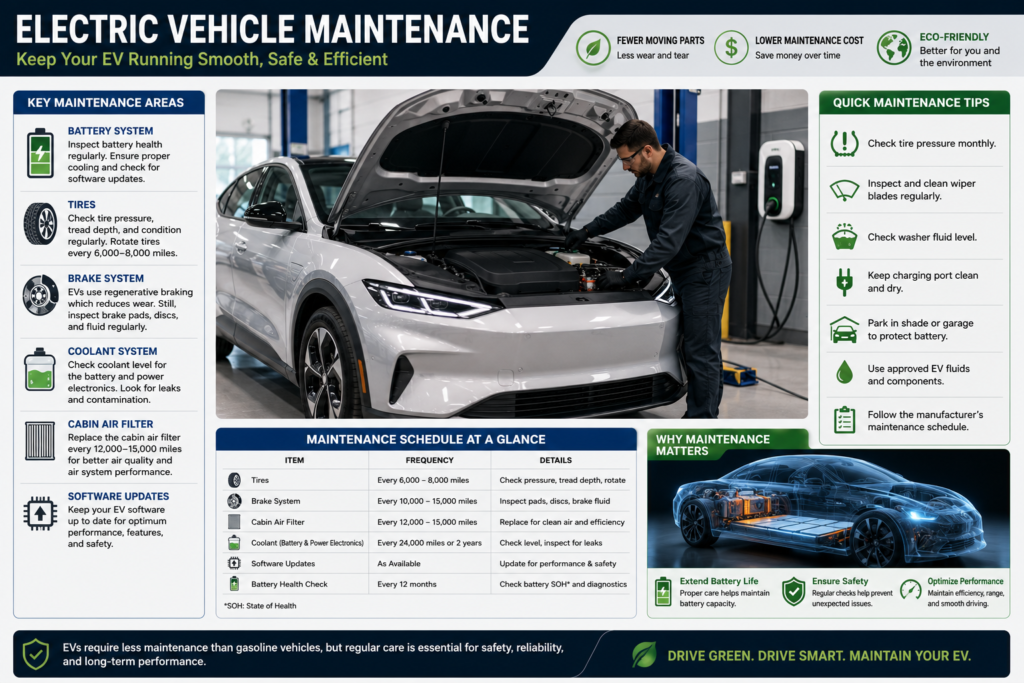
Electric Vehicle Maintenance: Since EVs have no traditional internal combustion engine, maintenance focuses primarily on the high-voltage battery system, electric motor components, cooling systems for the battery and power electronics, tires, brakes, and standard items like cabin filters and wiper blades. The absence of oil changes, spark plugs, and exhaust system maintenance significantly simplifies the overall maintenance schedule compared to gas-powered vehicles.
Hybrid Vehicle Maintenance: Hybrids require attention to both electric and traditional combustion engine components. This means owners still need to follow a conventional maintenance schedule for oil changes, spark plugs, and engine air filters, in addition to the electric-specific maintenance items shared with full EVs, such as high-voltage battery monitoring and regenerative braking system checks.
This dual-system approach means hybrid vehicle maintenance can, in some ways, be more involved than pure EV maintenance, since it essentially combines elements of both traditional and electric vehicle upkeep.
Plug-In Hybrids: These vehicles add an additional layer of consideration, requiring the charging equipment maintenance associated with EVs alongside the full combustion engine maintenance schedule of traditional hybrids.
Pros & Cons of Each Type
Electric Vehicle Maintenance
Pros: Generally less frequent maintenance overall, no oil changes or traditional engine-related service, and reduced brake wear thanks to regenerative braking.
Cons: When battery or power electronics issues do arise, repairs tend to be more specialized and costly, and not all repair shops are equipped to handle high-voltage systems.
Hybrid Vehicle Maintenance
Pros: Familiar combustion engine maintenance schedule that most drivers and mechanics are already comfortable with, combined with some of the reduced wear benefits of electric components like regenerative braking.
Cons: Requires attention to both electric and combustion systems, potentially leading to a more complex overall maintenance schedule compared to a pure EV.
Plug-In Hybrid Maintenance
Pros: Offers flexibility of electric-only driving for shorter trips while retaining the range and refueling convenience of a combustion engine for longer trips.
Cons: Combines the maintenance requirements of both full EVs and traditional hybrids, potentially resulting in the most comprehensive maintenance checklist of the three categories.
Each Type Repair Tips
For Electric Vehicles: Avoid regularly charging to 100% or letting the battery drop to 0%, since staying within a moderate charge range (often recommended between 20% and 80%) can help preserve long-term battery health. Have the battery cooling system inspected periodically, particularly before extreme weather seasons, to ensure it can properly regulate temperature under stress.
For Hybrid Vehicles: Stay on top of both the electric and combustion engine maintenance schedules separately, since neglecting one system doesn’t offset the need to maintain the other. Pay particular attention to manufacturer-recommended intervals for the hybrid transmission fluid, if applicable to your specific model.
For Plug-In Hybrids: Regularly inspect charging cables and the charging port for wear or damage, especially if you charge frequently, and maintain the combustion engine according to standard intervals even if you primarily drive in electric mode for daily use.
For All EV and Hybrid Owners: Keep an eye on tire wear and rotate tires regularly, given the added weight of battery components in most of these vehicles, and don’t neglect standard items like cabin air filters and wiper blades simply because the vehicle feels “low maintenance” overall.
Cleaning & Maintenance
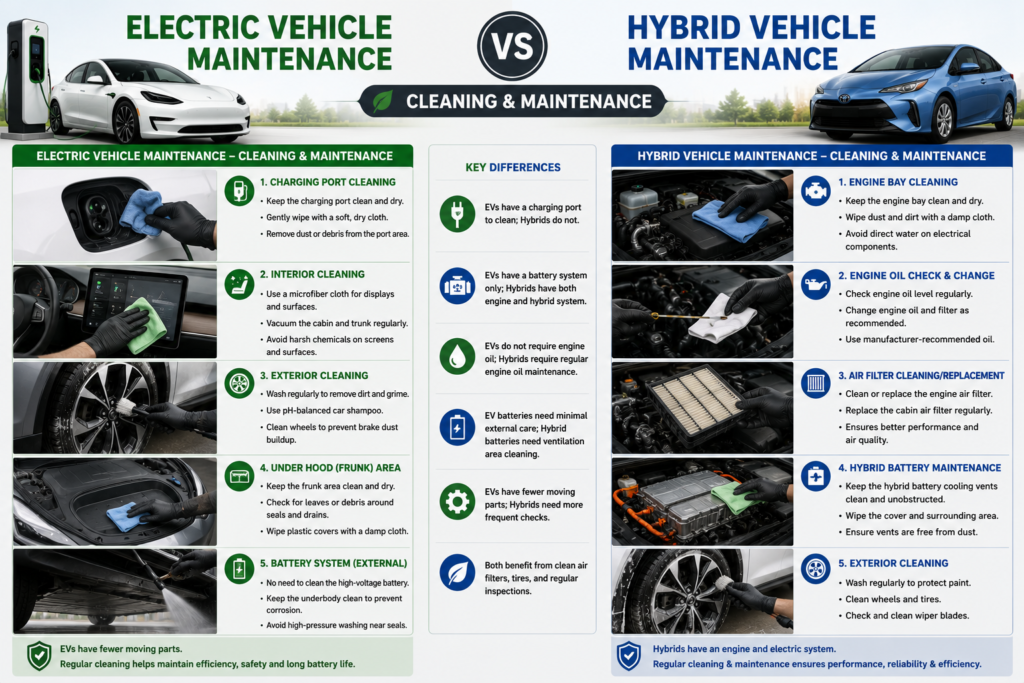
Beyond mechanical upkeep, regular cleaning and light maintenance help preserve both the performance and appearance of electric and hybrid vehicles. Keep the charging port clean and free of debris to ensure a secure, safe connection every time you charge. Clean the exterior regularly, paying attention to any exposed battery vents or cooling intakes to prevent dust and debris buildup that could affect thermal management.
For the cabin, regularly vacuum and wipe down interior surfaces, and replace the cabin air filter according to the manufacturer’s recommended schedule to maintain HVAC efficiency and air quality. Periodically check and top off standard fluids like windshield washer fluid, and for hybrids, monitor engine oil levels and coolant according to the same standards as a conventional vehicle.
Common Mistakes to Avoid
Avoid assuming an EV requires no maintenance at all simply because it lacks a traditional engine, since tires, brakes, cooling systems, and software all still require regular attention. Don’t ignore manufacturer-recommended software updates, since these often include important improvements to battery management and overall vehicle performance. Avoid neglecting the combustion engine maintenance schedule on a hybrid simply because the vehicle also runs on electric power, since skipping oil changes or spark plug replacement can still lead to engine damage over time. Don’t let the high-voltage battery consistently sit at very high or very low charge levels for extended periods, since this can accelerate long-term battery degradation.
Finally, avoid taking your EV or hybrid to a shop unfamiliar with high-voltage systems for anything beyond basic maintenance, since improper handling of these components can be both ineffective and unsafe.
FAQs
1. Do electric vehicles need oil changes? No, EVs do not use traditional engine oil since they lack an internal combustion engine.
2. How often should I service my hybrid’s combustion engine? Follow the manufacturer’s standard maintenance schedule, similar to a conventional gas vehicle, typically including oil changes every 5,000 to 10,000 miles depending on the model.
3. Does regenerative braking mean I never need to replace brake pads? No, brake pads still wear over time, though typically at a much slower rate than in traditional vehicles due to reduced reliance on friction braking.
4. How long do EV batteries typically last? Most EV batteries are designed to last 8 to 15 years or more, though actual lifespan varies based on usage habits, charging patterns, and climate.
5. Can I charge my EV to 100% every day? While occasional full charges are fine, consistently charging to 100% and depleting to very low levels can accelerate long-term battery degradation compared to maintaining a moderate charge range.
6. Do hybrids need special engine oil? Many hybrids require specific oil formulations recommended by the manufacturer, so it’s important to check your owner’s manual rather than assuming standard oil is appropriate.
7. Is electric vehicle maintenance cheaper than gas vehicle maintenance? Generally yes, due to fewer moving parts and reduced brake wear, though specialized repairs when needed can be more costly than traditional vehicle repairs.
8. Do plug-in hybrids need more maintenance than regular hybrids? Yes, plug-in hybrids combine the maintenance needs of both a standard hybrid combustion engine and the electric charging components associated with full EVs.
9. How often should I rotate tires on an EV? Many manufacturers recommend more frequent tire rotation for EVs, often every 5,000 to 7,500 miles, due to the added weight of battery components.
10. Can any mechanic work on an electric vehicle? Not all shops are equipped or certified to handle high-voltage components safely, so it’s important to choose a technician experienced specifically with EV systems for anything beyond basic maintenance.
11. Do EVs need coolant? Yes, most EVs use a liquid cooling system for the battery and power electronics, which requires periodic inspection and occasional fluid service.
12. What is the 12-volt battery in an EV used for? It powers various accessories and electronic systems separately from the main high-voltage battery, and it requires its own periodic maintenance and eventual replacement.
13. How often do hybrid vehicles need transmission fluid changes? This varies significantly by model, so it’s best to consult your owner’s manual, since some hybrid transmissions have different fluid requirements than conventional automatic transmissions.
14. Does cold weather affect EV and hybrid maintenance needs? Yes, cold weather can affect battery efficiency and range, making proper battery thermal management system maintenance particularly important in colder climates.
15. Are software updates really necessary for vehicle maintenance? Yes, software updates often include important improvements to battery management, charging efficiency, and overall vehicle performance, making them a meaningful part of ongoing maintenance.
Conclusion
Electric vehicle maintenance and hybrid vehicle maintenance both offer a different, often simplified experience compared to traditional gas-powered vehicles, but they come with their own specific considerations that shouldn’t be overlooked. Whether you’re managing the high-voltage battery health of a full EV, balancing the dual maintenance needs of a traditional hybrid, or navigating the combined requirements of a plug-in hybrid, staying informed and proactive is the key to long-term reliability and performance. By understanding the specific maintenance categories relevant to your vehicle and following manufacturer-recommended schedules, you can enjoy the benefits of electric and hybrid technology while avoiding unnecessary repairs and maximizing the lifespan of your vehicle’s most valuable components.