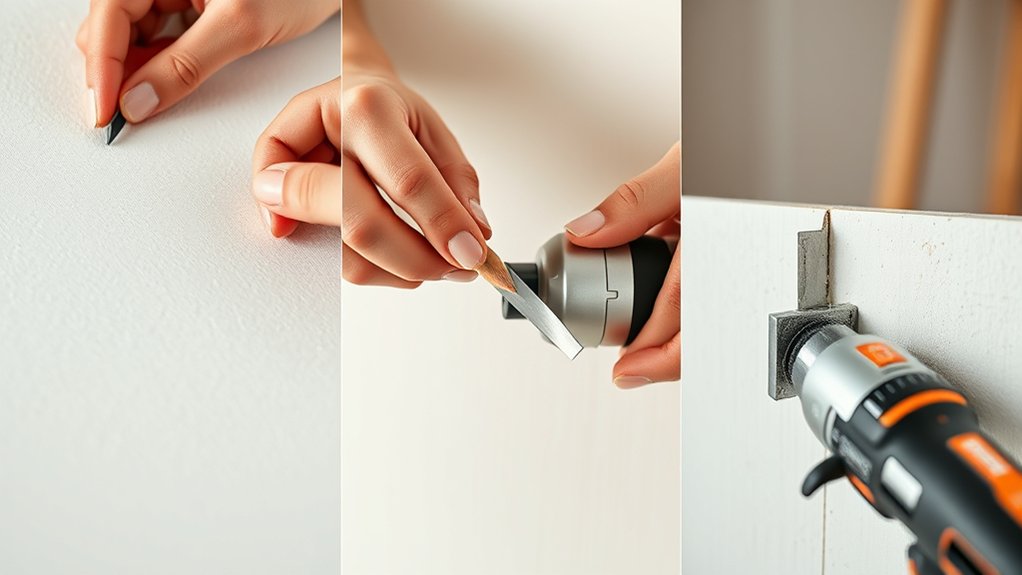
3 Steps to Using an Oscillating Tool for Sheetrock Cuts
Cutting Sheetrock cleanly with an oscillating tool can be frustrating, especially when torn paper, uneven edges, and hidden wiring get in the way. You’re not alone—many DIYers struggle to make precise cuts without creating extra repair work.
This roundup highlights tools and tips to help you make cleaner, safer Sheetrock cuts. Choose a coarse-tooth drywall blade, check that it’s sharp and secure, and inspect the wall for wires, pipes, ducts, and framing.
Mark your cut clearly, wear eye and dust protection, then guide the oscillating tool steadily from a corner or pilot opening without forcing it.
Finally, inspect the edge, trim torn paper with a utility knife, and smooth rough spots with a sanding sponge.
Continue for additional tips on making cleaner, safer Sheetrock cuts.
Key Takeaways
- Inspect and securely install a coarse-tooth drywall blade; replace it if dull, bent, or damaged.
- Check for hidden wiring, plumbing, ductwork, and framing before marking the Sheetrock cut line.
- Wear eye, hearing, and dust protection, then grip the oscillating tool firmly with both hands.
- Start at a corner or pilot opening, let the blade reach full speed, and guide it steadily along the line.
- Trim torn paper, sand uneven edges, vacuum dust, and inspect the opening for a proper fit.
Choose a Drywall Blade and Check the Cut Area

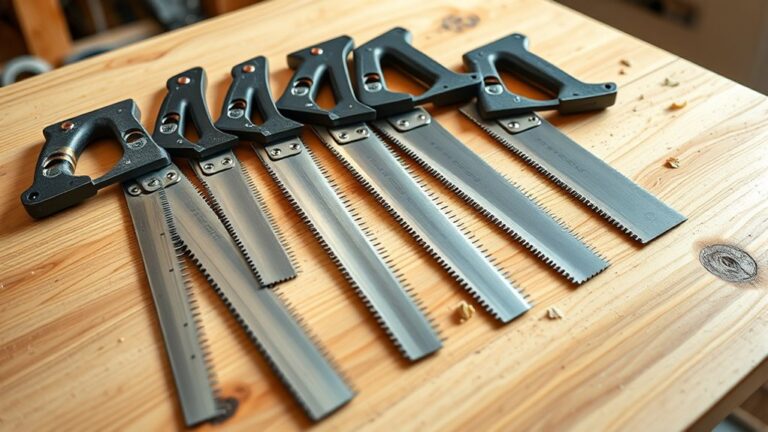
Choose a drywall blade designed for oscillating tools, preferably one with coarse teeth that can cut through gypsum board without excessive drag. Inspect its teeth, mounting interface, and overall condition before installation.
A dull, bent, or damaged blade can wander, overheat, and increase dust, so replace it rather than forcing a poor cut.
For drywall safety, examine the work area before you power the tool. Look for electrical cables, plumbing, ductwork, fasteners, and framing that could interfere with your planned opening.
Turn off nearby circuits when possible, and use a stud finder or inspection opening to improve your understanding of hidden components. Keep the area well lit and clear of loose items.
Wear eye protection, hearing protection, and a suitable dust mask. Check that the oscillating tool’s battery or cord, trigger, guard, and attachment clamp work properly.
Oscillating tool maintenance matters, so clean dust from the vents and tighten the blade securely. Keep your hands away from the future opening and maintain a stable stance while preparing.
Mark and Cut With an Oscillating Tool
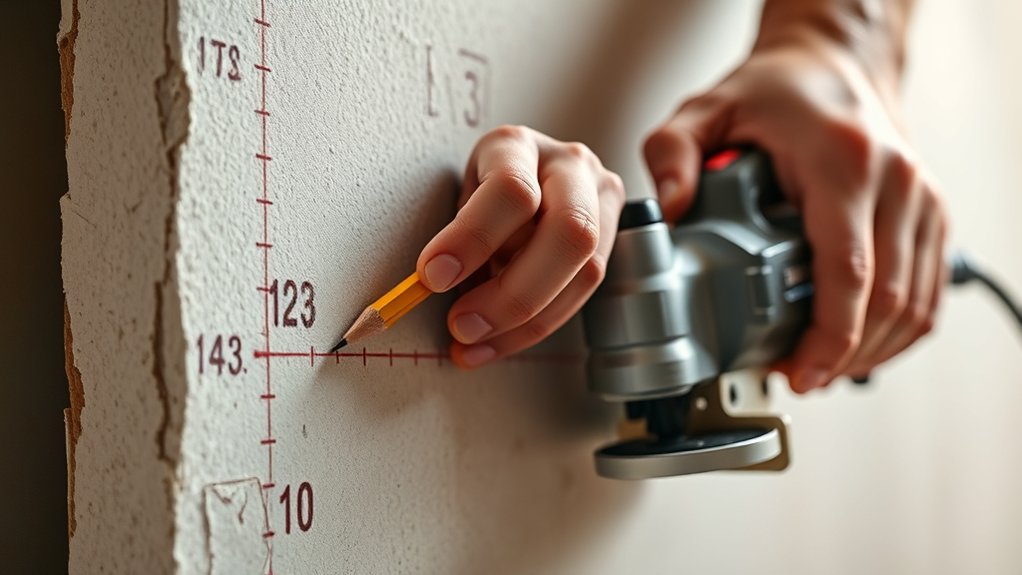
With the blade secured and the area checked, transfer your cut lines to the Sheetrock and confirm their placement before starting. Put on eye protection and a dust mask as part of your Drywall safety routine.
Grip the oscillating tool with both hands, set the blade just inside a marked line, and start at a corner or pilot opening. Let the blade reach full speed before guiding it steadily along the mark.
Don’t force the tool. Allow its teeth to cut while you keep the base controlled and the cord clear. Pause at corners, reposition your hands, and avoid hidden wiring or plumbing.
| Action | Technique | Safety check |
|---|---|---|
| Mark | Use a straightedge | Verify measurements |
| Start | Enter at a corner | Keep hands clear |
| Guide | Maintain steady speed | Watch the cord |
| Pause | Reposition safely | Check tool heat |
Follow Oscillating tool maintenance guidance by removing dust after cutting and checking the blade before storage.
Inspect and Smooth the Cut Edges
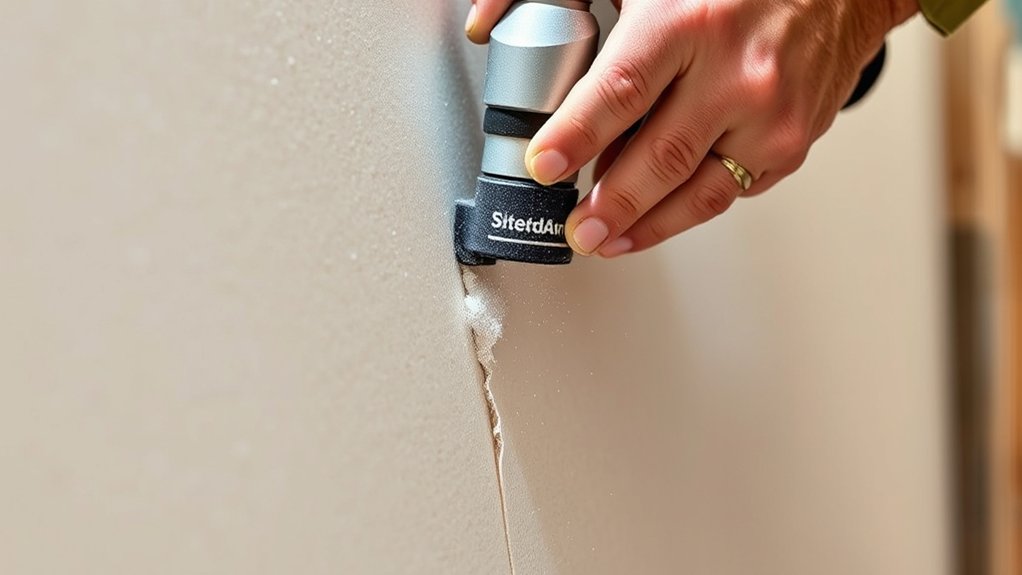
After the cutout is complete, inspect the edges for uneven sections, loose paper, or jagged gypsum. Hold a utility knife at a slight angle, and trim torn paper or protruding drywall carefully.
Don’t force the blade, because you could widen the opening or crumble the gypsum core.
For edge finishing, run a fine-grit sanding sponge around the perimeter. Use light, even strokes to remove ridges without rounding the edge.
If you find a deep gouge or soft spot, brush away dust and apply a thin layer of joint compound. Let it dry, then sand it flush.
Check the opening with a straightedge or the replacement material to confirm a snug fit. Vacuum dust from the cut and surrounding wall before you continue.
This surface preparation helps joint compound, tape, or adhesive bond properly. Wear eye protection and a dust mask while trimming and sanding.
Avoid pressing hard enough to damage intact drywall paper.
Frequently Asked Questions
Can an Oscillating Tool Cut Through Drywall Containing Electrical Wiring or Plumbing?
No, you shouldn’t cut blindly through drywall containing electrical wiring or plumbing. An oscillating tool can slice wires, puncture pipes, cause shocks, flooding, or start fires.
Before cutting, shut off power and water, locate hidden lines with reliable detectors, and confirm their paths from both sides whenever possible. Electrical hazards demand caution, while proper Tool blade selection helps control cutting depth.
If you can’t verify clearance, stop and contact a qualified professional before proceeding.
What Safety Gear Should I Wear While Cutting Sheetrock With an Oscillating Tool?
Wear protective eyewear to shield your eyes from drywall dust and flying debris. Use a respirator mask rated for fine particles, especially in poorly ventilated areas.
Put on hearing protection because oscillating tools can produce damaging noise. Wear snug work gloves for grip, but keep them clear of the blade.
Choose long sleeves, sturdy pants, and closed-toe, nonslip shoes. Keep loose clothing, jewelry, and hair secured while you work.
How Do I Control Dust When Making Multiple Drywall Cuts Indoors?
Control dust by sealing the room, closing doors, and covering furniture and floors with plastic. Use a shop vacuum with a HEPA filter beside your oscillating tool, and choose a dust-extracting attachment if available.
Make clean, controlled cuts to reduce debris. Apply dust containment methods, including taped plastic barriers and a damp cleanup afterward.
Follow smart ventilation strategies: exhaust air outdoors, but avoid blowing dust through the home. Wear your respirator throughout.
Can I Use an Oscillating Tool to Cut Through Moisture-Resistant or Fire-Rated Drywall?
Yes, you can use an oscillating tool to cut moisture-resistant or fire-rated drywall, but choose the right blade and work carefully. Check the panel’s Drywall thickness first, then install a carbide-grit or drywall blade suited to the material.
Mark your opening clearly to improve Cutting precision, and cut slowly to avoid tearing the facing. Wear eye protection and a respirator, especially with fire-rated panels, and don’t cut through hidden wiring or plumbing.
How Should I Maintain and Store My Oscillating Tool After Cutting Sheetrock?
After cutting sheetrock, treat your oscillating tool like a trusted workhorse: clean it before dust hardens. Unplug or remove its battery, then brush and vacuum drywall powder from vents, switches, and the tool head.
Wipe surfaces with a dry cloth, inspect the cord or battery, and replace worn blades. These Tool maintenance habits prevent buildup.
For smart Storage solutions, remove attachments, protect the blade, and store everything in a dry, dust-free case.
Conclusion
With the right blade and a clear cutting path, you can turn an oscillating tool into a steady guide through sheetrock. Mark your line, follow it patiently, and let the tool do the work instead of forcing it.
When you inspect and smooth the edges, you’re not just finishing a hole. You’re opening a clean doorway for the next stage of your project. A careful cut is the foundation for successful sheetrock cuts and helps your plans take shape.