Engine Oil Leak Repair, Cost, and Engine Oil Pan Repair: The Complete Guide
Introduction
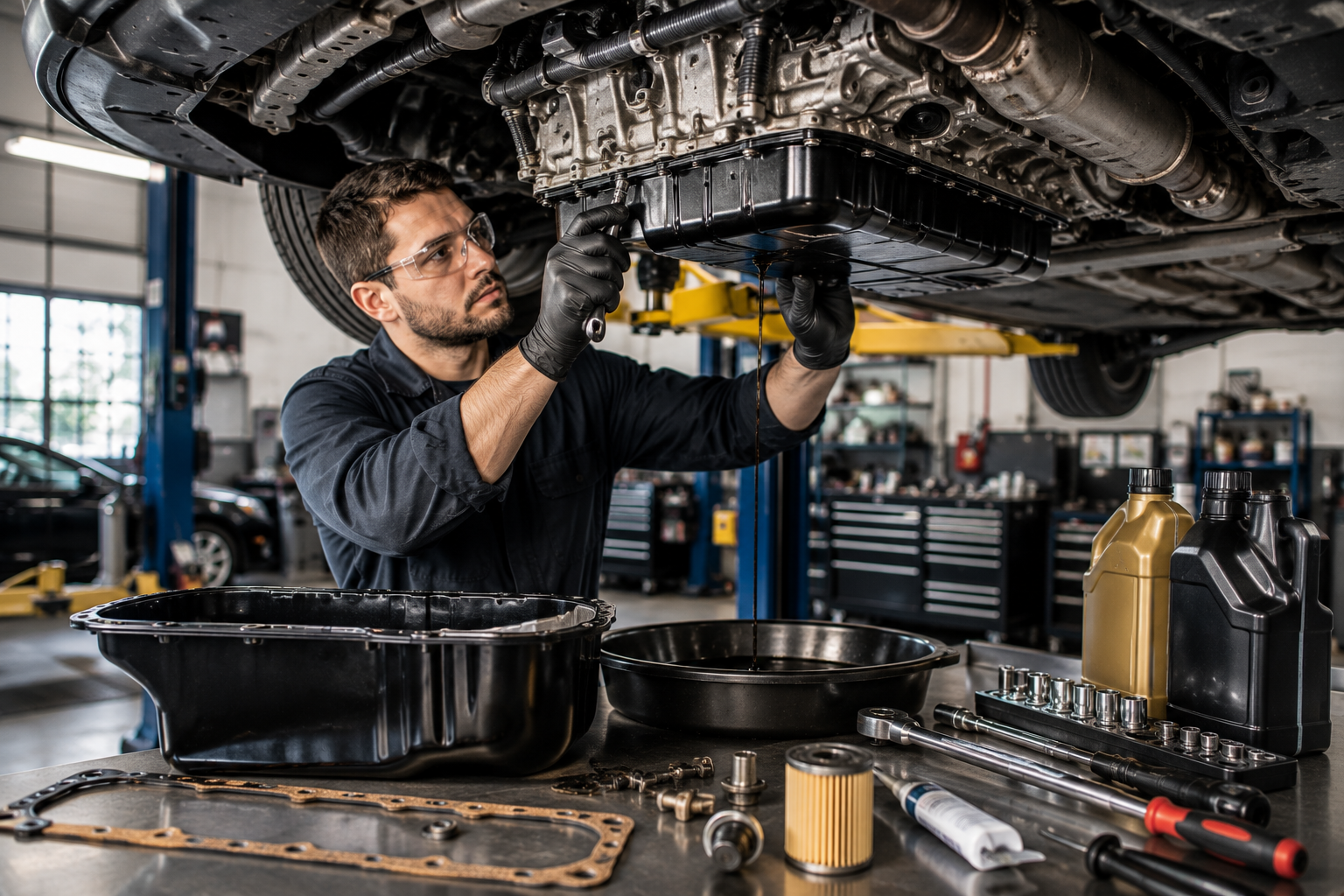
Engine Oil Leak Repair : That dark spot appearing on your driveway or garage floor is one of the most common signs that something in your vehicle needs attention. Engine oil leak repair is one of the most frequently needed automotive services, and understanding what causes these leaks, how much engine oil leak repair cost typically runs, and when a job like engine oil pan repair becomes necessary can save you significant money and prevent more serious engine damage down the road. This guide covers everything you need to know, from identifying the specific source of your leak to comparing repair approaches, understanding realistic pricing, and avoiding the common mistakes that turn a manageable leak into a costly engine problem.
Why Engine Oil Leak Repair Matters
Engine oil serves a critical function, lubricating moving parts, reducing friction and heat, and helping carry away contaminants that would otherwise accumulate within the engine. When a leak develops, you’re not just dealing with an unsightly stain on your garage floor — you’re gradually losing the very fluid your engine depends on to operate safely and efficiently. Left unaddressed, a slow leak can eventually lead to critically low oil levels, resulting in increased friction, overheating, and potentially catastrophic engine damage that costs far more to repair than the original leak would have.
Beyond protecting your engine, addressing oil leaks promptly also protects your wallet in more immediate ways. Oil leaking onto hot engine components can create a fire risk, while oil dripping onto the ground creates an environmental hazard and, in many areas, a code violation if left unaddressed on a driveway or in a parking area. Understanding engine oil leak repair, along with realistic engine oil leak repair cost expectations, helps you make informed decisions rather than letting a small problem grow into a major one.
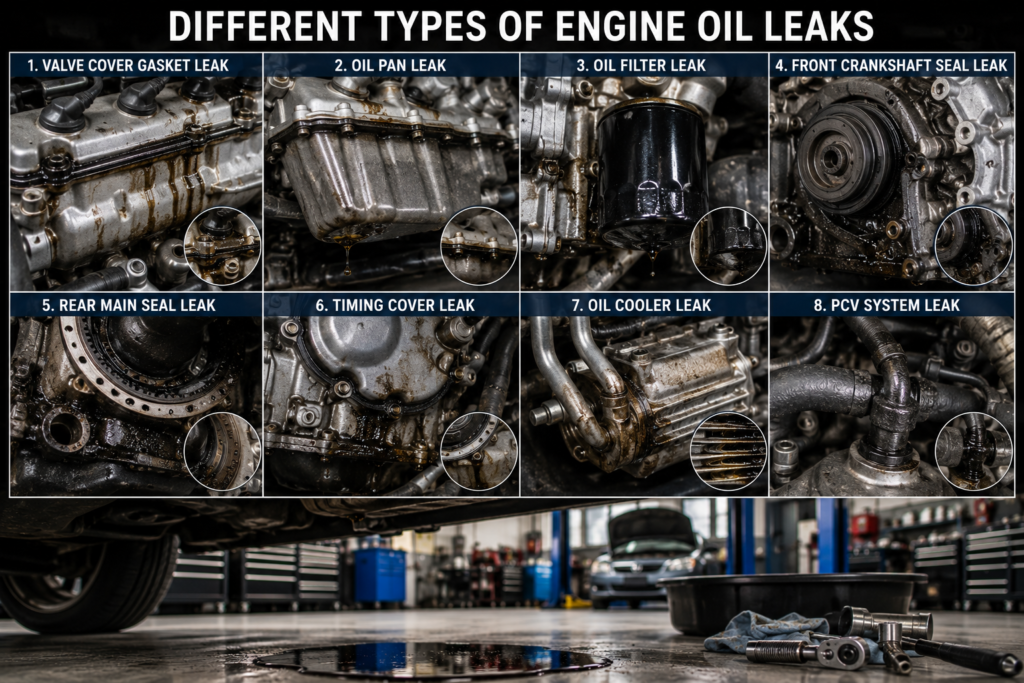
Different Types of Engine Oil Leaks
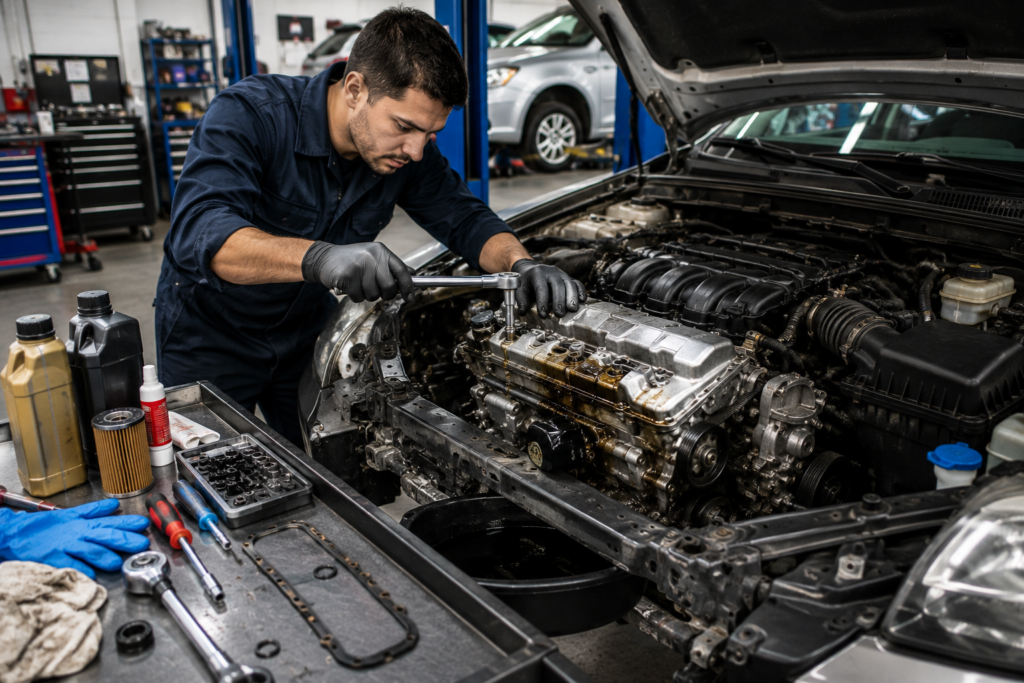
Oil leaks can originate from numerous locations throughout the engine, and identifying the specific source is the essential first step in any repair.
- Oil Pan Gasket Leaks: One of the most common sources, occurring where the oil pan seals against the bottom of the engine block, often due to a degraded gasket material over time.
- Valve Cover Gasket Leaks: Located at the top of the engine, these gaskets seal the valve cover and are prone to hardening and cracking with age and heat exposure.
- Oil Pan Cracks or Corrosion: Physical damage to the oil pan itself, often caused by road debris impact or long-term rust and corrosion, particularly in colder climates using road salt.
- Front or Rear Main Seal Leaks: These seals prevent oil from escaping around the crankshaft where it exits the engine block, and they’re prone to wear over high mileage.
- Oil Filter Housing Leaks: Occurring at the connection point for the oil filter, often due to a worn gasket or an improperly tightened filter during a previous oil change.
- Drain Plug Leaks: A frequently overlooked source, often caused by a stripped drain plug thread or a worn crush washer that fails to create a proper seal.
- Oil Cooler Line Leaks: Found in vehicles equipped with an oil cooler, these leaks occur where cooler lines connect to the engine or the cooler unit itself.
- Cylinder Head Gasket Leaks: While more commonly associated with coolant issues, a failing head gasket can also allow oil to leak externally or mix with coolant internally.
- Timing Cover Gasket Leaks: Located at the front of the engine where the timing cover seals against the block, these leaks often require significant disassembly to access and repair.
- Oil Pressure Sensor Leaks: A smaller but common leak point, occurring around the sensor’s mounting threads or seal.
- PCV Valve or Hose Leaks: While technically part of the ventilation system rather than a direct oil leak, a failing PCV valve can cause excess pressure that forces oil out through other seals and gaskets.
Engine Oil Leak Repair Comparison
Different oil leak sources call for different repair approaches, each with its own complexity and cost profile.
Gasket Replacement: The most common repair category, covering valve cover, oil pan, and timing cover gaskets, generally involving removal of the affected component, cleaning of mating surfaces, and installation of a new gasket.
Seal Replacement: Addressing front or rear main seal leaks, this repair often requires more extensive disassembly, particularly for rear main seals, which may require transmission removal on many vehicles.
Oil Pan Repair or Replacement: For physical damage like cracks or severe corrosion, this may involve either patching (in minor cases) or full oil pan replacement, which requires draining the oil and removing the pan entirely.
Drain Plug and Crush Washer Replacement: A relatively simple, low-cost repair addressing leaks specifically at the drain plug, often resolved by replacing a worn crush washer or, in cases of stripped threads, installing a thread repair insert.
Sensor and Fitting Repair: Typically among the least expensive repairs, involving replacement of a worn seal or gasket at a sensor or fitting location.
Engine Oil Pan Repair Explained
Engine oil pan repair deserves particular attention since it’s one of the more involved and commonly needed repairs in this category. The oil pan sits at the bottom of the engine, serving as the primary reservoir for engine oil when the vehicle isn’t running. Because of its position, it’s particularly vulnerable to damage from road debris, speed bumps, and general wear from constant exposure to road conditions.
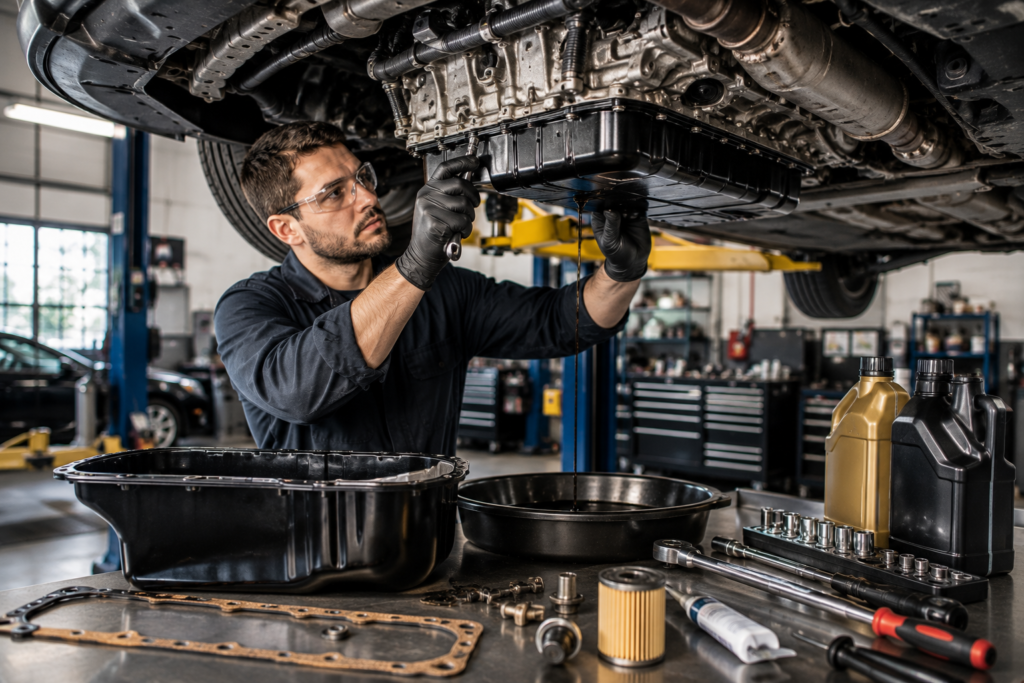
When an oil pan develops a leak, the repair approach depends heavily on the cause and severity of the damage. For gasket-related leaks, the repair typically involves removing the pan (or in some cases, removing it partially depending on engine design), cleaning the mating surfaces thoroughly, and installing a new gasket before reinstalling the pan with properly torqued bolts. For physical damage like a crack from an impact, minor cracks can sometimes be repaired using specialized epoxy compounds designed for this purpose, while more significant damage typically requires full oil pan replacement.
Corrosion-related damage, particularly common in regions with harsh winters and road salt use, often necessitates full replacement, since corroded metal generally can’t be reliably sealed or patched long-term.
Pros & Cons of Each Repair Type
Gasket Replacement
Pros: Generally effective and long-lasting when performed correctly, addressing the root cause of many common oil leaks.
Cons: Labor costs can be significant depending on gasket location, since some gaskets require substantial disassembly to access.
Seal Replacement
Pros: Resolves persistent leaks at the crankshaft that often can’t be addressed any other way.
Cons: Particularly for rear main seals, this repair can be among the most labor-intensive and costly on this list due to the need to separate the transmission from the engine on many vehicles.
Oil Pan Repair (Epoxy or Patch)
Pros: Lower cost and less invasive than full replacement, suitable for minor, non-structural damage.
Cons: Generally considered a temporary solution rather than a permanent fix, particularly for larger cracks or ongoing corrosion.
Full Oil Pan Replacement
Pros: Provides a complete, reliable, long-term solution, particularly important for significant corrosion or structural damage.
Cons: More expensive than a patch repair and requires full oil drainage and pan removal.
Drain Plug and Crush Washer Repair
Pros: Typically quick, affordable, and effective for this specific, common leak source.
Cons: If threads are significantly stripped, this repair may require a more involved thread insert installation rather than a simple washer replacement.
Each Type Repair Tips
For Gasket Replacement: Always replace gaskets with the manufacturer-recommended material and torque bolts to the specified sequence and value, since overtightening can warp components and cause new leaks.
For Seal Replacement: If you’re already having transmission work done for another reason, consider proactively replacing the rear main seal at the same time, since much of the labor cost is tied to the disassembly required to access it.
For Oil Pan Repair: Use epoxy patches only as a temporary measure for minor damage, and plan for eventual full replacement if the underlying corrosion or damage is likely to progress.
For Drain Plug Repair: Always use a new crush washer with every oil change, since reusing an old, compressed washer is a common and easily avoidable cause of drain plug leaks.
For Sensor and Fitting Repair: Confirm the correct replacement part and torque specification for your specific sensor, since overtightening can crack the housing and create a new leak entirely.
Engine Oil Leak Repair Cost Overview
Engine oil leak repair cost varies significantly based on the specific source of the leak, your vehicle’s make and model, and regional labor rates. Here’s a general breakdown:
- Valve cover gasket replacement: $150–$450
- Oil pan gasket replacement: $250–$700, depending on accessibility
- Front main seal replacement: $200–$500
- Rear main seal replacement: $500–$1,200 due to the labor involved in accessing this component
- Oil pan replacement (parts and labor): $300–$900
- Oil pan epoxy patch repair: $50–$150
- Drain plug and crush washer replacement: $20–$75
- Timing cover gasket replacement: $400–$1,000, depending on engine complexity
- Oil cooler line repair: $150–$500
Given this range, getting an accurate diagnosis of the specific leak source before committing to a repair is essential, since costs can vary dramatically depending on which component is actually responsible for the leak.
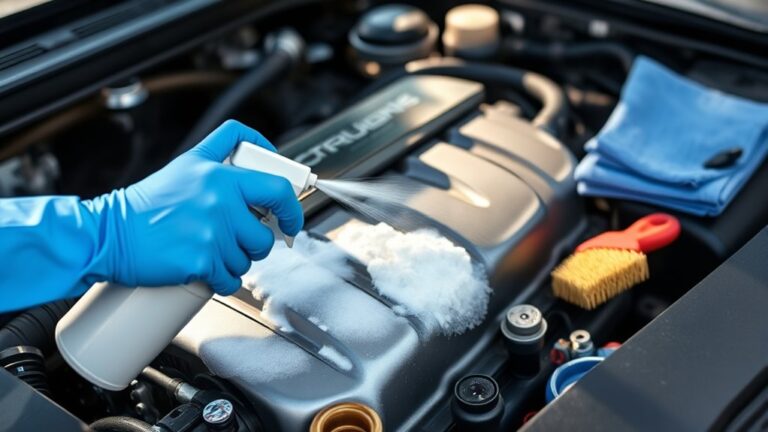
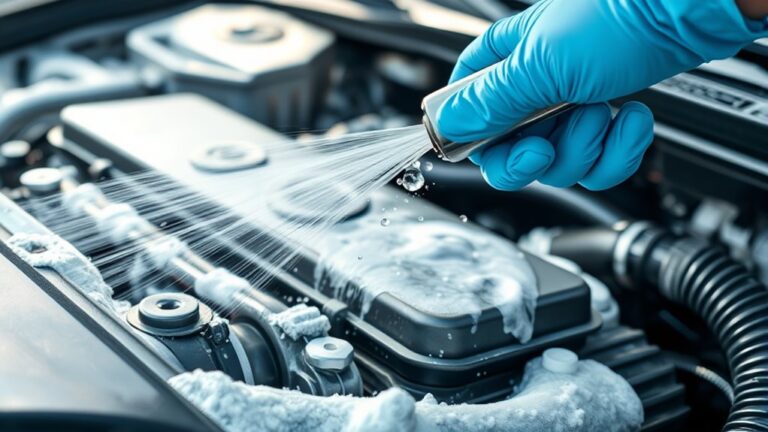
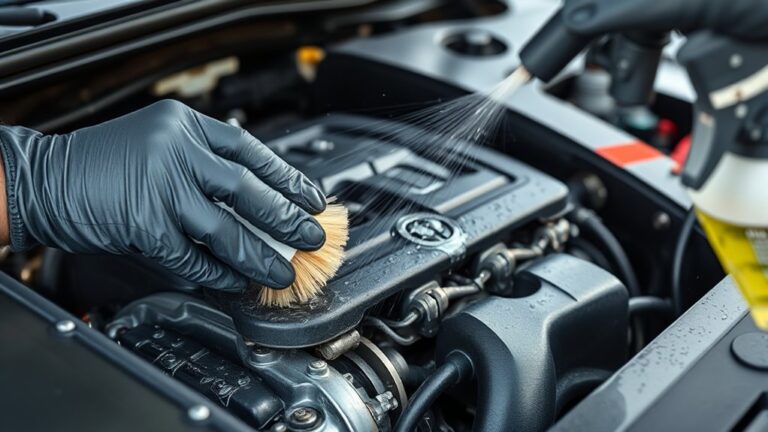
Cleaning & Maintenance
Proper maintenance helps prevent future oil leaks and extends the life of gaskets, seals, and the oil pan itself. Always use a new crush washer with each oil change to prevent drain plug leaks from developing. Avoid overtightening the oil filter during changes, since this can damage the sealing gasket and create a leak at that connection point. Periodically inspect visible gaskets and seals for signs of oil seepage, addressing minor issues before they progress into more significant leaks.
Keep the underside of your vehicle reasonably clean, since accumulated road grime and moisture can accelerate corrosion on the oil pan and surrounding components. If you live in an area with harsh winters and road salt exposure, consider periodic undercarriage washing to help slow corrosion-related damage to the oil pan and other exposed components.
Common Mistakes to Avoid
Avoid ignoring small oil spots on your driveway, since even minor leaks can indicate a developing issue that will worsen over time if left unaddressed. Don’t rely on oil leak “stop leak” additives as a permanent solution, since these products often provide only temporary relief and can sometimes cause more issues than they resolve. Avoid reusing old gaskets or crush washers during repairs, since these components are generally designed for one-time use and won’t create a proper seal when reused.
Don’t skip cleaning the mating surfaces thoroughly during a gasket replacement, since residual old gasket material or oil residue can prevent a proper seal even with a brand-new gasket installed. Finally, avoid choosing the cheapest possible repair shop quote without confirming they’ve accurately diagnosed the actual leak source, since an incorrect diagnosis can lead to paying for a repair that doesn’t actually resolve the problem.
FAQs
1. How can I tell where my oil leak is coming from? A mechanic can use UV dye added to the oil, along with a visual inspection under the vehicle, to trace the leak back to its specific source.
2. Is it safe to drive with an oil leak? Driving short-term with a minor, well-monitored leak may be manageable, but any significant leak should be addressed promptly to avoid risking low oil levels and engine damage.
3. How much does engine oil leak repair cost on average? Costs vary widely by source, ranging from under $75 for a simple drain plug fix to over $1,000 for more complex repairs like a rear main seal replacement.
4. Can I fix an oil leak myself? Some repairs, like replacing a drain plug crush washer, are manageable for confident DIYers, while more involved repairs like main seal or timing cover gasket replacement are generally best left to professionals.
5. What does it mean if my oil pan is leaking? This typically indicates either a worn gasket at the pan’s seal or physical damage to the pan itself, such as a crack from road debris impact or corrosion.
6. How much does engine oil pan repair typically cost? Costs range from $50 to $150 for minor patch repairs to $300–$900 for full pan replacement, depending on your vehicle and the extent of damage.
7. Can a cracked oil pan be repaired without replacing it? Minor cracks can sometimes be repaired with specialized epoxy, though this is generally considered a temporary fix rather than a permanent solution.
8. Why does my car leak oil only after driving, not when parked? This can indicate a leak that only becomes apparent under engine heat and pressure, such as a valve cover gasket that seals better when cold.
9. Is a rear main seal leak expensive to fix? Yes, this is often one of the more costly oil leak repairs due to the labor involved in separating the transmission from the engine to access the seal.
10. How often should oil pan gaskets be replaced? There’s no fixed mileage interval, since gasket lifespan depends on driving conditions and engine heat exposure, but replacement is typically needed when a leak is identified rather than on a set schedule.
11. Can stop-leak additives actually fix an oil leak? These products may provide temporary relief for very minor seal leaks, but they aren’t a reliable permanent fix and shouldn’t replace proper gasket or seal repair.
12. Does an oil leak affect my car’s warranty? This depends on your specific warranty terms and whether the leak is related to a covered component, so it’s worth checking your warranty documentation or consulting your dealership.
13. What’s the difference between an oil leak and normal oil consumption? An oil leak involves fluid escaping externally, often visible as spots or drips, while oil consumption refers to oil being burned internally during normal engine operation, which doesn’t produce visible external leaking.
14. How urgent is it to fix a slow oil leak? While a slow leak may not require immediate emergency repair, it should be addressed promptly to avoid gradually low oil levels and to prevent the leak from worsening over time.
15. Will fixing an oil leak improve my car’s performance? While a minor leak alone may not significantly affect performance, resolving it helps maintain proper oil levels, which is essential for overall engine health and long-term reliability.
Conclusion
Understanding the many potential sources of engine oil leaks, along with realistic engine oil leak repair cost expectations, empowers you to make informed decisions rather than ignoring a problem that will likely worsen over time. Whether you’re dealing with a simple drain plug leak, a more involved engine oil pan repair, or a significant seal replacement, prompt diagnosis and choosing the right repair approach for your specific situation are key to protecting both your engine’s longevity and your budget. By staying attentive to early warning signs and following good maintenance practices, you can minimize the risk of future leaks and keep your engine running smoothly for years to come.