Engine Coolant Leak Repair, Engine Gasket Repair, and Car Engine Mount Repair: The Complete Guide
Introduction
Beneath the hood of every vehicle sits a network of interconnected systems that all need to work together seamlessly to keep the engine running safely and smoothly. When something goes wrong — whether it’s a puddle of coolant on the driveway, an oily residue seeping from a gasket, or an unusual vibration coming from the engine bay — it’s easy to feel overwhelmed by not knowing exactly what’s failing or how serious the problem really is.
This guide covers three of the most common engine-related repairs drivers encounter: engine coolant leak repair, engine gasket repair, and car engine mount repair. Understanding the symptoms, repair approaches, and costs associated with each can help you address problems promptly and avoid more expensive damage down the road.
Why These Repairs Matter
Each of these three repair categories protects a different but equally critical aspect of your engine’s health. Coolant leaks, if left unaddressed, can lead to overheating and potentially catastrophic engine damage, since your cooling system exists specifically to keep engine temperatures within a safe operating range. Gasket failures can allow fluids to mix improperly, cause pressure loss, or create leaks that gradually starve critical components of the lubrication or sealing they depend on.
Engine mounts, meanwhile, might seem like a minor component, but they play an essential role in stabilizing the engine, absorbing vibration, and preventing excessive movement that can damage surrounding components like hoses, wiring, and exhaust connections.
Ignoring symptoms in any of these three areas typically leads to the same outcome: a manageable, moderately priced repair growing into something far more extensive and costly. Understanding what to watch for and how these repairs work empowers you to act quickly, communicate effectively with a mechanic, and make informed decisions about your vehicle’s care.
Different Types of Engine Coolant Leaks, Gasket Failures, and Mount Issues
Each of these three repair categories includes multiple distinct types, and understanding the differences helps with accurate diagnosis.
- Radiator Coolant Leaks: Occurring at the radiator itself, often due to corrosion, physical damage, or a failing seam, resulting in visible coolant loss near the front of the vehicle.
- Coolant Hose Leaks: Developing where hoses connect to the engine, radiator, or other cooling system components, often due to age-related cracking or a loosened clamp.
- Water Pump Leaks: Occurring at the water pump’s seal or gasket, often accompanied by a whining noise from a failing bearing in addition to visible leaking.
- Head Gasket Coolant Leaks: A failing head gasket can allow coolant to leak externally or, more seriously, mix with engine oil or enter the combustion chamber.
- Valve Cover Gasket Leaks: Located at the top of the engine, these gaskets primarily seal oil but can sometimes be mistaken for coolant leaks due to their proximity to other components.
- Oil Pan Gasket Leaks: Sealing the oil pan against the engine block, this gasket type is prone to hardening and cracking with age and heat cycling.
- Intake Manifold Gasket Leaks: Sealing the intake manifold against the engine block, failures here can cause both coolant leaks (in engines routing coolant through the manifold) and vacuum leaks affecting performance.
- Timing Cover Gasket Leaks: Found at the front of the engine, these leaks often require significant disassembly to properly access and repair.
- Broken or Cracked Engine Mounts: Physical deterioration of the rubber or hydraulic mount material, often due to age, heat exposure, or oil contamination degrading the rubber compound.
- Hydraulic Engine Mount Fluid Leaks: Specific to hydraulic mounts, which use fluid-filled chambers to dampen vibration, these mounts can develop leaks that reduce their effectiveness.
- Engine Mount Bracket Damage: Physical damage to the metal bracket connecting the mount to the engine or frame, often resulting from an impact or accident rather than gradual wear.
Repair Comparison: Coolant Leaks, Gaskets, and Mounts
Each repair category involves distinct approaches, and understanding how they compare helps clarify what to expect from a repair shop.
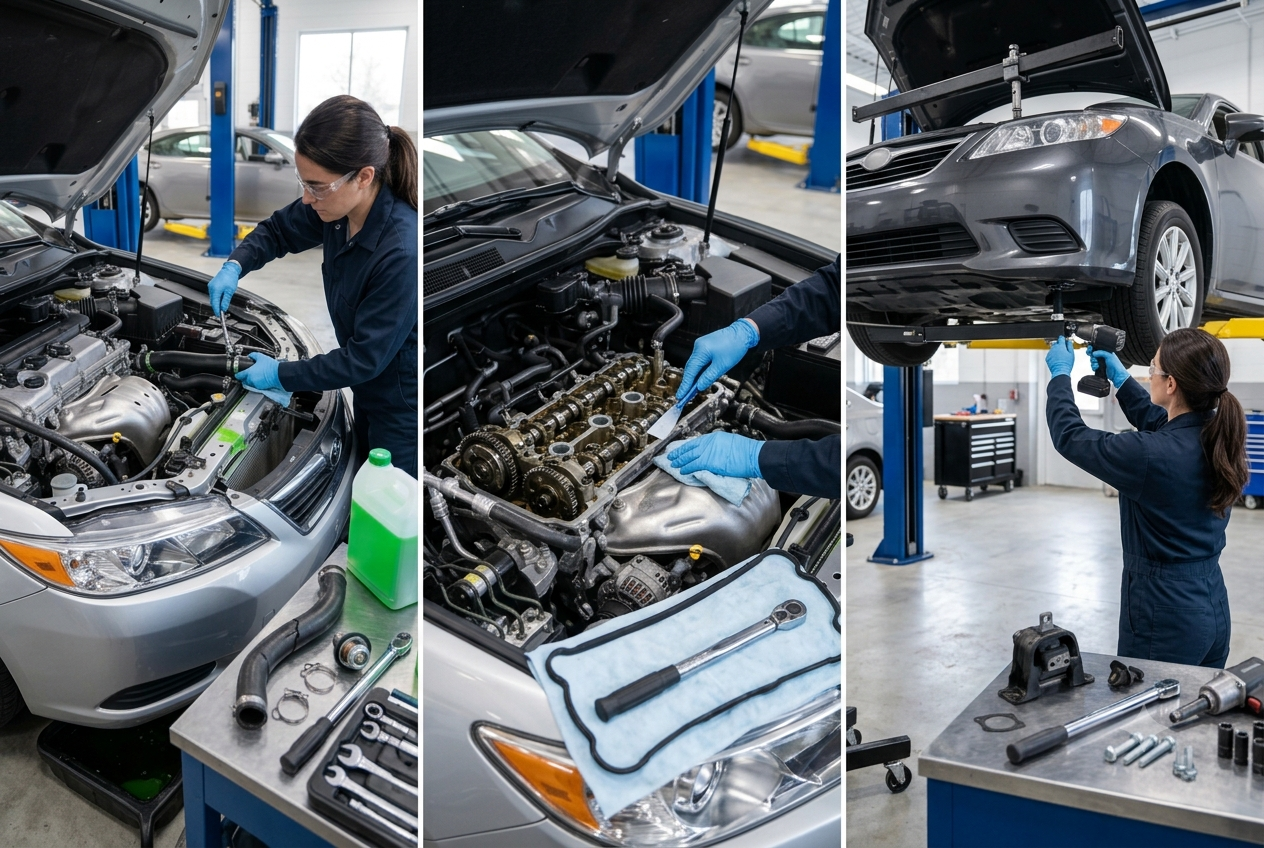
Engine Coolant Leak Repair: Typically involves identifying the specific leak source through pressure testing or dye inspection, followed by repair or replacement of the affected component, whether that’s a hose, the radiator, the water pump, or a gasket.
Engine Gasket Repair: Generally requires disassembly of the components surrounding the affected gasket, thorough cleaning of the mating surfaces, and installation of a new gasket with properly torqued fasteners to ensure a lasting seal.
Car Engine Mount Repair: Usually involves supporting the engine with a jack or specialized support tool, removing the damaged mount, and installing a replacement, taking care to properly torque all mounting bolts to manufacturer specifications.
In general, coolant leak repairs vary the most in complexity depending on the specific source, gasket repairs tend to require the most labor-intensive disassembly, and engine mount repairs, while mechanically straightforward, require careful handling to avoid damaging surrounding components during the engine support process.
Engine Coolant Leak Repair, Gasket Repair, and Mount Repair Explained
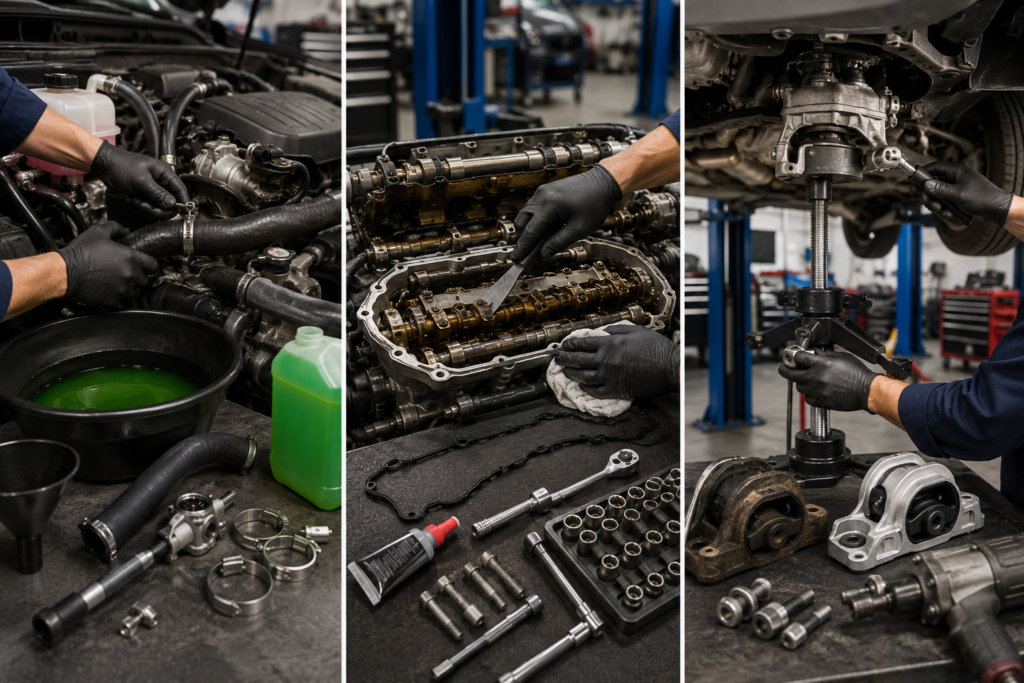
Engine Coolant Leak Repair Explained: Once a coolant leak is diagnosed, the repair approach depends heavily on the source. Hose leaks are often the simplest, involving straightforward replacement of the damaged hose and clamp. Radiator leaks may be repairable with specialized epoxy for very minor damage, though replacement is generally recommended for anything beyond a pinhole leak. Water pump leaks require replacing the entire pump assembly, since the seal generally can’t be serviced independently. In all cases, after the repair, the cooling system must be properly refilled and bled of air pockets to ensure proper circulation.
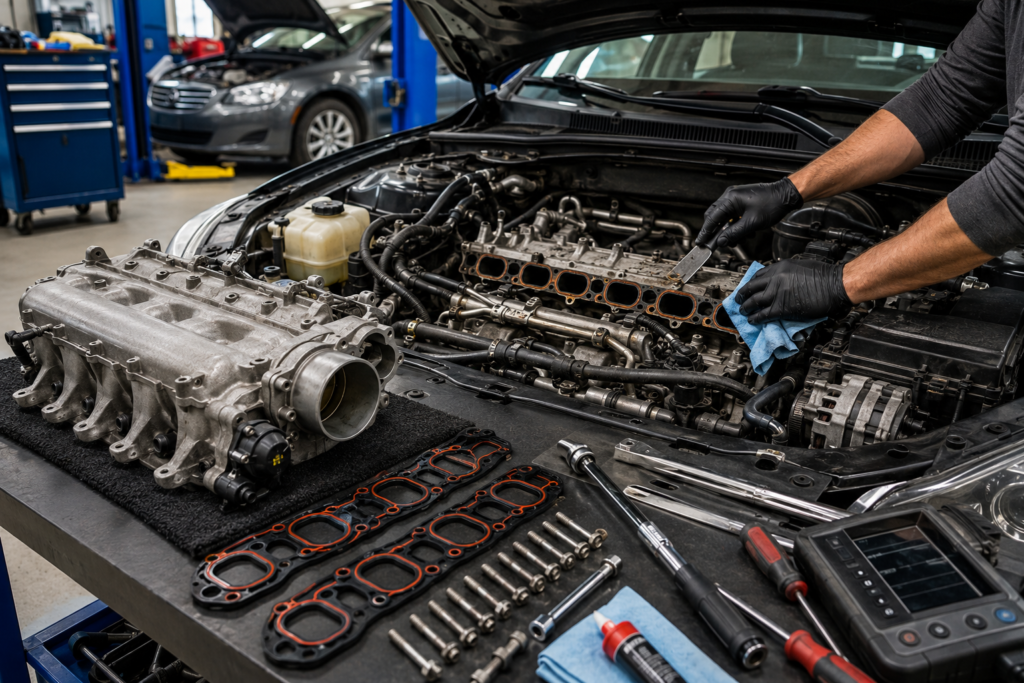
Engine Gasket Repair Explained: Gasket repairs require careful attention to the mating surfaces on both sides of the gasket, since even minor debris or old gasket material left behind can prevent a proper seal. After removing the failed gasket, technicians thoroughly clean both surfaces, inspect for warping or damage that might require machining, and install the new gasket using the correct torque sequence and specification for the fasteners involved. Skipping proper torque procedures is one of the most common causes of a repeat gasket failure shortly after repair.
Car Engine Mount Repair Explained: Before removing a damaged engine mount, the engine must be properly supported using a jack, engine support bar, or hoist to prevent it from shifting once the mount is disconnected. Once secured, the damaged mount is unbolted and removed, and the new mount is installed and torqued to specification. Because engine mounts work together as a system (most vehicles have two to four mounts), it’s often recommended to inspect all mounts when one is found to be failing, since they tend to wear at a similar rate.
Pros & Cons of Each Repair Type
Coolant Hose Replacement
Pros: Generally affordable and straightforward, often resolving the leak completely with minimal labor.
Cons: If multiple hoses are aging simultaneously, addressing them one at a time can lead to repeat shop visits rather than a single comprehensive repair.
Radiator Repair or Replacement
Pros: Replacement provides a complete, reliable fix for significant damage or corrosion.
Cons: Epoxy repairs for minor damage are generally considered temporary, and full replacement is more costly than most other coolant leak repairs.
Gasket Replacement (General)
Pros: Directly addresses the root cause of many oil and coolant leaks, offering a long-lasting repair when performed correctly.
Cons: Labor costs can be significant depending on the gasket’s location and the amount of disassembly required to access it.
Engine Mount Replacement
Pros: Resolves excessive vibration and movement, protecting surrounding components from secondary damage caused by a failing mount.
Cons: Requires careful engine support during the repair process, and replacing only one mount when others are also worn can lead to uneven wear and repeat repairs sooner than expected.
Each Type Repair Tips
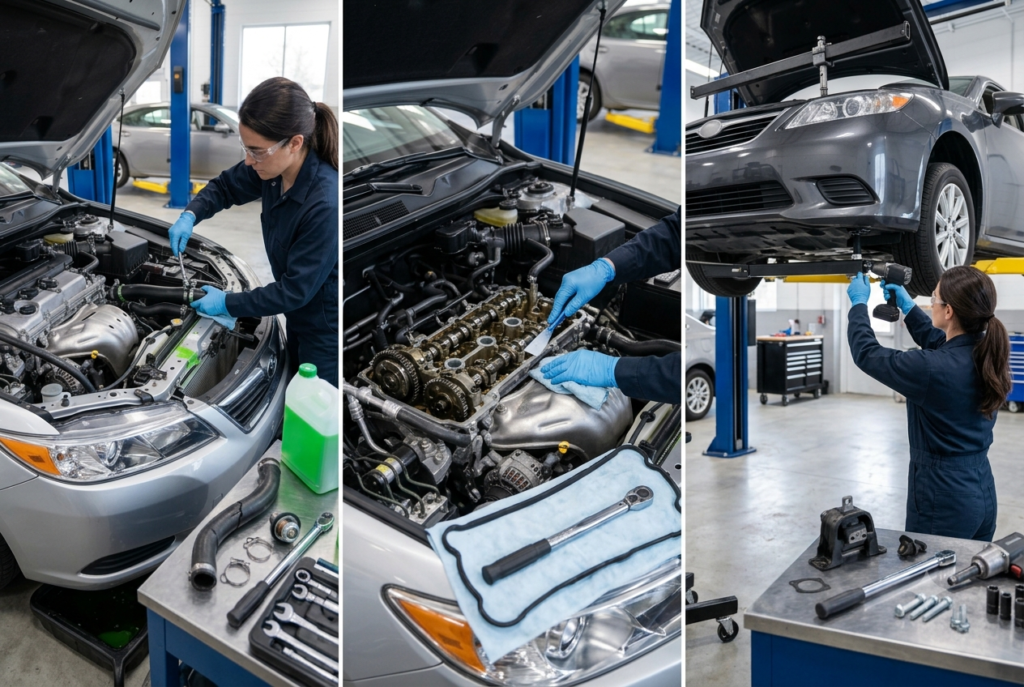
For Coolant Leak Repair: Always use the coolant type specified by your vehicle’s manufacturer, since mixing incompatible coolant formulations can cause corrosion and further leaks. After any coolant system repair, monitor levels closely for the first week to confirm the fix has fully resolved the issue.
For Gasket Repair: Never reuse an old gasket, since these components are generally designed for one-time use and won’t create a proper seal a second time. Always follow the manufacturer’s specified torque sequence when reinstalling components, since uneven tightening is a common cause of premature gasket failure.
For Engine Mount Repair: Have all engine mounts inspected together rather than replacing just the failed one in isolation, since mounts installed at the same time typically wear at a similar rate. After installation, start the vehicle and check for unusual vibration or noise that might indicate a mount wasn’t properly seated.
Cleaning & Maintenance
Preventing future issues in all three of these categories comes down to consistent maintenance. Regularly check coolant levels and inspect visible hoses for cracking, bulging, or soft spots, replacing them proactively before they fail completely. Keep the engine bay reasonably clean, since built-up grime can make it harder to spot small leaks early and can accelerate corrosion on metal components like the radiator or mounting brackets. Follow your manufacturer’s recommended gasket-adjacent maintenance, such as periodic valve cover inspections, to catch early signs of gasket degradation before a significant leak develops.
Periodically inspect engine mounts during routine service visits, particularly on higher-mileage vehicles, since mounts can degrade gradually without producing dramatic symptoms until wear becomes significant. Address any fluid leaks promptly, regardless of source, since oil contamination is a common accelerant of rubber engine mount deterioration.
Common Mistakes to Avoid
Avoid ignoring small coolant spots on your driveway, since even minor leaks tend to worsen over time and can eventually lead to overheating if left unaddressed. Don’t rely on temporary sealant additives as a permanent fix for significant coolant or gasket leaks, since these products are generally better suited to very minor issues rather than substantial damage. Avoid reusing old gaskets or skipping proper surface cleaning during a gasket repair, since both significantly increase the risk of a repeat leak shortly after the repair.
Don’t delay engine mount replacement once excessive vibration or clunking noises are noticed, since a failing mount can place additional strain on surrounding components like hoses, wiring, and the exhaust system. Finally, avoid choosing a repair shop without confirming they’ve accurately diagnosed the specific source of a leak or vibration, since an incorrect diagnosis can lead to paying for a repair that doesn’t actually resolve the underlying problem.
FAQs
1. How can I tell if I have a coolant leak versus an oil leak? Coolant is typically green, orange, pink, or blue and has a sweet smell, while oil is generally darker brown or black with a distinct petroleum odor.
2. How much does engine coolant leak repair typically cost? Costs vary by source, ranging from under $150 for a simple hose replacement to $600 or more for water pump or radiator replacement.
3. Can I drive with a small coolant leak? While a very minor leak may be manageable short-term with close monitoring, it’s best to have it diagnosed and repaired promptly to avoid the risk of overheating.
4. What’s the difference between a head gasket leak and other gasket leaks? A head gasket leak can allow coolant and oil to mix or enter the combustion chamber, making it generally more serious and expensive to repair than external-only leaks from gaskets like the valve cover or oil pan.
5. How much does engine gasket repair typically cost? Costs vary significantly by gasket type and location, ranging from around $150 for a valve cover gasket to over $1,500 for a head gasket replacement.
6. What are the signs of a failing engine mount? Common signs include excessive vibration, clunking noises during acceleration or shifting, and visible engine movement when the hood is open and the engine is running.
7. How much does car engine mount repair typically cost? Individual mount replacement generally ranges from $200 to $650 per mount, including parts and labor, though costs vary by vehicle and mount location.
8. Can a bad engine mount cause other damage? Yes, excessive engine movement from a failing mount can strain and damage surrounding components, including hoses, wiring, and exhaust connections.
9. Is it necessary to replace all engine mounts at once? While not always required, replacing all mounts together is often recommended since they tend to wear at a similar rate, helping avoid repeat repairs in the near future.
10. Can I temporarily patch a coolant leak myself? Minor, very small leaks may respond to over-the-counter sealant products temporarily, but this isn’t a substitute for a proper diagnosis and repair.
11. Why does my car leak coolant only when the engine is hot? This often indicates a leak that becomes more apparent under pressure and heat expansion, such as a hose connection or gasket that seals slightly better when cold.
12. How long does gasket repair typically take? Depending on the specific gasket and its accessibility, repairs can range from a couple of hours for a straightforward valve cover gasket to a full day or more for a head gasket replacement.
13. What causes engine mounts to wear out over time? Common causes include age-related rubber degradation, heat exposure, oil or fluid contamination, and the general wear from constant vibration absorption during normal engine operation.
14. Can a coolant leak cause engine gasket failure? Yes, prolonged low coolant levels can lead to overheating, which is a common contributing factor in gasket failures, particularly for the head gasket.
15. Is it safe to replace an engine mount myself? While mechanically inclined DIYers can sometimes handle simpler mount replacements, proper engine support equipment and torque specifications are essential, making this a repair many drivers prefer to leave to a professional.
Conclusion
Engine coolant leak repair, engine gasket repair, and car engine mount repair each address a distinct but equally important aspect of your vehicle’s overall health. Whether you’re dealing with a slow coolant drip, an oil-stained gasket seal, or a vibrating, clunking engine mount, prompt diagnosis and proper repair technique are essential to preventing these manageable issues from escalating into more serious, costly engine damage. By staying attentive to early warning signs, following good maintenance habits, and choosing a qualified repair shop when professional help is needed, you can keep your engine running smoothly, quietly, and reliably for many miles to come.