How to Check Car Engine Size in 10 Easy Steps
Figuring out your car’s engine size can feel tricky, especially if you’re not a car expert. You’re not alone—many people struggle to find this important info, which is key to understanding your vehicle’s performance and maintenance needs.
Luckily, checking your car engine size is easier than you might think.
You can check your car’s engine size by first looking at documents like the owner’s manual, registration, or insurance papers. Next, find and decode the VIN for engine details.
Check labels on the door jamb or under the hood, and inspect the engine block for identification codes.
Use online tools or ask a mechanic for confirmation. These simple steps give you accurate info on your engine size, helping you understand performance and maintenance better as you investigate further.
Key Takeaways
- Locate the VIN on the dashboard or driver’s door frame and use online VIN decoders to find engine size details.
- Check the owner’s manual under “Engine” or “Specifications” for accurate engine displacement and performance data.
- Inspect labels on the driver’s side door jamb or under the hood for engine size and emission sticker information.
- Look for engine codes stamped on the engine block near the timing cover or cylinder head.
- Use manufacturer websites or automotive databases by entering make, model, and year to verify engine size easily.
Where To Find Your Car’s Engine Size In Documents And Labels
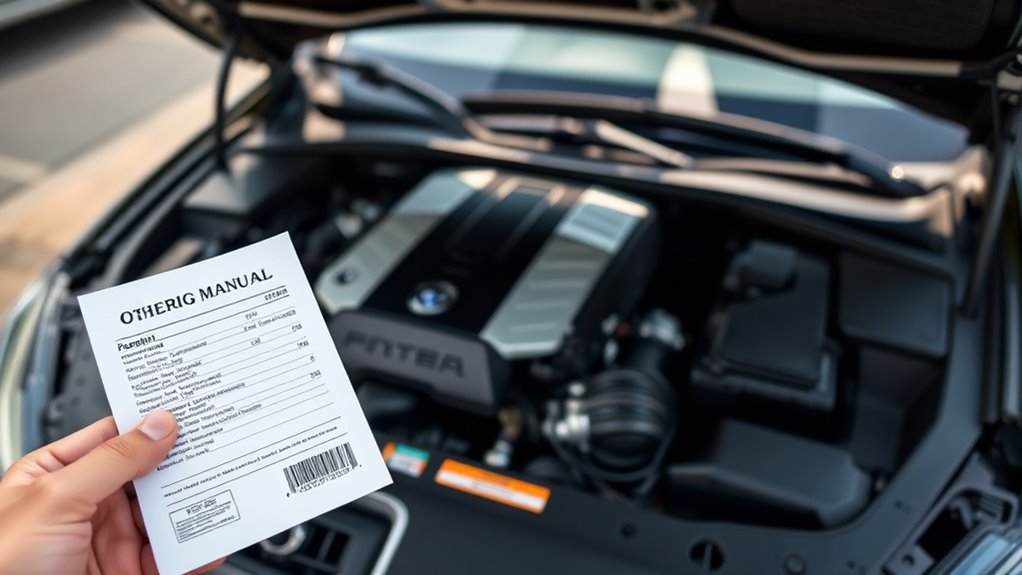
Where can you find your car’s engine size without popping the hood? You’ll want to verify your vehicle’s documents and labels first. Start with the owner’s manual. It usually lists the engine size clearly since it affects fuel efficiency and helps you understand emissions standards compliance.
Next, look at the vehicle registration or title. These often include engine displacement details, especially if required by local regulations. Inside the driver’s side door jamb, you might find a label or sticker that states your engine size along with other important info like tire pressure.
This label is handy because manufacturers include engine size to ensure the vehicle meets emissions standards. You can also check insurance documents, which sometimes note engine size for premium calculations tied to fuel efficiency.
How To Read The VIN For Engine Size
To find your car’s engine size using the VIN, start by locating the VIN plate—it’s usually on the dashboard or the driver’s side door frame. Once you’ve got the VIN, you can decode certain characters that reveal the engine details. This way, you can figure out the exact engine type without even opening the hood. Pretty handy, right?
Locating The VIN
How can you quickly find your car’s engine size without popping the hood? Start by locating the Vehicle Identification Number (VIN). It’s usually found on the driver’s side dashboard, visible through the windshield, or on the inside of the driver’s door frame.
The VIN holds key details about your car, including engine specs that influence fuel efficiency and engine noise. By knowing where to find the VIN, you avoid guesswork about your engine’s capacity, which directly affects how much fuel your car consumes and the kind of engine noise it produces.
Keep in mind, the VIN is a 17-character code unique to your vehicle, so having it on hand is the first step in understanding your engine’s size and performance characteristics.
Decoding Engine Information
Once you have your VIN, you can reveal detailed engine information by decoding its characters. Each section of the VIN holds specific data, including engine size, type, and manufacturing details. This decoding helps you understand how your engine meets fuel efficiency and emissions standards.
To decode the engine information, focus on these key VIN positions:
- Engine Code: Identifies the engine model and size directly.
- Check Digit and Model Year: Helps confirm the engine’s specifications and compliance with emissions standards.
- Manufacturer Identifier: Indicates the origin, affecting fuel efficiency technologies used.
How To Check Your Owner’s Manual For Engine Specifications
Where can you find the most accurate information about your car’s engine size? The answer is your owner’s manual. This manual reference is the best place to check for detailed engine specifications because it comes directly from the manufacturer. Inside, you’ll find exact figures about your engine’s displacement, often listed in liters or cubic centimeters (cc).
To locate this information quickly, look for sections labeled “Engine,” “Specifications,” or “Technical Data.” The manual often includes other useful details like horsepower and torque ratings, but focusing on engine size will give you the displacement you need. If you don’t have a physical copy, many manufacturers offer digital versions on their websites, searchable by your car’s make, model, and year.
Checking your owner’s manual guarantees you get precise and reliable data, avoiding guesswork or inaccurate sources. It makes it your go-to manual reference for engine specifications every time.
How To Locate The Engine Code On Your Engine Block
After checking your owner’s manual for engine specifications, the next step is to identify the engine code stamped directly on your engine block. This code is a unique combination of letters and numbers that tells you important details about your engine. To locate it, you’ll need to open the hood and look closely at the engine block itself.
Here’s where to focus your search:
- Near the front of the engine block, close to the timing cover
- On the side of the engine block, often near the cylinder head
- Around the transmission bell housing area
Keep in mind that the engine code might be stamped, engraved, or cast into the metal surface. It can sometimes be covered by dirt or grease, so clean the area gently if needed. Once you find the engine code on your engine block, you can use it to verify your engine size and other key specifications accurately.
How To Find Your Engine Size Using Online Tools
Although locating the engine code on your block gives you valuable information, using online tools can quickly confirm your engine size without any guesswork. You can start by visiting manufacturer websites or trusted automotive databases. Simply enter your vehicle’s make, model, and year to access detailed specs, including engine displacement.
These tools often highlight how engine size impacts fuel efficiency and emission standards, helping you understand your car’s environmental footprint.
Additionally, some websites offer VIN (Vehicle Identification Number) decoding services that reveal engine details instantly. Using these tools saves time and guarantees accuracy compared to manual searches.
Knowing your exact engine size is essential for maintenance, upgrades, and complying with emission standards in your area. So, by relying on online resources, you get a reliable answer while also gaining insights into how your engine size relates to fuel efficiency and regulatory requirements.
This method is perfect if you want fast, clear information without opening the hood.
How To Use A Dipstick Or Visual Inspection To Estimate Engine Size
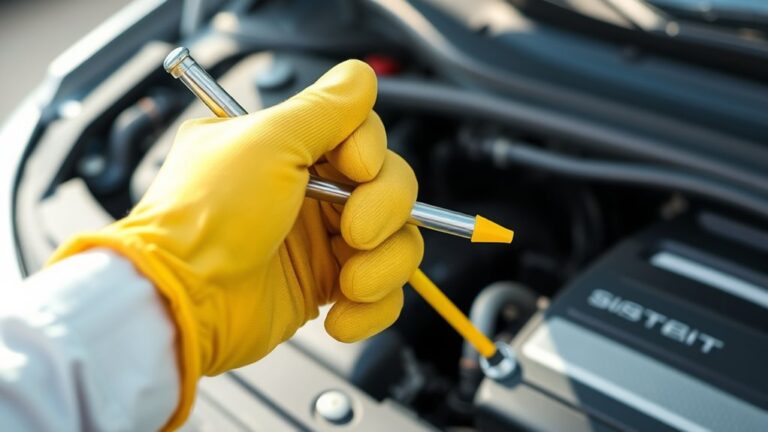
You can get clues about your engine size just by checking the oil level on the dipstick. Some dipsticks actually have markings that relate to engine specifications, which can be pretty handy.
Also, take a close look around the engine bay. Sometimes you’ll find stamped numbers or labels that show the engine displacement.
These quick visual checks are great because they give you a rough estimate without needing any special tools or manuals.
Dipstick Oil Level
How can you use a dipstick to estimate your car’s engine size? While the dipstick primarily measures oil level, it also offers clues about engine size through oil consumption and engine lubrication needs. Larger engines generally require more oil, so checking the oil level can hint at engine capacity.
To use the dipstick effectively, pull it out, wipe it clean, then reinsert it fully before checking the oil level. Next, note the oil quantity and thickness. Thicker oil or lower levels may indicate higher oil consumption, which is typical of bigger engines.
You can also compare oil markings with your vehicle’s manual to correlate oil volume with engine size. This simple inspection helps you approximate engine size by understanding how much oil your engine needs for proper lubrication.
Visual Engine Markings
Several key engine markings provide quick clues about your car’s engine size during a visual inspection. Look around the engine block for stamped numbers or labels indicating displacement, often expressed in liters or cubic centimeters (cc). These markings are usually near the valve cover or on the engine block itself.
While checking, listen to the engine noise. Larger engines often produce deeper, louder sounds compared to smaller ones. You can also correlate engine size with fuel efficiency. Smaller engines generally use less fuel, so if your car has high fuel efficiency, it likely has a smaller engine.
Using the dipstick, although primarily for oil level, can help you identify engine type if it has model-specific markings. Combining these visual cues and sounds helps you estimate engine size without specialized tools.
How To Read Engine Size On Your Car’s Emission Sticker
Although emission stickers might seem like just regulatory labels, they actually provide key details about your car’s engine size. These stickers, usually found under the hood or on the door frame, display essential information related to your engine capacity and compliance with emission regulations.
By learning to read them, you can quickly identify your engine’s specifications without guesswork.
Look for these key details on the emission sticker:
- Engine capacity: Often listed in liters or cubic centimeters (cc), this tells you the exact size of your engine.
- Emission regulations compliance: Indicates the standards your engine meets, which indirectly reflects its type and size.
- Engine family or code: A unique identifier that sometimes includes engine displacement information.
Knowing how to read your emission sticker helps you understand your vehicle’s engine capacity and guarantees it meets environmental standards. This knowledge is handy for maintenance, upgrades, or verifying vehicle details.
How To Confirm Your Engine Size With A Mechanic Or Dealership
Once you’ve checked your emission sticker, the next step is to get a professional confirmation of your engine size. Visiting a mechanic or dealership ensures you have accurate information, especially if you’re considering an engine upgrade or performance tuning.
Mechanics have access to detailed vehicle data and can physically inspect your engine to verify its size. Dealerships use your vehicle’s VIN to pull exact specifications from the manufacturer’s database, eliminating any guesswork.
Mechanics inspect your engine directly, while dealerships use your VIN for precise manufacturer specifications.
When you take your car in, explain why you need the engine size confirmed, whether for an engine upgrade or performance tuning. This helps them provide tailored advice or recommend compatible parts.
Confirming the engine size with a trusted professional also prevents costly mistakes if you plan modifications. This step guarantees you’re working with the right data, making future upgrades or tuning more effective and safe.
Don’t skip this crucial verification if you want a smooth, informed process.
Comparing Engine Sizes Across Models And Years
When you compare engine sizes across different models and years, you’ll start to notice some clear trends in how they’ve evolved. It’s pretty interesting to see, right? Understanding these variations helps you get why some engines perform better or use fuel differently. So, let’s take a closer look at how model changes and yearly updates impact engine size and performance.
Engine Size Evolution Trends
As you investigate different car models and years, you’ll notice clear shifts in engine sizes that reflect changing priorities in performance, fuel efficiency, and emissions standards. Over time, engine design has evolved to balance power output with environmental concerns. Smaller, turbocharged engines have become common, delivering efficiency without sacrificing performance.
Key trends include:
- Downsizing engines to improve fuel efficiency while maintaining power through advanced engineering
- Incorporating turbochargers and direct injection to optimize combustion and reduce emissions
- Progressing from large displacement engines to more compact, lightweight designs
Understanding these trends helps you appreciate how manufacturers adapt engine size to meet modern demands. This evolution highlights a shift from sheer engine size toward smarter, more efficient engine design focused on sustainability and drivability.
Model Variations Explained
Although engine size varies widely across car models and years, understanding these differences can help you make better decisions when comparing vehicles. Different models often come with various engine options, each designed to balance power, fuel efficiency, and performance.
You’ll notice that some variations are due to factory engine modifications tailored for specific markets or driving conditions. When comparing models, pay close attention to how engine size affects fuel efficiency, as larger engines typically consume more fuel but offer greater power.
Conversely, smaller engines often provide better mileage but may lack performance. By grasping these model variations, you can pick a car that suits your driving style and budget, avoiding surprises related to engine size and its impact on daily use.
Yearly Performance Differences
How do engine sizes impact a car’s performance from one year to the next? When you compare engine sizes across different models and years, you’ll notice distinct changes in power, fuel efficiency, and regulatory compliance. Manufacturers often adjust engine displacement to balance performance with evolving emission standards.
Consider these key factors when evaluating yearly performance differences:
- Smaller engines in newer models often deliver better fuel efficiency without sacrificing too much power.
- Changes in engine size can reflect improvements in technology, such as turbocharging, enhancing performance despite smaller displacement.
- Stricter emission standards may lead to design tweaks that affect engine size and output to meet environmental requirements.
What Engine Size Means For Your Car’s Performance And Maintenance
When you understand your car’s engine size, you gain insight into its power and fuel efficiency. A larger engine typically means more horsepower and better acceleration, which is great if you want strong performance. However, it often comes with lower fuel efficiency, so you might spend more at the pump.
Conversely, smaller engines usually offer better fuel efficiency but less power, making them ideal for city driving or daily commutes.
Engine size also affects maintenance costs. Bigger engines have more components and may require pricier parts or specialized service, which can increase upkeep expenses. Smaller engines tend to be simpler and cheaper to maintain.
Knowing your engine size helps you anticipate these costs, plan your budget, and choose driving habits that match your car’s capabilities. By understanding what engine size means for performance and maintenance, you can make smarter decisions about your vehicle and how to care for it effectively.
Frequently Asked Questions
Can Engine Size Affect My Car Insurance Rates?
Yes, engine capacity can affect your car insurance rates. Generally, a larger engine capacity means higher insurance premiums because cars with bigger engines are often seen as more powerful and riskier to insure.
Insurers consider this increased risk when calculating your premiums. So, if your car has a high engine capacity, expect your insurance costs to be higher compared to vehicles with smaller engines, which usually have lower premiums.
Does Engine Size Influence Fuel Efficiency Significantly?
Engine size is the heart of your car’s fuel efficiency, and yes, it influences it considerably. Bigger engines often gulp more fuel, lowering your miles per gallon, while smaller engines sip fuel more sparingly.
However, modern technology can sometimes balance this out. So, if you want better fuel efficiency, choosing a smaller engine size usually helps you save at the pump without compromising too much on power.
How Does Engine Size Impact Vehicle Resale Value?
Engine capacity directly impacts your vehicle’s resale value because buyers often consider fuel efficiency and performance. If your car has a larger engine capacity, it may appeal to those wanting more power, boosting resale value.
However, many buyers prefer smaller engines for better mileage, which can also maintain strong resale value. You’ll want to balance engine size with market demand to maximize your car’s resale value effectively.
Are Larger Engines Always More Powerful?
No, larger engines aren’t always more powerful. You might notice louder engine noise with bigger engines, but power depends on design, turbocharging, and tuning too.
Sometimes, smaller engines with advanced tech deliver impressive power while keeping engine noise low. Also, larger engines often need more engine maintenance, which can affect performance over time.
Can Engine Size Determine the Type of Fuel I Should Use?
Yes, engine size can influence the type of fuel you should use because engine compatibility with certain fuels affects performance and fuel efficiency. Larger engines often require higher-octane fuel to prevent knocking, while smaller engines may run efficiently on regular gasoline.
Always check your vehicle’s manual to guarantee proper fuel choice. Using the right fuel helps maintain engine health and maximizes fuel efficiency, saving you money and boosting performance.
Conclusion
Now that you know how to check your car’s engine size, you’re better equipped to understand your vehicle. Did you know that engine sizes can vary by up to 50% even within the same model year? This affects everything from fuel efficiency to maintenance costs.
So, take a few minutes to use these steps. You’ll save time and money by knowing exactly what’s under your hood when you check your car engine size!