7 Easy Steps to Know the Engine Size of a Car
Figuring out your car’s engine size can be surprisingly tricky, and you’re not alone if you’ve struggled with it. Many people want to know this important detail but don’t know where to start or what to look for.
Whether you’re buying a car, planning maintenance, or just curious, knowing the engine size helps you make informed decisions.
You can easily find your car’s engine size by checking the owner’s manual first. Next, decode the VIN located on your dashboard or door jamb to spot engine details. Look for the engine size on the emission label under the hood or on the door. If needed, check the engine block for stamped numbers.
Use online tools for quick info or measure displacement yourself. Finally, confirm with a mechanic or diagnostic tool to be sure.
There’s more handy info to help you get it right.
Key Takeaways
- Check the owner’s manual for engine size specifications and related maintenance details.
- Locate and decode the VIN, especially the 8th character. You can use online tools for accurate engine info.
- Find the engine size on the emission label under the hood or on the driver’s door jamb.
- Inspect the engine block stamping for displacement numbers. Clean the area if necessary to make it clearer.
- Consult a qualified mechanic or use diagnostic tools like OBD-II scanners to confirm the engine size precisely.
Check the Owner’s Manual for Engine Size
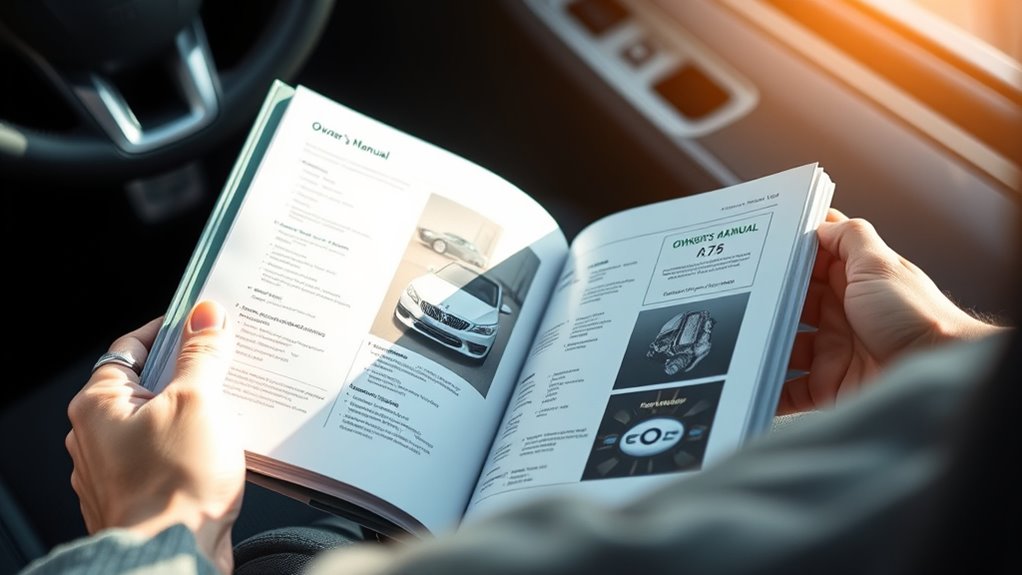
Before you look anywhere else, check your car’s owner’s manual. It usually lists the engine size clearly. You’ll find this information in the specifications section, where manufacturers provide key details about your vehicle.
Knowing the engine size helps you understand your car’s fuel efficiency because larger engines typically consume more fuel. This insight can guide your driving habits to maximize mileage and save on gas.
Moreover, the manual offers essential tips on engine maintenance tailored to your engine’s capacity. Following these guidelines ensures your engine runs smoothly and lasts longer.
Whether it’s oil change intervals or recommended fuel types, the manual has you covered. So, by simply flipping through your owner’s manual, you get accurate engine size info and practical advice to keep your car efficient and well-maintained. It’s the quickest and most reliable way to start your engine size check.
Find Engine Size Using the VIN
You can find your car’s engine size by using the Vehicle Identification Number, or VIN. First, you’ll want to locate the VIN on your car—it’s usually found on the dashboard or the driver’s side door. Once you have it, you can either decode the VIN characters yourself or use online VIN tools to quickly get the engine details. It’s a simple way to find out what’s under the hood!
Locate The VIN
Although the VIN might seem like just a long string of letters and numbers, it holds key information about your car’s engine size. To use VIN identification effectively, you first need to locate this unique code.
You’ll find the VIN in several places on your car, often near the engine labeling or on the vehicle’s body.
Here’s a quick guide to common VIN locations:
| Location | Description |
|---|---|
| Driver’s side dashboard | Visible through the windshield |
| Driver’s side door jamb | On a sticker or metal plate |
| Engine bay | Near engine labeling or firewall |
Check these spots carefully to find the VIN, which is essential for identifying your engine size accurately.
Decode VIN Characters
How can you pinpoint your car’s engine size just by looking at the VIN? Each character in the VIN holds vital information, including engine details. To decode it:
- Identify the engine code, usually found in the 8th character of the VIN. This code directly relates to your engine size.
- Cross-reference this code with the manufacturer’s guide or a VIN decoding chart to confirm the exact engine specifications.
- Use this information to track your vehicle history and make informed decisions about engine maintenance, ensuring you choose the right parts and service intervals.
Use Online VIN Tools
When you need a quick and accurate way to find your car’s engine size, online VIN tools come in handy. Just enter your vehicle’s 17-character VIN into a trusted website, and the tool will instantly provide detailed information about your engine, including its size.
This method saves time and eliminates guesswork compared to manual decoding. Knowing your engine size through these tools helps you better understand your car’s fuel efficiency, allowing you to optimize your driving habits and reduce fuel costs.
It also supports proper engine maintenance by ensuring you use the right parts and fluids tailored to your engine’s specifications. Using online VIN tools is a smart, convenient step in managing your vehicle’s performance and longevity.
Locate Engine Size on the Emission Label
You can usually find the emission label under the hood or on the driver’s side door jamb. This label lists important engine specifications, including the engine size. Different car makers use common formats, so once you spot the label, reading the engine size is pretty straightforward. Just take a close look, and you’ll see the engine size clearly indicated right there.
Emission Label Location
Where can you find your car’s engine size without lifting the hood? The emission label is your best bet. This label is crucial because it provides engine details in compliance with emission standards, ensuring your vehicle meets environmental regulations.
To locate it, follow these steps:
- Check under the hood on the radiator support or the underside of the hood itself; this is a common label placement spot.
- Look inside the driver’s side door jamb; many manufacturers place the emission label here for easy access.
- Inspect near the firewall or on the engine bay’s side panels, where labels are often affixed.
Once you find the emission label, you’ll see engine size clearly listed alongside other essential emission-related information.
Reading Engine Specifications
Wondering how to decode the engine size from the emission label? First, find the section labeled “engine displacement” or “engine size.” This number, usually in liters (L) or cubic centimeters (cc), tells you the exact capacity of the engine.
Knowing this helps you understand engine compatibility with parts or upgrades. For example, a 2.0L engine requires components designed for that specific size. This info also ties directly to fuel efficiency. Smaller engines typically consume less fuel, while bigger ones might deliver more power but at higher fuel costs.
Common Label Formats
Although emission labels vary by manufacturer and region, most follow common formats that make locating the engine size straightforward. When you check the emission label under the hood or inside the driver’s door frame, look for these key formats:
- Displacement in liters or cubic centimeters (cc): You’ll see numbers like 2.0L or 2000cc clearly listed, indicating engine size.
- Engine family or code: Sometimes engine size is embedded within a series of letters and numbers, which you can decode using the vehicle manual.
- Fuel efficiency ratings: These often accompany engine specs, helping you decide if an engine upgrade boosts performance or fuel efficiency.
Knowing these formats helps you quickly find your car’s engine size and weigh options like engine upgrades for better fuel efficiency.
Read Engine Size on the Engine Block Stamping
How can you quickly find your car’s engine size without digging through paperwork? One of the easiest ways is to check the engine block directly. The engine block often has a stamping that includes vital information like the engine size.
You’ll want to locate the stamping location, which is usually on the side or front of the engine block near the cylinder head or on a flat machined surface. Once you find it, look closely for numbers or codes that indicate the engine displacement, typically measured in liters or cubic inches.
This stamping is usually cast or engraved into the metal, so it’s durable and easy to spot with a flashlight. Knowing how to read this information saves you time and ensures accuracy, especially if you don’t have access to the vehicle’s documents. Just be sure to clean the area if it’s covered in grease or dirt for better visibility.
Use Online Tools to Find Engine Size
Where can you quickly verify your car’s engine size without opening the hood? Online tools are a fast and reliable way to find this info. You just need a few details about your car, and you’re set. Here’s how you can use these tools effectively:
- Enter Your Vehicle Identification Number (VIN): Many websites let you input your VIN to pull up detailed specs, including engine size. This saves you from any guesswork.
- Search by Make, Model, and Year: If you don’t have the VIN handy, entering your car’s make, model, and year will usually get you the engine size. This helps you understand your car’s fuel efficiency expectations.
- Check Manufacturer or Third-Party Databases: Some sites offer insights into engine maintenance tips tailored to your engine size, helping you keep your car running smoothly.
Using online tools not only saves time but also guarantees you get accurate data to optimize fuel efficiency and plan proper engine maintenance.
How to Measure Engine Displacement Yourself
If you want to understand your car’s engine beyond just the basic specs, measuring the engine displacement yourself is a great skill to learn. Start by locating the engine’s cylinder bore diameter and the stroke length. These are usually found in your vehicle’s service manual.
You’ll need a caliper to measure the bore diameter accurately and a ruler or measuring tape for the stroke, which is the distance the piston travels inside the cylinder. Once you have these measurements, use the formula: Displacement = π/4 × bore² × stroke × number of cylinders. This calculation gives you the total engine displacement in cubic centimeters or liters.
Knowing how to measure engine displacement helps you stay informed about your car’s engine maintenance needs and can give insights into how engine size impacts car performance. This hands-on approach ensures you understand the core of your vehicle’s power and efficiency without relying solely on external sources.
Confirm Engine Size With a Mechanic or Diagnostic Tool
Two reliable ways to confirm your car’s engine size are by consulting a professional mechanic or using a diagnostic tool. Both options guarantee accuracy and save you from guesswork, especially if you’re considering engine repair or want to assess fuel efficiency.
Consult a mechanic or use a diagnostic tool to accurately confirm your car’s engine size and avoid guesswork.
Here’s how you can proceed:
- Visit a Mechanic: A qualified mechanic can quickly identify the engine size by inspecting the engine or checking the vehicle’s documentation.
- Use a Diagnostic Tool: Plug in an OBD-II scanner or similar device to retrieve detailed engine data, including displacement.
- Compare Results: Cross-check information from the mechanic and the diagnostic tool to ensure consistency.
Confirming engine size this way helps you make informed decisions about maintenance and fuel efficiency. Plus, it prevents costly errors during engine repair by providing exact specifications you can rely on.
Frequently Asked Questions
How Does Engine Size Affect Fuel Efficiency?
Engine size directly affects fuel efficiency because larger engines usually consume more fuel. You’ll notice that bigger engine size means higher fuel consumption, leading to increased emissions.
However, if you keep up with proper maintenance, you can improve your engine’s efficiency and reduce emissions. Smaller engines tend to be more fuel-efficient, but regular maintenance is vital regardless of engine size to guarantee peak performance and lower environmental impact.
Can Engine Size Determine a Car’s Resale Value?
When it comes to resale value, engine size isn’t always the be-all and end-all. You might hear engine size myths suggesting bigger means better resale, but that’s not the whole story.
Resale value factors like brand reputation, mileage, and overall condition often play a bigger role. So, don’t put all your eggs in one basket by focusing solely on engine size when considering a car’s future worth.
Does Engine Size Impact Insurance Premiums?
Yes, engine size can impact your insurance premiums. Larger engines often mean higher premiums because they’re linked to more powerful vehicles, which may pose greater risks.
However, if you keep up with regular engine maintenance and prioritize vehicle safety features, you can help lower your costs. Insurers appreciate well-maintained cars since they’re less likely to have breakdowns or cause accidents, so taking care of your engine and safety gear pays off.
What Is the Difference Between Engine Size and Horsepower?
Imagine the roar of a powerful engine. It’s more than just noise. Engine size, or engine capacity, refers to the total volume of all cylinders, also called engine displacement, usually measured in liters or cc.
Horsepower, on the other hand, measures how much work the engine can do or how fast it can make your car go. So, while engine size is about volume, horsepower is about power and performance.
Are Larger Engines Always More Powerful?
Larger engines aren’t always more powerful. While engine capacity often means more potential power, engine tuning plays a huge role too.
You could have a smaller engine finely tuned to produce impressive horsepower, sometimes outperforming bigger engines. So, don’t just focus on size; consider how well the engine is designed and adjusted.
Engine capacity gives you a baseline, but tuning can make a big difference in actual performance.
Conclusion
Now that you know these simple ways to find your car’s engine size, don’t worry if you’re not super tech-savvy. You don’t have to understand complex mechanics or buy expensive tools. Just start with easy options like the owner’s manual or online VIN checkers.
If you’re still unsure, a quick visit to a mechanic can confirm everything for you. With these steps, you’ll have your engine size figured out in no time! Knowing your engine size makes car maintenance and repairs so much easier.