How to Know Your Car Engine Size in Simple Steps
If you’ve ever needed to know your car engine size and felt overwhelmed, you’re not alone. Many people struggle to find this information quickly and accurately, especially when they’re in a hurry or don’t have the right documents on hand. Understanding your engine size is important for maintenance, repairs, and making informed decisions about your vehicle.
You can quickly find your car’s engine size by checking the owner’s manual or looking for labels under the hood or on the door jamb. You can also decode the 17-character VIN, especially the 8th digit, or use trusted online tools by entering your VIN for accurate details.
If you don’t have documentation, visually inspect the engine block for stamped codes. Knowing your engine size helps with maintenance and repairs. Keep exploring to uncover tips for best practices and common mistakes to avoid.
Key Takeaways
- Check the owner’s manual for accurate engine size information in the specifications section.
- Locate engine size labels under the hood, door jamb, firewall, or radiator support.
- Decode the 8th character of the VIN using manufacturer resources to identify engine size.
- Use trusted online tools by entering your VIN or engine code for detailed specs.
- Visually inspect the engine block for stamped numbers and cross-reference with vehicle data.
How To Find Your Engine Size Using the Owner’s Manual
Although it might seem obvious, the easiest way to find your car’s engine size is by checking the owner’s manual. You’ll typically find this information listed in the specifications section, where engine details are clearly outlined.
While you’re there, you might also spot tips on managing engine noise and maintaining the cooling system, which are vital for your engine’s health. Understanding your engine size helps you diagnose issues like unusual engine noise that could indicate mechanical problems or cooling system failures.
The manual often explains how the cooling system works to keep your engine from overheating, especially if you notice any changes in performance. Instead of guessing or relying on aftermarket sources, the owner’s manual gives you accurate, manufacturer-approved specifics.
Finding Engine Size Labels On Your Car
Once you’ve checked your owner’s manual, the next step is to locate the engine size labels directly on your car. These labels provide essential information, especially if you’re planning engine tuning or need to verify compliance with emission standards. Here’s where you should look:
After consulting your owner’s manual, find engine size labels on your car for tuning or emissions verification.
- Under the hood: Open the hood and inspect the engine bay. Look for a sticker or metal plate on the engine block or nearby components.
- Driver’s side door jamb: Check the inside edge of the door or the door frame. Manufacturers often place engine details and specifications here.
- Firewall: This is the metal panel separating the engine compartment from the cabin; it sometimes has a label with engine specs.
- Radiator support or front frame: Some vehicles have information stickers near the radiator or front frame.
How To Read Your Vehicle Identification Number (VIN) For Engine Info
Wondering how to uncover your car’s engine size without digging under the hood? Start by reading your Vehicle Identification Number (VIN). This 17-character code holds vital info about your car, including the engine size.
VIN decoding involves breaking down specific sections of this code. Look for the engine code within the VIN, usually found in the 8th position. This code represents your engine’s specifications, including displacement and type.
Once you identify the engine code, you can reference your vehicle’s manual or manufacturer resources to translate it into the actual engine size. Keep in mind each car brand uses unique engine codes, so understanding your specific VIN’s format is key.
Using Online Tools To Look Up Your Car’s Engine Size
After identifying your engine code from the VIN, you can quickly confirm your car’s engine size by using online lookup tools. These websites simplify car maintenance by providing accurate engine specifications. This helps you make informed decisions on engine upgrades or repairs. Here’s how to use them effectively:
- Enter your VIN or engine code into a trusted car database or manufacturer’s site.
- Review the detailed engine specs, including displacement and cylinder count.
- Compare engine sizes if you’re considering performance upgrades to guarantee compatibility.
- Save or print the information for future reference during maintenance or when consulting mechanics.
Using online tools saves time and reduces guesswork, making car maintenance straightforward. They’re especially helpful if you want to upgrade your engine or verify details before buying parts. By relying on these digital resources, you’ll always have accurate engine size data at your fingertips, streamlining the upkeep and improvement of your vehicle.
How To Estimate Engine Size When No Documentation Is Available
If you don’t have access to your car’s documentation, you can still estimate the engine size by performing some simple physical measurements and observations. First, open the hood and visually inspect the engine block. Look for stamped numbers or codes on the block itself; these often indicate engine displacement.
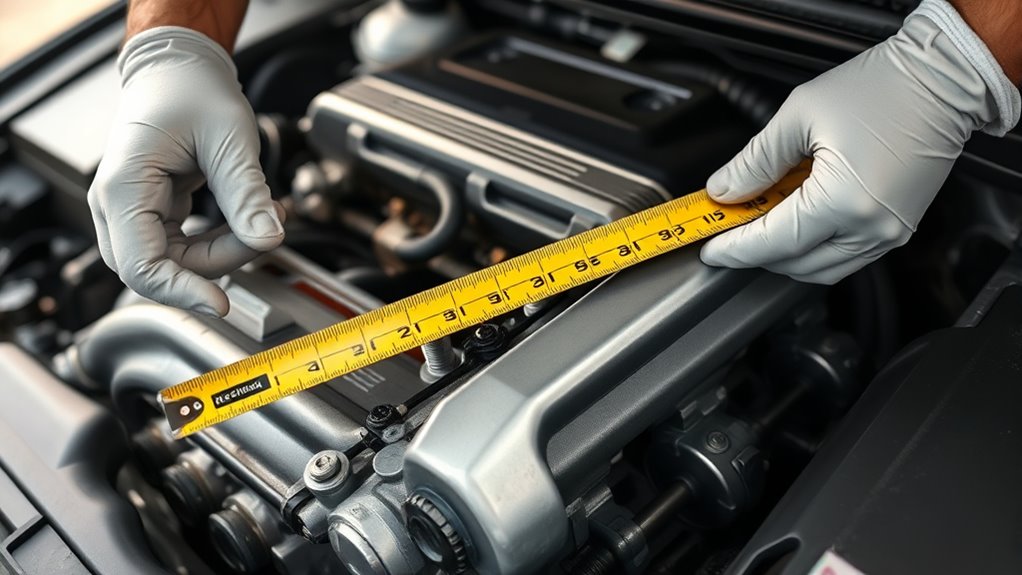
Use a tape measure to gauge the approximate length, width, and height of the engine block, but remember this is a rough estimate. Be aware that engine customization or aftermarket modifications can alter the engine’s appearance and size, making direct measurement less reliable.
Check for any added components like turbochargers or superchargers, which might indicate performance upgrades unrelated to engine size. If you spot aftermarket parts, consider that the original engine size might differ from what the modified engine suggests.
Combining your observations with a bit of research on your car’s make and model can help you arrive at a reasonable estimate of your engine size without paperwork.
Understanding Engine Size: Liters Vs. Cubic Inches
Although engine size is commonly discussed in liters or cubic inches, these measurements represent the same concept: the total volume of all the engine’s cylinders combined. This volume, known as engine capacity or displacement measurement, tells you how much air-fuel mixture the engine can burn in one cycle.
To understand the difference between liters and cubic inches:
- Liters measure engine capacity using the metric system, common in most countries.
- Cubic inches use the imperial system, often favored in classic American cars.
- One liter equals approximately 61 cubic inches.
- Both units accurately represent the displacement measurement, just in different scales.
Knowing these units helps you interpret engine specs regardless of the measurement system used. When identifying your car’s engine size, you might see either unit depending on the manufacturer or region. Just remember, they describe the same displacement, the total cylinder volume your engine uses to produce power.
How Engine Size Affects Performance And Fuel Economy
You’ll notice that a larger engine size usually means more power output. This gives your car better acceleration and towing ability. But at the same time, bigger engines often consume more fuel, which can lower your overall fuel efficiency. So, understanding this trade-off helps you decide what engine size best fits your driving needs.
Power Output Differences
How does engine size influence your car’s power and fuel efficiency? Larger engines generally produce more power because they burn more fuel and air per cycle. However, that doesn’t mean smaller engines can’t pack a punch with proper engine tuning and aftermarket modifications.
Here’s how engine size affects power output:
- Bigger engines deliver higher torque and horsepower, boosting acceleration and towing capacity.
- Smaller engines often rely on turbocharging and precise engine tuning to enhance power without increasing size.
- Aftermarket modifications can optimize airflow and exhaust, improving power regardless of engine size.
- Power output affects how your car feels on the road, influencing responsiveness and driving dynamics.
Understanding these differences helps you make better decisions when evaluating your vehicle’s performance potential.
Fuel Efficiency Impact
Why does engine size play such a big role in your car’s fuel efficiency? Larger engines typically consume more fuel because they burn more air and fuel to produce power. This means smaller engines often help with fuel conservation, making them ideal for everyday driving.
Furthermore, smaller engines tend to emit fewer pollutants, supporting emission reduction efforts.
Here’s a quick look at how engine size impacts fuel efficiency:
| Engine Size | Fuel Efficiency Impact |
|---|---|
| Small (1.0-1.5L) | Better fuel conservation |
| Medium (1.6-2.5L) | Balanced performance & fuel economy |
| Large (2.6L+) | Higher fuel consumption |
Choosing the right engine size helps you balance performance with the goal of saving fuel and reducing emissions.
Checking Engine Size For Used Car Parts
When you’re on the hunt for used car parts, a good first step is to find your engine identification number. It’s usually stamped right on the engine block, so keep an eye out for that.
You can also take a look at your vehicle registration details—these often list the engine size too.
Doing these little checks makes sure you get parts that fit your engine just right.
Locate Engine Identification Number
Before you can determine the engine size, you’ll need to locate the engine identification number on your vehicle. This number is crucial for accurate engine tuning and ensuring your car meets emission standards.
Here’s how to find it:
- Open the hood and look for a metal plate or stamped numbers on the engine block.
- Check near the firewall or on the cylinder head, where manufacturers often place the ID.
- Refer to your owner’s manual for the exact location, as it varies by make and model.
- Use a flashlight and clean the area if needed to clearly read the number.
Once you have the engine identification number, you can accurately identify your engine size and compatibility for used parts or maintenance.
Use Vehicle Registration Details
After locating your engine identification number, another reliable way to confirm your engine size is by checking your vehicle registration details. Your vehicle registration often includes key information about your car, such as the engine size, which is essential when looking for used car parts.
To access this, simply open your vehicle registration document or log in to your local motor vehicle authority’s online portal. Once you find the engine size listed, you’ll know exactly what specifications your car requires.
This method is especially useful if the engine number is hard to read or missing. By using your vehicle registration, you avoid guesswork and ensure you buy compatible parts, saving time and money during repairs or upgrades.
Why Engine Size Matters For Maintenance And Repairs
Because engine size directly affects a car’s performance and complexity, it plays a crucial role in maintenance and repairs. Knowing your engine size helps you choose the right engine oil and the correct type of spark plugs. This ensures your engine runs smoothly and efficiently.
Understanding engine size is key to selecting proper oil and spark plugs for smooth, efficient performance.
Larger engines often require more frequent checks and specific parts tailored to their design.
Here’s why engine size matters for maintenance and repairs:
- Oil Requirements: Bigger engines generally need higher volumes and specific grades of engine oil.
- Spark Plug Type: Engine size influences the spark plug size and heat range needed.
- Repair Costs: Larger engines usually mean more expensive parts and labor.
- Maintenance Frequency: More complex engines may require more frequent tune-ups and inspections.
Common Mistakes To Avoid When Identifying Your Engine Size
Don’t misread engine codes—they can be tricky and might send you down the wrong path. It’s always best to double-check your manufacturer’s specifications rather than guessing or using outdated information. By avoiding these mistakes, you’ll save yourself time and steer clear of costly errors.
Misreading Engine Codes
While engine codes can seem like straightforward identifiers, misreading them is a common mistake that can lead you to the wrong engine size. When you rely on these codes, you risk confusing similar codes or overlooking key characters, resulting in misidentified engine models.
To avoid this, keep these points in mind:
- Don’t confuse similar-looking characters like “I” and “1” or “O” and “0.”
- Check the entire code, as missing a digit can change the engine size.
- Use official resources or manuals to decode engine codes accurately.
- Be aware that some manufacturers use different codes for the same engine size.
Avoiding these pitfalls will help you identify your car’s engine size correctly and prevent costly mistakes.
Ignoring Manufacturer Specifications
Relying solely on engine codes without consulting the manufacturer’s specifications can lead you astray when identifying your engine size. Manufacturers often use technical jargon or coded language that’s not straightforward, and without their official specs, you might misinterpret these details.
Due to manufacturer secrecy, some engine information isn’t readily available or is deliberately obscured, making it risky to guess based on incomplete data. Ignoring these specifications means you could end up with wrong assumptions, affecting maintenance, repairs, or upgrades.
Always access the official documentation or trusted databases from the manufacturer to avoid confusion. By doing so, you guarantee that you’re working with accurate engine size information, saving time and preventing costly errors down the road. Don’t skip this critical step.
Frequently Asked Questions
Can Engine Size Impact My Car Insurance Rates?
Yes, engine size can impact your car insurance rates. Insurers often consider engine capacity because bigger engines usually mean higher speeds and greater risk.
If your car has a large engine capacity, you might pay more in premiums. Also, fuel efficiency plays a role. Cars with better fuel efficiency tend to be cheaper to insure since they’re often driven more responsibly and cost less to repair.
How Does Engine Size Influence Vehicle Resale Value?
Engine size often plays the role of a double-edged sword in vehicle resale value. If you’ve got a bigger engine, it’s like holding a roaring lion under the hood. Buyers might love the power but worry about engine efficiency and higher fuel consumption.
Smaller engines, while less thrilling, usually promise better fuel economy, boosting resale appeal. So, you’ll find engine size influences resale value by balancing power cravings against cost-conscious buyers seeking efficiency.
Are Larger Engines Always More Expensive to Insure?
Larger engines usually mean higher engine capacity, which often leads to increased insurance premiums. Insurance companies see bigger engines as a higher risk because they can deliver more power and speed, potentially causing more damage in accidents.
However, it’s not always the case. Your driving history, car model, and location also affect premiums. So, while bigger engines tend to cost more to insure, you might find exceptions depending on your overall profile.
Does Engine Size Affect Emissions and Environmental Regulations?
Engine size dances with emissions like a shadow with light. It directly affects fuel efficiency and engine performance. When you drive a bigger engine, it often drinks more fuel, pumping out more emissions, which tightens environmental regulations around it.
Smaller engines usually sip fuel more efficiently, producing fewer pollutants and meeting stricter standards. So, yes, engine size shapes how your car aligns with eco-rules, balancing power with the planet’s call for cleaner air.
Can Engine Size Determine Eligibility for Certain Driving Licenses?
Yes, engine size can impact your eligibility for certain driving licenses because engine classification often plays a key role in license requirements. Depending on where you live, licenses might restrict you to vehicles with specific engine sizes to make sure you’re driving safely and within your skill level.
Conclusion
Knowing your car’s engine size is like holding the key to a well-oiled clockwork. Everything runs smoother when you understand the heart of your vehicle.
Whether you flip through your owner’s manual, decode the VIN, or use online tools, these simple steps guarantee you won’t be left in the dark.
With this knowledge, you’ll steer clear of costly mistakes, keep your car humming, and enjoy the road ahead with confidence and ease. Knowing your car engine size truly makes all the difference.