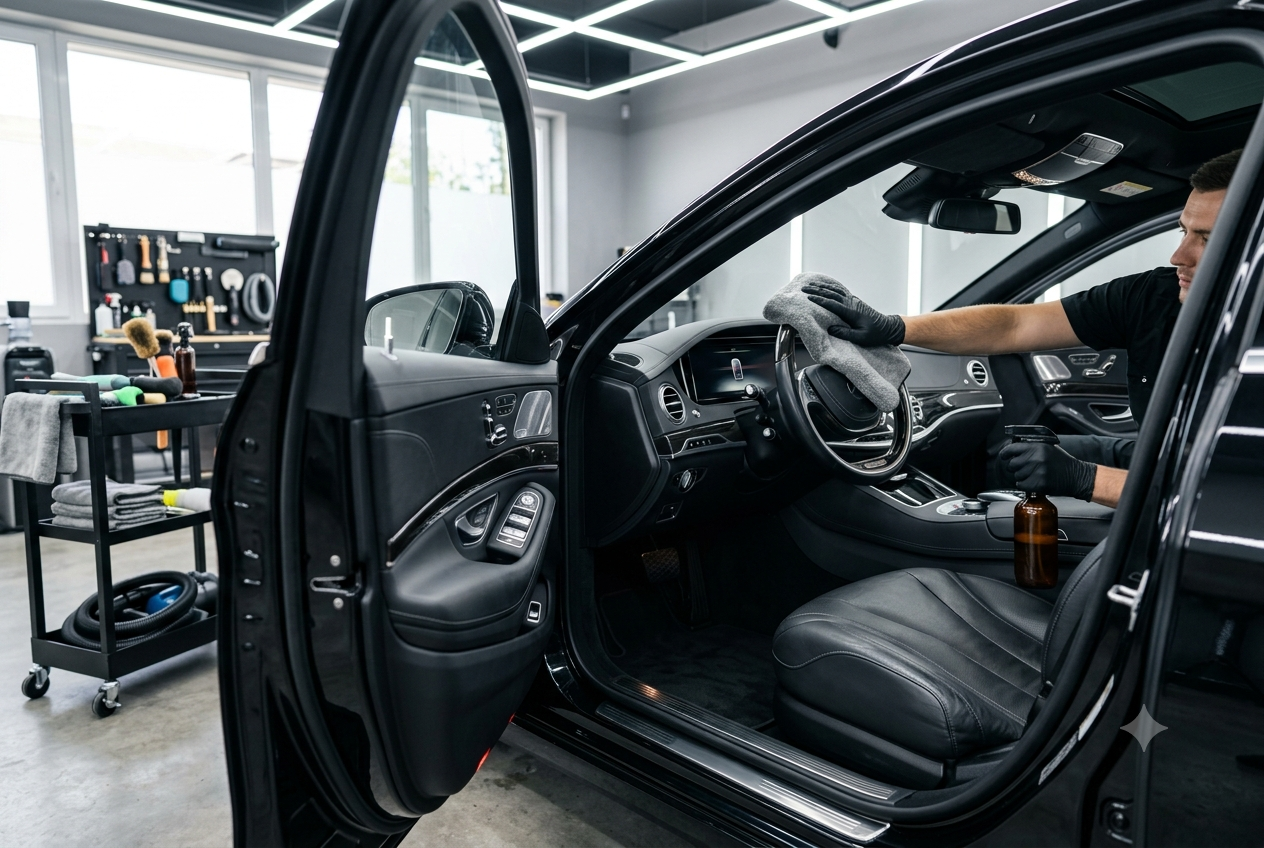
How Often Should You Detail Your Car? A Best Guide 2026 to Car Detailing Prices and Timing
Introduction
One of the most common questions car owners ask is simple on the surface but surprisingly nuanced in practice: how often should you detail your car? The answer depends on your driving habits, climate, parking conditions, and how much you value keeping your vehicle looking its best. Alongside that question come two more practical concerns — car detailing prices and how long does it take to detail a car — both of which vary significantly depending on the type of service, vehicle size, and condition of the paint and interior.
Whether you’re a new car owner trying to establish a maintenance routine or someone who hasn’t detailed their car in years and wants to know what to expect, this guide will walk you through everything: how often detailing should happen, the different types of detailing services available, what they cost, how long each one takes, and how to avoid the common mistakes that lead to wasted money or disappointing results.
By the end of this article, you’ll have a clear framework for building a detailing schedule that fits your budget, your vehicle’s needs, and your lifestyle.
Why Knowing How Often You Should Detail Your Car Matters
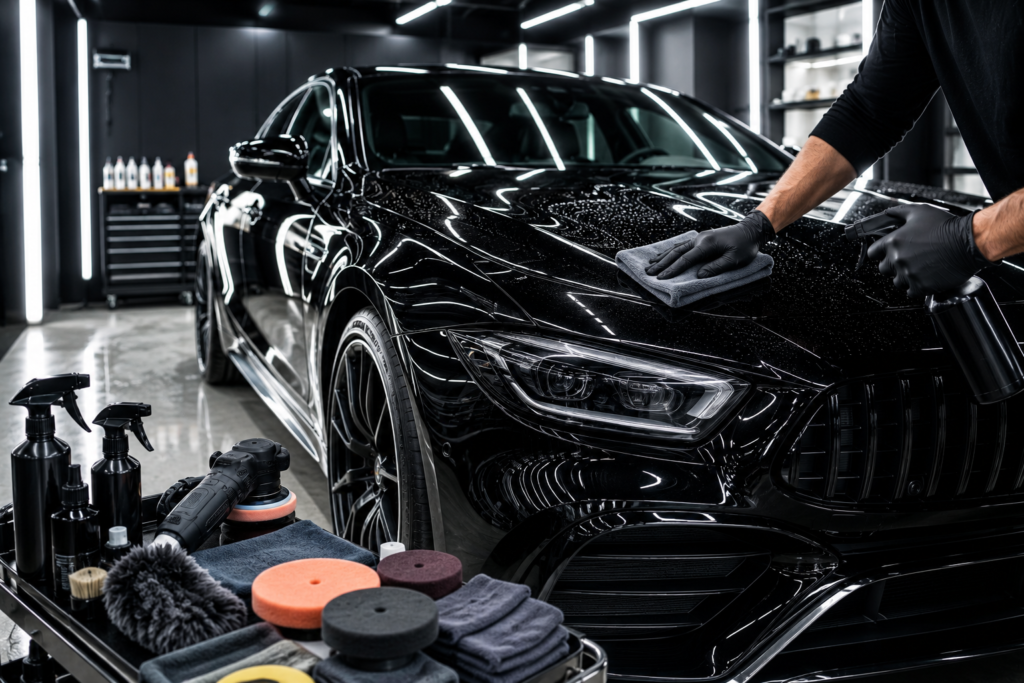
Understanding how often should you detail your car isn’t just about aesthetics — it directly affects your vehicle’s long-term condition and resale value. Skipping regular detailing allows dirt, UV rays, and contaminants to cause lasting damage to paint, upholstery, and trim, while over-detailing (especially aggressive polishing) can unnecessarily wear down clear coat over time.
Here’s why getting the frequency and service type right matters:
- Protects your paint investment – Regular washing and periodic detailing prevent swirl marks, oxidation, and staining from becoming permanent.
- Preserves interior condition – Routine interior detailing prevents stains, odors, and UV fading from setting into upholstery and dashboard materials.
- Impacts resale value – A consistently maintained vehicle with documented detailing history often commands a higher resale or trade-in price.
- Saves money long-term – Preventative detailing is generally cheaper than correcting years of neglect, such as heavy paint correction or deep stain removal.
- Improves driving experience – A clean, well-maintained interior and exterior simply make everyday driving more enjoyable.
Knowing both the right frequency and realistic car detailing prices helps you budget appropriately and avoid either overpaying for unnecessary services or underinvesting in the care your vehicle actually needs.
Different Types of Car Detailing Services (10+ Types)
Not all detailing services are the same, and understanding the differences helps you choose the right one for your needs and budget.
- Basic Exterior Wash & Dry – A simple hand wash, rinse, and dry, often including tire shine and window cleaning.
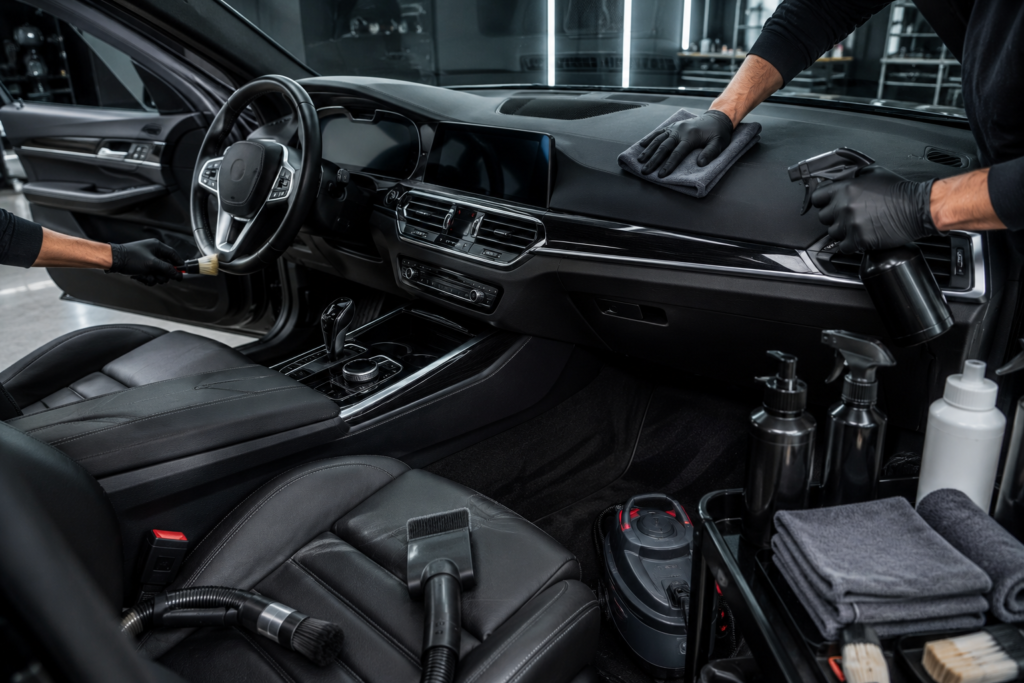
- Basic Interior Detailing – Vacuuming, wiping down surfaces, and light stain treatment for seats and carpets.
- Full Exterior Detail – Includes washing, clay bar treatment, wheel cleaning, and a coat of wax or sealant.
- Full Interior Detail – Deep cleaning of upholstery, carpets, vents, and all interior surfaces, including steam cleaning where applicable.
- Complete Full-Service Detail – Combines full interior and exterior detailing in one comprehensive package.
- Paint Correction Detail – Machine polishing to remove swirl marks, scratches, and oxidation before applying protection.
- Ceramic Coating Package – A detailing service that includes paint correction followed by application of a long-lasting ceramic coating.
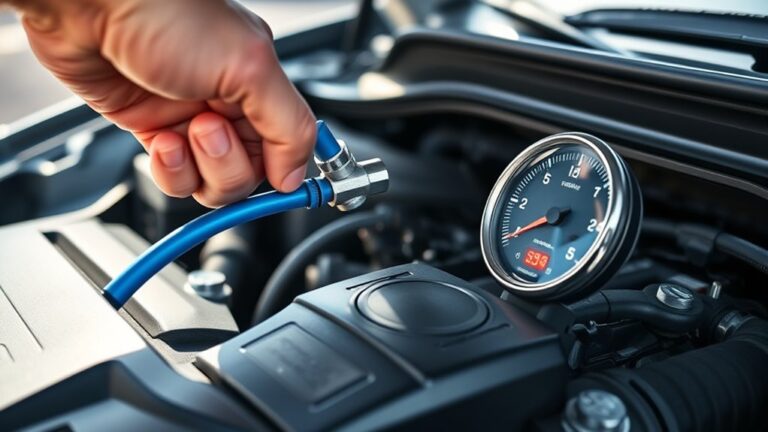
- Engine Bay Detailing – Degreasing and cleaning the engine compartment for both appearance and maintenance purposes.
- Headlight Restoration – Removing oxidation and haze from headlight lenses to restore clarity and improve nighttime visibility.
- Leather Conditioning Detail – Deep cleaning and conditioning leather seats to prevent cracking and fading.
- Odor Removal / Ozone Treatment – Specialized treatment to eliminate smoke, pet, or mildew odors from the cabin.
- Pre-Sale / Trade-In Detail – A cosmetic-focused detail designed to maximize a vehicle’s appearance before selling or trading it in.
- Maintenance Detail (Quick Detail) – A lighter, faster service between full details to maintain gloss and cleanliness.
Each of these services differs not only in what’s included but also in car detailing prices and how long does it take to detail a car, which we’ll break down next.
Maintenance Comparison
Here’s a general comparison of how often each type of service should be performed, along with typical price ranges and time requirements:
| Type | Recommended Frequency | Typical Price Range | Typical Duration |
|---|---|---|---|
| Basic Exterior Wash & Dry | Weekly to biweekly | $15–$40 | 20–40 minutes |
| Basic Interior Detailing | Monthly | $50–$100 | 45–90 minutes |
| Full Exterior Detail | Every 2–3 months | $100–$250 | 2–4 hours |
| Full Interior Detail | Every 3–6 months | $100–$300 | 2–5 hours |
| Complete Full-Service Detail | Every 3–6 months | $200–$500 | 4–8 hours |
| Paint Correction Detail | Every 1–3 years | $300–$1,000+ | 4–10 hours |
| Ceramic Coating Package | Every 2–5 years | $500–$2,000+ | 1–3 days (including curing) |
| Engine Bay Detailing | Every 6–12 months | $50–$150 | 30–60 minutes |
| Headlight Restoration | Every 1–2 years | $50–$150 | 30–60 minutes |
| Leather Conditioning Detail | Every 3–6 months | $75–$200 | 1–2 hours |
| Odor Removal / Ozone Treatment | As needed | $75–$250 | 1–3 hours |
| Pre-Sale Detail | Once, before sale | $150–$400 | 3–6 hours |
| Maintenance Detail | Monthly | $50–$120 | 1–2 hours |
Prices and durations vary by region, vehicle size, and the detailer’s experience level, but this table offers a realistic baseline for budgeting and scheduling.
Maintenance Explained
The concept of “maintenance” in car detailing refers to how frequently each service needs to be repeated to keep your vehicle in optimal condition. Understanding this helps answer both how often should you detail your car and how much you should expect to spend annually.
- Weekly to biweekly washing keeps dirt, road grime, and contaminants from building up and causing long-term paint damage.
- Monthly interior maintenance prevents dust, crumbs, and minor stains from becoming embedded in upholstery and carpet fibers.
- Quarterly to biannual full details address deeper cleaning needs, including clay bar treatments, wax reapplication, and thorough interior deep cleaning.
- Annual to multi-year paint correction and coating services are less frequent but more intensive, designed to reset the vehicle’s finish and provide long-term protection.
- As-needed specialty services like odor removal or headlight restoration are performed only when a specific issue arises, rather than on a fixed schedule.
Owners who maintain a consistent schedule of lighter, more frequent services often spend less overall than those who neglect their vehicle for years and then require intensive correction and restoration work.
Pros & Cons of Each Type
Basic Exterior Wash & Dry
- Pros: Affordable, quick, keeps paint free of surface grime
- Cons: Doesn’t address deeper contamination or protect against UV damage
Basic Interior Detailing
- Pros: Budget-friendly way to maintain cleanliness
- Cons: Doesn’t remove deep stains or odors
Full Exterior Detail
- Pros: Restores gloss and removes embedded contaminants
- Cons: More expensive and time-consuming than a basic wash
Full Interior Detail
- Pros: Thorough cleaning of all cabin surfaces
- Cons: Requires significant drying time, especially after steam cleaning
Complete Full-Service Detail
- Pros: Comprehensive, addresses both interior and exterior in one visit
- Cons: Highest price point among routine service types
Paint Correction Detail
- Pros: Removes swirl marks and restores true gloss
- Cons: Time-intensive and costly; not needed as frequently
Ceramic Coating Package
- Pros: Long-term protection, reduces future maintenance needs
- Cons: High upfront cost and multi-day turnaround
Engine Bay Detailing
- Pros: Improves appearance and can help spot mechanical issues early
- Cons: Requires care to avoid water damage to sensitive components
Headlight Restoration
- Pros: Improves visibility and appearance affordably
- Cons: Results can fade over time without a protective UV coating
Leather Conditioning Detail
- Pros: Prevents cracking and extends the life of leather seats
- Cons: Needs to be repeated regularly to maintain effectiveness
Odor Removal / Ozone Treatment
- Pros: Effectively eliminates stubborn smells
- Cons: Vehicle typically needs to be unoccupied for several hours during treatment
Pre-Sale Detail
- Pros: Maximizes visual appeal for potential buyers
- Cons: Primarily cosmetic; doesn’t address mechanical issues
Maintenance Detail (Quick Detail)
- Pros: Fast, affordable way to maintain results between full details
- Cons: Not a substitute for periodic deep cleaning or correction
Touch-Up & Repair Tips for Each Type
- Basic Exterior Wash: Use a spray detailer between washes to maintain shine without a full rewash.
- Basic Interior Detailing: Keep a portable vacuum or interior wipes in the car for quick touch-ups between services.
- Full Exterior Detail: Apply a maintenance spray wax every few weeks to extend the results.
- Full Interior Detail: Use fabric or leather protectant sprays between full details to guard against new stains.
- Complete Full-Service Detail: Schedule a quick maintenance detail at the halfway point to extend results until the next full service.
- Paint Correction Detail: Follow up with a ceramic coating or sealant to protect the corrected surface and delay future correction needs.
- Ceramic Coating Package: Use ceramic-safe booster sprays between full washes to refresh hydrophobic performance.
- Engine Bay Detailing: Wipe down visible components monthly to reduce dust buildup between full cleanings.
- Headlight Restoration: Apply a UV-protective sealant after restoration to slow down future oxidation.
- Leather Conditioning Detail: Reapply conditioner every 2–3 months, especially in hot or sunny climates.
- Odor Removal Treatment: Use a cabin air freshener or activated charcoal bag to help maintain freshness afterward.
- Pre-Sale Detail: Keep the vehicle clean until sale by wiping down surfaces and avoiding food or drinks inside the cabin.
- Maintenance Detail: Stick to a consistent monthly schedule rather than waiting until visible dirt accumulates.
Cleaning & Maintenance Best Practices
To keep your detailing schedule efficient and cost-effective, follow these best practices:
- Wash your car weekly or biweekly to prevent dirt and contaminants from causing long-term damage.
- Vacuum and wipe down the interior monthly to avoid deep-set stains and odors.
- Schedule a full detail every 3–6 months depending on driving conditions and exposure to the elements.
- Apply protection (wax, sealant, or ceramic coating) after any paint correction to extend the results.
- Address spills and stains immediately rather than waiting for the next scheduled detail.
- Use a professional service for paint correction and ceramic coating rather than attempting these advanced processes yourself.
- Keep a simple maintenance log to track when each service was last performed and when the next is due.
Common Mistakes to Avoid
- Assuming a single wash equals a full detail – Washing removes surface dirt but doesn’t address deeper contamination, stains, or paint imperfections.
- Waiting too long between details – Neglecting your vehicle for years often leads to more expensive corrective services down the line.
- Choosing the cheapest detailer without checking reviews – Low prices sometimes reflect rushed work or lower-quality products.
- Over-detailing paint with aggressive polishing – Excessive correction removes more clear coat than necessary and can shorten your paint’s lifespan.
- Not asking for a breakdown of car detailing prices – Understanding what’s included in a quoted price helps avoid unexpected upsells.
- Ignoring interior maintenance – Many owners focus only on exterior shine while neglecting cabin cleanliness, which affects both comfort and resale value.
- Skipping protection after paint correction – Failing to apply wax, sealant, or ceramic coating afterward leaves the corrected paint vulnerable to fast re-scratching.
Frequently Asked Questions (FAQs)
1. How often should you detail your car? Most experts recommend a full detail every 3–6 months, with lighter maintenance washing weekly or biweekly in between.
2. How long does it take to detail a car? It depends on the service — a basic wash takes 20–40 minutes, while a complete full-service detail can take 4–8 hours, and ceramic coating packages may require 1–3 days including curing time.
3. What are typical car detailing prices? Prices range widely, from $15–$40 for a basic wash to $500–$2,000+ for comprehensive services like ceramic coating packages.
4. Does detailing frequency depend on where I live? Yes, vehicles in harsh climates, coastal areas, or heavy pollen regions typically need more frequent detailing than those in milder, more sheltered environments.
5. Is it worth paying for a full-service detail regularly? For most owners who want to preserve their vehicle’s appearance and value, yes — regular full-service details prevent costly long-term damage.
6. How long does interior detailing take compared to exterior detailing? Interior detailing generally takes slightly longer due to steam cleaning and stain treatment, though a combined full-service detail addresses both simultaneously.
7. Why do car detailing prices vary so much between shops? Pricing depends on vehicle size, service inclusions, product quality, and the detailer’s experience and location.
8. Can I detail my car myself to save money? Yes, basic washing and interior cleaning are manageable DIY tasks, though paint correction and ceramic coating are best left to professionals.
9. How often should I get my car’s interior deep cleaned? Every 3–6 months is typical, though households with pets, children, or frequent food consumption in the car may benefit from more frequent cleaning.
10. Does the type of vehicle affect car detailing prices? Yes, larger vehicles like SUVs and trucks typically cost more to detail than smaller sedans due to increased surface area and interior space.
11. How long does a ceramic coating package take to complete? Including paint correction and curing time, ceramic coating packages often take 1–3 days from start to finish.
12. Should I detail my car before selling it? Yes, a pre-sale detail often improves buyer perception and can positively affect the final sale or trade-in price.
13. How often should headlight restoration be done? Typically every 1–2 years, depending on UV exposure and whether a protective sealant was applied after the last restoration.
14. Is a quick maintenance detail worth the cost between full details? Yes, it helps extend the results of your last full detail and keeps your vehicle looking fresh at a lower cost than a complete service.
15. What factors should I consider when choosing a detailing service? Look at reviews, service inclusions, transparent pricing, and whether the detailer uses quality products suited to your vehicle’s specific needs.
Conclusion
Figuring out how often should you detail your car, understanding realistic car detailing prices, and knowing how long does it take to detail a car all come together to help you build a maintenance routine that actually works for your lifestyle and budget. Lighter, more frequent services like washing and quick interior cleaning help prevent long-term damage, while periodic full details, paint correction, and ceramic coating packages provide deeper restoration and longer-lasting protection.
By understanding the different types of detailing services available, their typical costs and timeframes, and the common mistakes to avoid, you can make informed decisions that keep your vehicle looking its best without overspending or falling behind on essential care. A consistent, well-planned detailing schedule isn’t just about appearances — it’s an investment in your car’s long-term condition and value.