Brake Fluid Explained: Types, Maintenance, and Best Brake Fluid Change Cost Guide 2026
Introduction
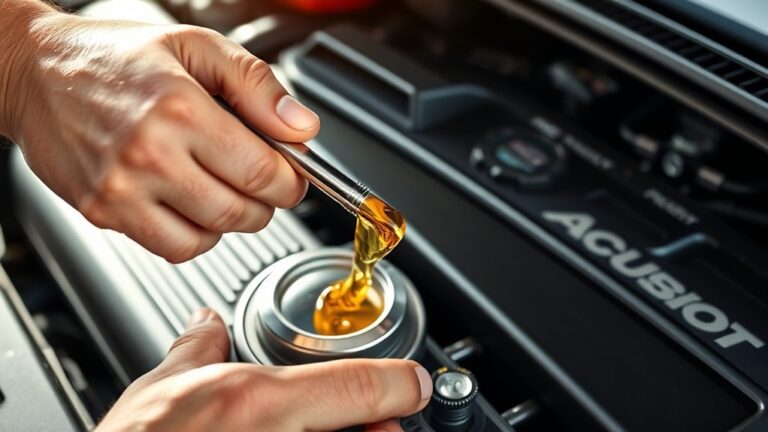
Brake fluid is one of the most overlooked components in vehicle maintenance, yet it plays a critical role in your car’s ability to stop safely. Unlike engine oil or coolant, brake fluid isn’t something most drivers think about until a warning light appears or a mechanic mentions it during a routine service. But understanding brake fluid — what it does, the different types available, and what a brake fluid change cost typically looks like — is essential for every vehicle owner who wants to maintain safe, reliable braking performance.
It is a hydraulic fluid that transfers the force from your foot pressing the brake pedal into the pressure needed to engage your brake pads or shoes. Because it operates in a sealed system exposed to heat and, over time, moisture absorption, brake fluid degrades and must be replaced periodically. Using the wrong type, or neglecting to change it altogether, can lead to reduced braking performance, corrosion within the brake system, and in severe cases, brake failure.
This guide covers everything you need to know: why this matters, the different types available, how their maintenance needs compare, what affects brake fluid change cost, the pros and cons of each type, repair tips, cleaning and maintenance best practices, common mistakes to avoid, and answers to the most frequently asked questions.
Why Brake Fluid Matters
Your braking system relies entirely on hydraulic pressure to function, and brake fluid is the medium that makes that pressure transfer possible. Without properly functioning brake fluid, your brakes simply cannot perform as designed, regardless of how good your brake pads or rotors are.
Here’s why brake fluid deserves serious attention:
- It’s the backbone of hydraulic braking – Brake fluid transmits force from the pedal to the calipers or wheel cylinders, and any compromise in fluid quality directly affects stopping power.
- It absorbs moisture over time – Most brake fluids are hygroscopic, meaning they naturally absorb water from the air, which lowers the fluid’s boiling point and increases the risk of brake fade under heavy use.
- It protects internal components – Quality brake fluid helps prevent corrosion within brake lines, calipers, and the master cylinder, all of which are expensive to repair or replace.
- It affects safety directly – Degraded brake fluid can lead to a spongy pedal feel, reduced stopping power, or complete brake failure in extreme cases, particularly during prolonged braking such as mountain descents.
- Ignoring it leads to costlier repairs – Neglected brake fluid can cause corrosion damage that turns a simple fluid change into an expensive brake system overhaul.
Understanding brake fluid and staying on top of a proper change schedule is one of the simplest, most affordable ways to protect both your safety and your vehicle’s long-term reliability.
Different Types of Brake Fluid (10+ Types)
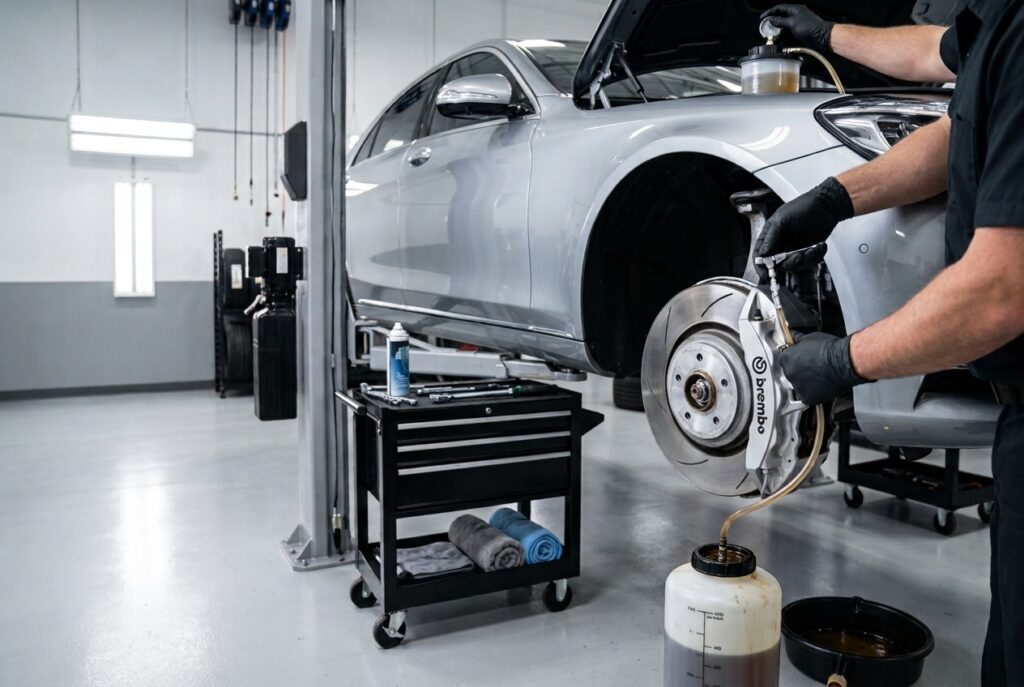
Brake fluid isn’t a one-size-fits-all product. Different vehicles, driving conditions, and performance needs call for different formulations. Here are the main types you’ll encounter.
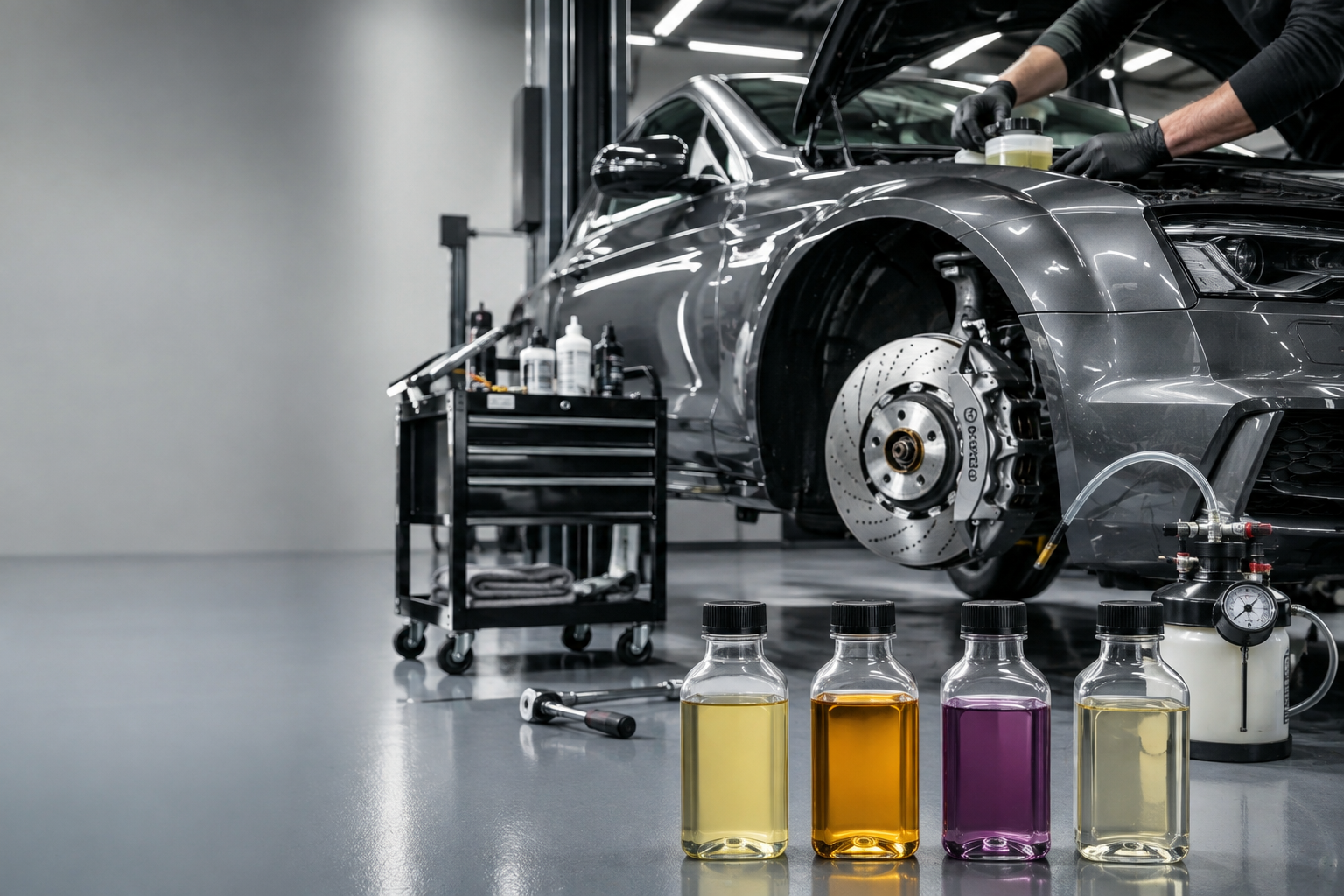
- DOT 3 Brake Fluid – A glycol-based fluid commonly used in standard passenger vehicles; affordable but has a lower boiling point than higher-spec fluids.
- DOT 4 Brake Fluid – Also glycol-based, with a higher boiling point than DOT 3, making it suitable for vehicles with more demanding braking needs, including many modern cars with ABS.
- DOT 4 Low Viscosity (DOT 4 LV) – A specialized version of DOT 4 designed for vehicles with electronic stability control and advanced braking systems that require faster fluid response.
- DOT 5 Brake Fluid (Silicone-Based) – A non-hygroscopic, silicone-based fluid that doesn’t absorb moisture, often used in classic cars and specialty applications; not compatible with ABS systems.
- DOT 5.1 Brake Fluid – A glycol-based fluid (despite the “5” naming) with a very high boiling point, often used in high-performance and heavy-duty vehicles.
- Mineral-Based Brake Fluid (LHM) – Used primarily in certain European vehicles like older Citroën and Rolls-Royce models; not compatible with standard DOT fluids.
- Synthetic Glycol-Based Fluid – A broader category covering most DOT 3, 4, and 5.1 fluids, engineered for consistent performance across temperature ranges.
- Racing / High-Performance Brake Fluid – Formulated with extremely high dry and wet boiling points for track use, where brakes are subjected to extreme heat.
- Low-Boiling-Point Standard Fluid – Basic formulations found in older or economy vehicles, sufficient for normal driving but less suited to heavy-duty use.
- High-Boiling-Point Performance Fluid – Designed for towing, mountain driving, or performance vehicles where brake temperatures run higher than average.
- Color-Coded Brake Fluid Variants – Some manufacturers offer tinted fluids to make leak detection and fluid changes easier to visually track.
- OEM-Specific Brake Fluid – Certain manufacturers specify proprietary formulations that meet or exceed DOT standards for their particular braking systems.
Choosing the correct type isn’t just a preference — using an incompatible fluid, such as silicone-based DOT 5 in an ABS-equipped vehicle, can cause serious performance and safety issues.
Maintenance Comparison
Here’s a general comparison of how different brake fluid types perform in terms of maintenance needs and typical replacement intervals:
| Type | Moisture Absorption | Recommended Change Interval | Relative Cost |
|---|---|---|---|
| DOT 3 | High | Every 2 years | Low |
| DOT 4 | High | Every 2 years | Low-Moderate |
| DOT 4 LV | High | Every 1–2 years | Moderate |
| DOT 5 (Silicone) | None | Every 3–5 years | Moderate-High |
| DOT 5.1 | High | Every 2 years | Moderate-High |
| Mineral-Based (LHM) | Low | Every 2–3 years (vehicle-specific) | Moderate |
| Synthetic Glycol-Based | High | Every 2 years | Moderate |
| Racing/High-Performance | Moderate-High | Every 6–12 months (track use) | High |
| Low-Boiling Standard | High | Every 1–2 years | Low |
| High-Boiling Performance | Moderate | Every 2 years | Moderate-High |
As a general rule, glycol-based fluids (DOT 3, 4, and 5.1) require more frequent changes due to moisture absorption, while silicone-based DOT 5 fluid lasts longer but isn’t suitable for every vehicle.
Maintenance Explained
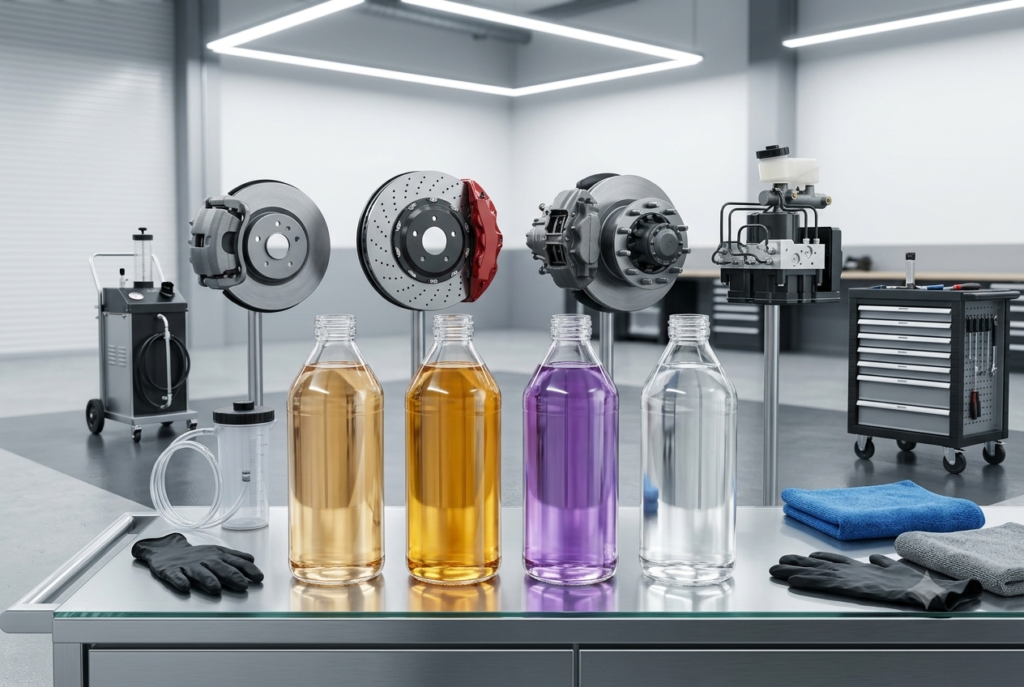
Brake fluid maintenance isn’t just about topping off the reservoir — it’s about ensuring the fluid maintains its boiling point and moisture content within safe limits. Here’s what that involves:
- Routine fluid level checks during regular oil changes or inspections to catch leaks or low levels early.
- Moisture content testing, which some shops perform using a brake fluid tester to determine if a change is needed before the standard interval.
- Full fluid flushes every 1–3 years, depending on fluid type and manufacturer recommendation, to remove moisture-contaminated fluid and replace it with fresh fluid.
- Bleeding the brake system during a flush to remove air bubbles, which can also cause a spongy pedal feel similar to moisture contamination.
- Inspecting for discoloration, since brake fluid that appears dark brown or cloudy is often a sign it’s overdue for replacement.
Because brake fluid maintenance directly affects safety, most manufacturers provide a specific recommended interval in the owner’s manual, and it’s generally not advisable to extend beyond that timeframe simply to save on brake fluid change cost.
Pros & Cons of Each Type
DOT 3
- Pros: Affordable, widely available
- Cons: Lower boiling point, absorbs moisture quickly
DOT 4
- Pros: Higher boiling point than DOT 3, suitable for most modern vehicles
- Cons: Still hygroscopic, requires regular changes
DOT 4 LV
- Pros: Faster response for advanced braking systems
- Cons: More expensive and less widely stocked than standard DOT 4
DOT 5 (Silicone)
- Pros: Doesn’t absorb moisture, longer intervals between changes
- Cons: Not compatible with ABS systems, can trap air more easily during bleeding
DOT 5.1
- Pros: Very high boiling point, suitable for performance and heavy-duty use
- Cons: Higher cost than standard DOT 3 or 4
Mineral-Based (LHM)
- Pros: Low moisture absorption, designed for specific vehicle systems
- Cons: Not interchangeable with standard DOT fluids; limited availability
Synthetic Glycol-Based
- Pros: Reliable, consistent performance across most vehicles
- Cons: Still requires regular moisture-related maintenance
Racing/High-Performance Fluid
- Pros: Extremely high boiling point for track conditions
- Cons: Expensive and requires more frequent changes due to intense heat exposure
Low-Boiling-Point Standard Fluid
- Pros: Cost-effective for everyday, non-demanding driving
- Cons: Not suitable for towing, mountain driving, or performance use
High-Boiling-Point Performance Fluid
- Pros: Better suited for demanding driving conditions
- Cons: Higher cost than standard fluid options
Repair Tips for Each Type
- DOT 3: If pedal feel becomes soft, schedule a fluid flush promptly rather than waiting for the next standard interval.
- DOT 4: Monitor fluid color regularly; darkening fluid indicates it’s time for a change.
- DOT 4 LV: Ensure any technician servicing your vehicle uses the correct low-viscosity formulation to avoid compatibility issues.
- DOT 5 (Silicone): Have the system bled carefully and slowly, as silicone fluid is more prone to trapping air bubbles than glycol-based options.
- DOT 5.1: Because of its glycol base, treat it with the same moisture-monitoring routine as DOT 3 and DOT 4.
- Mineral-Based (LHM): Only use fluid specifically labeled for your vehicle’s system; never substitute with standard DOT fluid.
- Synthetic Glycol-Based: Stick to manufacturer-recommended intervals rather than extending changes to save money.
- Racing/High-Performance Fluid: Change more frequently if used for track days, since repeated high-heat cycles degrade performance fluid faster.
- Low-Boiling Standard Fluid: Upgrade to a higher-spec fluid if you frequently tow or drive in mountainous terrain.
- High-Boiling Performance Fluid: Pair with high-quality brake pads and rotors to fully benefit from the fluid’s heat resistance.
Cleaning & Maintenance Best Practices
Brake fluid isn’t something you “clean” in the traditional sense, but proper system care extends its life and performance:
- Check fluid levels regularly, ideally during every oil change or seasonal inspection.
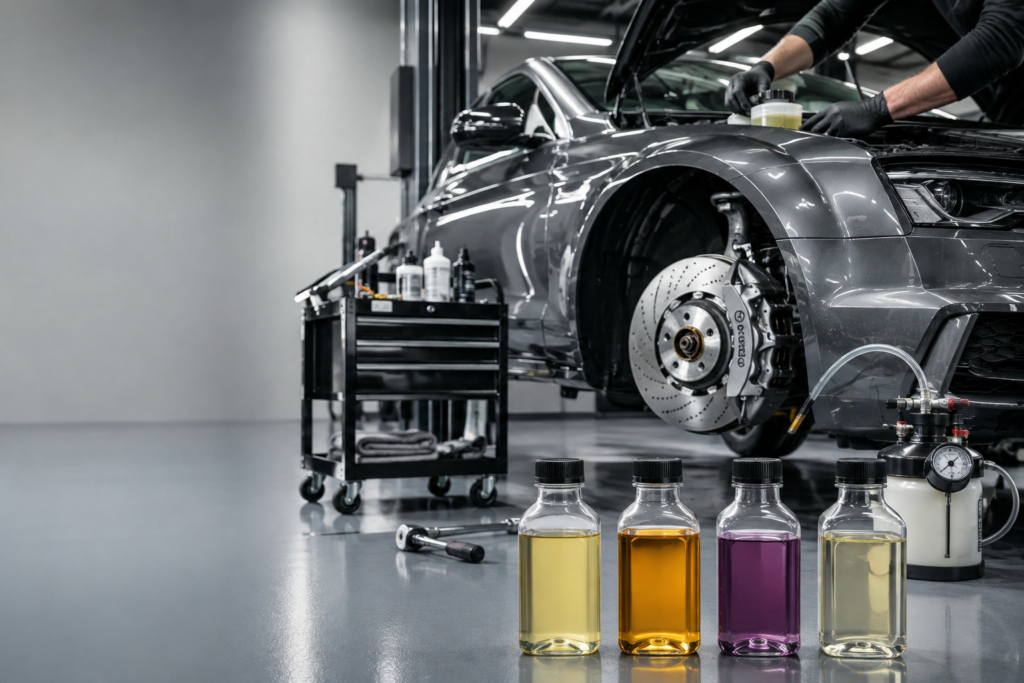
- Watch for discoloration, as fresh brake fluid is typically clear to light amber, while degraded fluid turns dark brown.
- Have moisture content tested periodically, especially if your vehicle is due for a flush based on mileage or time.
- Keep the reservoir cap sealed properly to minimize moisture and contaminant entry.
- Avoid mixing incompatible fluid types, such as silicone-based DOT 5 with glycol-based DOT 3, 4, or 5.1.
- Address any leaks immediately, since low fluid levels can introduce air into the system and compromise braking performance.
- Follow your manufacturer’s recommended flush interval, typically every 2 years for most glycol-based fluids.
Common Mistakes to Avoid
- Ignoring the recommended change interval – Waiting too long allows moisture buildup to reduce the fluid’s boiling point, increasing the risk of brake fade.
- Using the wrong fluid type – Mixing incompatible fluids, especially silicone-based DOT 5 with glycol-based fluids, can damage seals and reduce braking performance.
- Assuming brake fluid never needs changing – Unlike some fluids, brake fluid degrades over time even without heavy use, due to moisture absorption.
- Overlooking the true brake fluid change cost when budgeting – Failing to account for labor, especially if a full system bleed is required, can lead to unexpected costs.
- Delaying service after warning signs – A spongy pedal, dashboard warning light, or discolored fluid should prompt immediate inspection, not procrastination.
- DIY fluid changes without proper bleeding technique – Improper bleeding can introduce air into the lines, leading to reduced brake performance.
- Choosing the cheapest fluid without checking manufacturer specifications – Using a fluid that doesn’t meet your vehicle’s required DOT rating can compromise safety.
Frequently Asked Questions (FAQs)
1. What is brake fluid, and what does it do? Brake fluid is a hydraulic fluid that transfers the force from pressing the brake pedal into the pressure needed to engage the brakes at each wheel.
2. How often should brake fluid be changed? Most manufacturers recommend changing brake fluid every 2 years, though this can vary depending on the fluid type and driving conditions.
3. What is the average change brake fluid cost? Brake fluid change cost typically ranges from $80 to $200 depending on the vehicle, fluid type, and whether a full system bleed is required.
4. Can I mix different types of brake fluid? No, mixing incompatible types, such as silicone-based DOT 5 with glycol-based DOT 3 or 4, can damage seals and compromise braking performance.
5. How do I know if my brake fluid needs to be changed? Signs include a soft or spongy brake pedal, a dashboard warning light, or fluid that appears dark brown or cloudy instead of clear to light amber.
6. Is DOT 4 better than DOT 3 brake fluid? DOT 4 generally has a higher boiling point than DOT 3, making it better suited for vehicles with more demanding braking systems, though both are widely used.
7. Does brake fluid really absorb moisture over time? Yes, most brake fluids (except silicone-based DOT 5) are hygroscopic and naturally absorb moisture from the air, which lowers their boiling point over time.
8. Can I change brake fluid myself? Yes, with proper tools and bleeding technique, though many owners prefer professional service to ensure the system is fully bled and free of air bubbles.
9. What happens if I never change my brake fluid? Neglected brake fluid can lead to reduced stopping power, a spongy pedal feel, and corrosion damage within the brake system over time.
10. Why does change brake fluid cost vary so much between shops? Cost varies based on vehicle type, fluid type required, regional labor rates, and whether additional services like a full system bleed are needed.
11. Is silicone-based DOT 5 fluid better than glycol-based fluid? It depends on the application — DOT 5 doesn’t absorb moisture, but it’s not compatible with ABS systems, making glycol-based fluids more common in modern vehicles.
12. Does towing or mountain driving affect brake fluid needs? Yes, vehicles used for towing or frequent mountain driving benefit from higher-boiling-point fluid and more frequent change intervals due to increased heat exposure.
13. Can old brake fluid cause brake failure? In severe cases, yes — degraded, moisture-contaminated fluid can boil under heavy braking, leading to a loss of hydraulic pressure and reduced stopping power.
14. How long does a brake fluid change take? A standard brake fluid flush typically takes 30 minutes to an hour, depending on the vehicle and whether a full system bleed is performed.
15. Should I get a brake fluid test before committing to a full flush? Yes, many shops offer fluid testing to check moisture content, which can help confirm whether a full flush is necessary at that time.
Conclusion
Brake fluid may not get as much attention as oil changes or tire rotations, but it plays an equally critical role in keeping your vehicle safe to drive. Understanding the different types of brake fluid, how their maintenance needs compare, and what to expect in terms of brake fluid change cost helps you stay ahead of potential safety issues rather than reacting to them after the fact.
Whether your vehicle uses standard DOT 3, higher-performance DOT 4 or 5.1, or specialty silicone-based DOT 5 fluid, the key takeaway remains the same: consistent maintenance and timely fluid changes protect both your braking performance and your long-term repair costs. By following your manufacturer’s recommended intervals, watching for warning signs, and avoiding common mistakes like mixing incompatible fluid types, you can ensure your braking system performs reliably for years to come.