5 Key Differences Between Rotary and Hammer Drills
Choosing the right drill can be frustrating, especially when you need clean holes without damaging your material. You’re not alone—many people struggle to decide between a rotary drill and a hammer drill. Understanding the key differences between rotary and hammer drills can make your choice much easier.
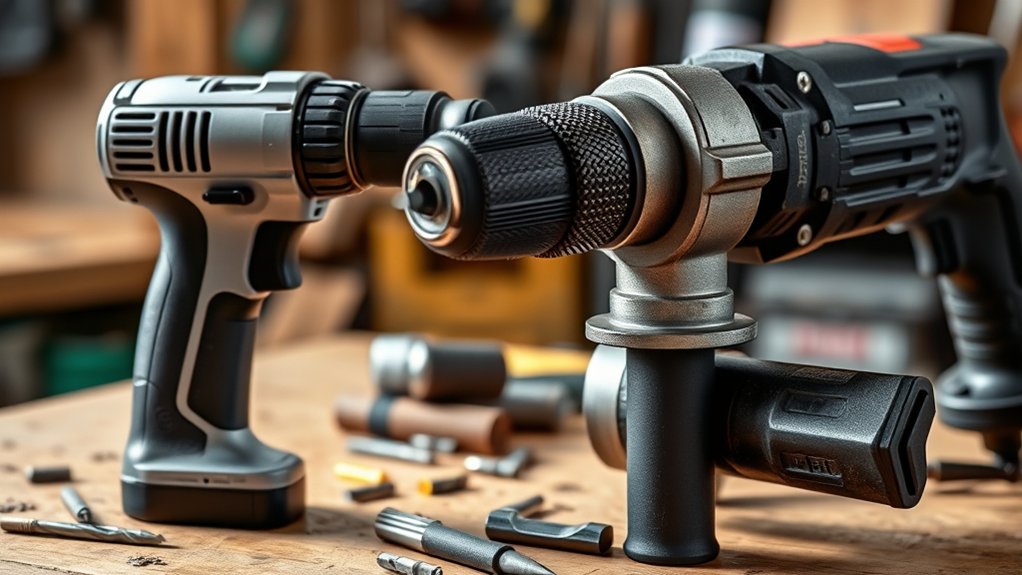
A rotary drill spins smoothly for controlled drilling and fastening, while a hammer drill combines rotation with rapid forward-and-back impacts. Hammer models provide more striking force for brick, block, and light concrete, whereas rotary drills deliver steadier torque for wood, metal, plastic, and extended work.
Rotary drills typically offer better speed control and precision, while hammer drills vibrate more and need a firm grip. Choose based on your material, hole size, comfort, and project needs. You’ll find more guidance below.
Key Takeaways
- Operating action: Rotary drills spin smoothly, while hammer drills combine rotation with rapid forward-and-back impacts.
- Primary materials: Rotary drills suit wood, metal, plastic, and fastening. Hammer drills excel in brick, block, and concrete.
- Control and precision: Rotary drills offer smoother variable-speed control. Hammer drills produce vibration that makes precise handling harder.
- Power delivery: Rotary drills provide steady torque, whereas hammer drills use impact energy to chip through masonry.
- Project suitability: Choose rotary drills for general-purpose, lighter work. Choose hammer drills for masonry holes and construction tasks.
Rotary vs. Hammer Drill: How Do They Work?
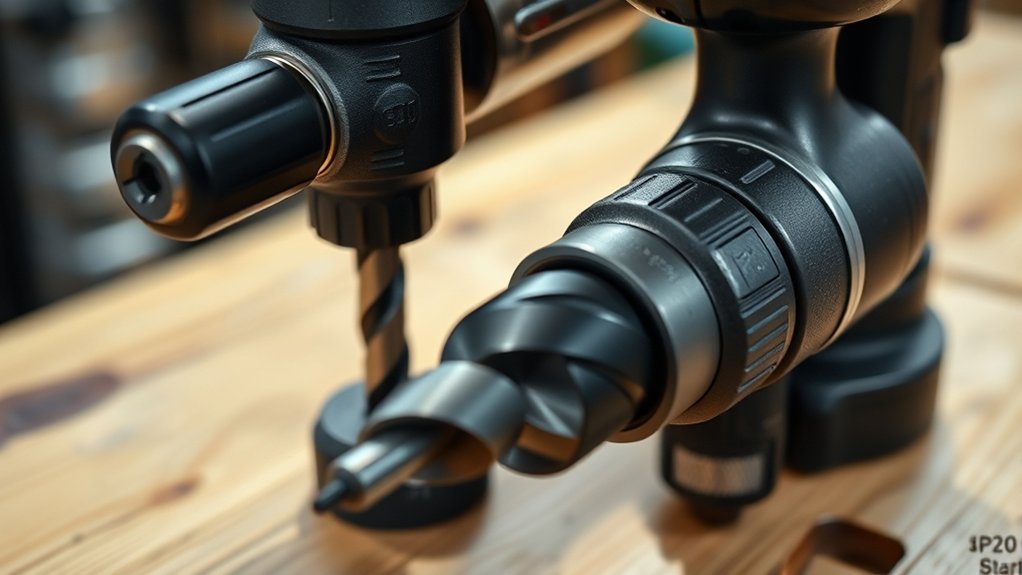
Rotary and hammer drills both spin a bit, but they apply force differently. When you use a rotary drill, the motor turns the chuck and bit continuously.
Rotary drills cut through materials with smooth, continuous rotation, giving you steady control for varied drilling tasks.
You guide the tool into wood, metal, plastic, or masonry while the bit removes material through rotation and cutting. A hammer drill adds a rapid forward-and-back motion to that rotation.
Its internal mechanism pushes the bit against masonry repeatedly, helping you break through brick, block, or concrete as you drill.
You’ll notice the difference in how each tool feels. A rotary drill runs with a smoother action, while a hammer drill delivers a buzzing, tapping sensation through the handle.
Consider Drill ergonomics when choosing between them, especially if you’ll work overhead or for long periods. Also compare Corded vs. cordless designs: corded models provide continuous operation, while cordless models let you move freely.
Choose the action and format that match your task, access, and comfort.
Which Drill Delivers More Power and Impact?

The hammer drill delivers more impact because its forward-and-back action helps the bit chip through hard masonry as it spins. You’ll feel that pulsing force when drilling, making it effective for demanding holes in brick, block, and concrete. However, its impact mechanism doesn’t automatically mean greater overall power.
A rotary drill typically supplies stronger continuous torque and handles heavy-duty work with less effort from you. If you need maximum force for extended drilling, chiseling, or demolition, you’ll usually prefer a rotary model, especially when paired with the right bit and operating mode. Its larger motor can also maintain performance under sustained loads.
Battery efficiency matters, too. A hammer drill may consume more energy when its impact feature runs continuously, while a rotary drill’s efficiency depends on its motor and workload. You should also compare noise levels: both tools can be loud, but hammering often creates a sharper, more noticeable sound. Wear hearing protection and choose power based on the task.
Which Materials Can Each Drill Handle?
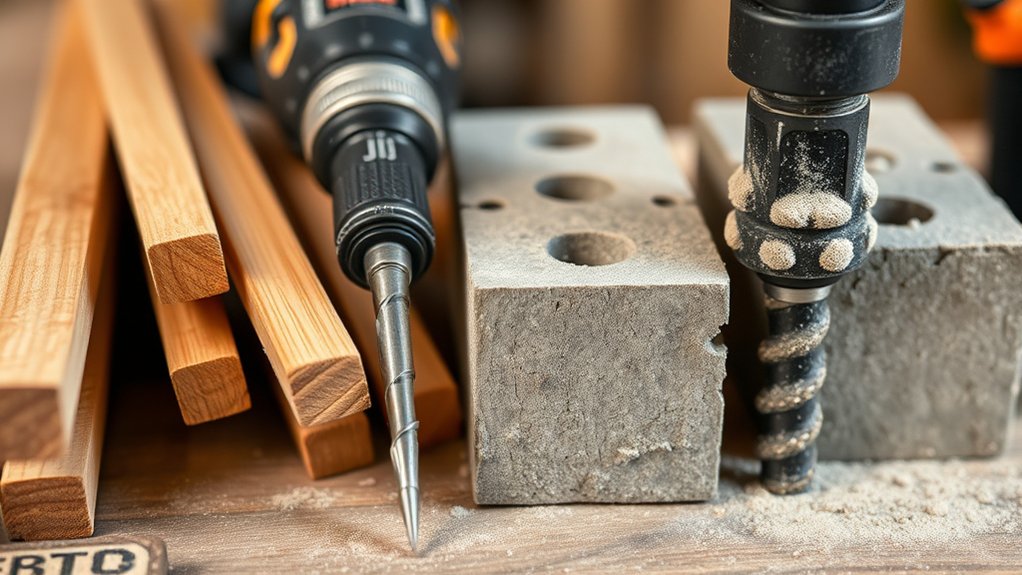
For everyday materials such as wood, plastic, and metal, both drills work well with the correct bit and speed setting. A rotary drill handles these materials cleanly, making it suitable for furniture, cabinetry, electrical work, and general repairs.
With a metal-rated bit, you can drill through aluminum, steel, and other thin metals. Tougher alloys require appropriate accessories and lubrication.
A hammer drill adds masonry capability to that material versatility. You can use it on brick, concrete block, mortar, and light concrete when paired with a masonry bit.
Its hammering action helps the bit break through mineral surfaces, while the rotary function remains useful for wood and metal. However, you shouldn’t use hammer mode on delicate materials, since it may crack tile, chip plaster, or damage finished surfaces.
For demanding masonry projects, choose a model with sturdy construction and proper cooling to support drill durability. Match each drill and bit to the material, and you’ll achieve cleaner holes while reducing wear.
Which Drill Offers Better Speed and Control?
When speed and control matter most, a rotary drill usually offers the smoother experience for everyday tasks. Its variable-speed trigger lets you start slowly, prevent bit walking, and increase power as needed.
You’ll also find it easier to maintain steady pressure and guide the bit accurately, especially during repetitive drilling or screw-driving.
A hammer drill can work quickly, but its impact mechanism adds vibration and may make fine control more challenging. You’ll appreciate that extra force when drilling masonry, yet it can feel less refined during delicate work.
Compare ergonomics considerations, including handle shape, balance, grip comfort, and overall weight. These details affect how long you can work without fatigue.
Pay attention to noise level differences, too. A rotary drill generally runs more quietly, helping you communicate and concentrate.
Choose the rotary model for smoother handling and precise speed adjustments. Select a hammer drill when its impact action outweighs the reduced comfort and control.
Your technique still matters: let the tool’s weight assist, keep both hands steady, and avoid forcing the bit.
Which Drill Fits Your Project?
Your project’s material, hole size, and workload should determine whether you choose a rotary or hammer drill. Choose a rotary drill for wood, metal, plastic, and general fastening. Its smooth rotation gives you precise control and works well for smaller holes and lighter tasks.
If you’re drilling into brick, concrete, or masonry, select a hammer drill. Its hammering action breaks through hard surfaces faster, especially when you need several holes.
Consider the tool’s ergonomic design before you buy. A lighter rotary drill may reduce fatigue during extended overhead work, while a hammer drill’s added power and vibration require a secure grip.
You should also compare chuck sizes, variable-speed settings, impact rates, and available accessories. A price comparison can help you stay within budget, but don’t choose solely by cost.
Match power to your project, then prioritize durability, comfort, and warranty support. The right drill will finish your work efficiently without unnecessary strain or expense.
Frequently Asked Questions
How Much Do Rotary and Hammer Drills Typically Cost?
You’ll typically pay $50–$150 for a basic rotary drill and $70–$250 for a hammer drill. Heavy-duty rotary models can reach $300–$600, while professional hammer drills often cost $200–$500 or more.
Your price comparison should include power, chuck type, battery, and included accessories. Brand options such as DeWalt, Makita, Bosch, Milwaukee, and Ryobi cover different budgets.
Cordless kits usually cost more, but they include batteries and chargers, improving convenience and overall value.
What Safety Gear Should You Use With Rotary and Hammer Drills?
Wear personal protective equipment whenever you use rotary or hammer drills: safety glasses, hearing protection, a dust mask or respirator, sturdy gloves, and steel-toe footwear.
OSHA reports that workplace noise can cause permanent hearing loss, making hearing protection especially important during prolonged drilling.
Follow essential safety precautions: secure the workpiece, inspect the bit and cord, maintain a firm grip, keep loose clothing away, and disconnect power before changing bits or clearing debris.
How Do You Maintain and Clean a Rotary or Hammer Drill?
Unplug your drill before cleaning or maintaining it. Brush away dust, then wipe the housing, vents, chuck, and cord with a dry cloth.
Use compressed air carefully to clear debris, but don’t force grit deeper inside. Inspect bits for wear and perform regular bit cleaning after each job.
Follow your manual’s lubrication maintenance schedule, applying only recommended grease or oil. Tighten loose parts, replace damaged cords, and store the tool somewhere dry.
Which Accessories Are Compatible With Rotary and Hammer Drills?
You’ll find compatible accessories by matching each tool’s chuck and job. Rotary drills accept standard twist bits, spade bits, hole saws, screwdriver bits, and wire wheels, giving you broad accessory versatility.
Hammer drills also use these accessories when hammer action is switched off, but masonry bits and carbide-tipped bits suit impact mode. Check the manufacturer’s specifications for bit compatibility, shank size, and speed ratings before attaching accessories, so you’ll drill safely and efficiently.
Are Cordless Models Better Than Corded Rotary and Hammer Drills?
Cordless models aren’t always better than corded rotary and hammer drills; your choice depends on the job. You’ll enjoy mobility, quick setup, and no extension cord with cordless tools, but battery efficiency, charging time, and pack weight matter.
Corded models deliver continuous power and often greater endurance for demanding work. In a Power comparison, corded tools typically win for sustained drilling, while cordless models suit portability, convenience, and occasional projects better.
Conclusion
Choosing between a rotary and hammer drill doesn’t have to be difficult. If you’re drilling light masonry, wood, or metal, a hammer drill offers speed, control, and versatility.
For demanding concrete work, a rotary drill provides deeper impact and greater power. Think of it as choosing the right partner for the job: one handles everyday tasks, while the other steps in when things get more serious.
Pick wisely, and your project will go more smoothly. Understanding the key differences between rotary and hammer drills will help you choose the right tool for the job.