What Is a Reciprocating Saw and How to Use It
Cutting through tough materials can be frustrating, especially when a basic saw isn’t up to the job. You’re not alone—many DIYers struggle to find a tool that can handle different projects quickly and cleanly. That’s where a reciprocating saw can make a real difference.
A reciprocating saw is a versatile power tool with a narrow blade that moves rapidly back and forth, allowing you to cut wood, metal, plastic, drywall, pipes, and more. To use it, choose the correct blade, inspect the tool, secure your workpiece, and wear eye and hearing protection.
Install the blade firmly, press the shoe against the material, and guide the saw steadily without forcing it. You’ll find more tips for safer, cleaner cuts below.
Key Takeaways
- A reciprocating saw is a power tool that cuts using a rapid back-and-forth blade motion rather than a rotating disc.
- It cuts wood, metal, plastic, drywall, pipes, nails, and other materials, making it useful for demolition, remodeling, and repairs.
- Choose a blade based on the material and thickness. Use fewer teeth per inch for wood and more for metal.
- Install the blade securely, wear eye and hearing protection, clamp the workpiece, and check for hidden wires or pipes.
- Press the shoe firmly against the workpiece, squeeze the trigger gradually, guide steadily without forcing, and wait for the blade to stop.
What Is a Reciprocating Saw?
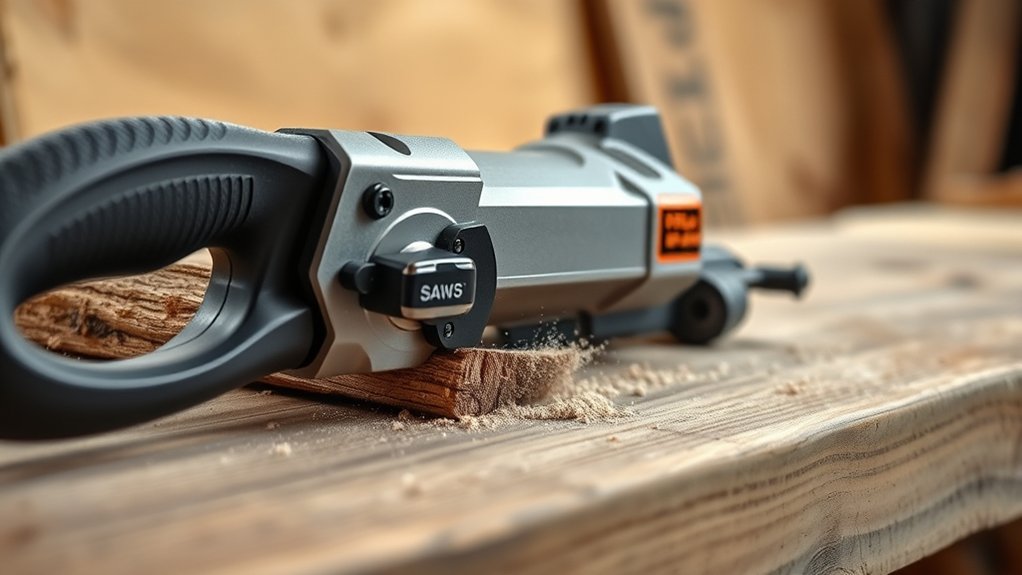
A reciprocating saw is a power tool that cuts with a rapid back-and-forth motion. You’ll recognize it by its compact body, pistol-style grip, and narrow blade extending from the front.
Unlike a circular saw, it doesn’t use a rotating disc, so you can guide it into tight spaces and awkward positions. You’ll find corded and cordless models, with differences in power, runtime, weight, and portability.
Unlike circular saws, reciprocating saws offer flexible cutting in tight spaces, with corded and cordless options to suit every project.
Many versions include adjustable shoes, variable-speed triggers, tool-free blade clamps, and orbital settings that help you match the tool to a task. The Reciprocating saw history began with early powered hacksaws and evolved into today’s versatile demolition tools.
Manufacturers continue adding innovative blade technology, producing blades designed for wood, metal, plastic, pruning, and mixed materials. You’ll choose a blade based on the material and desired cut.
The saw’s rugged design helps you remove sections quickly during remodeling, construction, plumbing, electrical work, or yard maintenance.
How Does a Reciprocating Saw Work?
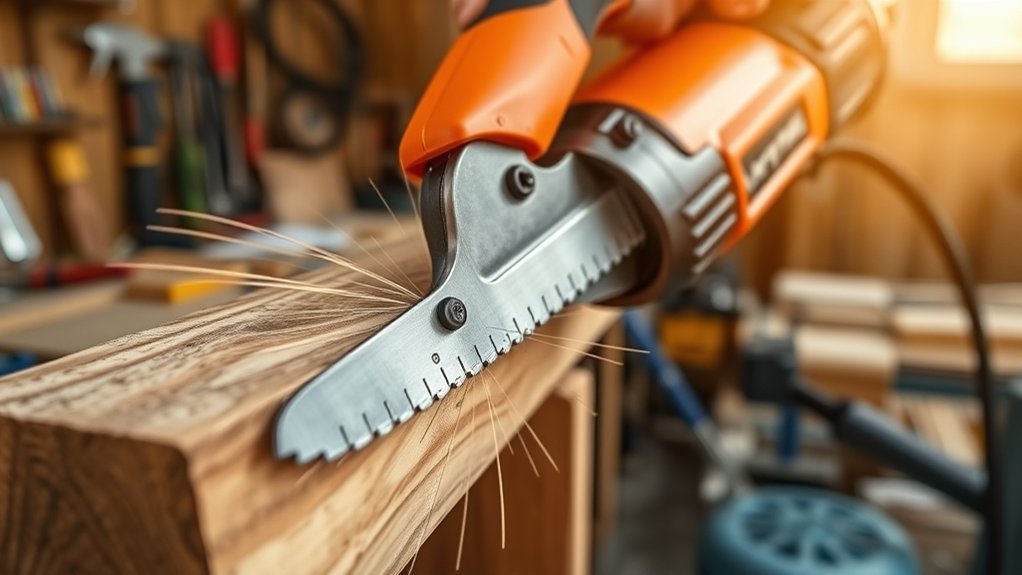
When you pull the trigger, the motor drives the blade in rapid back-and-forth strokes. As it moves, the teeth cut through the material on each pass. For cleaner results, choose the right blade and apply steady pressure.
Motor and Blade Motion
Inside the tool, an electric motor spins a gear that drives an eccentric crank, converting rotary motion into the rapid back-and-forth movement of the saw’s blade. This motor function gives you consistent power while you squeeze the trigger.
A linkage transfers the crank’s rotation to the blade clamp, so the blade moves forward and backward along a straight path. You can control the motor’s speed with trigger pressure, allowing slower movement for careful positioning and faster movement when you need more momentum.
The stroke length, measured by how far the blade travels, depends on the tool’s design. Some models include variable-speed controls that help you match blade motion to the material and task.
The shoe remains fixed against the workpiece, while the motor and internal drive system produce the blade’s reciprocating movement.
Cutting Action Explained
During each stroke, the blade’s teeth cut on the forward or backward movement, depending on the blade design, while the shoe stabilizes the tool against the material. As the motor drives the blade in a rapid reciprocating motion, you guide the saw rather than force it. Let the teeth remove material and keep the shoe planted for control.
- Start slowly to align your cut and reduce wandering.
- Increase pressure only enough to maintain steady progress.
- Match cutting techniques to the material, using fine teeth for metal and coarse teeth for wood.
- Replace dull blades promptly to protect blade durability and prevent overheating.
The blade’s stroke length and speed affect cutting performance. Variable-speed control helps you adapt to different materials, while a sharper blade cuts faster, produces cleaner results, and reduces vibration.
Keep both hands positioned securely, and let the saw complete each stroke.
What Can a Reciprocating Saw Cut?
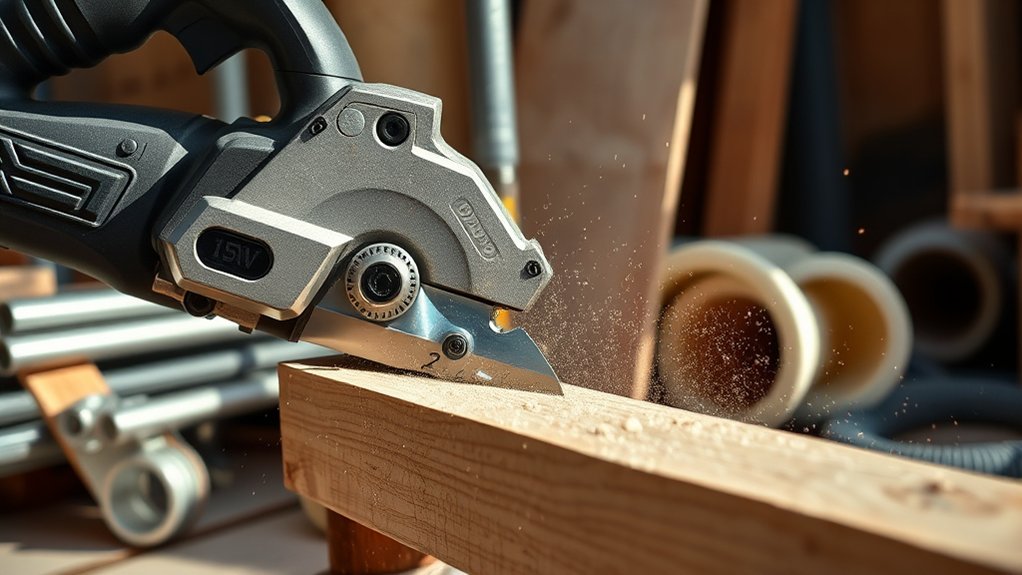
A reciprocating saw can cut wood, metal, plastic, drywall, pipes, nails, and other tough materials when you use the right blade. Its cutting versatility makes it useful for demolition, remodeling, plumbing, and emergency repairs.
You can slice through framing lumber, remove damaged studs, open drywall, trim plastic pipe, or cut embedded nails without dismantling an entire structure.
| Material | Common task | Result |
|---|---|---|
| Wood | Demolition cuts | Fast progress |
| Metal | Cutting nails or pipe | Powerful removal |
| Plastic | Trimming pipe | Clean access |
Blade materials affect performance, but the saw’s strength comes from its aggressive back-and-forth motion. You’ll appreciate that reach when a cramped space makes hand tools frustrating.
Keep both hands on the tool, support the workpiece, and expect sparks or sharp edges when cutting metal. Don’t force the saw; let its stroke do the work.
Always wear eye protection, gloves, and hearing protection, especially during dusty or noisy demolition.
Choose the Right Reciprocating Saw Blade
Choose a reciprocating saw blade based on the material, thickness, and type of cut you need. Match the blade’s teeth per inch (TPI) to your project: fewer teeth cut faster through wood, while more teeth create smoother cuts in metal.
Consider these options:
- Wood blades: Use coarse teeth for lumber, branches, and demolition work.
- Metal blades: Choose fine teeth for pipes, sheet metal, and nails.
- Bi-metal blades: Select these durable blades for mixed materials and demanding jobs.
- Specialty blades: Pick carbide-grit or diamond-grit designs for tile, cast iron, or abrasive materials.
Longer blades reach through thick stock, but shorter blades offer better control. Decide whether you need a straight, flush, curved, or plunge cut, then match the blade shape accordingly.
Effective cutting techniques also depend on blade flexibility, tooth pattern, and durability. Replace dull or damaged blades promptly because they cut slowly, wander, and can damage your workpiece.
Let the blade’s design guide your choice for cleaner, safer results.
Get Your Saw Ready Safely
Before you start cutting, inspect your reciprocating saw for any damage and put on the right safety gear. Make sure the blade is securely fastened. Taking these steps helps you get ready for the job safely.
Inspect the Saw
Inspect your reciprocating saw before every use to confirm it’s safe and ready. Unplug corded models or remove the battery before checking parts. Hold the tool comfortably to assess saw ergonomics, then examine the housing for cracks, loose screws, or damaged controls.
- Check the cord, plug, battery, and contacts for cuts, burns, corrosion, or looseness.
- Test the shoe; it should lock firmly and adjust smoothly without excessive movement.
- Confirm blade compatibility with your saw and project, then inspect the blade clamp for debris or damage.
- Make sure the trigger, lock-off switch, and variable-speed control move freely and return properly.
Install the blade securely, keeping your fingers away from its teeth. Run the saw briefly without contacting material, listening for unusual noise or vibration.
Stop immediately if anything feels loose, overheats, or operates unpredictably.
Choose Safety Gear
Once the saw passes inspection, protect yourself with gear suited to the task. Put on safety glasses or a face shield to block flying chips, and wear hearing protection because reciprocating saws produce damaging noise.
Choose earmuffs or earplugs that provide effective noise reduction without blocking important warnings from people nearby. Wear snug, cut-resistant gloves for grip and hand protection, but keep them away from the moving blade.
Select sturdy, slip-resistant work boots to protect your feet from falling materials and improve your footing. If you’re cutting dusty, painted, or treated materials, use a properly rated respirator and improve ventilation.
Avoid loose clothing, jewelry, and dangling drawstrings that could catch on the tool. Hold the saw comfortably, and favor models with an ergonomic design to reduce fatigue during extended work.
Secure the Blade
Choose a blade designed for the material you’ll cut, then disconnect the saw from power or remove its battery. Review the manufacturer’s instructions before handling the clamp.
Different Blade types suit wood, metal, plastic, or demolition work, so match the teeth and length to your task.
- Open the blade-release collar or lever without forcing it.
- Insert the blade fully, with its teeth facing the intended cutting direction.
- Release the collar, then tug the blade firmly to confirm it’s locked.
- Check that the blade sits straight and doesn’t wobble or contact the shoe improperly.
Keep fingers away from the trigger and blade path while installing. Inspect the shank and clamp for damage, dirt, or looseness.
Reconnect your selected Power sources only after the blade is secure. If the clamp won’t hold the blade, stop and replace or service the saw.
How to Use a Reciprocating Saw
Before cutting, inspect the saw, secure the workpiece, and select a blade suited to the material. Wear eye and hearing protection, then grip the tool with both hands. Place the shoe firmly against the surface, align the blade with your mark, and squeeze the trigger gradually.
Let the blade’s reciprocating motion do the work; guide the saw steadily without forcing it. Release the trigger before lifting the shoe, and wait until the blade stops.
| Task | Action | Purpose |
|---|---|---|
| Start | Press the shoe down | Stabilize the cut |
| Guide | Follow your line | Improve accuracy |
| Pace | Use steady pressure | Control progress |
| Finish | Release the trigger | Stop safely |
Choose orbital action for fast wood cuts when your model offers it. Use straight action for metal or controlled work.
Understanding reciprocating saw history explains its versatile design. Knowing saw blade materials helps you match blades to wood, metal, plastic, or demolition tasks.
Keep your stance balanced and reposition the tool when necessary.
Avoid Common Reciprocating Saw Mistakes
Avoid common reciprocating saw mistakes by keeping the shoe pressed firmly against the workpiece and letting the blade do the cutting. Before you start, inspect the tool, blade, and work area. Don’t rush setup or force the saw through material.
- Choose the right blade. Check blade compatibility with the material and saw’s clamp before installing it. A loose or unsuitable blade can break or bind.
- Secure the workpiece. Clamp boards, pipes, or sheet material so they won’t shift unexpectedly.
- Check the power source. For corded models, use a suitable outlet and keep the cord clear. For cordless models, install a charged battery securely.
- Wear proper protection. Use eye and hearing protection, avoid loose clothing, and keep bystanders away.
Disconnect the power source before changing blades or clearing debris. Watch for hidden wires, pipes, and fasteners, and never cut where you can’t see the blade’s path.
Stop immediately if the tool vibrates unusually, smells hot, or behaves unexpectedly.
Improve Cut Control and Blade Life
Once the work area and tool are ready, improve control by keeping the shoe firmly against the material and guiding the saw with steady, moderate pressure. Let the blade do the work; forcing it can increase vibration, reduce cutting precision, and damage both the blade and tool.
Keep your wrists aligned, maintain a balanced stance, and follow a controlled path rather than twisting the saw during a cut.
Keep wrists aligned, stance balanced, and movements controlled to guide the saw smoothly without twisting during the cut.
Choose a blade suited to the material and task, then inspect it before use. Replace blades that are dull, bent, cracked, or missing teeth.
A sharp, properly selected blade improves durability because it cuts efficiently without excessive heat or strain. Use shorter strokes when you need greater control, and ease off pressure as the blade nears completion.
Afterward, remove debris from the shoe and blade area, and store the saw securely. These habits help you achieve smoother results, reduce wear, and extend blade life.
Cut Wood, Metal, Pipe, and Branches
Match the blade to the material, then adjust your technique: use a coarse blade and steady feed for wood and branches, a fine-tooth metal blade with slower pressure for metal, and a blade designed for pipe when making clean, controlled cuts. Support your workpiece, mark the cut, and keep both hands positioned securely on the saw.
- Wood: Cut studs, pallets, and lumber with firm, straight strokes. For drywall installation, use a fine blade and shallow pressure to avoid tearing surrounding paper.
- Metal: Clamp sheet metal or tubing, apply cutting fluid when appropriate, and let the blade work without forcing it.
- Pipe: Secure the pipe before cutting, especially overhead, and rotate around it when access is limited.
- Branches: Use a pruning blade, support the limb, and cut from the underside first to prevent bark stripping.
For garden fencing, a reciprocating saw quickly trims posts, rails, and wire supports. Wear eye and hearing protection, and keep bystanders clear of falling material.
Clean and Maintain Your Saw
Keep your reciprocating saw clean and well maintained so it cuts efficiently and remains safe to use. Unplug the tool or remove its battery before servicing it.
Brush away sawdust, metal filings, and debris around the blade clamp, vents, shoe, and trigger. Use a dry cloth or compressed air, but don’t spray water or cleaner into the housing.
Inspect the power cord, battery, shoe, and blade clamp for damage, and replace worn parts promptly. Check blade compatibility before installing a replacement; the correct blade must lock securely and match your material.
Apply a small amount of manufacturer-approved lubricant to moving parts if your manual recommends it. Tighten loose screws, and keep the ventilation openings clear to prevent overheating.
Store the saw in a dry case, away from moisture and extreme temperatures. Replace dull or bent blades instead of forcing them through material.
Proper cleaning improves performance, extends tool life, and supports noise reduction during operation.
Frequently Asked Questions
Can Reciprocating Saws Be Used for Demolition Work?
Yes, you can use reciprocating saws for demolition work. Their powerful, rapid strokes cut through wood, nails, drywall, pipes, and some metal.
Choose suitable blade types, such as coarse wood blades for framing or bi-metal blades for nails and metal.
Before cutting, follow essential Safety precautions: wear eye and hearing protection, secure the material, check for hidden wiring or plumbing, and keep both hands clear of the blade and moving parts.
Are Cordless Reciprocating Saws as Powerful as Corded Models?
Cordless reciprocating saws can match corded models for many tasks, giving you freedom, mobility, and control. Premium battery-powered tools deliver impressive cutting speed and torque, while corded versions usually provide consistent power for prolonged, demanding demolition.
Your choice depends on battery life, workload, and access to outlets. Consider blade versatility, too: the right blades let either model cut wood, metal, plastic, or masonry. For maximum endurance, keep spare batteries charged.
What Safety Gear Should I Wear When Operating a Reciprocating Saw?
Wear protective gear whenever you operate a reciprocating saw: safety glasses or a face shield, hearing protection, sturdy gloves, long pants, and slip-resistant, steel-toe footwear. Secure loose clothing and tie back long hair to prevent entanglement.
Consider a dust mask when cutting materials that create harmful particles. Follow essential safety precautions, including checking the blade, securing your workpiece, maintaining firm footing, and keeping both hands clear of the cutting path.
How Much Does a Quality Reciprocating Saw Typically Cost?
You’ll typically pay $100–$250 for a quality reciprocating saw, while professional models can cost $300 or more. Your choice depends on the power source: corded saws usually cost less, while cordless kits cost more because they include batteries and chargers.
Check blade types, speed settings, stroke length, and warranty before buying. If you already own compatible batteries, you can save considerably by purchasing a bare tool instead of a complete kit.
Can Beginners Safely Use a Reciprocating Saw?
Safety first: you can use a reciprocating saw safely as a beginner when you respect its power and follow basic precautions.
Choose the proper blade for each material, inspect the tool, wear eye and hearing protection, and secure your workpiece. Practice controlled cutting techniques, keep both hands stable, and let the blade do the work.
Start slowly, avoid forcing cuts, and unplug the saw before changing blades.
Conclusion
A reciprocating saw can turn tough cutting jobs into quick, controlled work when you choose the right blade and use safe technique. Remarkably, some high-quality blades can make thousands of cuts before replacement, depending on the material and workload.
Keep both hands steady, support your workpiece, and let the blade do the cutting instead of forcing it. Afterward, unplug or remove the battery, brush away debris, and inspect the tool so it’s ready for your next project. With these tips, you can use a reciprocating saw safely and effectively.