What Is a Chainsaw Wrench Used For?
Keeping a chainsaw properly maintained can be frustrating, especially when you need several tools for simple adjustments. You’re not alone—many chainsaw owners struggle to find one tool that handles everyday repairs. A chainsaw wrench can make these tasks faster and more convenient.
A chainsaw wrench is a compact tool you’ll use to adjust chain tension, tighten or loosen guide-bar nuts, tune carburetor screws, and remove spark plugs. You can also use its screwdriver tip for small adjustments and fasteners.
Choose the correct socket size, keep the saw cool and clean, and apply controlled force to prevent slipping or damage. Inspect the wrench for wear, clean it after use, and store it dry.
The following tips explain how to use it safely and effectively.
Key Takeaways
- A chainsaw wrench tightens or loosens guide-bar nuts and other chainsaw fasteners during maintenance.
- Its screwdriver tip adjusts chain tension and turns slotted carburetor screws during tune-ups.
- The wrench’s spark-plug socket removes and reinstalls spark plugs for inspection or replacement.
- It provides controlled leverage, helping prevent stripped fasteners, component damage, and unsafe loose hardware.
- Proper cleaning, rust protection, inspection, and dry storage extend the wrench’s usefulness and reliability.
What Is a Chainsaw Wrench?
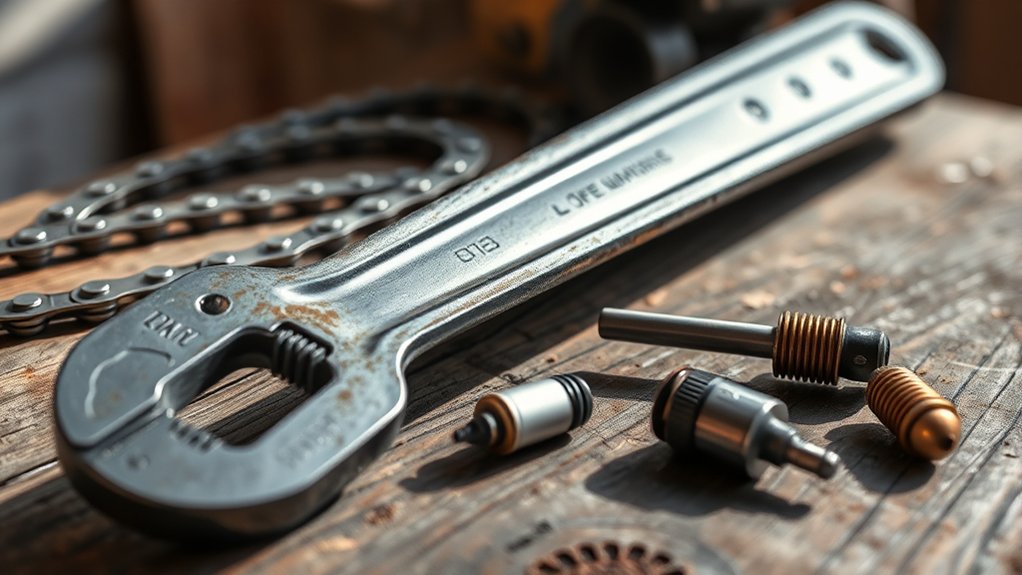
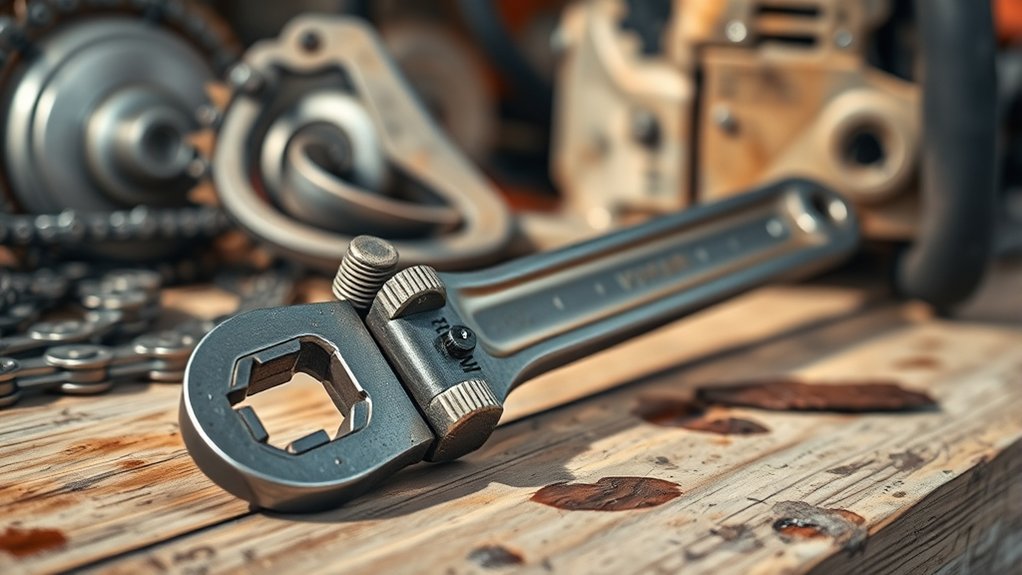
A chainsaw wrench is a compact hand tool designed to maintain and adjust a chainsaw. You’ll typically find two socket sizes combined with a flat screwdriver, creating a practical tool for routine servicing.
A compact chainsaw wrench combines socket sizes and a flat screwdriver for convenient routine maintenance and adjustments.
The sockets match common nuts on a chainsaw, while the screwdriver end suits slotted adjustment components. This combination keeps essential functions in one small, portable design.
Manufacturers produce these tools from durable wrench materials, including hardened steel, chrome vanadium, or other corrosion-resistant alloys. Those materials help the wrench withstand repeated pressure, contact with metal fasteners, and exposure to oil or outdoor conditions.
Some models include a molded plastic or rubber handle that improves grip and comfort.
When you examine a chainsaw wrench, you’ll notice its straightforward shape and specialized sizing. It isn’t a general household wrench; its dimensions correspond to chainsaw hardware.
You can carry it in a tool pouch, storage compartment, or pocket, making it a convenient part of your chainsaw maintenance equipment.
What Can You Use a Chainsaw Wrench For?
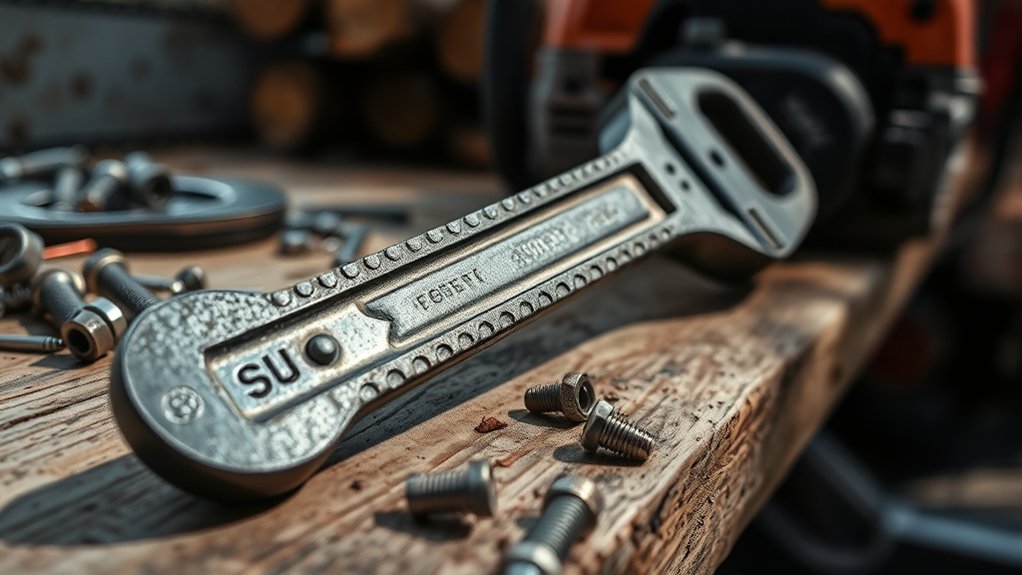
Whether you’re preparing the saw for work or handling a quick repair, you can use a chainsaw wrench to remove spark plugs, tighten bar nuts, adjust chain tension, and turn the carburetor’s slotted adjustment screws. Its compact design keeps essential tools together, so you won’t need to carry a full toolbox into the yard.
- Remove a spark plug for inspection or replacement.
- Secure the guide bar after cleaning or servicing.
- Set chain tension to reduce slack and improve cutting control.
- Turn compatible carburetor screws during careful tune-ups.
- Tighten or loosen nuts on related saw components.
Before working, stop the engine, disconnect the spark-plug lead, and let hot parts cool. Wear gloves and eye protection as part of basic Chainsaw safety, and keep the chain away from your hands.
Use these Maintenance tips regularly: clean debris from the bar area, check fasteners for looseness, and inspect the wrench for damage. Make each adjustment gradually, then test the saw in a clear, stable area.
Follow your model’s manual when procedures differ.
Choose the Right Chainsaw Wrench Size
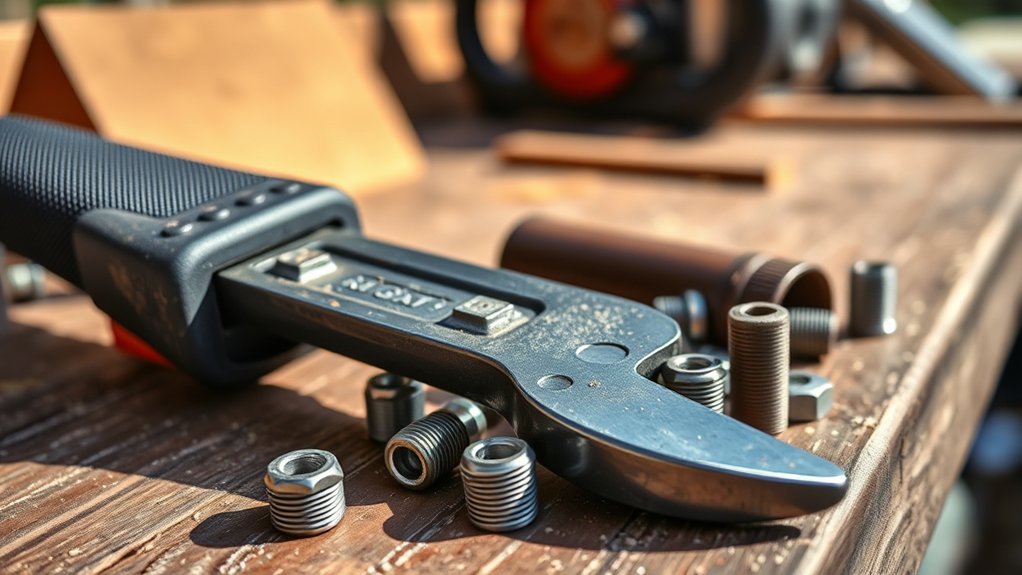
Choose a wrench that fits your chainsaw’s fastener size for a secure grip. Before buying, check the socket sizes and choose a versatile tool that includes the sizes you need.
Match Wrench to Fastener
Matching the wrench to the fastener keeps you from rounding nuts or damaging the chainsaw. Before loosening anything, identify the fastener types on your model. Bar nuts, clutch covers, spark plugs, and chain-adjustment parts may require different wrench profiles.
Review your owner’s manual, then choose a tool that fits the fastener firmly without forcing it.
- Identify the fastener’s shape and purpose.
- Choose a wrench with matching contact points.
- Keep the tool seated straight on the nut.
- Replace worn or damaged wrench edges.
- Stop if the fastener resists unexpectedly.
Good wrench compatibility protects both the hardware and your hands. A loose fit can slip, chew up corners, or strain your wrist, while excessive force may break a small component.
Clean dirt from the fastener first, and use controlled pressure. Don’t substitute pliers when the correct chainsaw wrench is available.
Check Socket Sizes
Check the socket size before you turn a bar nut, spark plug, or other chainsaw fastener. A snug fit protects corners and gives you controlled advantage. Compare the wrench’s labeled measurements with your saw’s manual, then test the socket on a cool, clean fastener.
Don’t force a near match; you could round the nut or damage the plug.
| Fastener | Check |
|---|---|
| Bar nut | Match the specified socket |
| Spark plug | Confirm plug size and depth |
| Oil reservoir cap | Use the listed size |
For Chain lubrication, inspect the oil reservoir cap and its seal before tightening it. Keep dirt out of threads, and replace a worn socket that slips.
Measure in millimeters or inches as specified, since similar-looking sizes may not interchange. Verify each measurement before applying pressure, especially when maintenance occurs roadside or in poor light.
Choose a Versatile Tool
Once you’ve confirmed the fastener sizes, select a versatile chainsaw wrench that fits the most common nuts and plugs on your saw. Choosing the right size streamlines chainsaw maintenance and prevents rounded edges or damaged components.
A combination tool with a correctly sized socket and screwdriver lets you handle routine adjustments without carrying several separate tools. Consider these features:
- Matching socket sizes for your bar nuts and spark plug
- A sturdy handle for controlled tightening
- A screwdriver tip for carburetor or cover screws
- Compact construction for easy storage
- Durable materials that resist wear and corrosion
Check the wrench’s specifications before buying, because similar saws may use different fasteners. Good tool versatility saves space, reduces interruptions, and helps you complete repairs confidently.
Keep the wrench with your saw’s essential equipment, so it’s ready whenever maintenance needs arise.
Stay Safe Before Using the Wrench
Before you use the wrench, put on gloves, eye protection, and any other appropriate safety gear. Then inspect the wrench for cracks, wear, or loose parts. If you notice any damage, don’t use it.
Wear Protective Gear
Protective gear keeps small mistakes from turning into serious injuries when you use a chainsaw wrench. Before you begin, choose safety equipment that protects your hands, eyes, feet, and hearing. Wear snug protective clothing that won’t catch on nearby parts, and secure loose hair or jewelry.
- Wear cut-resistant work gloves for a steadier grip.
- Use safety glasses or a face shield against flying debris.
- Choose hearing protection around loud chainsaw equipment.
- Put on steel-toe, slip-resistant boots for stable footing.
- Wear fitted, durable clothing that covers exposed skin.
Keep your gear clean, comfortable, and properly fastened so it won’t distract you while tightening or loosening hardware. Don’t rely on ordinary sneakers, thin gloves, or loose sleeves.
The right layers help you handle the wrench confidently and reduce injuries if your hand slips or debris moves unexpectedly.
Inspect the Wrench First
With your protective gear secured, inspect the chainsaw wrench before use. Check the socket, jaws, and handle for cracks, bends, loose parts, or excessive wear.
A damaged wrench may slip, round fasteners, or cause your hand to strike the saw. Confirm that the socket fits your chainsaw’s nuts snugly and that any adjustable mechanism moves smoothly.
Wipe away oil, dirt, and metal filings so you maintain a firm grip. Good wrench maintenance includes tightening loose components, replacing worn tools, and cleaning the wrench after each job.
Don’t use a wrench with a damaged handle or distorted socket. Choose a sound replacement instead.
Afterward, practice proper tool storage by keeping the wrench dry, organized, and away from cutting edges. This quick inspection helps you work confidently and prevents avoidable injuries during adjustments.
Adjust Chain Tension With the Wrench
Adjust the chain tension by loosening the bar nuts with the wrench, then turning the tensioning screw until the chain fits snugly against the guide bar without binding. Make small adjustments, and keep the wrench seated firmly on each nut to prevent rounding.
Hold the bar’s nose slightly upward while you set tension, since its position affects the adjustment. Work slowly, because overtightening can strain the chain, sprocket, and guide bar during operation.
Use these wrench-assisted habits:
- Loosen both bar nuts evenly before adjusting.
- Turn the tensioning screw in small increments.
- Keep the screwdriver end clean for a secure fit.
- Inspect the guide-bar groove for packed debris.
- Apply Chain lubrication after adjustment and before cutting.
Good Bar maintenance supports smoother adjustments and helps protect the components you’re servicing. If the nuts resist movement, clean the wrench and fastener surfaces rather than forcing the tool.
Reinstall any clutch cover parts securely, and keep the wrench with your saw for field adjustments. Always shut off the engine and let hot parts cool before working.
Check for Correct Chain Tension
After adjusting the chain, check its tension by pulling it away from the guide bar at the midpoint. You should see a small gap, while the drive links remain engaged in the bar groove.
Check tension at the guide bar’s midpoint: a small gap should appear while drive links remain seated in the groove.
If the chain lifts too far, feels loose, or sags beneath the bar, it needs further adjustment. If it won’t move away from the bar or feels stiff, it’s too tight.
Release the chain and slide it around the bar by hand, wearing protective gloves. It should move smoothly without binding, grinding, or jerking.
Check several points because uneven wear can create tight and loose sections. Proper chain tension supports clean cutting, reduces kickback risk, and limits unnecessary strain on the saw.
Good chain lubrication helps the chain travel smoothly and reduces heat. Include tension checks in your bar maintenance routine, especially before each cutting session and after the chain warms up.
Let the chain cool before making another accurate assessment.
Tighten Bar Nuts and Other Fasteners
Use the chainsaw wrench to tighten the bar nuts securely once the chain tension is correct. Hold the bar steady and turn each nut evenly, stopping when it feels firmly seated. Don’t overtighten, because excessive force can damage the studs, nuts, or clutch cover.
Check the fasteners before every job and after heavy cutting. You can also use the wrench to secure other nuts and bolts your chainsaw’s design includes.
Keep contact surfaces clean so parts sit flush, and inspect damaged hardware before continuing. During maintenance, remember these points:
- Tighten both bar nuts evenly.
- Replace stripped or cracked nuts promptly.
- Confirm the clutch cover sits correctly.
- Recheck fasteners after the first cuts.
- Keep the wrench with your saw.
Proper chain lubrication reduces heat and vibration, helping fasteners stay secure. When you plan a bar replacement, use the wrench to remove the old hardware and install the new bar correctly.
Follow your owner’s manual for the manufacturer’s torque specification, and never operate the saw with loose fasteners.
Use the Screwdriver Tip for Adjustments
Use the screwdriver tip to adjust the chain tension and keep the chain running safely. You can also fine-tune the carburetor settings for smoother performance. Plus, it’s handy for tightening small fasteners in tight spaces.
Adjust Chain Tension
To adjust chain tension, insert the chainsaw wrench’s screwdriver tip into the tensioning screw and turn it until the chain fits snugly against the guide bar without binding. Before adjusting, switch off the saw, unplug it, or remove its battery, then let the chain cool.
Pull the chain around the bar to check movement and lift it slightly at the center. It should snap back into place without sagging.
- Check tension before each cutting session.
- Wear gloves to protect your hands.
- Tighten the bar nuts after adjustment.
- Recheck tension after several cuts.
- Clean the groove during Bar maintenance.
Proper Chain lubrication reduces friction and heat, helping the chain hold its setting. Don’t overtighten; excessive tension strains the bar, sprocket, and chain.
Your chainsaw wrench makes these small corrections quick, safe, and precise. Reinspect whenever cutting performance changes or the chain appears loose.
Fine-Tune Carburetor Settings
When the engine idles roughly or hesitates during acceleration, use the chainsaw wrench’s screwdriver tip to make small carburetor adjustments. First, warm the saw outdoors, then consult the manufacturer’s manual for the correct high-, low-, and idle-speed screw positions.
Turn each adjustment screw slowly, usually in quarter-turn increments, and listen for smoother operation after every change. You’ll want the engine to accelerate cleanly, idle steadily, and run without excessive smoke or racing.
Don’t force the screws or exceed recommended settings, because an overly lean mixture can damage the engine. Keep the chain disengaged and maintain a firm grip while testing.
Proper engine tuning improves cutting performance and fuel use. If the saw still runs poorly, stop and have a qualified technician inspect it rather than continuing adjustments.
Tighten Small Fasteners
A chainsaw wrench’s screwdriver tip lets you tighten small fasteners on the starter cover, air-filter housing, and other accessible parts. Before turning, confirm fastener compatibility and choose the correct tip for the screw head types you encounter. You’ll avoid stripped heads and damaged components by matching the tip snugly.
- Check the screwdriver tip for wear before use.
- Seat the tip fully in the screw head.
- Turn clockwise with steady, moderate pressure.
- Stop when the fastener feels secure.
- Recheck covers after running the saw.
Don’t force a stubborn screw or use the wrench as a pry bar. If the tip slips, stop and inspect the screw for damage. Replace badly worn fasteners, and consult your chainsaw’s manual for torque guidance. This simple adjustment helps keep protective covers secure while preserving threads and serviceability.
Remove a Spark Plug With the Wrench
You can use a chainsaw wrench to remove the spark plug by disconnecting the plug wire, fitting the wrench over the plug, and turning it counterclockwise. Before starting, switch off the chainsaw, let the engine cool, and place it on a stable surface.
Pull the wire boot straight off the plug rather than tugging the cable. Slide the wrench’s spark-plug socket over the plug until it seats fully.
> Remove the boot gently, then seat the spark-plug socket fully before loosening the plug.
Hold the wrench squarely, then loosen the plug with steady pressure. Once it turns freely, spin it out by hand and lift it from the cylinder head.
This simple spark plug removal method helps you inspect the electrode for deposits, damage, or fouling. Check tool compatibility first, since some chainsaws require a specific socket size or a thin-walled design.
If the wrench doesn’t fit completely, stop and choose the correct size. Keep dirt away from the opening while the plug is removed, and reinstall the plug carefully afterward.
Avoid Mistakes and Replace a Worn Wrench
To avoid damage, don’t force a chainsaw wrench that slips, binds, or fails to seat fully on the fastener. Stop, clean the nut, and check that you’re using the correct size.
Excessive force can round edges, crack components, or injure your hand. Replace the wrench if its jaws look spread, its socket is rounded, or rust weakens the metal.
Use these habits to protect your saw and yourself:
- Inspect the wrench before every job.
- Match the tool precisely to each fastener.
- Keep contact surfaces clean and dry.
- Store the wrench away from moisture.
- Replace damaged tools immediately.
Good Wrench maintenance includes wiping away oil, resin, and dirt after use. Lightly coat bare steel with rust protection, but remove excess lubricant before gripping a fastener.
For Proper storage, place the wrench in a dry toolbox or hang it where it won’t get struck or lost. Don’t hammer on it, use it as a pry bar, or modify its shape.
A sound wrench gives you controlled leverage and helps prevent costly repairs.
Frequently Asked Questions
Can a Chainsaw Wrench Be Used on Electric Chainsaws?
Yes, you can use a chainsaw wrench on many electric chainsaws, but you should confirm electric chainsaw compatibility first. Check your owner’s manual to identify the correct fastener sizes and required tools.
Wrench size variations exist, so one wrench may not fit every model. Use the wrench for tasks such as adjusting chain tension, tightening bar nuts, or replacing the chain. Always unplug the saw before servicing it.
How Often Should I Clean and Maintain My Chainsaw Wrench?
Clean your chainsaw wrench after every use, especially if it collects oil, sawdust, or dirt. Wipe it with a dry cloth, then remove stubborn residue with mild degreaser and dry it completely.
During routine chainsaw maintenance, inspect the wrench weekly for rust, bent jaws, or worn edges. Apply a light protective oil occasionally to improve wrench durability.
Store it somewhere dry, and replace it if damage prevents a secure fit.
Where Can I Buy a Replacement Chainsaw Wrench?
You can buy a replacement chainsaw wrench from hardware stores, outdoor-power-equipment dealers, chainsaw manufacturers, and reputable online retailers. Check chainsaw wrench compatibility before ordering by matching your saw’s brand, model, socket sizes, and screwdriver type.
Your owner’s manual usually lists the correct tool. Compare replacement options, including manufacturer-branded combination wrenches and durable universal tools.
Avoid unverified sellers, and choose a wrench with strong materials, clear sizing, and positive reviews.
Are Universal Chainsaw Wrenches Compatible With Every Chainsaw Brand?
No, universal chainsaw wrenches aren’t compatible with every chainsaw brand. You’ll usually find broad brand compatibility because many models use standard spark-plug sockets and adjustment screwdrivers, but manufacturers can vary fastener sizes and designs.
Check your chainsaw’s manual or compare the wrench’s specifications before buying. Prioritize tool versatility, yet confirm socket dimensions and included drivers match your equipment.
A brand-specific wrench may provide a more reliable fit and prevent damage.
What Should I Do if My Chainsaw Wrench Becomes Rusty?
When orange rust clouds your chainsaw wrench, act before it spreads. Scrub the surface with a wire brush or fine steel wool, then apply penetrating oil to loosen stubborn corrosion.
Wipe everything dry and inspect the tool for deep pitting, cracks, or weakened jaws. Replace it if damage threatens safe use.
For rust prevention, coat it lightly with machine oil. Practice smart wrench storage by keeping it dry, clean, and inside a sealed toolbox.
Conclusion
A chainsaw wrench is small, but it handles big maintenance tasks. With it, you can adjust chain tension, tighten bar nuts, turn adjustment screws, and remove the spark plug. Before you start, choose the correct size, shut off the engine, and let the saw cool.
A worn wrench can slip like a loose chain, so replace it promptly. Keep this compact tool nearby, and your chainsaw’s sharp cutting performance won’t be matched by preventable problems. Knowing what a chainsaw wrench is used for helps keep your saw safe and reliable.