Rotary Hammer Vs Hammer Drill €“ 3 Key Differences
Choosing between a rotary hammer and a hammer drill can be confusing, especially when you need the right tool for concrete, masonry, or occasional home projects. You’re not alone—many people struggle to balance drilling power, versatility, comfort, and cost.
In this guide to rotary hammer vs hammer drill, we’ll break down the key differences so you can choose the tool that fits your work without wasting effort or money.
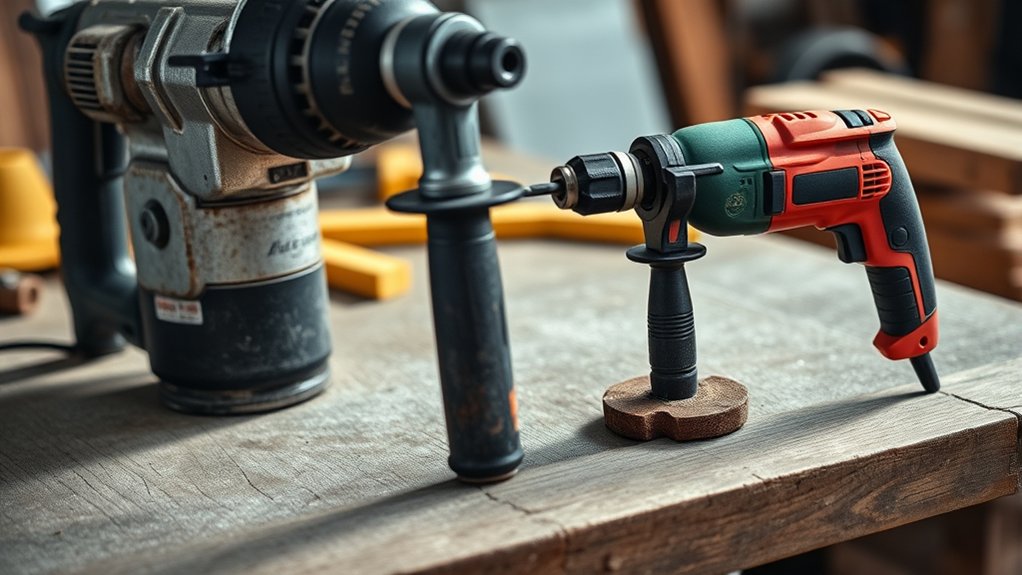
A rotary hammer delivers more impact power, so you can drill large holes, set deep anchors, and chisel dense concrete with less effort.
A hammer drill uses lighter impacts, making it better for occasional masonry, tile, wood, or metal work.
Rotary hammers typically accept locking SDS-Plus or SDS-Max bits and offer hammer-only, rotary-hammer, and drill modes, while hammer drills use standard round-shank bits.
You’ll also notice more weight and fatigue with rotary hammers; the key differences become clearer below.
Key Takeaways
- Impact power: Rotary hammers deliver stronger impacts for dense concrete, masonry, large holes, and demanding construction work.
- Functionality: Hammer drills combine standard drilling with light hammering, while rotary hammers typically offer drilling, hammering, and chiseling modes.
- Bit compatibility: Hammer drills use standard round-shank bits, whereas rotary hammers require locking SDS-Plus or SDS-Max bits.
- Weight and handling: Hammer drills are lighter and easier for overhead tasks, while rotary hammers are heavier but more powerful.
- Best applications: Choose a hammer drill for occasional repairs and anchors. Choose a rotary hammer for frequent, heavy-duty masonry or demolition.
Rotary Hammer vs Hammer Drill: Which Is Stronger?
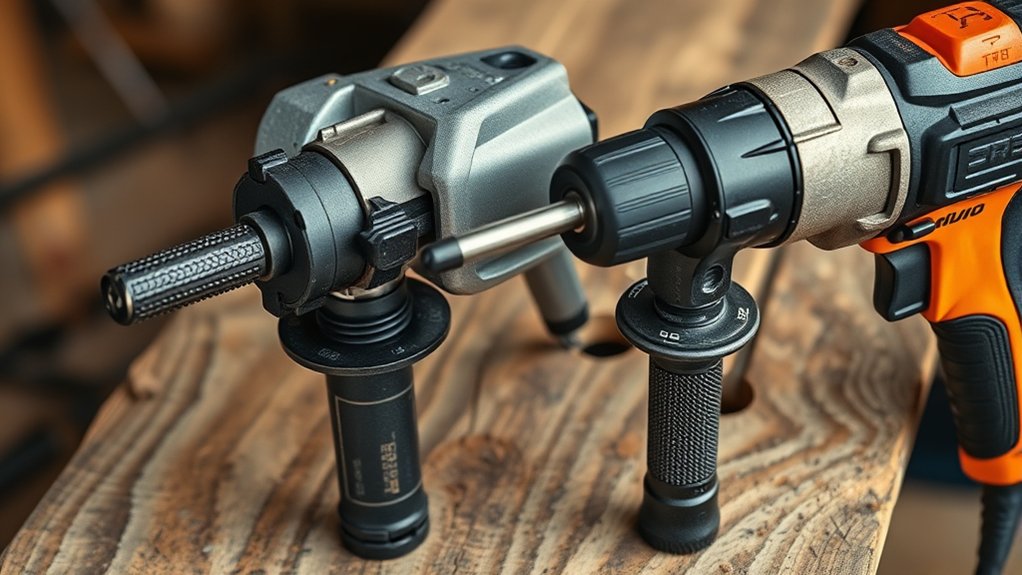
When comparing a rotary hammer vs. a hammer drill, the rotary hammer is stronger. You’ll notice the difference when you work with dense concrete, masonry, or other hard materials.
Its motor delivers greater impact force, so you can make progress faster and apply less downward pressure. A hammer drill uses lighter impacts, which suit occasional drilling in brick, block, or concrete but won’t match a rotary hammer’s force for demanding work.
Your choice also depends on the power source. A corded rotary hammer typically provides consistent power for extended jobs, while cordless models offer mobility without sacrificing much performance.
Choose corded models for consistent power on long jobs, or cordless tools for convenient mobility without sacrificing much performance.
Hammer drills often come cordless, making them convenient for lighter tasks and quick repairs.
Consider the weight comparison before you buy. Rotary hammers usually weigh more because they contain larger motors and stronger mechanisms.
That added weight can improve performance but may cause fatigue during overhead work. A hammer drill feels easier to handle, though you’ll trade away impact strength when drilling tough masonry.
What Modes and Bits Do They Use?
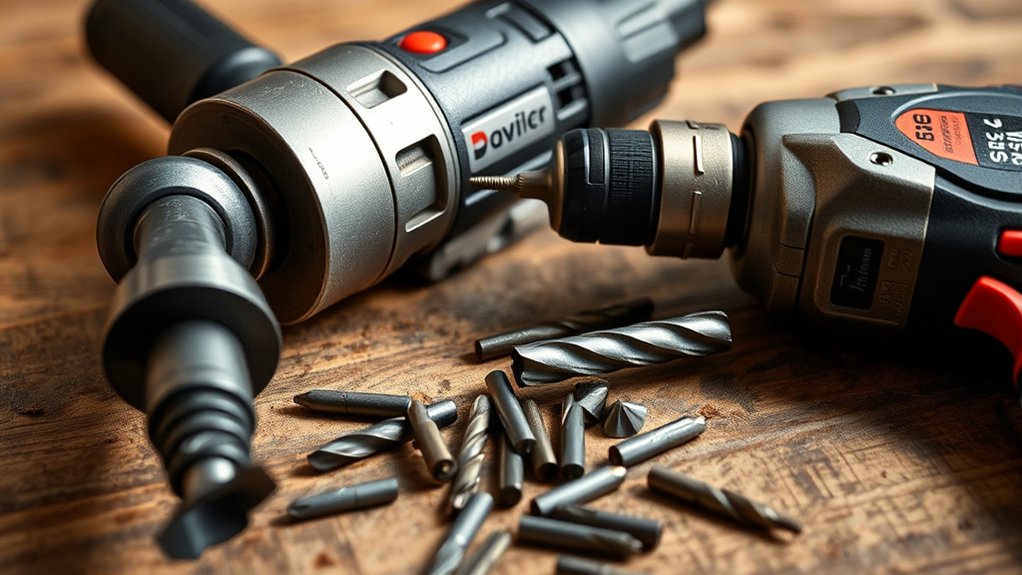
Beyond power and weight, the available modes and bits show how each tool fits different jobs. A hammer drill typically offers drill and hammer-drill modes. You can switch between rotating only for wood or metal and rotating with vibration for masonry.
It accepts standard round-shank bits, including twist bits, masonry bits, and hole saws with compatible adapters.
A rotary hammer usually provides rotation-only, rotary hammer, and hammer-only modes. You can use it for drilling concrete, chiseling tile, or light demolition.
Its SDS-Plus or SDS-Max chuck accepts specialized bits that lock in securely and slide to transfer impact efficiently. SDS masonry bits, chisels, and core cutters match the tool’s impact mechanism.
Check Battery compatibility before buying cordless models, since packs often work only within one brand’s voltage platform. Also consider Noise levels: both tools create substantial sound, but rotary hammers can produce sharper impact noise.
Wear hearing protection, and choose bits rated for your tool’s chuck and operating mode to prevent slipping, overheating, or premature wear.
Which Tool Fits Your Project?
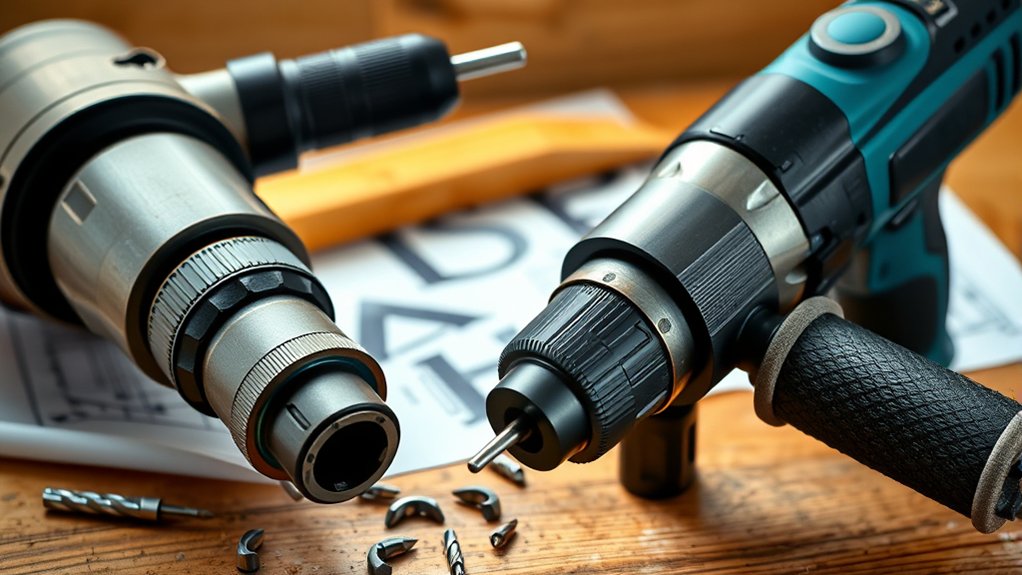
Choose a hammer drill for occasional masonry holes, lighter tasks, and projects that also involve wood or metal. You’ll appreciate its versatility when you switch between drilling, driving, and hammering without carrying a heavier tool.
It’s also a practical choice for shelves, anchors, tile, and small repairs.
Choose a rotary hammer when you regularly drill concrete, brick, or block, especially for larger holes or deep anchors. Its stronger impact mechanism handles demanding work faster and with less strain.
Its chiseling modes also help with demolition and chasing channels. However, expect more weight, noise, and vibration.
Consider ergonomics before buying. If you’ll work overhead or in tight spaces, a compact hammer drill may feel easier to control.
For extended masonry jobs, a rotary hammer’s power can outweigh its bulk. Finally, compare maintenance and durability: clean either tool, inspect cords and bits, and follow lubrication requirements.
Choose the tool that matches your material, workload, and comfort.
Frequently Asked Questions
How Much Maintenance Does Each Tool Require?
You’ll find that both tools need modest maintenance, but their routines differ. For Maintenance frequency, clean vents and inspect cords after each use, then check brushes and fasteners periodically.
A hammer drill typically needs little more than cleaning and occasional chuck care. A rotary hammer demands more attention: follow the manual’s Lubrication requirements, grease its mechanism as specified, and inspect seals, bits, and brushes regularly.
Always unplug either tool before servicing or cleaning.
Are Rotary Hammers and Hammer Drills Safe for Beginners?
Yes, you can use rotary hammers and hammer drills safely as a beginner when you start slowly and follow instructions. Picture dust swirling as the bit meets concrete: control matters more than force.
Wear eye and hearing protection, secure your workpiece, inspect the cord and bit, and keep both hands on the tool. Build user training through practice on scrap material.
Consider tool versatility, but choose the right setting and avoid rushing.
Which Tool Produces Less Noise and Vibration?
A hammer drill usually produces less noise and vibration than a rotary hammer, especially during light masonry work. In this Noise comparison, you’ll notice the hammer drill sounds sharper but operates less forcefully.
Rotary hammers create deeper impacts, raising both volume and Vibration levels through your hands and arms. You’ll reduce discomfort by wearing hearing protection, gripping lightly, and taking breaks.
For occasional drilling, choose the hammer drill for greater comfort and control.
Can These Tools Be Used for Drilling Into Wood or Metal?
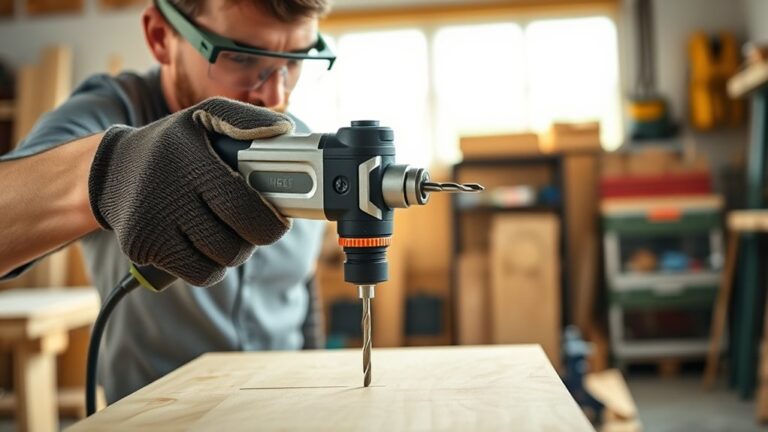
Yes, you can use both tools for wood drilling and metal drilling, but you’ll need the right bits and settings. Turn off hammer action first, because impact can damage wood, dull bits, or distort metal.
A hammer drill works adequately for occasional tasks, while a rotary hammer’s size and power make it less convenient. Choose standard twist bits for metal, wood bits for timber, and moderate speed for clean results.
What Safety Gear Should You Wear When Operating Either Tool?
Wear personal protective equipment whenever you operate either tool. Protect your eyes with safety glasses or sealed goggles, and use hearing protection because both tools produce damaging noise.
Wear a dust mask or respirator when drilling masonry, concrete, or other dusty materials. Choose snug work gloves, sturdy nonslip footwear, and fitted clothing.
Follow safety precautions: secure the workpiece, inspect the bit and cord, and keep both hands firmly on the tool.
Conclusion
Choosing between a rotary hammer vs. hammer drill depends on your project. A hammer drill handles lighter masonry tasks, while a rotary hammer delivers greater force for concrete, anchors, and demolition.
In fact, rotary hammers can remove material roughly twice as fast as hammer drills in demanding applications. If you’re drilling occasional holes, choose the hammer drill.
For frequent, deep, or heavy-duty work, you’ll save time and effort with a rotary hammer and the right bit.