Hammer Drill Vs Rotary €“ 3 Key Differences
Choosing between a hammer drill and a rotary hammer can be confusing, especially when you need clean holes without wasting time or effort. You’re not alone—many people struggle to match the right tool to the job.
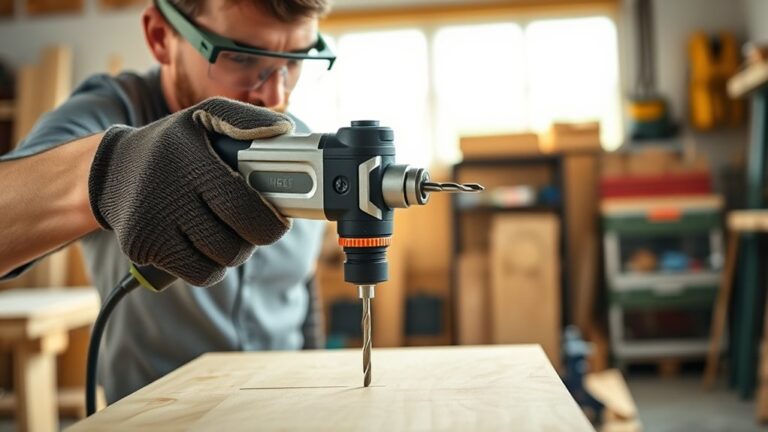
A hammer drill suits you for occasional holes in brick, block, or light concrete, while a rotary hammer handles dense concrete and heavier work. First, rotary hammers deliver stronger piston-driven impacts, so they drill larger holes faster. Second, they accept bigger bits and chisels; hammer drills mainly combine rotation with lighter hammering. Third, hammer drills weigh less and work better for wood, metal, and overhead repairs, while rotary hammers cause more fatigue and noise.
Keep going to compare speed, comfort, and project fit.
Key Takeaways
- Impact mechanism: Hammer drills use a toothed chuck for lighter impact, while rotary hammers use a piston-driven mechanism for stronger blows.
- Performance: Rotary hammers drill dense concrete and larger holes faster; hammer drills suit brick, block, and light masonry.
- Versatility: Hammer drills commonly handle wood, metal, and masonry, while rotary hammers also support chiseling and heavy-duty applications.
- Size and comfort: Hammer drills are lighter and easier for overhead work, whereas rotary hammers are heavier but more powerful.
- Noise and workload: Both require hearing protection, but rotary hammers are typically louder and better suited to demanding, extended projects.
Hammer Drill Vs Rotary Hammer: How Does Power Differ?
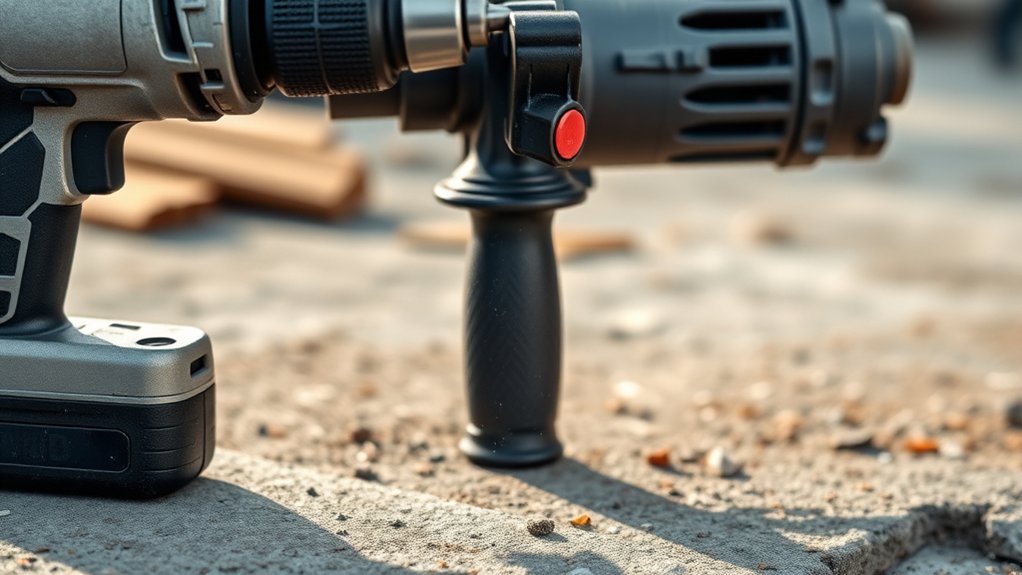
A hammer drill delivers moderate power by combining rotation with a rapid hammering action, making it suitable for drilling into brick, block, and other light masonry. You’ll feel its pulses through the handle as the bit chips shallow holes, while its standard motor handles wood, metal, and occasional masonry tasks.
Hammer drills combine rotation and rapid hammering for light masonry, while remaining versatile enough for wood, metal, and household repairs.
This versatility makes it practical for household repairs and light renovation work.
A rotary hammer produces considerably greater impact force through a piston-driven mechanism. You can use it to bore deeper holes, break concrete, and install anchors in dense masonry with less strain on the tool.
Its stronger mechanism also supports larger bits and chisels, but added weight may tire you during extended use.
Consider Tool durability when matching power to your workload: forcing a hammer drill through concrete can shorten its life. Noise levels also rise with impact strength, so wear hearing protection and follow safe operating practices whenever you drill.
Hammer Drill Vs Rotary Hammer: Which Drills Faster?
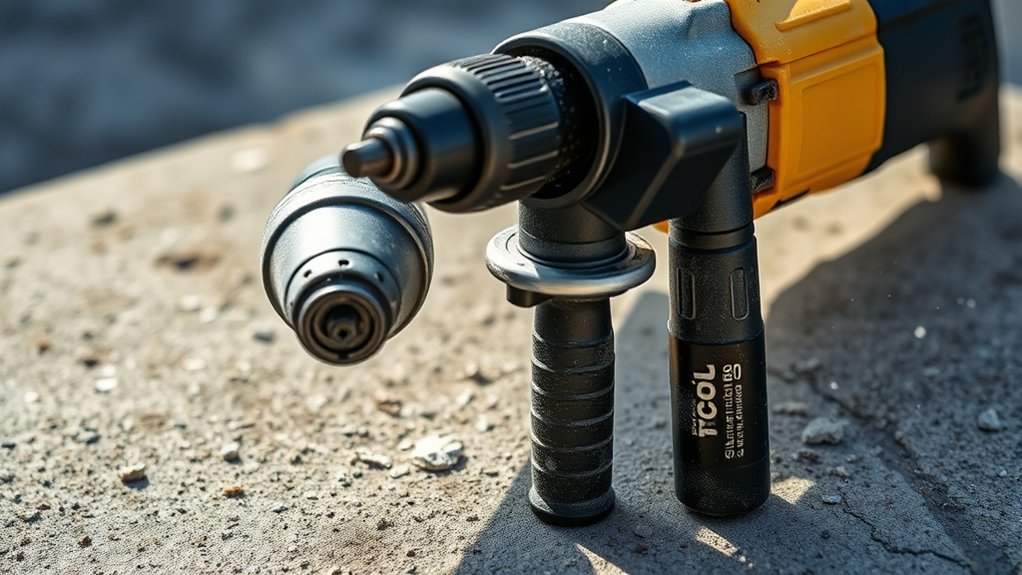
When drilling speed matters, a rotary hammer usually finishes masonry holes faster because its piston-driven impact breaks dense material more efficiently. You’ll notice the advantage most when drilling concrete, brick, or thick block.
A hammer drill uses a vibrating chuck, so it works more gradually and may require firmer pressure.
Your actual results depend on bit quality, hole diameter, and material density. Compare these speed-related factors:
- Rotary hammers remove material faster in hard concrete.
- Hammer drills can maintain steady progress in softer masonry.
- Larger holes typically favor a rotary hammer’s stronger impact.
- Proper bits reduce friction and prevent wasted drilling time.
- Battery life can limit cordless performance during repeated holes.
You’ll also hear different noise levels. Rotary hammers generally sound deeper and more forceful, while hammer drills often produce a sharper vibration.
Don’t judge speed by sound alone. Watch how quickly the bit advances and how often you need to clear dust.
For small holes, either tool may feel quick, but demanding masonry work exposes the rotary hammer’s clear advantage.
Which Tool Fits Your Project?
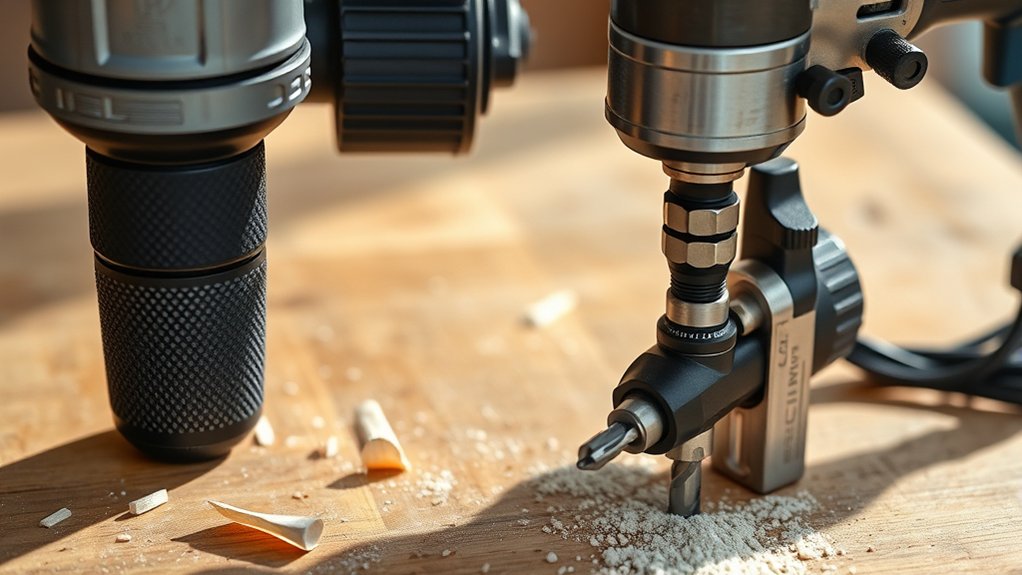
Which tool fits your project depends on the material, hole size, and workload. Choose a hammer drill when you’ll drill occasional holes in brick, block, or light concrete, especially with smaller diameters. Its familiar chuck accepts standard bits, and you can switch to regular drilling for wood or metal. It’s usually lighter, making extended overhead work easier.
Pick a rotary hammer when you’ll tackle dense concrete, masonry, or many large holes. Its stronger impact mechanism removes material faster and supports chiseling tasks, but the added power brings more weight and cost. Consider tool ergonomics before committing: a vibration-reducing handle and balanced body can limit fatigue during demanding jobs.
Also compare noise levels. Both tools are loud, so wear hearing protection, but a rotary hammer may sound harsher during sustained use. For occasional repairs, choose the versatile hammer drill. For renovation, anchoring, or demolition, choose the rotary hammer. Match the tool to your workload, and you’ll work faster, safer, and with less strain.
Frequently Asked Questions
Can a Hammer Drill Function as a Regular Drill?
Yes, you can use a hammer drill as a regular drill. Switch off the hammering function, then install the appropriate bit for wood, metal, plastic, or other materials.
This setting provides useful tool versatility and drill adaptability for everyday projects. Apply steady pressure, choose the correct speed, and avoid forcing the bit.
While a hammer drill may feel heavier than a standard drill, it handles ordinary drilling tasks effectively and reliably.
What Safety Gear Should You Wear When Using Either Tool?
You should wear protective eyewear to shield your eyes from flying dust, chips, and debris when using either tool. Add hearing protection, such as earmuffs or earplugs, because prolonged noise can damage your hearing.
Wear sturdy, closed-toe, nonslip footwear and avoid loose clothing or jewelry that could catch. Use a dust mask or respirator when drilling masonry, and secure long hair.
Gloves can improve grip, but keep them away from rotating parts.
How Loud Are Hammer Drills and Rotary Hammers During Operation?
Hammer drills and rotary hammers typically produce 95–110 decibels, loud enough to risk hearing damage in minutes. Every 3-decibel increase roughly doubles sound energy.
For a noise levels comparison, hammer drills often sound slightly quieter, while rotary hammers generate deeper, stronger impacts and may reach higher peaks.
Wear properly rated hearing protection, limit exposure, and take breaks. Apply sound insulation tips: close doors, use acoustic barriers, and alert nearby people before you start working.
How Often Should You Maintain and Lubricate These Power Tools?
Follow a regular maintenance schedule: inspect your hammer drill or rotary hammer before each use, clean vents, and check cords, chucks, bits, and brushes. Wipe away dust after every job, then inspect moving parts weekly if you use the tool frequently.
Follow the manufacturer’s lubrication frequency, typically greasing rotary-hammer gears every 40–50 hours or as directed. Don’t over-lubricate; excess grease attracts abrasive dust and can cause overheating or damage.
Can These Tools Drill Through Tile Without Causing Cracks?
Yes, you can drill through tile without cracks, but choose the right bit and technique. Check material compatibility first: use a carbide-tipped bit for ceramic tile and a diamond bit for porcelain, glass, or natural stone.
Disable hammer mode, start slowly, and keep the surface cool with water. Apply light pressure, support the tile, and avoid sudden force. Tile cracking often results from excessive heat, vibration, or pressure.
Conclusion
Choose a hammer drill when you’re tackling light masonry, tile, or occasional anchor holes. For tougher concrete, repeated drilling, or chiseling, you’ll want a rotary hammer’s greater impact energy and faster performance.
In fact, rotary hammers can deliver several times more impact force than hammer drills, which explains their advantage on demanding jobs. Your choice ultimately depends on the material, hole size, and workload.
Pick the tool that matches your project, and you’ll work faster with less strain. Understanding the key differences between a hammer drill and rotary hammer helps you choose the right tool for the job.