
Top 10 Circular Saw Blades for 2027
Choosing the right circular saw blade can be frustrating, especially when every option promises smoother, faster cuts. You’re not alone—many people struggle to find a blade that matches their material, saw, and project needs.
This guide to the top circular saw blades of 2027 makes the decision easier.
For the top circular saw blades of 2027, choose based on your material, tooth count, kerf, diameter, and saw compatibility. Diablo Trex suits demanding all-purpose work, while Makita A-93681 and Bosch Daredevil handle fast framing cuts.
DEWALT ToughSeries offers job-site durability, Freud D1296L and Forrest Woodworker II deliver fine finishes, and Milwaukee 48-40-4140 cuts metal. CRAFTSMAN 140T provides budget-friendly performance.
Always verify arbor size, RPM rating, and blade condition before cutting. Investigate the full guide to compare each blade.
Key Takeaways
- Compare blades by tooth count, kerf, diameter, arbor size, RPM rating, and intended material.
- Choose all-purpose blades like Diablo Trex for framing, remodeling, decking, and nail-embedded wood.
- Select Makita A-93681 or Bosch Daredevil blades for fast, efficient framing and renovation cuts.
- Use Freud D1296L or Forrest Woodworker II blades for smooth finishes on trim, plywood, and cabinetry.
- Inspect, store, and maintain blades properly while following saw compatibility and safety requirements.
How Do You Choose a Circular Saw Blade?
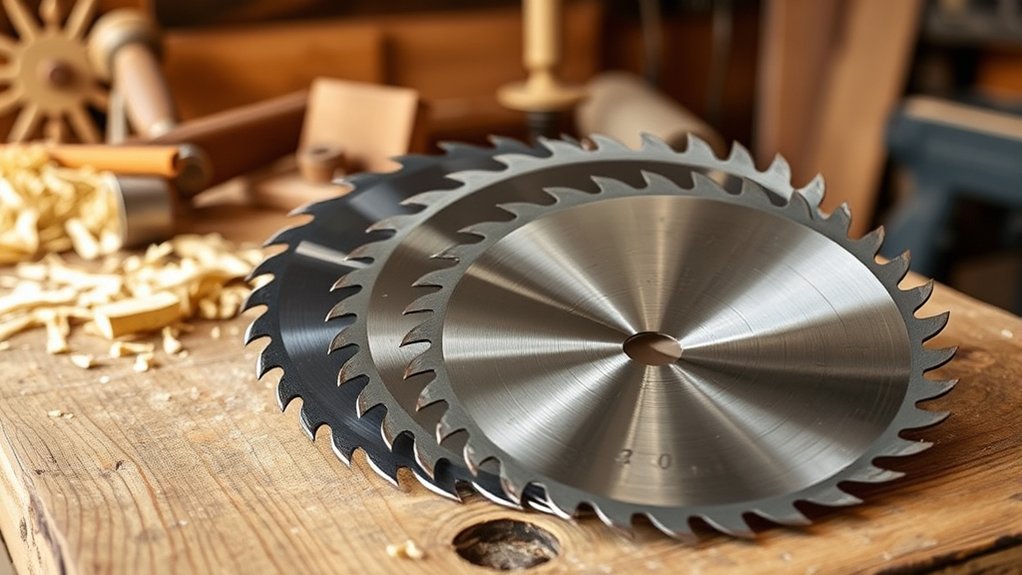
To choose the right circular saw blade, match its tooth count, material, kerf, and diameter to the job. Choose fewer teeth for fast, rough cuts and more teeth for cleaner finishes.
> Match tooth count, material, kerf, and diameter to your project for efficient, accurate circular saw cuts.
Confirm the blade fits your saw’s diameter, arbor, and maximum revolutions per minute. Match the material rating to your project, such as wood, metal, masonry, or composites.
Select a kerf that suits your saw’s power and the cut you need.
Before cutting, inspect the blade for missing teeth, cracks, warping, or resin buildup. Don’t use a damaged blade.
Secure your workpiece, unplug the saw while changing blades, and wear eye and hearing protection. These habits support saw blade safety and help prevent kickback.
Replace dull blades rather than forcing the saw through material. If you use Blade sharpening, follow the manufacturer’s guidance and maintain the original tooth geometry.
Store blades dry, covered, and separated to protect their edges.
Diablo Trex: Best All-Purpose Blade
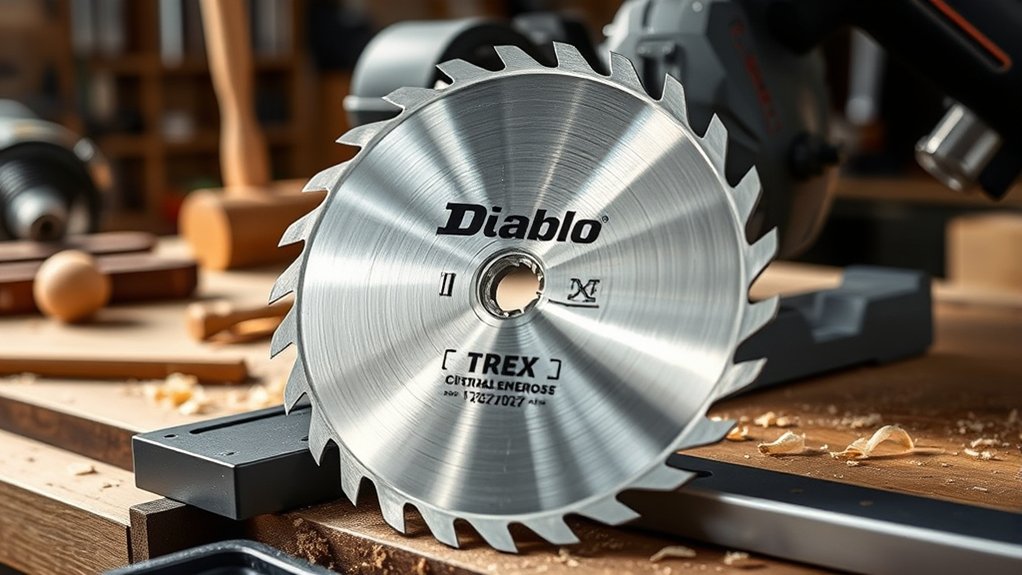
If you need one blade for a range of demanding cuts, the Diablo Trex stands out as a versatile all-purpose option. Its carbide teeth handle wood, embedded nails, and other challenging materials, so you won’t need frequent blade changes during renovation work.
The reinforced body also helps the blade resist warping while delivering smooth, controlled cuts.
- Versatility: You can use it for framing repairs, demolition, decking, and general remodeling.
- Durability: Its tough tooth design withstands abrasive debris and maintains cutting performance.
- Blade materials: Carbide construction improves edge life, while the hardened plate supports stability.
- Control: The optimized tooth geometry reduces vibration, helping you guide the saw confidently.
Before cutting, inspect the blade for damaged teeth, secure your workpiece, and confirm compatibility with your saw.
Follow essential Safety precautions by wearing eye and hearing protection, keeping both hands clear, and waiting for the blade to stop before setting the saw down.
Choose Trex when you value one dependable blade for varied, demanding tasks.
Makita A-93681: Best Framing Blade
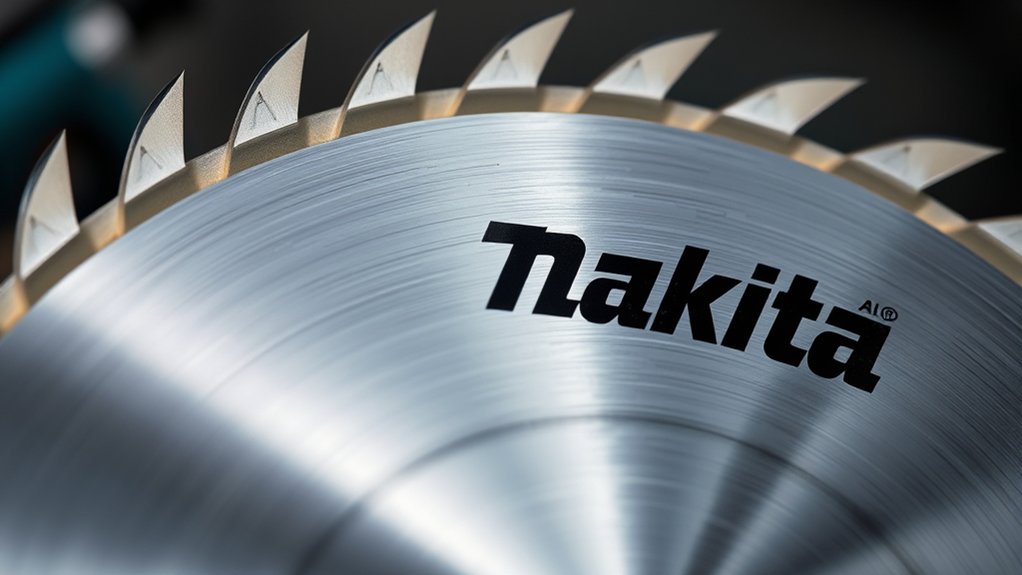
The Makita A-93681 helps you frame more efficiently with fast, consistent cuts. Its durable construction stands up to demanding job-site conditions, while the precision teeth deliver clean, accurate results.
Framing Performance
When framing demands fast, clean cuts, the Makita A-93681 delivers dependable performance through dimensional lumber, plywood, and OSB. You’ll notice its 24-tooth configuration clears material quickly while producing edges clean enough for accurate assembly.
Its carbide-tipped teeth track confidently, helping you maintain control during repeated crosscuts and rips. The blade suits jobsite saws and cordless circular saws, so you can move efficiently between wall sections, sheathing, and roof components.
- Fast cuts: Spend less time pushing through boards.
- Clean results: Reduce splintering on common framing stock.
- Smooth handling: Keep your saw moving steadily.
- Practical upkeep: Use blade sharpening and saw blade maintenance to preserve cutting accuracy.
Although it favors speed over furniture-grade finishes, you’ll appreciate its balanced performance for structural work. Match the blade to your saw, secure each workpiece, and let the teeth do the cutting.
Blade Durability
Built for demanding framing cycles, the Makita A-93681 uses carbide-tipped teeth to resist wear through repeated cuts in lumber, plywood, and OSB. You’ll extend its service life by keeping nails, screws, and grit out of the cutting path.
The blade’s construction handles jobsite abuse, while proper storage helps prevent tooth damage.
| Durability factor | What you should do | Benefit |
|---|---|---|
| Carbide teeth | Remove embedded debris | Slower wear |
| Clean storage | Use a blade case | Fewer chips |
| Blade sharpening | Hire a qualified service | Restored cutting ability |
Inspect the teeth before each project, and replace the blade if you spot cracks, missing carbide, or excessive damage.
Follow safety precautions: disconnect power before inspection, wear eye protection, and handle the blade by its edges. With routine care, you’ll get dependable longevity from this framing blade.
Cutting Precision
With its precision-ground carbide teeth, the Makita A-93681 delivers clean, controlled cuts through framing lumber, plywood, and OSB. You’ll notice its thin kerf removes less material, helping your saw track straight while reducing strain.
The alternating tooth design limits splintering, so you can make accurate crosscuts and rip cuts with fewer touch-ups.
- Set your cutting depth just below the workpiece to improve control.
- Support both sides of the board to prevent pinching and wandering.
- Mark your line clearly, then guide the saw steadily without forcing it.
- Inspect teeth regularly; Blade sharpening or replacement preserves precision.
Wear Safety equipment, including eye and hearing protection, whenever you cut. Although this framing blade prioritizes speed, it still produces dependable results when you pair it with a stable stance, a properly aligned saw, and a sharp, unobstructed cutting path.
You’ll finish framing tasks faster and cleaner.
Bosch Daredevil: Best Fast-Cutting Wood Blade
The Bosch Daredevil makes fast, clean cuts through wood with minimal tear-out. Its carbide teeth stay sharp during demanding projects, so you can count on reliable, long-lasting performance.
It’s especially useful for framing, plywood, and everyday woodcutting jobs.
Fast, Clean Cuts
When speed matters, the Bosch Daredevil delivers fast, clean cuts through framing lumber, plywood, and other common wood materials. Its aggressive tooth design helps you work efficiently, while the thin kerf reduces resistance and waste.
You’ll get smoother progress when you support your workpiece properly and mark your cut clearly.
- Set depth: Adjust the blade just below the material for controlled cutting.
- Feed steadily: Let the saw maintain momentum; don’t force it through knots.
- Use safety precautions: Wear eye and hearing protection, secure loose clothing, and keep both hands positioned safely.
- Follow maintenance tips: Clear pitch and sawdust after use, then inspect the blade before your next project.
The Daredevil suits framing, decking, shelving, and renovation work where quick, accurate cuts matter. Pair it with a properly aligned saw and a sharp layout line to improve results.
You’ll save time without sacrificing control.
Carbide Tooth Durability
Bosch Daredevil’s carbide-tipped teeth stay sharp through repeated cuts in framing lumber, plywood, and other wood materials, so you can work longer with fewer blade changes.
The reinforced carbide resists impact when you encounter occasional knots, embedded debris, or uneven grain. Its tooth configuration balances aggressive removal with enough support to reduce chipping and premature wear.
A durable blade coating helps limit friction, heat buildup, and resin adhesion, keeping the cutting edges cleaner during demanding sessions.
You’ll also benefit from the blade’s stable construction, which helps the teeth maintain their alignment as you push through cuts.
Because the carbide tips hold their edge longer, you won’t need to stop as often for replacements or sharpening. That durability supports consistent performance, lower downtime, and more predictable results throughout your project.
Ideal Wood Applications
That long-lasting carbide performance makes the Bosch Daredevil a strong choice for fast cuts in framing lumber, plywood, OSB, and other common wood materials. You’ll get clean, efficient results when building walls, cutting sheets, or sizing boards for remodeling projects. Its tooth design handles demanding cuts while helping you maintain steady feed pressure.
- Framing: Cut studs, rafters, joists, and blocking quickly on construction sites.
- Sheet goods: Trim plywood and OSB with controlled, productive passes.
- General carpentry: Size dimensional lumber for decks, shelving, and repairs.
- Rough cutting: Tackle embedded knots and construction-grade wood without slowing excessively.
For woodworking safety, secure every workpiece, check blade clearance, and wear eye and hearing protection. Include blade maintenance in your routine: inspect carbide teeth, remove pitch buildup, and replace the blade when cutting becomes difficult or uneven. You’ll extend performance and reduce kickback risks.
DEWALT ToughSeries: Best Durable Job-Site Blade
DEWALT ToughSeries blades stand out on busy job sites because they combine impact-resistant construction with long-lasting cutting performance. You’ll appreciate their tough carbide teeth, reinforced shoulders, and anti-stick coating when you move between framing lumber, plywood, and general construction cuts.
These blade materials help the teeth resist chipping while the coating reduces friction, heat, and pitch buildup. The ToughSeries design also supports consistent results when you work quickly or encounter occasional nails and abrasive debris.
Choose the tooth count that matches your task: fewer teeth remove material fast, while more teeth produce smoother edges. Pay attention to cutting angles, too. An optimized hook angle helps the blade feed confidently without feeling overly aggressive.
With a rigid plate and vibration-reducing design, you’ll get steadier control and cleaner tracking during long shifts. Keep the blade sharp, match it to your saw, and use it when durability matters more than a specialty finish.
You’ll spend less time changing blades and more time cutting.
IRWIN Marathon: Best Blade for Treated Wood
Choose the IRWIN Marathon when you need a durable blade for treated wood and demanding projects. Its corrosion-resistant construction helps it stand up to harsh lumber and tough job-site conditions. You’ll get clean, reliable cuts with less hassle.
Treated Wood Durability
When you’re cutting pressure-treated lumber, the IRWIN Marathon stands out for its corrosion-resistant coating and durable carbide teeth. You’ll get consistent cuts through dense boards, even when embedded chemicals and uneven grain challenge lesser blades.
Its tooth design helps limit grain separation, so edges stay cleaner with less splintering. For dependable performance, follow these practical steps:
- Support lumber securely to prevent vibration and tooth impact.
- Match the blade’s tooth count to your cut: fewer teeth cut faster, while more teeth improve finish quality.
- Feed steadily; forcing the saw overheats teeth and shortens service life.
- Inspect carbide tips regularly, and schedule blade sharpening when cuts become rough or the motor strains.
With proper handling, the Marathon maintains accuracy across repeated projects. You’ll spend less time replacing blades and more time completing durable, professional-looking cuts in treated wood.
Corrosion-Resistant Construction
Built to resist the moisture and chemicals found in pressure-treated lumber, the IRWIN Marathon uses a corrosion-resistant coating that helps protect the blade during demanding cuts. When you work with treated boards, you expose steel to preservatives that can accelerate oxidation.
This blade’s coating technology creates a protective barrier, supporting rust prevention without requiring constant maintenance. You can store it in your truck, workshop, or job-site box with greater confidence, especially when humidity runs high.
The protected surface also helps the blade withstand repeated contact with damp lumber and outdoor conditions. For your renovation, framing, or deck project, that added resistance can extend usable life and reduce premature replacement.
Choose the Marathon when you need a blade designed for treated wood’s harsh chemical environment. It’s a practical safeguard for demanding work.
Clean, Reliable Cuts
The IRWIN Marathon delivers clean, reliable cuts through pressure-treated lumber, helping you maintain straight edges with less splintering. Its carbide teeth stay sharp through demanding projects, while the blade’s design reduces vibration for smoother control.
You’ll get better results when you pair its performance with these habits:
- Support boards fully to prevent binding and uneven cuts.
- Mark your cut line clearly, then guide the saw steadily without forcing it.
- Follow safety precautions: wear eye and hearing protection, secure loose clothing, and keep hands clear.
- Practice blade maintenance by removing pitch buildup and checking teeth before each project.
Use the correct tooth count for your material, and let the saw reach full speed before cutting. With consistent technique, the Marathon helps you produce cleaner edges and dependable results on treated wood.
Freud D1296L: Best Fine-Finish Blade
Freud’s D1296L delivers exceptionally clean cuts for trim, cabinetry, and other fine-finish projects, thanks to its high tooth count and precision-ground carbide teeth. When you need polished edges with minimal splintering, you’ll appreciate how its 96-tooth design handles plywood, melamine, and hardwood trim. The thin kerf removes less material, helping your saw work efficiently while producing a smoother cut.
Its durable Blade material supports repeated use, while the anti-vibration design helps you maintain control through long panels and delicate pieces. You’ll get the best results by feeding your saw steadily rather than forcing it; excessive pressure can reduce accuracy and burn the workpiece.
Match the blade to your saw’s arbor and confirm that the maximum cutting speed suits your tool before starting. Because this blade prioritizes finish quality, you should reserve it for detail work instead of fast, aggressive ripping. With proper setup, the D1296L gives you crisp, professional-looking results.
Forrest Woodworker II: Best Premium Finish Blade
When you want premium finish quality across hardwoods, plywood, and veneered panels, Forrest’s Woodworker II delivers exceptionally smooth, chip-free cuts. Its carefully ground carbide teeth, thin kerf, and stable plate help you achieve clean edges while reducing sanding and tear-out. Choose it when appearance matters more than speed.
Forrest’s Woodworker II delivers exceptionally smooth, chip-free cuts when premium finish quality matters most.
- Best use: You’ll get outstanding results on cabinet parts, trim, doors, and fine furniture.
- Cut quality: The blade tracks smoothly, leaving polished surfaces and crisp veneers with minimal splintering.
- Woodworking techniques: Pair it with a zero-clearance insert, steady feed rate, and properly supported workpiece for even cleaner cuts.
- Maintenance and safety: Keep teeth free of resin, inspect the plate, and follow essential saw safety tips: wear eye protection, disconnect power before adjustments, and never force the cut.
The Woodworker II costs more than ordinary blades, but its durability and refined performance can justify the investment for demanding projects. You’ll especially appreciate it when every visible edge needs a professional finish.
Milwaukee 48-40-4140: Best Metal-Cutting Blade
For metal stock, Milwaukee’s 48-40-4140 gives you a purpose-built option for clean, controlled cuts through steel, aluminum, and other nonferrous materials. Its carbide construction and specialized tooth geometry help you produce precise cuts while reducing sparks, burrs, and material waste.
The blade material resists wear, so you can expect dependable performance across demanding fabrication tasks. You’ll also appreciate its optimized Cutting speed, which balances fast progress with smooth, manageable cuts.
Use it with a compatible saw and the correct settings for your material, then let the blade do the work without forcing it. Milwaukee designs this blade for professionals who need repeatable results on job sites, in workshops, or during installation work.
Check the arbor size and saw requirements before buying, and wear proper eye, hearing, and hand protection. If you regularly cut metal rather than wood, this blade gives you the focused performance and control that a general-purpose option can’t match.
CRAFTSMAN 140T: Best Budget Blade
The CRAFTSMAN 140T gives you an affordable, fine-tooth option for clean cuts in trim, plywood, laminate, and other finish materials. Its 140 teeth leave smooth edges with minimal splintering, making it useful for cabinets, shelving, and delicate project work.
You’ll get strong value when you need finish quality without investing in a premium blade.
- Best use: Choose it for crosscuts and finish cuts in wood-based materials, not heavy demolition or thick hardwood.
- Cut quality: Maintain a steady feed rate and support your workpiece to prevent chipping.
- Maintenance: Inspect the teeth regularly. Blade sharpening can restore performance, but replace the blade if teeth are missing or damaged.
- Safe operation: Follow safety precautions, including eye protection, secure clamping, and disconnecting power before installation.
Before cutting, confirm the blade matches your saw’s arbor and maximum speed. You’ll achieve the cleanest results by letting the blade work steadily rather than forcing it through material.
Frequently Asked Questions
How Often Should Circular Saw Blades Be Sharpened or Replaced?
You should sharpen circular saw blades when cuts become rough, slow, or difficult, typically after several hours of demanding use. Inspect carbide teeth regularly, and replace the blade if teeth chip, crack, or remain dull after sharpening.
Your material, cutting frequency, and blade quality determine the exact schedule. For reliable blade maintenance and cutting accuracy, clean blades after use, avoid nails, and follow the manufacturer’s sharpening and replacement recommendations.
Are Circular Saw Blades Interchangeable Between Different Saw Brands?
Yes, you can often use circular saw blades across different brands, but you must check blade compatibility first. Picture the blade spinning smoothly, teeth flashing like tiny silver combs through wood.
Match the blade diameter, arbor size, kerf, tooth design, and maximum RPM to your saw’s specifications. Brand compatibility usually matters less than these measurements, though some proprietary systems require specific blades.
Never install a blade that fits loosely, exceeds your saw’s speed rating, or suits the wrong material.
What Safety Gear Should You Wear When Using a Circular Saw?
You should wear Protective eyewear to shield your eyes from flying chips and dust, plus Ear protection to reduce damaging noise. Add a properly fitted dust mask or respirator when cutting materials that create fine particles.
Wear snug clothing, non-slip work boots, and avoid jewelry or loose sleeves that could catch. Keep gloves away from the blade unless your tool’s manufacturer specifically recommends them.
Always secure your workpiece and follow the saw’s safety instructions.
How Should Circular Saw Blades Be Stored to Prevent Damage?
Store circular saw blades in protective storage containers to prevent damage, because one careless toss can turn precision tools into dangerously ruined metal. Keep each blade clean, dry, and separated from others to avoid rust, chipped teeth, and warping.
Use blade guards, sleeves, or padded cases, and place containers on stable shelves away from moisture and extreme heat. Check the blade material before storing, then apply light rust protection when appropriate.
Can Circular Saw Blades Be Used on Cordless and Corded Saws?
Yes, you can use many circular saw blades on both cordless and corded saws, provided you match the blade’s diameter, arbor size, kerf, and maximum RPM to your tool. Check your manufacturer’s specifications before installing anything.
Blade compatibility matters more than the power source. Different saw blade types suit wood, metal, masonry, or composites, so choose the correct tooth design and material.
Never exceed the blade’s rated speed, and inspect it before use.
Conclusion
Choosing the right circular saw blade helps you cut faster, cleaner, and more safely. Whether you’re framing, trimming, slicing metal, or working on a budget, match the blade’s tooth count, material, and purpose to your project.
Don’t let the wrong blade turn a simple cut into a headache. With these top 10 circular saw blades for 2027, you have a reliable starting point for every task.
Pick wisely, keep your blade sharp, and choose the best circular saw blade for your project. With the right tool, your work can shine like a polished gem.