How to Clean a Sports Car Engine in 5 Easy Steps
Keeping your sports car engine clean can feel like a daunting task. You’re not alone if you’ve struggled with grime buildup or worried about damaging sensitive components while cleaning. Many enthusiasts want their engines to look as sleek as the rest of their ride but aren’t sure how to get that perfect, spotless finish.
To clean your sports car engine in five easy steps, start by ensuring the engine is completely cool and cover sensitive parts like the air intake and battery. Use a quality automotive degreaser and soft brushes to gently loosen grime, then rinse carefully with low-pressure water.
Dry thoroughly with microfiber towels or compressed air, checking for any damage or moisture. Finally, maintain cleanliness with regular checks and wiping. Keep going to uncover expert tips for a spotless, well-maintained engine.
Key Takeaways
- Ensure the engine is completely cool before you start. Cover sensitive parts like air intakes and electrical components with plastic bags to protect them.
- Use a high-quality automotive degreaser along with soft brushes to gently clean greasy areas. This helps avoid damaging delicate surfaces.
- Spray the degreaser evenly and let it sit for a few minutes. Then rinse carefully with low-pressure water, working section by section.
- Dry the engine thoroughly using microfiber towels or compressed air. Pay close attention to wiring and battery terminals to avoid any moisture issues.
- Regularly maintain the engine by checking fluid levels and wiping surfaces. Protect it from dust by using an engine cover whenever possible.
Get Your Sports Car Engine Ready for Cleaning
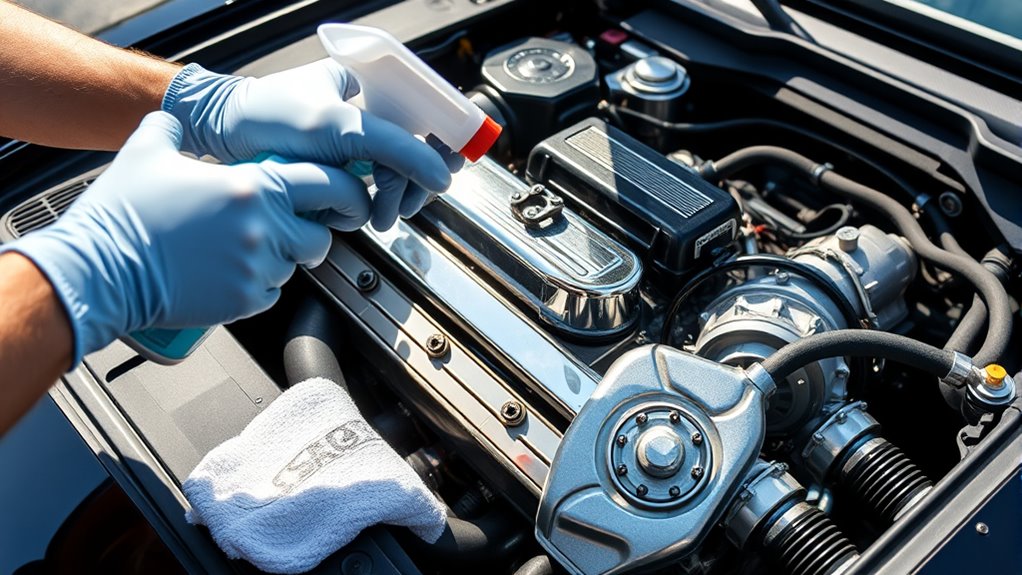
Before you begin cleaning, make sure your sports car engine is completely cool to avoid burns and damage. Hot engines are not only dangerous to touch but also increase the risk of engine overheating during cleaning, which can cause costly repairs.
Once cooled, inspect the engine bay for any leaks or damaged components that might worsen if exposed to water or cleaning solutions. Cover sensitive parts like the air intake, battery, and exposed wiring with plastic bags or foil to prevent water intrusion.
Removing debris like leaves or dirt helps you clean more effectively and prevents blockages that can impact fuel efficiency. Taking these preparatory steps guarantees you won’t accidentally cause damage or reduce your engine’s performance.
Proper preparation not only protects your sports car’s engine but also helps maintain ideal fuel efficiency by preventing overheating and ensuring all components function smoothly after cleaning.
Pick the Right Tools and Cleaners for Your Engine
With your engine prepped and protected, it’s time to focus on selecting the right tools and cleaners to get the job done effectively. Start by choosing a high-quality engine degreaser designed specifically for automotive use. These products break down stubborn grease and grime without damaging sensitive engine components. Avoid harsh chemicals that could corrode parts or harm rubber seals.
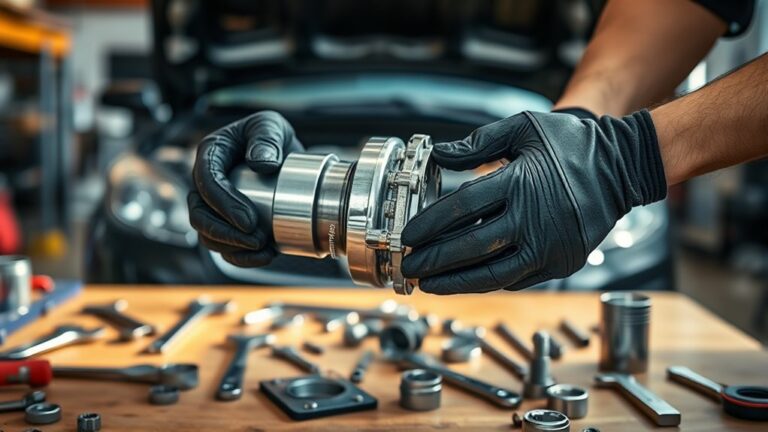
Next, gather essential tools like soft brushes, microfiber cloths, and a spray bottle for even application. A stiff brush might damage delicate surfaces, so opt for softer bristles to avoid scratches. Don’t forget to wear protective gloves to shield your hands from chemicals and grime throughout the cleaning process.
Step-by-Step Guide to Washing Your Sports Car Engine
Once you’ve gathered your tools and cleaners, start by covering sensitive electrical parts and air intakes with plastic bags to prevent water damage. Make sure the engine temperature is cool before you begin to prevent burns and guarantee the cleaners work effectively.
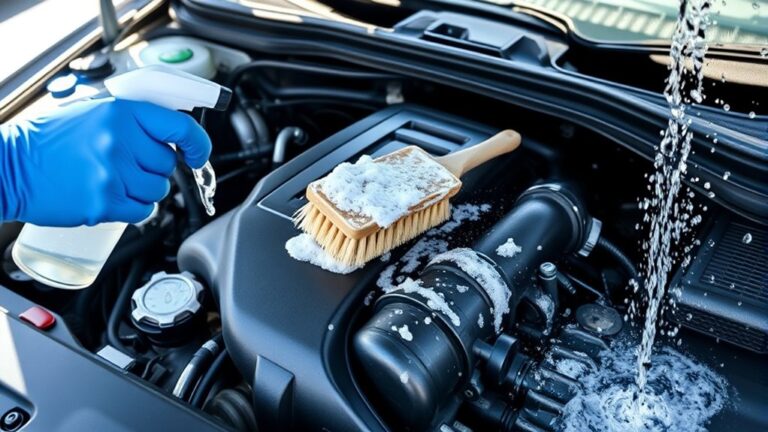
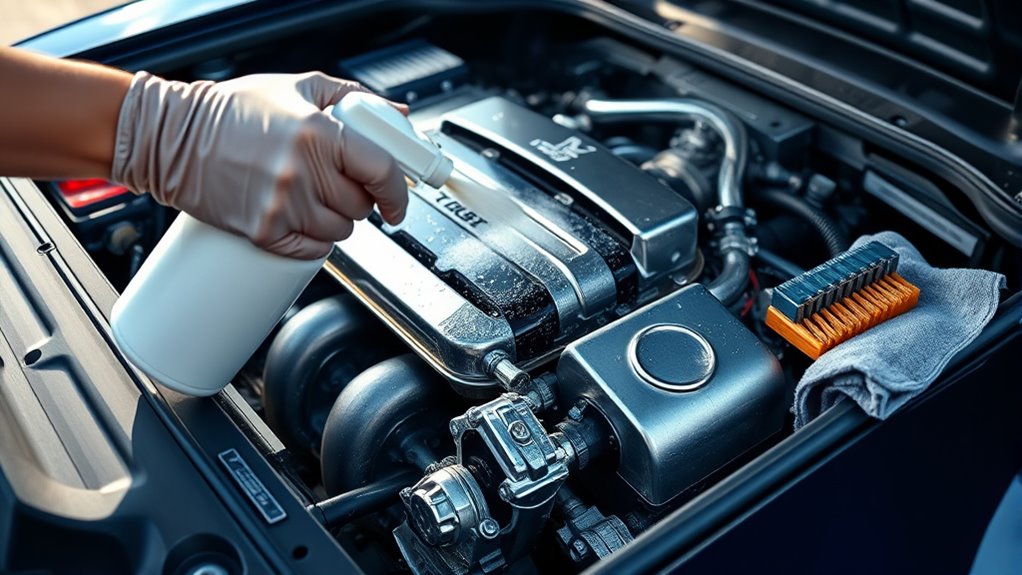
Begin by spraying a degreaser evenly across the engine bay, focusing on greasy spots but avoiding electrical components. Let it sit for a few minutes to break down grime, then gently scrub stubborn areas with a soft brush.
Next, rinse the engine bay lightly with a low-pressure hose or a spray bottle to avoid flooding. Always follow safety precautions by wearing gloves and eye protection throughout the process.
Avoid high-pressure water, which can force moisture into delicate parts. Work systematically, section by section, to guarantee a thorough clean without missing spots.
Taking these steps carefully will help you clean your sports car engine safely and effectively.
Dry and Inspect Your Engine After Cleaning
After rinsing your engine, you’ll want to dry it thoroughly to prevent moisture from causing corrosion or electrical issues. Start by letting the engine cool completely, as high engine temperature can trap steam and moisture, making drying less effective. Then, use compressed air or a clean microfiber towel to remove water from tight spots, especially around electrical connections.
Next, carefully inspect your engine for any damage or loose components. Pay close attention to wiring and hoses to guarantee nothing shifted during cleaning. Battery safety is vital, so check terminals for corrosion or moisture and dry them thoroughly to avoid electrical shorts.
Here’s a quick checklist:
- Allow engine temperature to normalize before drying.
- Use compressed air or towels to eliminate trapped moisture.
- Inspect electrical parts and battery terminals for damage or dampness.
Drying and inspecting promptly helps maintain your sports car’s performance and prevents costly repairs.
Easy Ways to Keep Your Sports Car Engine Clean Longer
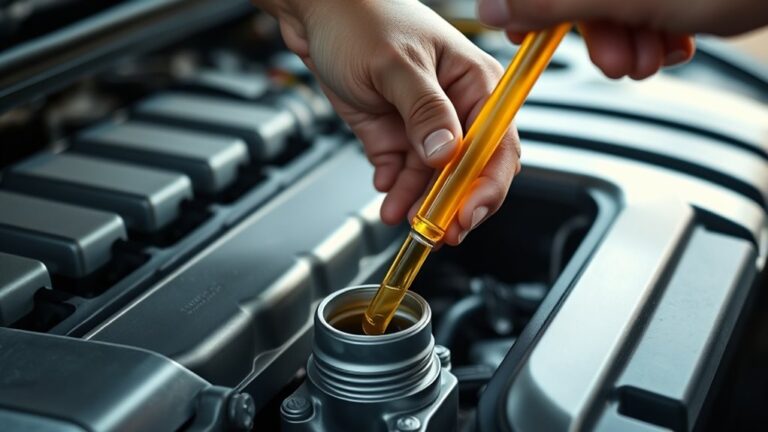
Keeping your sports car engine clean doesn’t stop at the initial wash and inspection. To keep it looking sharp longer, regularly check your engine oil and coolant levels. They not only ensure performance but help prevent leaks and buildup that cause grime.
You should also avoid driving through dusty or muddy areas whenever possible, as debris can quickly dirty your engine bay. Using a quality engine cover while parked can protect against dust and moisture.
Furthermore, wipe down accessible parts with a microfiber cloth every few weeks to remove dust and light dirt before it hardens. Scheduling routine maintenance helps identify small issues like oil or coolant leaks early, preventing stains and buildup.
Frequently Asked Questions
Can I Use a Pressure Washer on My Sports Car Engine?
You can use a pressure washer on your sports car engine, but you have to be very careful. Pressure washer risks include damaging sensitive electrical parts or forcing water into areas that can cause corrosion.
Instead, consider safer engine cleaning tools like a soft brush and degreaser. If you do use a pressure washer, keep the pressure low, avoid direct sprays on electrical components, and cover delicate parts to protect your engine.
How Often Should I Deep Clean My Sports Car Engine?
You should deep clean your sports car engine about once a year to keep it running smoothly. Regularly check the engine oil and cooling system, as contaminants can build up and affect performance.
If you drive in dusty or wet conditions, consider cleaning more often. Keeping these components clean helps prevent overheating and prolongs engine life, so don’t skip this important maintenance step.
Will Engine Cleaning Improve My Car’s Performance?
Yes, cleaning your engine can improve performance. Studies show engines running cooler by just 10°F can boost efficiency by up to 5%. When you remove grime and buildup, you help regulate engine temperature better and prevent overheating.
Using safe chemical cleaners breaks down stubborn grease without damaging components. This keeps your engine running smoother, extending its life and possibly increasing horsepower. So, regular cleaning isn’t just about looks; it’s smart maintenance.
Are There Any Risks of Voiding My Warranty by Cleaning the Engine?
Yes, warranty concerns can arise if you don’t follow cleaning limitations set by your car manufacturer. If you use harsh chemicals or high-pressure water, you might damage sensitive components, which could lead to your warranty being voided.
Always check your owner’s manual or contact your dealer before cleaning. Stick to recommended methods and avoid soaking electrical parts to keep your warranty intact while maintaining your engine’s cleanliness.
Can I Clean My Sports Car Engine Myself or Should I Hire a Professional?
Why leave your engine looking like a mystery when you can reveal its shine? You can clean your sports car engine yourself if you’re careful, but remember, improper cleaning can affect engine oil seals or damage sensitive parts.
If you want to protect your investment and improve car aesthetics without risk, hiring a professional is wise. They know how to avoid pitfalls and keep your engine spotless and safe.
Conclusion
Now that you’ve mastered the easy steps to clean your sports car engine, you might think you’re done. But wait, there’s one secret to keeping that engine looking fresh even longer.
Ready to uncover the simple habit that can save you time and effort down the road? Stick with what you’ve learned, and you’ll unleash the full potential of your engine’s shine.
The best part? It’s easier than you ever imagined to maintain a clean sports car engine.