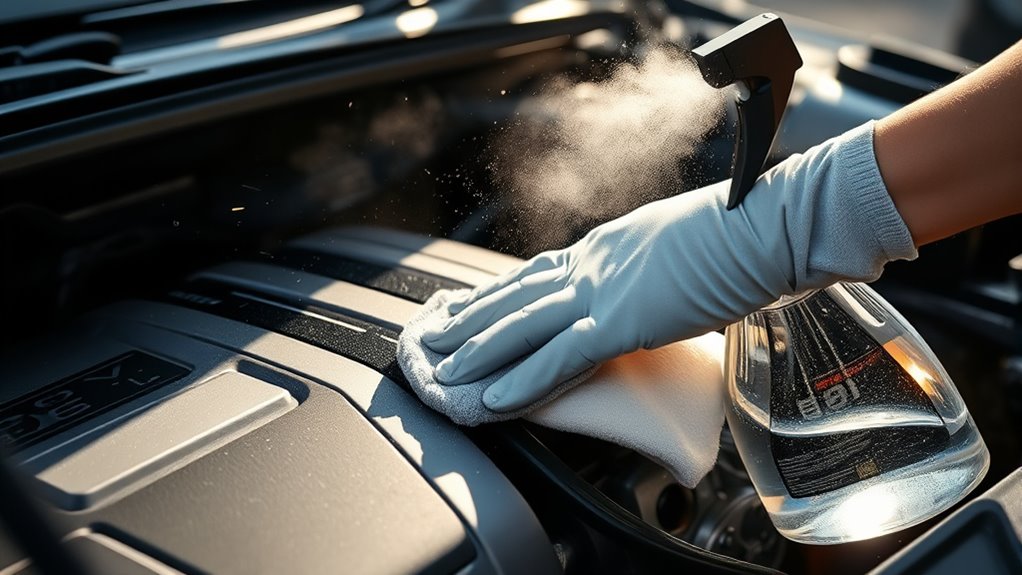
7 Easy Steps to Clean Dust From Your Car Engine
If you’ve ever noticed your car engine looking dusty and grimy, you’re not alone. Many people struggle with keeping their engine clean without causing damage. A dusty engine can affect your car’s performance and even lead to costly repairs if not addressed properly. That’s why knowing how to clean dust from your car engine the right way is so important.
To clean dust from your car engine, first prepare by disconnecting the battery and covering sensitive parts to keep them dry. Gather soft brushes, microfiber cloths, and degreaser.
Gently brush away loose dust, apply cleaner to grime, then rinse carefully with low-pressure water.
Dry thoroughly using cloths and compressed air to prevent moisture buildup.
Finish by inspecting for stubborn dirt.
Following these steps will help your engine run smoother and last longer. Explore more tips to protect your engine effectively.
Clean Dust From Your Car Engine Key Takeaways
- Disconnect the battery and cover sensitive parts like the battery, oil cap, and coolant reservoir with plastic to prevent water damage.
- Use a soft brush to gently loosen and remove dust from vents, belts, and fan blades without damaging delicate components.
- Spray a gentle degreaser evenly on dirty engine surfaces, let it sit for 5-10 minutes, then rinse thoroughly with low-pressure water.
- Dry the engine with microfiber cloths and compressed air. Focus on tight spots and electrical connections to prevent moisture buildup.
- Inspect for remaining dust or debris. Make sure all areas are dry and confirm protection before restarting the engine for safety and longevity.
Get Your Engine Ready for Cleaning
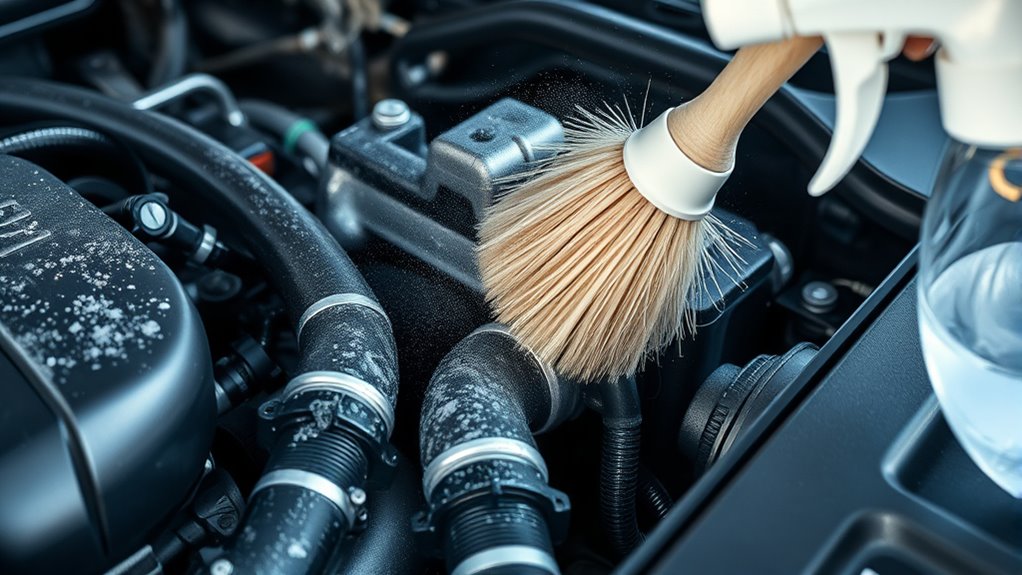
How do you prepare your engine for a thorough cleaning? Start by checking the engine oil quality. If the oil looks dirty or hasn’t been changed recently, consider replacing it before cleaning. Fresh oil helps protect engine components during and after the cleaning process.
Next, focus on battery maintenance. Disconnect the battery terminals to prevent any electrical shorts or damage caused by water or cleaning agents. Make sure the terminals are clean and free of corrosion before disconnecting.
Once disconnected, cover the battery with a plastic bag or waterproof material to keep it dry. Allow the engine to cool completely before you begin cleaning to avoid burns or damage to sensitive parts.
Taking these steps guarantees your engine is safe and ready, making the cleaning process more effective and preventing potential issues later on. Preparing your engine properly sets the foundation for a successful dust removal and overall engine care.
Gather the Right Tools for Engine Cleaning
Before you start cleaning, make sure you’ve got the essential tools like brushes, microfiber cloths, and a gentle degreaser. And don’t forget your protective gear—gloves and safety glasses are a must to keep yourself safe. Having the right equipment ready will make the whole process a lot smoother and way more effective.
Essential Cleaning Tools
A few essential tools will make cleaning your car engine easier and more effective. Start with a good-quality brush to remove dust and grime from hard-to-reach areas. A soft-bristled brush works well around delicate parts like spark plugs to prevent damage.
You’ll also need a spray bottle filled with degreaser to break down stubborn oil and dirt residues, especially near the engine oil cap and surrounding components. Microfiber cloths are perfect for wiping surfaces without scratching.
Furthermore, a plastic scraper helps lift caked-on grime without harming engine parts. Having a vacuum with a narrow nozzle attachment can help suck up loosened debris. With these tools ready, you’ll keep your engine clean while protecting crucial elements like spark plugs and engine oil seals.
Protective Gear Needed
Although cleaning your car engine can be rewarding, you’ll want to protect yourself with the right gear to stay safe and comfortable. Start by wearing protective clothing, such as long sleeves and gloves, to shield your skin from dirt, grease, and cleaning chemicals.
Safety glasses are a must to protect your eyes from dust, debris, and splashes of cleaning solutions. If you have sensitive skin or allergies, consider a mask to avoid inhaling dust particles.
Choose sturdy shoes to prevent slips or injuries while working around your vehicle. By gearing up properly, you’ll minimize risks and focus on cleaning effectively.
Don’t skip this step; your safety comes first when tackling engine dust and grime.
Keep Sensitive Engine Parts Dry and Safe
Two crucial steps help you keep sensitive engine parts dry and safe during cleaning. First, cover critical components like the engine oil cap and coolant system reservoir with plastic bags or cling wrap. This prevents water or cleaning agents from seeping in and causing damage.
Second, avoid spraying water directly onto electrical connections, sensors, or exposed wiring to prevent short circuits.
Here’s a quick reference on parts to protect and why:
| Part | Reason to Protect | Protection Method |
|---|---|---|
| Engine Oil Cap | Prevent water contamination | Cover with plastic wrap |
| Coolant System | Avoid fluid dilution | Seal with plastic bag |
| Electrical Wiring | Prevent short circuits | Avoid direct spraying |
Remove Loose Dust With a Soft Brush
You’ll want to pick a soft brush that won’t scratch your engine’s surfaces. Just brush gently so you don’t cause any damage while loosening the dust. Try to focus on those tight spots where dust likes to hide and build up.
Choose The Right Brush
How do you remove loose dust without causing damage? It starts with brush selection. Choose a soft-bristled brush specifically designed for delicate surfaces to prevent scratches on your car engine.
Natural or synthetic bristles both work, but make sure they’re clean and flexible. Avoid stiff or wire brushes, as they can harm sensitive components.
Proper brush maintenance is just as important. Rinse your brush after each use to clear away debris, then let it dry completely. This prevents dirt buildup that could scratch surfaces next time.
Regularly inspect your brush for worn or hardened bristles and replace it when necessary. By carefully selecting and maintaining your brush, you’ll effectively remove loose dust while protecting your engine’s delicate parts.
Brush Gently To Avoid Damage
Although using a soft brush is essential, brushing too hard can damage delicate engine parts. When you start cleaning, focus on delicate brushing to guarantee you don’t harm sensitive components like wiring or sensors.
Use light, controlled strokes to achieve gentle dust removal without scratching surfaces or dislodging small parts. Remember, your goal is to remove loose dust, not scrub stubborn grime. That can come later with other methods.
Pay attention to areas where dust tends to collect but avoid applying pressure. By brushing gently, you’ll protect your engine’s integrity while effectively clearing away surface dust.
Taking your time with this step sets a solid foundation for a cleaner engine without risking costly damage.
Target Hard-To-Reach Areas
Where do you usually find the most stubborn dust in your engine? It’s often tucked away in hidden crevices where your cloth can’t reach. To tackle these spots, grab a soft brush and gently sweep away loose dust.
The brush’s gentle bristles help dislodge stubborn debris without damaging delicate components. Work carefully around tight spaces like wiring harnesses, air filter boxes, and valve covers.
Take your time to reach every nook and cranny, making sure no dust lingers. Using a soft brush lets you clean effectively without pushing debris deeper into hard-to-reach areas.
This simple step guarantees your engine stays cleaner and runs smoother. Don’t rush; targeting these hidden spots makes a big difference in your engine’s overall cleanliness.
Use Cleaner to Break Down Grime
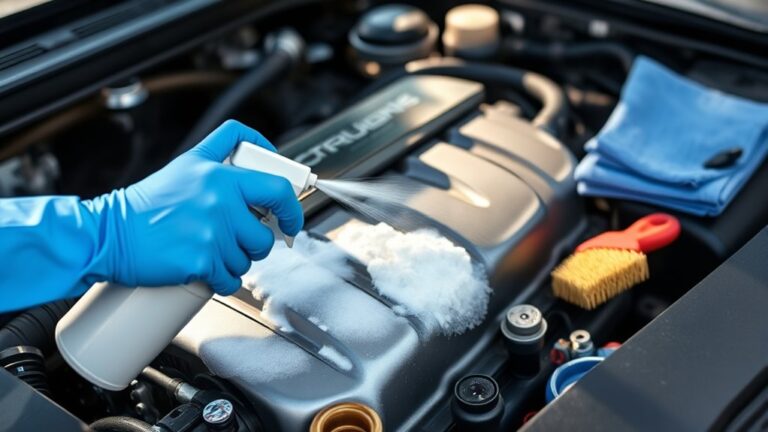
Before you rinse off the dust, apply a specialized engine cleaner to break down the stubborn grime and grease. This cleaner initiates a chemical breakdown of dirt particles, making grime removal much easier. Spray the cleaner evenly over the engine surfaces, focusing on areas with heavy buildup.
Let it sit for the recommended time, usually 5 to 10 minutes, to allow the chemicals to penetrate and loosen the grime. Avoid letting the cleaner dry completely, as it can leave residue or cause staining.
Using the right cleaner guarantees that tough grease and oil don’t just smear around but actually dissolve. You’ll notice the dirt softening and lifting, which prepares the engine for a thorough wash in the next step.
Remember to wear gloves and avoid sensitive parts like electrical connections when applying the cleaner. This step is vital for effective grime removal and sets you up for a cleaner, more efficient engine rinse afterward.
Rinse the Engine Carefully
How do you rinse your car engine without causing damage? First, make sure the engine temperature is cool. Rinsing a hot engine can cause thermal shock, potentially cracking components.
Use a gentle stream of water rather than a high-pressure hose to avoid forcing water into sensitive areas. Focus on rinsing off all the cleaner and chemical residues thoroughly, because leftover chemicals can corrode parts or attract more dirt.
Avoid spraying electrical connections directly. Instead, shield them with plastic bags or foil before rinsing. Work methodically, starting from the top and moving downward to flush grime away efficiently.
Take care not to soak the air intake or exposed filters, as water can cause engine performance issues. By controlling water flow and ensuring the engine is cool, you’ll rinse away dust and cleaning agents safely without causing harm.
Dry Your Engine Thoroughly and Inspect for Dust
Once you’ve rinsed your engine, you’ll want to dry it thoroughly to prevent moisture from causing corrosion or electrical issues. Use a clean microfiber cloth or compressed air to remove water from tight spots and electrical connections. Moisture left behind can lead to engine overheating by interfering with sensor functions or causing short circuits.
After drying, inspect the engine closely for any remaining dust or debris. Dust accumulation effects like clogged filters or restricted airflow can cause your engine to run hotter and less efficiently. Pay special attention to vents, belts, and fan blades, as dust in these areas can worsen overheating risks.
Clearing out stubborn dust spots now helps maintain peak engine performance and longevity. Taking this extra step ensures your engine stays clean, cool, and runs smoothly, reducing the chances of costly repairs down the road. Don’t rush this process; it’s vital for a safe, dust-free engine.
Frequently Asked Questions
How Often Should I Clean My Car Engine?
You should clean your engine every 12,000 to 15,000 miles or at least once a year to maintain ideal performance. Engine cleaning frequency depends on your driving conditions. Dusty or off-road environments may require more frequent cleaning.
Use DIY cleaning tips like covering sensitive parts and using gentle cleaners to avoid damage. Regular cleaning helps prevent buildup and keeps your engine running smoothly. This can save you from costly repairs down the road.
Can Engine Cleaning Improve Fuel Efficiency?
Yes, engine cleaning can improve your fuel economy by helping your engine run more efficiently. When your engine is free from dust and grime, it reduces the strain on components, allowing them to work smoothly.
Regular engine maintenance, including cleaning, prevents buildup that can lower performance and waste fuel. So, keeping your engine clean not only protects it but also helps you save money on gas over time.
Is It Safe to Use a Pressure Washer on My Engine?
Using a pressure washer on your engine isn’t always safe because it risks causing engine damage. High-pressure water can force moisture into electrical components, sensors, or delicate parts. This can lead to short circuits or corrosion.
If you decide to use one, keep the pressure low and avoid sensitive areas. It’s better to opt for gentler cleaning methods to protect your engine and prevent costly repairs.
What Are the Signs of a Dirty Engine Affecting Performance?
If your engine performance feels like a snail’s pace, it’s probably thrilled with all that dust! When your engine oil looks dirty and air filters clog up, your car’s begging for help.
You’ll notice sluggish acceleration, rough idling, or strange noises, signs that grime’s choking your engine. Don’t ignore these; clean oil and fresh air filters keep your engine running smoothly, so don’t let dust turn your ride into a reluctant tortoise.
Can Engine Cleaning Void My Car’s Warranty?
Engine cleaning usually won’t void your car’s warranty as long as you do it properly. You’ve got to avoid using harsh chemicals or high-pressure water that could damage components.
Stick to gentle methods, and keep records to show you maintained your engine responsibly. Warranty implications mainly arise if the cleaning causes harm or neglect.
Conclusion
Now that you’ve tackled each step, your engine should look almost new, free from dust and grime. Isn’t it satisfying to see all that dirt vanish and your car ready to roar?
By taking your time and protecting sensitive parts, you’ve not only cleaned but also cared for your engine’s health. Keep this routine, and your car will thank you with smoother rides and longer life.
Ready to enjoy the drive with a clean car engine?