5 Simple Steps to Clean Your Car Engine Bay
If you’ve ever tried cleaning your car engine bay, you know it can feel like a daunting and messy task. You’re not alone—many people struggle with finding the right products and techniques to get the job done safely and effectively.
Fortunately, the right tools and cleaners can make a huge difference, turning a frustrating chore into a satisfying routine.
To clean your car engine bay in five simple steps, start by choosing the right biodegradable degreasers and tools like brushes and microfiber cloths.
Make sure the engine is cool, disconnect the battery, and work safely with gloves and eye protection.
Cover sensitive parts like the alternator and wiring to avoid damage.
Spray the cleaner, scrub gently, rinse with low pressure, then dry thoroughly and inspect for leaks or corrosion.
Keep going to uncover details that make the process easier and more effective.
Key Takeaways
- Ensure the engine is cool and disconnect the battery before starting to avoid electrical hazards.
- Cover sensitive components like the alternator and air intake with plastic or foil for protection.
- Spray a biodegradable, engine-safe degreaser over the engine bay and let it sit to break down grime.
- Use soft brushes and microfiber cloths to scrub stubborn dirt, then rinse gently with low-pressure water.
- Dry the engine thoroughly with towels and compressed air, then inspect for leaks or corrosion.
Choose the Right Tools and Products for Your Engine Bay
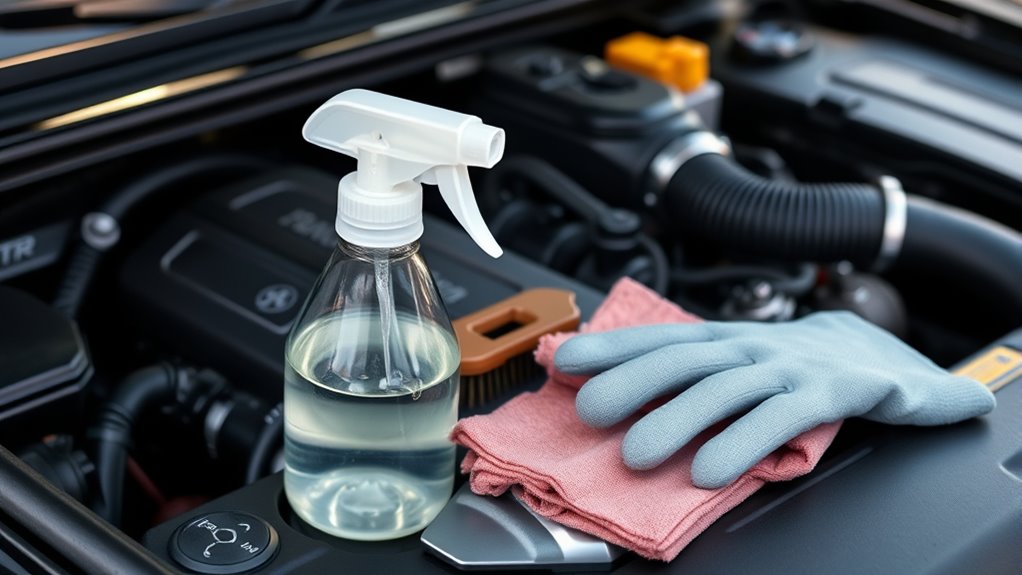
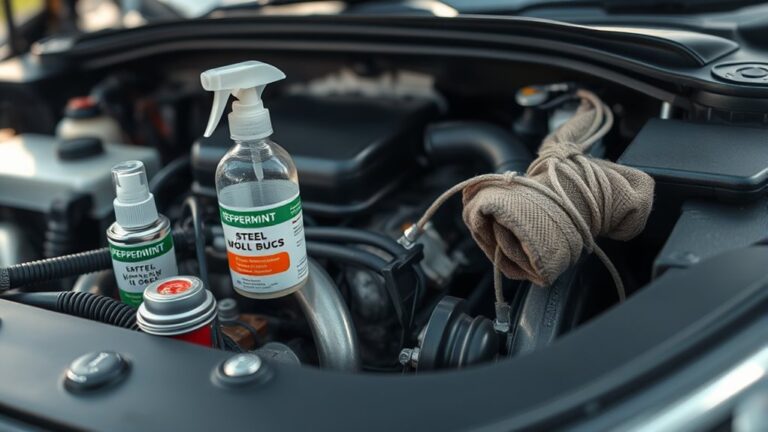
Before you plunge into cleaning, make sure you have the right tools and products on hand. Engine degreasing is a vital step, so choose a degreaser specifically formulated for automotive engines. Avoid harsh chemicals that can damage sensitive components.
Your chemical selection should prioritize biodegradable and non-corrosive options to protect both your engine and the environment. Gather brushes of varying stiffness, microfiber cloths, and a spray bottle for precise application.
A plastic scraper helps remove stubborn grime without scratching surfaces. Also, have a water source with a gentle spray nozzle ready to rinse without flooding the engine bay.
Prepare Your Engine Bay Safely Before Cleaning
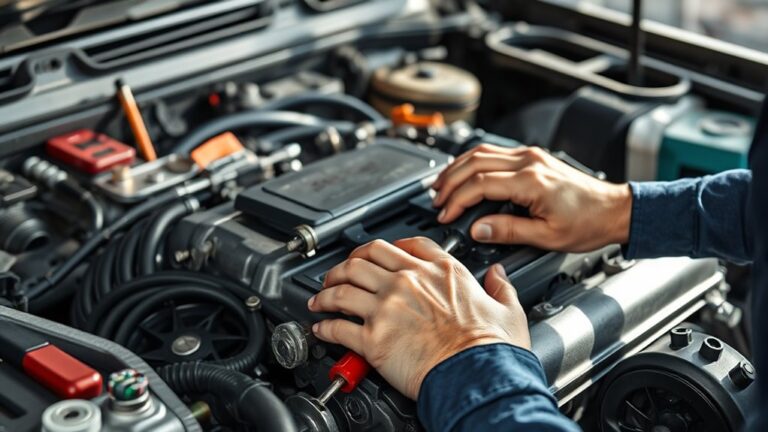
Once you’ve gathered the right tools and products, focus on preparing your engine bay to guarantee safety and effectiveness during cleaning. Start by ensuring the engine is cool; hot components can cause burns and increase engine bay hazards.
Begin by cooling the engine to ensure a safe and effective cleaning process.
Disconnect the battery to prevent electrical shorts or shocks. Check for any leaks or damaged wires, as cleaning could worsen these issues. Make sure your workspace is well-ventilated to avoid inhaling fumes from cleaning agents.
Wear gloves and eye protection as essential safety precautions to protect your skin and eyes from harsh chemicals. Remove any loose debris or leaves to avoid clogging drains or causing damage.
Finally, avoid working in direct sunlight or extreme temperatures, which can affect cleaning product performance and your safety. By taking these safety precautions, you minimize risks and create the best conditions for a thorough, safe engine bay cleaning.
Cover and Protect Sensitive Engine Components
How do you guarantee delicate parts of your engine stay safe during cleaning? Start by covering sensitive components like the alternator, exposed wiring, and air intake with plastic bags or aluminum foil. This simple step prevents water from causing damage or short circuits.
Always check your engine temperature before you begin. Cleaning a hot engine can cause steam burns and may warp plastic parts. Make certain the engine is cool to protect components and yourself.
Battery safety is essential, too. Cover the battery terminals tightly with plastic wrap or a specialized battery cover to avoid water exposure and corrosion. Disconnecting the battery is another option if you want extra protection.
Taking these precautions helps prevent electrical issues and keeps your engine bay in top shape while you clean. Covering and protecting sensitive parts isn’t just about safety. It’s about maintaining your car’s reliability.
Wash and Rinse Your Engine Bay
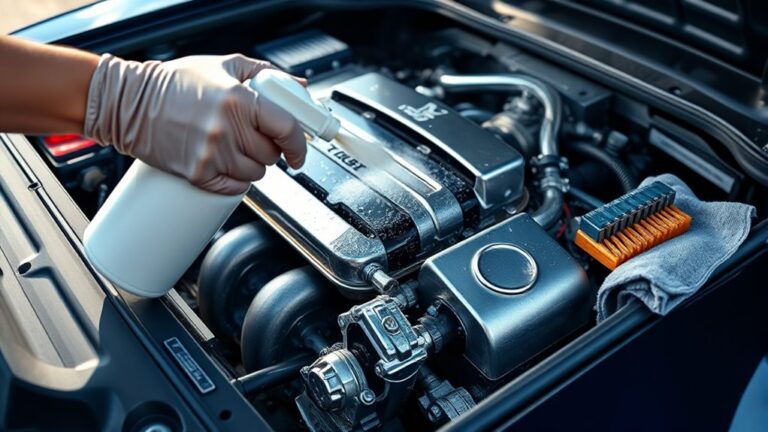
With sensitive parts safely covered, you can now focus on washing your engine bay without worry. Start by spraying a gentle, engine-safe cleaner over the entire area, making sure to reach all engine bay accessories like hoses, wires, and plastic covers. Avoid harsh chemicals that could damage these components. Let the cleaner sit for a few minutes to break down grease and grime.
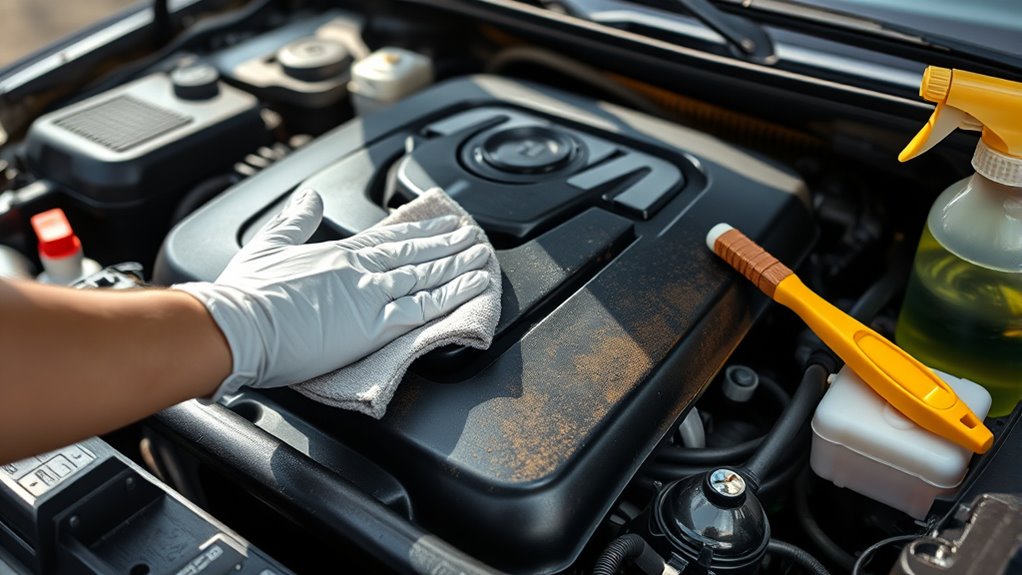
Next, use a soft brush or microfiber cloth to scrub stubborn dirt, paying attention to tight spots around engine bay accessories. When you’re ready to rinse, use a low-pressure hose or a spray bottle to avoid forcing water into sensitive areas. Rinse thoroughly to remove all soap and dirt.
Dry and Inspect Your Engine Bay for Issues
After rinsing, you’ll want to dry your engine bay thoroughly to prevent moisture-related issues. Use a clean microfiber towel to soak up excess water, then blow-dry hard-to-reach spots with compressed air or a leaf blower. Moisture left behind can cause engine corrosion, so being thorough is key.
Once dry, inspect your engine bay carefully. Look for any signs of engine corrosion, such as rust or flaky deposits on metal parts. Pay special attention to battery terminals and exposed wiring.
Also, check for leaks by examining hoses, seals, and fluid reservoirs. Leak detection at this stage helps you catch problems early before they worsen. If you spot any cracks, loose connections, or fluid puddles, address them promptly or consult a mechanic.
Taking the time to dry and inspect your engine bay now will help maintain your car’s performance and extend its lifespan.
Frequently Asked Questions
How Often Should I Clean My Car Engine Bay?
You should clean your engine bay every 6 to 12 months to keep it in top shape. Regular engine bay maintenance prevents dirt buildup and helps spot leaks early.
When you clean, use the right car cleaning tools like soft brushes and degreasers to avoid damage. If you drive in dusty or wet conditions often, consider cleaning more frequently.
Staying consistent guarantees your engine runs smoothly and looks great under the hood.
Can Cleaning the Engine Bay Improve Car Performance?
Cleaning your engine bay can boost performance like a rocket launch! While it won’t turn your car into a racecar, regular engine maintenance helps spot leaks and prevents overheating.
Just remember chemical safety. Use the right cleaners and avoid sensitive parts. Keeping your engine bay tidy helps your vehicle run smoother and last longer.
Is It Safe to Use a Pressure Washer on the Engine?
You shouldn’t use a pressure washer directly on your engine because it can cause serious engine damage. High-pressure water can force moisture into electrical components, sensors, and wiring, leading to short circuits or corrosion.
If you want to clean your engine bay, use a gentle spray or a damp cloth instead. Always cover sensitive parts like the alternator and air intake to avoid any water damage during cleaning.
What Should I Do if I Find a Leak During Cleaning?
Don’t ignore a leak just because it seems minor. It can get worse quickly. If you find a leak during cleaning, stop immediately and dry the area.
Leak repair might be simple, but you shouldn’t guess. It’s best to schedule a professional inspection to identify the source and severity. That way, you’ll avoid costly damage and keep your engine running smoothly without risking safety or performance.
Can Engine Bay Cleaning Help Prevent Corrosion?
Yes, cleaning your engine bay can help with corrosion prevention by removing dirt, grease, and moisture that cause engine rust. When you regularly wash away contaminants, you reduce the chances of rust forming on metal parts.
Keeping your engine bay clean means you’re actively protecting essential components from damage and extending their lifespan. Just make sure to dry everything properly to avoid trapping moisture, which could lead to corrosion instead of preventing it.
Conclusion
Cleaning your engine bay is like giving your car a fresh breath of life. With the right tools and careful preparation, you’ll shield delicate parts and wash away grime like a gentle rain.
As you dry and inspect, you’re not just maintaining; you’re nurturing the heart of your ride. Keep these simple steps in mind, and your engine will thank you with smoother rides and a longer life.
Ready to make your engine shine with these 5 simple steps to clean your car engine bay?