7 Easy Steps to Change Engine Oil in Your Car
Changing your engine oil can feel like a daunting task if you’re not sure where to start. You’re not alone—many people struggle with knowing when and how to do it properly. But keeping your engine in top shape is crucial, and with the right guidance, it’s easier than you think.
You can extend your engine’s life by changing your oil regularly. First, gather the right tools, oil, and a compatible filter. Park safely on a flat surface and wear gloves.
Drain the old oil by loosening the drain plug, then remove and replace the oil filter. Add the correct oil amount, checking levels with the dipstick.
Finally, dispose of used oil responsibly. Follow these easy steps and investigate how to keep your engine running smoothly for years.
Key Takeaways
- Park on a flat surface, engage the parking brake, and wear safety gear before starting the oil change.
- Gather tools and materials including the correct engine oil, oil filter, wrench, drain pan, and funnel.
- Drain old oil by loosening the drain plug. Remove the old oil filter carefully to avoid spills.
- Apply oil to the new filter gasket, install the new filter hand-tight, and add the recommended oil amount.
- Check oil level with the dipstick. Dispose of used oil and filters at designated recycling points safely.
Why Changing Your Engine Oil Matters
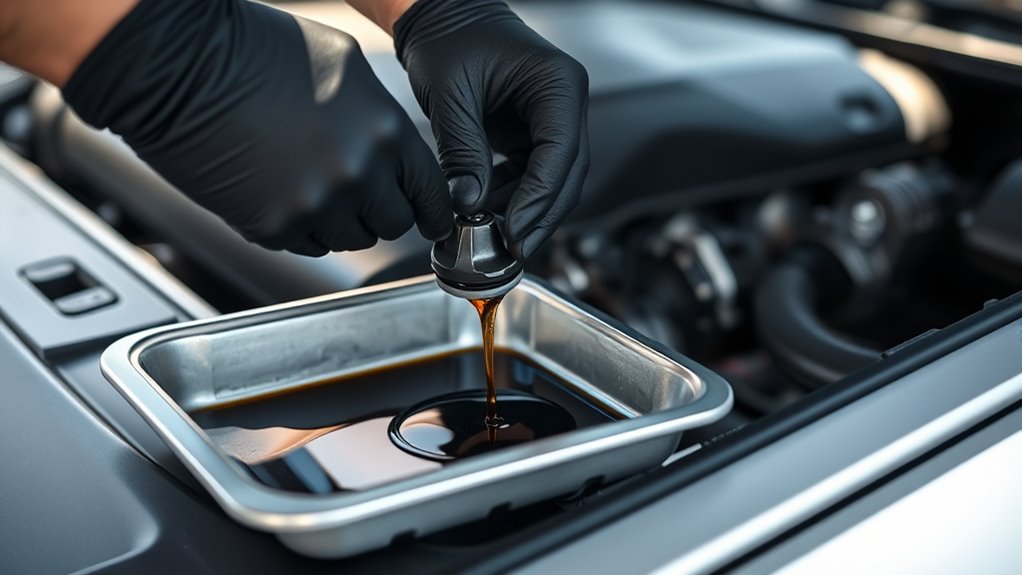
Changing your engine oil regularly plays a crucial role in keeping your car running smoothly. You rely on fresh oil to maintain proper engine lubrication, which reduces friction between moving parts and prevents wear.
Over time, oil breaks down and loses its ability to protect your engine effectively. If you let old oil sit too long, it can thicken, affecting oil viscosity and causing poor flow through engine components. This increases the risk of overheating and damage.
Gather Tools and Materials for Your Oil Change
Where do you start when preparing to change your engine oil? First, create a tools checklist to guarantee you have everything on hand. Essential items include a wrench or socket set to remove the drain plug, an oil filter wrench, a drain pan to catch the old oil, and a funnel for pouring new oil. You’ll also need gloves and rags for cleanup.
Next, focus on material preparation. Purchase the correct grade and amount of engine oil specified in your car’s manual, along with a new oil filter. Having these materials ready prevents interruptions and keeps the process smooth. Double-check that your oil filter matches your vehicle model to avoid compatibility issues.
Prepare Your Car: Safety Tips Before You Start
Before you start, make sure your car is parked on a flat, stable surface and that the parking brake is engaged. It’s a simple step, but it really helps keep things steady. Also, don’t forget to put on gloves and safety glasses—these will protect you from hot oil and any debris that might fly around. Taking these precautions will go a long way in keeping you safe throughout the process.
Secure Parking Location
How can you guarantee a safe and stable environment for your oil change? Start by choosing a secure parking location. Find a flat, level spot to prevent your car from rolling or shifting while you work underneath it.
Avoid slopes or uneven ground, as they increase risk and make lifting the car unsafe. If possible, park in a well-lit area visible to passersby; this not only improves safety but also aids theft prevention.
Lock your doors and remove valuables to minimize temptation. Using secure parking not only protects your car but also creates peace of mind, letting you focus on the task ahead.
Taking these precautions assures a smooth, safe oil change experience from start to finish.
Use Safety Gear
Why should you never skip wearing safety gear when changing your engine oil? Because personal protective equipment is essential to protect you from hot oil spills, sharp edges, and harmful chemicals.
Before you start, put on gloves to shield your hands from burns and skin irritation. Safety glasses will protect your eyes from unexpected splashes. Wearing long sleeves and closed-toe shoes adds an extra layer of defense.
Taking these safety precautions reduces the risk of injury and keeps the process smooth. Remember, even a simple task like changing oil can cause accidents if you’re not prepared.
Drain the Old Engine Oil
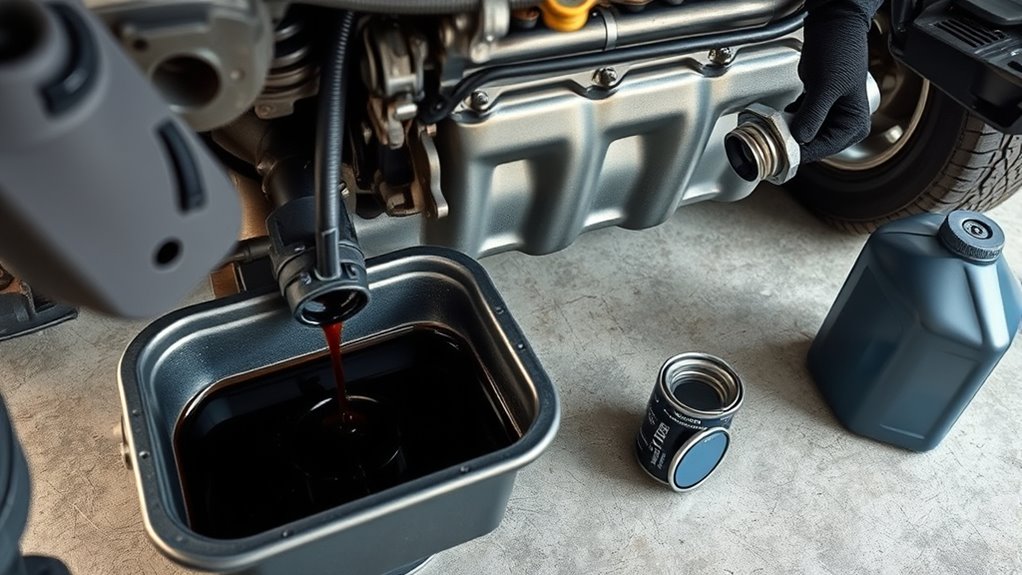
First, you’ll want to locate the drain plug underneath your car’s engine. Once you find it, go ahead and place an oil catch pan right beneath it to catch all the old oil. Then, carefully loosen the drain plug so the oil can flow out safely.
Locate The Drain Plug
You’ll find the drain plug underneath your car, usually at the lowest point of the oil pan. It’s a bolt that seals the oil reservoir, and removing it lets the old engine oil drain out.
Before you start, make sure you know the right engine oil types for your car and the recommended oil change frequency, as these factors affect how often you’ll perform this task. Use a wrench to loosen the drain plug carefully. Don’t strip it.
Once it’s loose, you can unscrew it by hand. Position yourself so you can easily access the plug without spilling oil. Locating the drain plug correctly is essential because if you miss it, the oil won’t drain properly, which can lead to engine issues later on.
Prepare Oil Catch Pan
Place a large oil catch pan directly beneath the drain plug to collect the old engine oil as it flows out. Make certain the catch basin is wide and stable enough to fit under the oil pan without tipping over.
Position it carefully to avoid spills, since the oil will drain quickly once you loosen the plug. Using a catch basin designed for automotive fluids helps prevent messes and simplifies disposal later.
Double-check that the pan’s capacity can handle all the oil from your car’s oil pan to avoid overflow. Once the catch pan is correctly placed, you’re ready for the next step.
Properly preparing this setup ensures a clean and efficient oil change by catching every drop of used engine oil safely.
Safely Remove Drain Plug
How do you safely remove the drain plug without causing spills or damage? First, make sure your oil catch pan is positioned directly under the plug. Use the proper wrench to avoid rounding off the plug. Loosen it slowly to control the oil flow and prevent sudden spills.
Remember, when reinstalling, applying the correct drain plug torque is essential for oil leak prevention.
Keep these tips in mind:
- Wear gloves to protect your hands from hot oil.
- Twist the plug gently to avoid stripping threads.
- Have rags ready for any drips.
- Dispose of old oil properly to protect the environment.
Replace the Oil Filter
Why is replacing the oil filter essential when changing your car’s oil? The oil filter traps dirt and debris, protecting your engine from wear and tear. If you skip this step, contaminants can circulate with the new oil, reducing engine performance and lifespan. Follow the proper oil filter replacement process to keep your engine clean and running smoothly.
First, locate the oil filter and use an oil filter wrench to loosen and remove it. Be ready for some oil spillage. Next, prepare the new oil filter by applying a thin layer of fresh oil on its rubber gasket. This ensures a tight seal. Screw the new filter in place by hand until snug, then tighten slightly more with the wrench.
| Step | Tip |
|---|---|
| Locate filter | Consult your manual |
| Remove filter | Use filter wrench carefully |
| Prep new filter | Oil gasket for seal |
| Install new filter | Hand-tighten plus slight wrench |
Add New Engine Oil and Check Levels
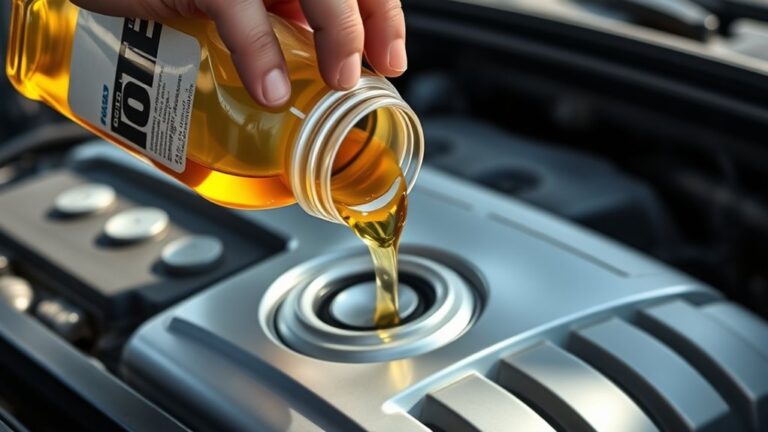
Once you’ve securely installed the new oil filter, you can add fresh engine oil to your car. Start by choosing the right oil viscosity recommended in your owner’s manual. This guarantees peak performance and protection for your engine. Pour the oil slowly into the fill hole to avoid spills. If you’re using oil with additives, it can improve engine cleanliness and reduce wear, so select wisely.
Next, check the oil level using the dipstick. Pull out the dipstick and wipe it clean with a rag. Reinsert it fully, then pull it out again to check the oil level. Ensure the oil sits between the minimum and maximum marks. Add more oil if the level is low, but don’t overfill.
Dispose of Used Oil and Clean Up
Where should you take the used oil after draining it from your car? Never pour it down drains or on the ground, as it harms the environment. Instead, bring the oil to a local recycling center or an auto shop that accepts used oil.
Proper oil recycling helps reduce the environmental impact and conserves resources by reprocessing the oil.
After disposing of the oil, clean your tools and work area thoroughly to avoid contamination and spills. Use absorbent materials for any drips and dispose of them properly.
| Disposal Location | Benefits | Notes |
|---|---|---|
| Local recycling center | Ensures safe processing | Often free or low cost |
| Auto repair shops | Convenient drop-off points | May accept filters too |
| Hazardous waste events | Community collection events | Check local schedules |
| Do not dispose on site | Prevents soil and water pollution | Illegal and harmful |
Proper disposal and cleanup protect the environment and keep your workspace safe.
Frequently Asked Questions
How Often Should I Change My Engine Oil Based on Driving Conditions?
You should change your engine oil every 3,000 to 5,000 miles under normal driving conditions. But if you frequently drive in stop-and-go traffic, extreme temperatures, or dusty environments, change it more often.
Don’t forget oil filter maintenance during each oil change to keep your engine running smoothly. Also, make sure to practice engine oil recycling to protect the environment.
Regular attention keeps your car performing well and extends its life.
Can Using Synthetic Oil Improve My Engine’s Performance?
Yes, using synthetic oil can improve your engine’s performance. Synthetic benefits include better lubrication and reduced friction, which help boost engine efficiency.
It flows smoothly at extreme temperatures, protecting your engine during cold starts and high heat. You’ll notice smoother operation and potentially better fuel economy.
Plus, synthetic oil lasts longer than conventional oil, meaning fewer oil changes and consistent protection for your engine over time.
What Are the Signs of Engine Oil Leaks I Should Watch For?
Oil stains on your driveway are like red flags waving, signaling an engine oil leak. You should watch for these dark, slick spots beneath your car.
Also, keep an eye out for engine smoke, which can mean oil is burning inside. If you notice a burning smell or your oil level dropping unusually fast, those are signs too.
Catching leaks early helps you avoid costly damage and keeps your engine running smoothly.
Is It Necessary to Warm up the Engine Before an Oil Change?
Yes, you should warm up the engine before an oil change. When the engine temperature is slightly raised, the oil viscosity decreases, making the oil thinner and easier to drain completely. This helps remove more contaminants and old oil from the engine.
Just let your car run for about 5 to 10 minutes. Don’t let it get too hot so you get a more efficient oil change without risking burns or damage.
How Do Oil Additives Affect Engine Longevity and Efficiency?
Oil additives can boost your engine’s longevity and efficiency by improving oil composition. They enhance properties like viscosity, reduce friction, and prevent wear. This helps your engine run smoother and last longer.
Additive benefits also include cleaning engine deposits and protecting against corrosion. By choosing oil with quality additives, you guarantee better performance and durability. Just remember, not all additives suit every engine, so pick one designed for your vehicle’s needs.
Conclusion
Changing your engine oil might seem like a small task, but it’s like giving your car a fresh burst of life! By following these simple steps, you’re not only saving a fortune but also extending your engine’s lifespan.
Just imagine the peace of mind knowing your car runs smoothly every time you hit the road. So, roll up your sleeves—it’s easier than rocket science and totally worth the effort when it comes to changing engine oil in your car!