3 Easy Tips to Keep Rodents Out of Your Car Engine
If you’ve ever found chewed wires or strange noises coming from your car engine, you’re not alone. Many people struggle with rodents making themselves at home under the hood, causing costly damage and frustrating repairs.
Keeping these pesky critters out can feel like a constant battle, but there are simple ways to protect your vehicle.
You can keep rodents out of your car engine by using natural scent repellents like peppermint oil or predator urine to create an unpleasant environment. Check regularly for early signs such as gnawed wires, droppings, or unusual odors to catch problems early.
Also, maintain a clean car and parking area by removing food crumbs and sealing gaps to reduce hiding spots. Keep these simple steps up, and you’ll be ready to investigate more effective ways to protect your vehicle.
Key Takeaways
- Use natural scent repellents like peppermint oil or predator urine around the engine bay to deter rodents.
- Install ultrasonic devices near the car or garage for continuous, humane rodent deterrence.
- Regularly clean the car interior and remove food crumbs or wrappers to eliminate attractants.
- Park in well-lit, open areas away from dense vegetation and trash to reduce rodent access.
- Seal gaps and holes in the vehicle and clear clutter around parking spots to limit hiding places.
Effective Rodent Deterrents for Your Car
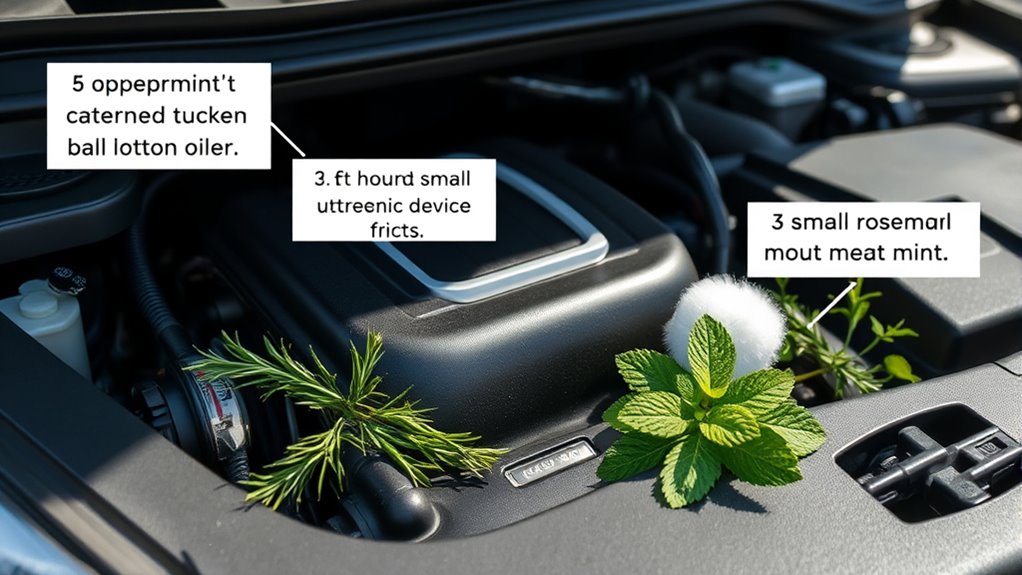
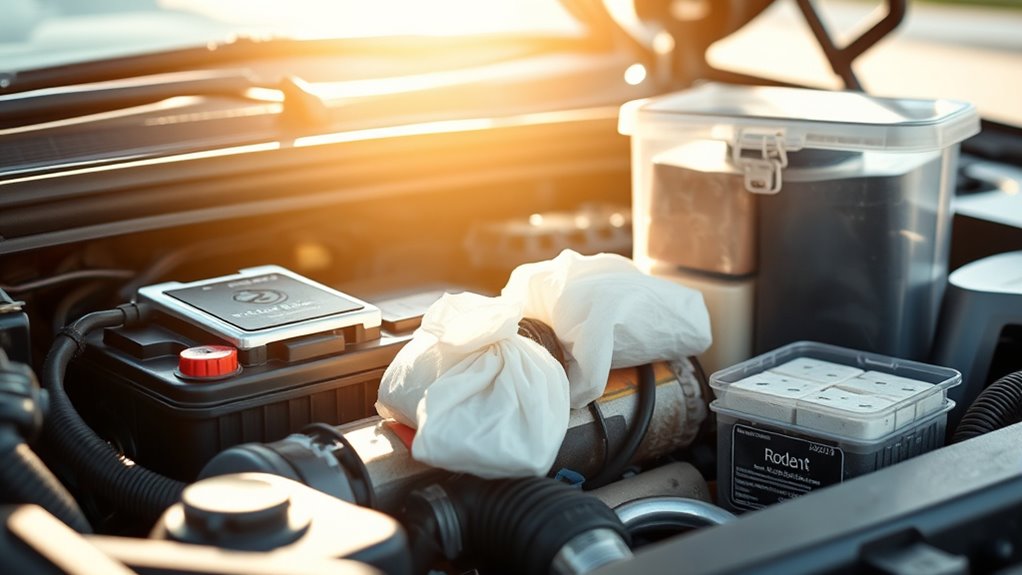
Although rodents can be persistent, you can effectively deter them from nesting in your car engine by using specific repellents. One of the best approaches is to use scent deterrents designed to repel rodents. These often contain natural ingredients like peppermint oil or predator urine, which rodents find unpleasant.
Spraying or placing these scents around your engine bay creates an environment rodents want to avoid.
In addition to scent deterrents, ultrasonic devices are a smart option to keep rodents away. These gadgets emit high-frequency sounds that are irritating to rodents but inaudible to humans.
You can install them near your car or in the garage to create an uncomfortable area for rodents. Combining scent deterrents with ultrasonic devices increases your chances of keeping your engine rodent-free.
With these tools, you take proactive steps to protect your car without relying on harmful chemicals or traps.
How to Spot Early Signs of Rodent Activity
If you want to stop rodents before they cause damage, you need to recognize their early signs. Keep an eye out for gnawing on wires, hoses, or plastic parts around your engine. Also, notice any unusual odors, like a musky or ammonia-like smell, which may indicate rodent urine. Early detection helps you act fast and avoid costly repairs.
Here’s a quick guide to spotting early signs of rodent activity:
| Sign | What to Look For | Why It Matters |
|---|---|---|
| Gnawing Marks | Chewed wires, hoses, or belts | Prevents electrical failures |
| Nesting Materials | Shredded paper or fabric | Indicates rodents are nesting |
| Droppings | Small, dark pellets | Confirms rodent presence |
| Unusual Odors | Musky or ammonia-like smells | Signals urine marking territory |
Maintain Your Car and Surroundings to Deter Rodents
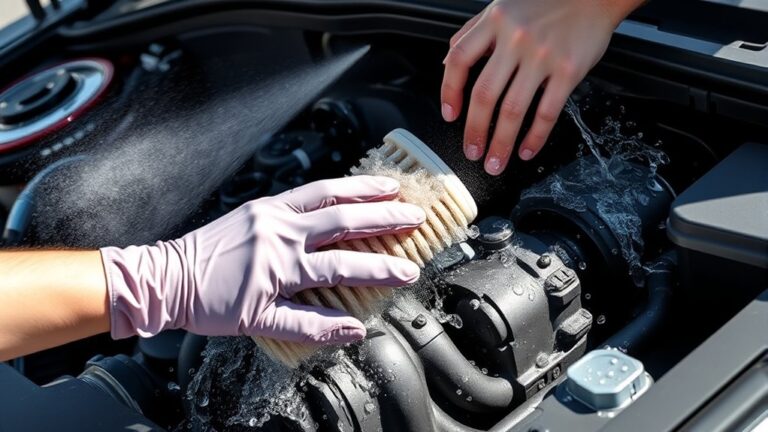
Keeping rodents away starts with consistent maintenance of both your car and its surroundings. First, practice regular car interior cleaning to remove crumbs, food wrappers, or any materials that might attract rodents. Don’t leave snacks or food remnants inside your vehicle, as these can invite unwanted guests.
Next, apply smart parking location strategies by choosing well-lit, open areas away from dense vegetation or trash bins where rodents often nest. If possible, park in a garage or use rodent deterrent mats designed for engine compartments.
Also, clear leaves, trash, and clutter around your parking spot to eliminate hiding spots. Finally, inspect and seal any gaps or holes in your vehicle’s exterior to block entry points.
Frequently Asked Questions
Can Rodents Damage My Car’s Electrical System Beyond the Engine?
Yes, rodents can definitely damage your car’s electrical system beyond the engine. They love chewing on electrical wiring, which can cause shorts, malfunctions, or even fires.
This rodent damage isn’t limited to just the engine bay; they might also target wiring in your dashboard, seats, or trunk. If you notice frayed wires or electrical issues, it’s a sign rodents have been active, and you should act quickly to prevent costly repairs.
Are Certain Car Models More Prone to Rodent Infestations?
Certain car models are like open doors to rodents, showing higher car model susceptibility due to design quirks. If your vehicle has a roomy engine compartment or uses materials rodents find tasty, you’re more at risk.
Smaller or older models often have tighter spaces, reducing engine compartment risks, while SUVs and trucks might invite more critters. Knowing your car’s vulnerabilities helps you take targeted steps to keep those unwanted guests away.
Do Ultrasonic Rodent Repellents Really Work Inside Car Engines?
Ultrasonic rodent repellents can have mixed ultrasonic effectiveness inside car engines. You might find they deter rodents temporarily, but results vary depending on the car’s design and environment.
While these devices are generally safe and don’t harm your vehicle, they’re not foolproof. You shouldn’t rely solely on them; combining repellents with other preventive measures improves your chances of keeping rodents away safely and effectively.
How Long Can Rodents Survive Inside a Parked Car Engine?
Birds of a feather flock together, and rodents are no different when choosing a rodent habitat. Inside your parked car engine, rodents can survive for several days to weeks, depending on food and warmth availability.
Their nesting behavior drives them to seek cozy, protected spots like your engine bay. If the environment is harsh or lacks resources, they won’t last long. But in ideal conditions, they can settle in and cause damage before you notice.
Can Insurance Cover Damage Caused by Rodents in Cars?
Yes, your insurance might cover damage caused by rodents, but it depends on your policy. Extensive coverage often includes damage from wildlife exclusion failures, like rodents chewing wires.
To avoid costly claims and maintain your car’s health, prioritize regular car maintenance and wildlife exclusion methods. Keeping your vehicle in good shape not only prevents damage but also helps you avoid expensive repairs that insurance might not fully cover.
Conclusion
By following these simple tips, you’ll keep rodents out of your car engine and avoid costly repairs. Stay vigilant for early signs like chewed wires or droppings, and maintain your car and surroundings regularly.
Remember, a little effort now saves you from a headache later. Just like your grandma’s trusty fly swatter, sometimes the simplest tools work best.
Keep your ride rodent-free, and you’ll enjoy worry-free drives every time. Keeping rodents out of your car engine is easier than you think!