How to Get a Cat Out of a Car Engine in 5 Easy Steps
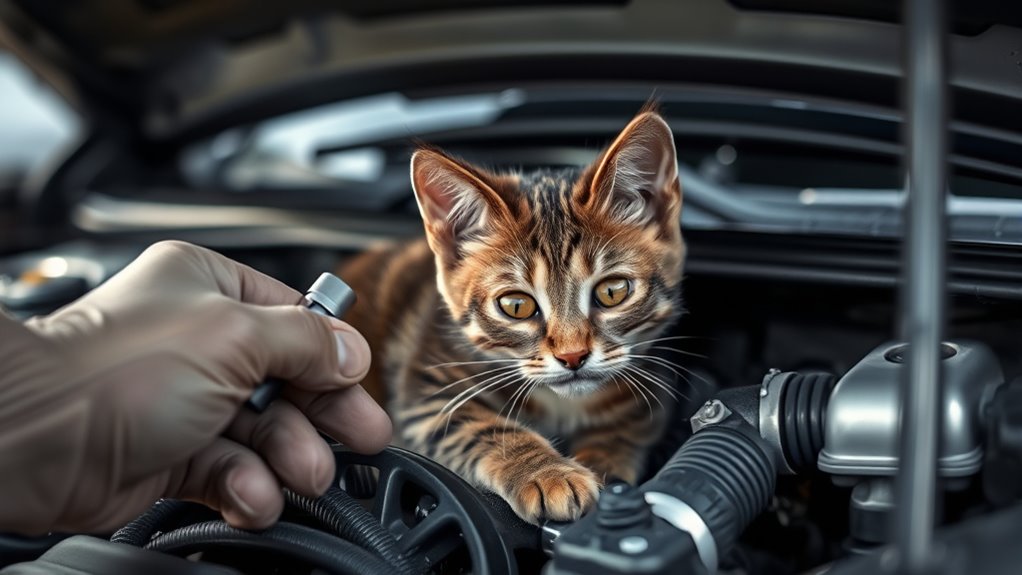
If you’ve ever heard unexpected meowing under your car hood, you’re not alone. Many people struggle with the worry and hassle of getting a cat out of a car engine. It’s a common problem, especially in colder months when cats seek warm, cozy spots.
Knowing how to safely remove a cat can save you stress and keep your furry friend safe.
To get a cat out of your car engine, first listen for meowing or tapping sounds before starting. Use a flashlight and gloves to safely inspect the engine area.
Gently tap or softly call the cat to encourage it to leave, and never start the engine until you’re sure it’s clear. If the cat resists, give it time or contact animal rescue for help.
Keep the hood checked regularly to prevent surprises, and you can investigate more safe removal tips and prevention strategies here.
Key Takeaways
- Ensure the vehicle is off and cooled down before inspecting the engine bay.
- Listen and gently tap the engine area to encourage the cat to come out.
- Use a flashlight and gloves to carefully check and reach inside if needed.
- Cover the cat gently with a towel to safely remove it without startling.
- Secure the cat in a carrier and check for injuries before restarting the engine.
How to Check If a Cat Is Hiding in Your Car Engine
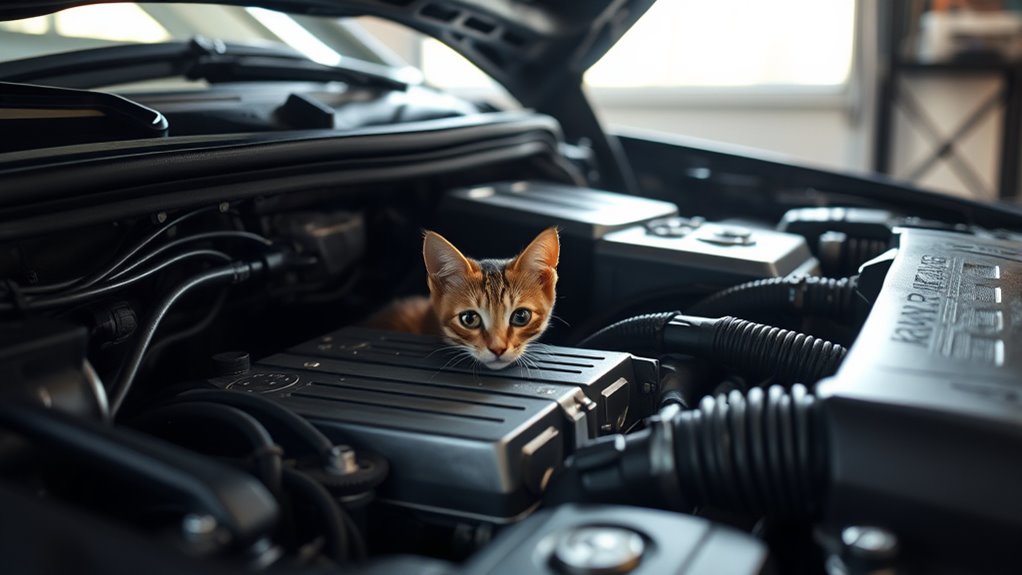
How can you tell if a cat is hiding in your car engine? First, listen closely to any unusual engine sounds before starting your vehicle. A cat curled up inside may cause faint scratching or meowing noises when you turn the key or tap the hood.
Next, carefully tap the car’s exterior, especially near the wheel wells and engine bay, to see if you get a reaction. If you hear rustling or movement, it’s a sign a cat may be inside.
Look for visual clues like fur or paw prints around the engine area. If you suspect a cat is trapped, don’t start the engine. This can injure the animal.
Instead, contact your local wildlife rescue for advice or assistance. They have the expertise to safely remove the cat without causing harm to you or the animal. Checking thoroughly before driving helps protect both you and the hidden feline friend.
What Tools You Need to Remove a Cat From Your Car Engine
Once you’ve identified signs that a cat might be hiding in your engine, it’s important to gather the right tools before attempting to coax it out safely. For effective car maintenance and to ensure engine safety, you’ll need a few essentials.
First, have a flashlight handy to inspect dark engine compartments clearly. Next, use a pair of gloves to protect your hands from sharp components and avoid startling the cat with sudden contact. A soft towel or blanket can help you gently cover or catch the cat if necessary.
Furthermore, a sturdy cardboard box or pet carrier is useful to secure the cat once it’s out. For added safety, keep a basic first aid kit nearby in case of scratches or bites. Avoid using loud tools or harsh chemicals, as these can stress the cat and risk engine damage.
Having these tools ready helps you focus on safely removing the cat while maintaining your vehicle’s engine safety.
How to Safely Get a Cat Out of Your Car Engine
Before you try to remove a cat from your car engine, make sure the vehicle is turned off and cooled down to prevent any injuries to you or the cat. Approach the car calmly to avoid startling the animal. Sudden movements or loud engine noise can scare the cat deeper into the engine compartment.
Speak softly and gently tap near the engine bay to encourage the cat to come out on its own. If the cat won’t leave, use a flashlight to locate it and carefully reach in with gloves or a towel to protect yourself. Avoid forcing the cat out, as this can cause stress and injury.
Prioritize pet safety by moving slowly and patiently. Once the cat is out, check for any signs of injury or distress and contact a vet if necessary. Always ensure your engine is silent before starting the car again to prevent accidents.
How to Prevent Cats From Getting Into Your Car Engine
Although cats often seek warmth and shelter in car engines, you can take simple steps to keep them out and protect both your vehicle and the animal. Start by adjusting litter box placement to a quiet, warm spot indoors. This reduces the cat’s need to find cozy places outside.
Employ cat proofing tips like using engine covers or placing deterrents around your car. And don’t forget to regularly check under your hood before starting your engine.
| Cat Proofing Tips | Why It Helps |
|---|---|
| Adjust litter box placement | Keeps cats indoors and warm |
| Use engine covers | Blocks entry points |
| Install motion-activated deterrents | Startles cats away |
| Check under the hood | Ensures no cats hide inside |
What to Do If You Can’t Get the Cat Out Safely
If you can’t safely coax the cat out of your engine, don’t try to force it or reach into tight spaces where you could get hurt. Your priority should be pet safety and your own well-being. Instead, keep the engine off and give the cat some space and time to come out on its own.
Avoid loud noises or sudden movements that might scare it further inside. If the cat remains trapped, call emergency contacts such as local animal control or a professional rescue service. They have the right tools and experience to handle the situation securely.
Never attempt to dismantle parts of your engine unless you’re trained, as this could harm both you and the animal. Remember, patience is key. Rushing can make things worse. Staying calm and seeking expert help ensures the cat gets out unharmed, protecting everyone involved.
Frequently Asked Questions
Can Certain Cat Breeds Be More Likely to Hide in Car Engines?
Yes, certain cat breeds can show breed tendencies that make them more prone to hiding behavior, including sneaking into car engines. Breeds like Siamese and Maine Coons are curious and adventurous, so you might find them exploring tight spaces more often.
If your cat loves hiding spots, you’ll want to check areas like engine compartments regularly. Understanding these tendencies helps you keep your curious feline safe and avoid surprises.
How Cold Does It Need to Be for Cats to Seek Warmth in Engines?
When temperatures drop below freezing, usually around 32°F (0°C), cats start seeking warm spots for winter survival. You’ll notice feline behavior changes as they look for cozy places like car engines to escape the cold.
If it’s bitterly cold outside, cats are more likely to crawl into engine compartments since the residual heat offers a safe refuge. Always check before starting your car to protect these clever survivors.
Are There Specific Times of Day Cats Usually Hide in Car Engines?
You’ll often find cats hiding in car engines during early mornings and late evenings when temperatures drop, especially in urban areas. Seasonal patterns play a big role. Cats seek warmth more during colder months like fall and winter.
Because engines stay warm after use, they become cozy spots. So if you’re checking your car during these times, be extra cautious to avoid disturbing a hidden feline friend.
Can a Cat Get Seriously Injured Inside a Car Engine?
Yes, cats can get seriously injured inside a car engine. In fact, vets report that 30% of cats trapped in engines suffer burns or broken bones.
When you start your car, engine noise and car vibrations can frighten or trap them further, causing panic or injury.
If you hear unusual sounds or notice your feline friend missing, check carefully to avoid harm before turning on your vehicle.
Is It Safe to Start the Car Engine if a Cat Is Inside?
No, it’s not safe to start the car engine if a cat is inside. The engine noise can scare or seriously injure the cat, causing it to panic or get hurt by moving parts.
You should take safety precautions first. Gently check the engine bay and try to coax the cat out carefully. Avoid sudden movements or loud noises, and only start the engine once you’re absolutely sure the cat is safely away.
Conclusion
You might worry that checking your engine could be dangerous or stressful for the cat, but taking these careful steps shows you care and could save a life. By staying calm, using the right tools, and being patient, you’ll help your pet safely escape without harm.
Remember, a little caution now prevents bigger problems later, and your kindness makes all the difference to a scared animal hiding where it shouldn’t be. Following these tips on how to get a cat out of a car engine ensures both you and the cat stay safe.