How to Wash Engine at Car Wash in 3 Easy Steps
Washing your engine at a car wash can feel overwhelming, especially if you’re worried about damaging sensitive components or making a costly mistake. You’re not alone—many people struggle with how to clean their engine safely and effectively without professional help.
The good news is that with the right approach, you can get your engine looking great without any hassle.
To wash your engine at a car wash, first make sure the engine is cool and disconnect the battery to avoid shorts. Cover sensitive parts like the air intake with plastic, and remove debris.
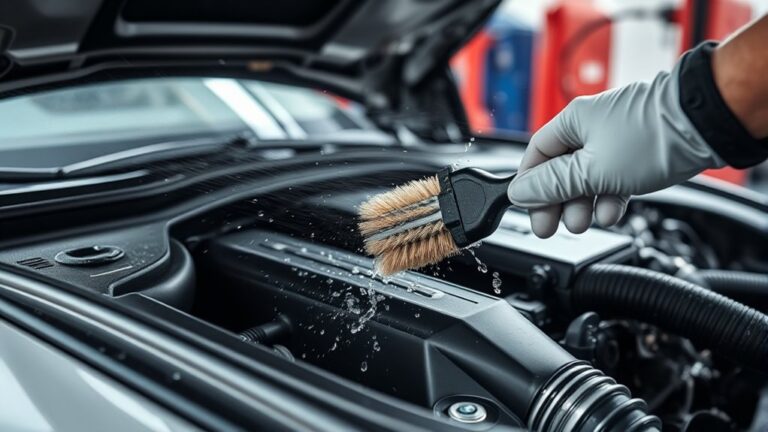
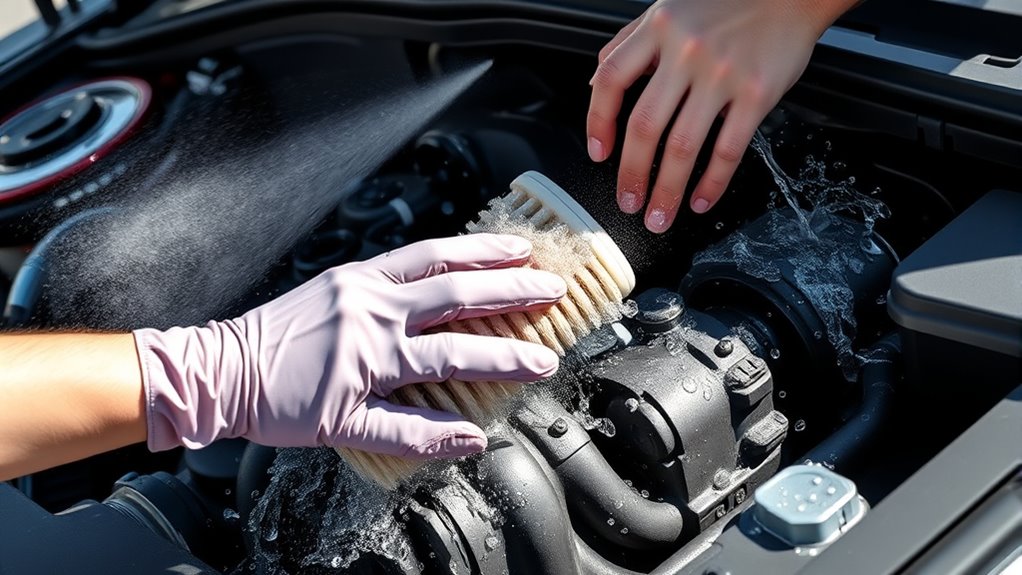
Next, apply a suitable degreaser using a soft brush, then rinse gently with low-pressure water to protect components.
Finally, dry the engine well with microfiber cloths and compressed air, checking for leaks or damage.
Keep going for tips on ensuring a safe, effective clean.
Key Takeaways
- Ensure the engine is cool and battery terminals are disconnected before washing.
- Cover sensitive parts like the air intake and wiring with plastic bags to protect them.
- Apply a quality degreaser evenly on greasy areas using a soft brush or cloth.
- Rinse gently with low-pressure water to avoid water intrusion and damage.
- Dry the engine thoroughly with microfiber cloths and compressed air to prevent moisture buildup.
Prepare Your Engine for a Safe Engine Wash
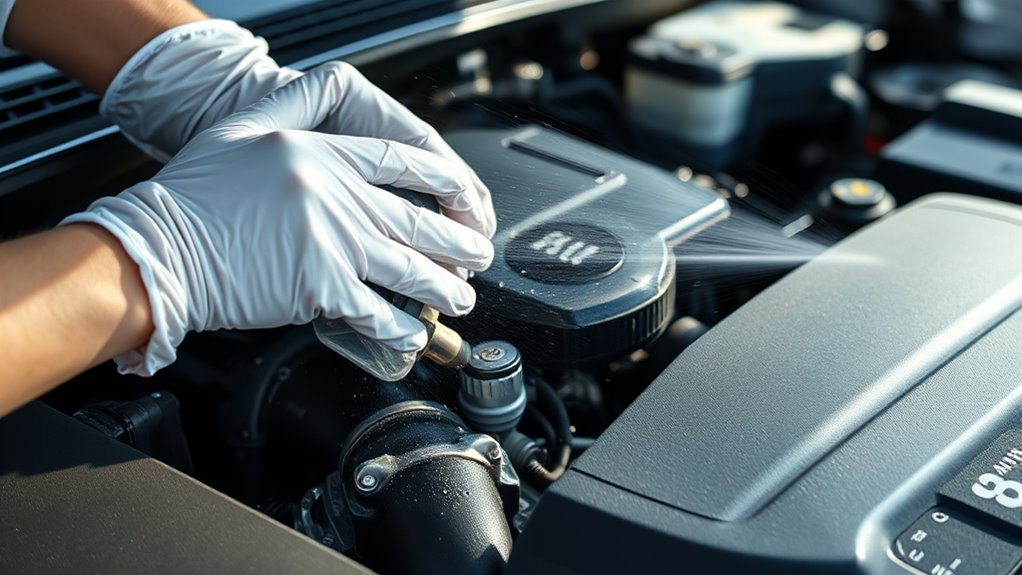
Before you start washing your engine, make sure the engine is completely cool to prevent damage or injury. This is a vital step in engine cleaning safety because hot engine parts can cause burns or react negatively to water.
Next, take engine wash precautions by disconnecting the battery terminals to avoid electrical shorts. Cover sensitive components like the air intake, distributor, and exposed wiring with plastic bags to protect them from water damage.
You’ll also want to remove any loose debris or leaves from the engine bay to prevent clogging drains or causing rust later on. Ensuring all caps, including oil and coolant caps, are tightly sealed will keep fluids safe from contamination.
Use the Right Tools to Wash Your Engine
Although washing your engine may seem straightforward, using the right tools makes a big difference in achieving a thorough and safe clean. Start by putting on proper safety gear like gloves and goggles to protect yourself from harmful chemicals and debris.
Wearing gloves and goggles is essential for a safe and effective engine cleaning experience.
Next, choose a quality engine degreasing product designed specifically for automotive use. Avoid harsh chemicals that can damage engine components. Use a soft brush or cloth to apply the degreaser evenly, focusing on greasy and dirty areas.
A gentle spray from a hose or pressure washer on a low setting helps rinse off the degreaser without forcing water into sensitive parts. Also, have old towels or microfiber cloths on hand to wipe off excess grime and moisture.
Using the right tools guarantees you remove dirt effectively while keeping your engine safe from damage. This careful approach sets the stage for a clean, well-maintained engine.
Dry and Inspect Your Engine to Prevent Damage
Once you’ve rinsed your engine, you’ll want to dry it thoroughly to prevent moisture from causing corrosion or electrical issues. Use a microfiber cloth to wipe down accessible areas and compressed air to blow out hidden moisture. This step is essential to protect sensitive parts and avoid engine oil contamination.
After drying, inspect your engine carefully. Look for signs of damage or leaks, especially around the engine oil cap and hoses. Checking for loose connections or cracked wires can help prevent engine overheating caused by faulty sensors or cooling system issues.
Here’s what you should focus on:
- Wipe off excess water from electrical components
- Check engine oil level and look for leaks
- Inspect hoses and belts for cracks or wear
- Confirm cooling fans and sensors are dry and intact
Taking these precautions keeps your engine running smoothly and prevents costly repairs down the line.
Frequently Asked Questions
Can I Use a Pressure Washer on My Engine?
You can use a pressure washer for engine cleaning, but you need to be careful. High pressure might damage sensitive components like electrical connections or force water into places it shouldn’t go.
It’s best to cover vulnerable parts with plastic bags and use a low-pressure setting. Always let the engine cool down before starting, and avoid spraying directly on delicate areas.
Taking these precautions helps you safely clean your engine with a pressure washer.
How Often Should I Wash My Engine?
You should wash your engine about every six months, like giving your car’s heart a fresh breath of air. Regular engine degreasing keeps dirt and grime from building up, helping your engine run smoother and cooler.
If you’re unsure, a professional cleaning once a year guarantees a thorough job without damage. Staying on top of this keeps your engine looking sharp and performing at its best, ready for the road ahead.
Is It Safe to Wash the Engine When It’s Hot?
You shouldn’t wash your engine when it’s hot because engine safety is at risk. Hot engine risks include cracking or warping parts due to sudden temperature changes and potential burns to you.
It’s best to let the engine cool down completely before washing. This way, you prevent damage and keep yourself safe while cleaning.
Always prioritize engine safety by avoiding washing a hot engine.
Will Engine Washing Improve My Car’s Performance?
Think of engine cleaning as giving your car’s heart a fresh breath of air. While it won’t turn your car into a racehorse, regular engine cleaning can help spot leaks and prevent buildup that slows performance.
You’ll keep your engine running cooler and more efficiently, which supports overall car maintenance. So, though it won’t boost horsepower dramatically, engine cleaning definitely helps your vehicle stay in top shape longer.
Can Engine Washing Prevent Engine Overheating?
Yes, engine washing can help prevent engine overheating by promoting dirt removal that keeps cooling components clear. When you remove grime and debris, your engine cools more efficiently, reducing heat buildup.
However, you need to be careful to avoid engine corrosion by safeguarding sensitive parts from water exposure during washing. So, while engine washing aids in preventing overheating, doing it properly ensures you don’t cause damage that could lead to bigger problems.
Conclusion
Now that you’ve prepped your engine, armed yourself with the right tools, and carefully dried every nook, imagine the invigorating, clean engine gleaming under the hood. You’ll feel pride knowing you’ve protected your car’s heart from grime and damage.
Just like giving your car a revitalizing shower, this simple routine brings new life to your drive. Keep it up, and your engine will thank you with smooth, powerful rides ahead. Washing your engine at the car wash is a smart way to keep it running strong and looking great.