7 Ways to Destroy a Car Engine Fast
If you’ve ever faced unexpected car troubles or costly engine repairs, you’re not alone. Many people struggle with maintaining their vehicle’s engine properly, often without realizing the small mistakes that can lead to major damage. Understanding how to avoid these pitfalls can save you a lot of time and money.
You can destroy your car engine fast by skipping oil changes and fluid checks, which causes sludge buildup and poor lubrication. Running without enough coolant leads to overheating and warped parts. Ignoring warning lights or strange noises lets small issues escalate.
Overheating repeatedly damages critical components, while using the wrong fuel clogs injectors and causes corrosion. Excessive revving or idling stresses the engine and boosts harmful emissions. If you want to avoid costly repairs, keep learning the key causes to steer clear of.
Key Takeaways
- Neglecting oil changes causes sludge buildup and engine wear, which leads to rapid engine damage.
- Operating the engine under excessive heat from high revs and prolonged idling causes warping and gasket failure.
- Running the engine without adequate coolant leads to overheating, component warping, and potential engine seizure.
- Using incorrect fuel clogs injectors, causes poor combustion, and accelerates fuel system damage.
- Ignoring warning signs and postponing repairs allows minor issues to escalate into costly engine failures.
Skipping Oil Changes and Essential Fluid Checks
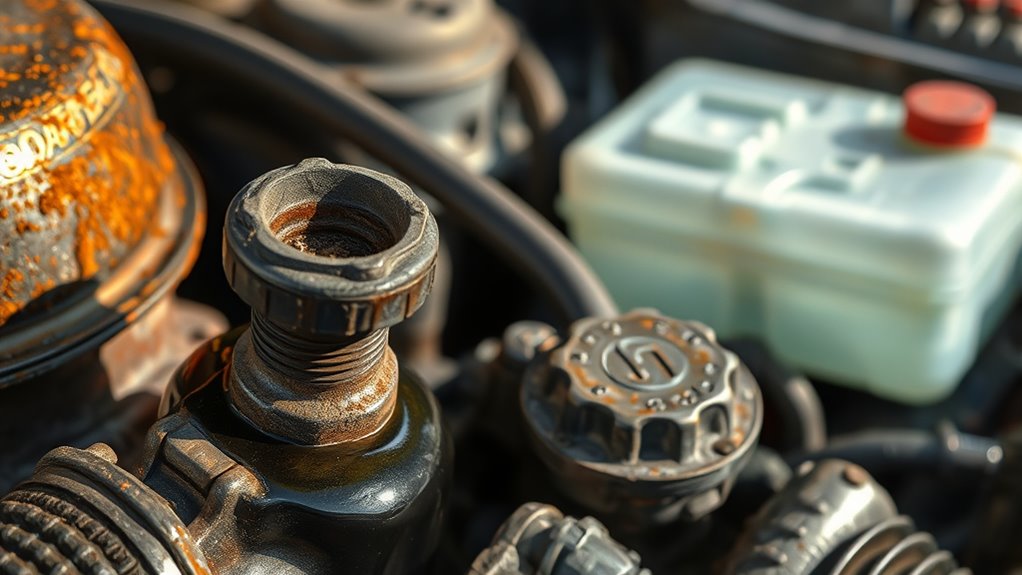
Why would you skip oil changes and fluid checks when they’re essential to your engine’s health? Ignoring these tasks lets oil degradation set in, reducing its ability to lubricate and protect engine parts.
Over time, dirty oil thickens, causing increased friction and heat that wear down components faster. If you don’t check fluids regularly, you risk fluid contamination, which can introduce harmful particles and moisture into your engine system.
Dirty oil thickens and contaminated fluids increase friction and heat, accelerating engine wear and damage.
Contaminated fluids don’t perform properly, leading to poor cooling, corrosion, and part failures. By neglecting oil and fluid maintenance, you accelerate engine damage considerably.
You might save time now, but you’ll pay with costly repairs or even total engine failure. Staying on top of oil changes and fluid checks keeps your engine running smoothly, prevents buildup of sludge, and avoids the harmful effects of contaminants.
Don’t let simple maintenance slip; it’s the first step in protecting your engine’s longevity.
Running Your Car Engine Without Enough Coolant
You really can’t let your engine run without enough coolant. It’s what keeps your car from overheating. When the coolant level drops, your engine heats up way too fast. And if you ignore that, you could seriously damage your engine sooner than you’d expect.
Coolant Role Importance
Running your car engine without enough coolant can quickly lead to severe damage. Coolant plays a crucial role in maintaining the engine’s temperature and preventing it from overheating.
When you ignore coolant levels, you risk exposing your engine to extreme heat. This can cause warping, cracking, or even complete failure. Coolant leaks are a common issue that can silently drain your coolant, leaving your engine vulnerable.
Moreover, coolant contamination can reduce the fluid’s effectiveness. This impairs heat transfer and causes corrosion inside the cooling system. If you don’t address these problems promptly, your engine won’t be properly protected.
To keep your engine safe, regularly check for leaks and make sure your coolant remains clean and at the correct level. Neglecting this can destroy your engine faster than you might expect.
Overheating Engine Effects
Ignoring coolant issues doesn’t just risk minor engine troubles; it can quickly lead to severe overheating. When you run your engine without enough coolant, heat builds up rapidly, causing internal components to expand and warp. Coolant leaks reduce your system’s ability to regulate temperature, making overheating almost inevitable. If you ignore signs like steam or a rising temperature gauge, you risk serious damage.
Radiator damage is common when overheating occurs. Without sufficient coolant, the radiator can crack or develop holes, worsening leaks and reducing cooling efficiency. Overheating can also lead to blown head gaskets, warped cylinder heads, and engine seizure. In short, neglecting coolant levels and leaks fast-tracks your engine’s destruction. Keep an eye on your coolant to avoid costly repairs or a total engine failure.
Ignoring Warning Lights and Strange Engine Noises
You’ll want to pay attention when warning lights pop on or your engine starts making strange noises. These signals usually mean there’s a problem and often point to serious damage. Ignoring them? That just speeds up engine wear and can lead to costly repairs down the line. So, it’s definitely better to check things out sooner rather than later.
Warning Lights Mean Trouble
How long will you wait before addressing those warning lights flickering on your dashboard? Ignoring dashboard alerts is a fast track to engine failure. These signals are your car’s way of telling you something’s wrong.
When a warning light pops up, skip the temptation to dismiss it. Use engine diagnostics to pinpoint the issue immediately. Waiting only lets minor problems escalate into costly repairs or catastrophic engine damage.
Whether it’s the check engine light or oil pressure warning, acting quickly prevents irreversible harm. You don’t want to gamble with your engine’s health. Recognize that these alerts demand prompt attention.
Strange Noises Indicate Damage
What do those strange clunks, knocks, or squeals coming from your engine really mean? Engine knocking is a clear sign that something’s wrong, usually caused by improper combustion or worn components. If you ignore it, you risk catastrophic damage.
Unusual vibrations are another red flag. They can indicate misaligned parts, imbalanced components, or failing mounts, all of which stress your engine unnecessarily. When you hear these noises or feel odd vibrations, don’t brush them off. They’re your engine’s way of telling you it’s suffering.
Continuing to drive without addressing these symptoms accelerates wear and can lead to a complete engine failure faster than you’d expect. Pay attention and fix the issue before it’s too late.
Ignoring Alerts Accelerates Wear
When your dashboard warning lights blink or strange noises persist, ignoring them only speeds up engine damage. Those alerts aren’t just annoyances. They’re your car’s way of signaling serious problems.
Overlooking a sensor malfunction or ignition issues can quickly spiral into costly repairs or complete engine failure. Don’t wait for things to get worse. Acting promptly can save your engine’s life.
Here’s what happens when you ignore alerts:
- Sensor malfunction leads to incorrect data, causing poor engine performance
- Ignition issues can cause misfires, damaging cylinders and spark plugs
- Overheating warnings ignored result in warped engine components
- Oil pressure lights neglected cause rapid wear and tear on moving parts
Ignoring these signs accelerates wear, turning small fixes into engine disasters.
Letting Your Engine Overheat Repeatedly
If you repeatedly let your engine overheat, you’ll quickly cause severe damage to critical components like the head gasket, pistons, and cylinders. Ignoring rising engine temperature stresses the cooling system, causing it to fail and leaving your engine vulnerable to warping and cracking. Each time you push your car beyond safe temperature limits, you invite costly repairs or even total engine failure.
Here’s what happens when your engine overheats repeatedly:
| Component | Effect of Overheating | Result |
|---|---|---|
| Head Gasket | Warps or cracks | Coolant leaks, engine failure |
| Pistons | Expand excessively | Engine knocking, damage |
| Cylinders | Overheat and seize | Loss of compression, stalling |
Keep an eye on your engine temperature gauge and maintain your cooling system to prevent overheating. Don’t let neglect ruin your engine fast.
Using the Wrong Fuel for Your Engine
Overheating can wreak havoc on your engine, but using the wrong fuel can cause just as much damage in a different way. When you put incorrect fuel in your car, you risk severe fuel contamination and fuel system damage. Your engine relies on precise fuel types to operate efficiently.
Using the wrong fuel can lead to clogged fuel injectors from contaminants, corrosion in fuel lines and the tank, poor combustion causing misfires, and damage to the catalytic converter.
Fuel contamination disrupts the engine’s ability to burn fuel cleanly, which stresses components and reduces performance. Fuel system damage can result in costly repairs or even engine replacement.
Always double-check your fuel type before filling up to avoid these costly mistakes. Don’t underestimate how quickly using the wrong fuel can destroy your engine. Sticking to the manufacturer’s recommendation is key to keeping your car running smoothly.
Revving or Idling Your Engine Too Much
Although it might seem harmless, revving or idling your engine excessively can quickly cause serious damage. When you rev your engine too much, you raise the engine temperature beyond what’s normal for idle or driving conditions. This extra heat stresses engine components, leading to premature wear or even warping parts like the cylinder head.
Idling for long periods also prevents your engine from reaching an essential operating temperature, which is crucial for proper combustion and lubrication.
Additionally, excessive idling and revving increase exhaust emissions, contributing to environmental harm and potentially clogging your catalytic converter. Over time, these actions reduce fuel efficiency and strain your engine’s internal systems.
If you want your engine to last, avoid unnecessary revving and keep idling to a minimum. Let your engine warm up gently and maintain steady RPMs while driving to protect critical parts and keep emissions in check.
Skipping Important Engine Maintenance and Repairs
Neglecting just a few key maintenance tasks can drastically shorten your engine’s lifespan. Skipping important engine maintenance and repairs is a quick way to wreck your car’s heart.
If you overlook timely oil changes and regular fluid inspections, your engine parts won’t get the lubrication and cooling they need. This leads to excessive wear and overheating. Avoid these common pitfalls:
- Delaying oil changes, causing sludge buildup and poor lubrication
- Ignoring coolant levels, risking engine overheating
- Overlooking transmission fluid checks, leading to gear damage
- Postponing repairs for warning lights and unusual noises
When you bypass these essential tasks, minor issues escalate into costly engine failures. Staying on top of maintenance not only protects your engine but also ensures your car runs smoothly. Don’t let neglect destroy your engine faster than normal wear and tear ever could.
Frequently Asked Questions
Can Adding Sugar to the Fuel Tank Damage the Engine?
Yes, adding sugar to the fuel tank can damage your engine. While sugar itself doesn’t dissolve in gasoline, it causes fuel contamination by clogging fuel filters and injectors, disrupting fuel flow.
Over time, this leads to poor engine performance and potential stalling. Also, any residual sugar mixed with moisture can cause chemical corrosion inside the fuel system.
Does Driving With a Broken Timing Belt Destroy the Engine?
Driving with a broken timing belt is like letting the heart skip a vital beat. It can instantly destroy your engine. When that belt snaps, the engine’s valves and pistons collide in a disastrous dance, causing severe engine damage.
You can’t ignore it because the timing belt keeps everything synchronized. If it fails, your car’s engine suffers catastrophic damage quickly. This leaves you with costly repairs or even a complete engine replacement. Don’t risk it.
Will Using Low-Quality Aftermarket Parts Harm Engine Performance?
Yes, using low-quality aftermarket parts can harm your engine’s performance. These parts often don’t fit or function perfectly, which can lead to engine overheating or oil contamination.
When the engine runs hotter than it should, components wear out faster. Contaminated oil reduces lubrication, causing friction and damage.
To keep your engine running smoothly, it’s best to invest in high-quality parts that meet manufacturer specifications and avoid costly repairs down the road.
Can Frequent Short Trips Cause Engine Wear?
Yes, frequent short trips can cause engine wear because your engine doesn’t reach its ideal operating temperature. This leads to oil degradation, reducing its ability to lubricate and protect engine parts.
Over time, this can contribute to engine overheating since waste heat isn’t efficiently managed. To protect your engine, try taking longer drives occasionally so the oil stays effective and your engine runs at the right temperature.
Is It Bad to Ignore the Air Filter Replacement Schedule?
Ignoring your air filter replacement schedule is like breathing through a clogged nose. You’ll struggle for air, and so will your engine.
Skipping air filter maintenance chokes engine airflow, reducing efficiency and causing dirt buildup. This makes your car work harder, leading to premature wear and costly repairs.
You’ll want to keep that filter clean to let your engine breathe freely and perform at its best every time you drive.
Conclusion
Your car engine is like a beating heart. Neglect it, and it’ll falter, gasping for life. Skipping oil changes or ignoring warning signs is like turning a blind eye to flags waving in the storm.
Treat your engine with care. Keep its fluids flowing, and listen closely. Don’t let impatience or ignorance be the hammer that shatters its rhythm.
Protect your engine, and it’ll carry you smoothly down every road ahead. Remember, knowing the 7 ways to destroy a car engine fast can help you avoid mistakes and keep your ride running strong.