How to Warm Up Your Car Engine in 10 Easy Steps
Warming up your car engine on cold mornings can be a real hassle, especially when you’re in a rush or dealing with freezing temperatures. You’re not alone—many people struggle with knowing the best way to get their engine ready without wasting time or fuel. That’s why we’ve put together these simple steps to help you warm up your car engine efficiently and safely.
To warm up your car engine in 10 easy steps, start by checking your owner’s manual and inspecting fluids like oil and coolant, plus the battery’s health.
Then, start your engine and let it idle briefly, about 30 to 60 seconds, while turning on the heater to warm the cabin and help engine heat circulate.
Avoid high RPMs early on and drive gently until the engine hits operating temperature.
Skip long idling to save fuel and reduce wear.
Following simple maintenance routines keeps warm-ups smooth and efficient; keeping these tips in mind guarantees better performance and longevity.
Key Takeaways
- Start the engine and let it idle for 30 seconds to 1 minute to circulate oil and gently warm up the engine.
- Turn on the heater immediately after ignition to speed up coolant circulation and warm the cabin.
- Avoid high RPMs and aggressive driving until the engine reaches normal operating temperature.
- Check and maintain fluid levels, including engine oil, coolant, and battery health, before starting.
- Drive gently after warm-up to ensure smooth engine, transmission, and exhaust system operation.
Why Warming Up Your Engine Boosts Performance and Longevity
When you warm up your car engine, you help guarantee that its moving parts receive proper lubrication before you start driving. Engine oil needs a moment to circulate fully, reducing friction and wear. If you hit the road immediately after starting, the oil is still thick and sluggish, which can strain components and shorten their lifespan.
Warming your engine ensures oil circulates properly, reducing friction and protecting vital moving parts from wear.
Furthermore, warming up allows the coolant system to reach ideal temperature gradually, preventing shocks from sudden temperature changes and ensuring efficient coolant maintenance. This protects your engine from overheating and corrosion.
By giving your engine a brief warm-up period, you promote smoother performance, improve fuel efficiency, and reduce emissions. It’s a simple step that extends the life of your engine parts and keeps your car running reliably.
Skipping this process might seem like saving time, but it can lead to costly repairs down the road. So, take those few extra minutes. It’s worth it for your engine’s health.
Take a Quick Look at Your Owner’s Manual
Warming up your engine properly sets the stage for better performance, but every car has its own specific recommendations. To get it right, start by checking your owner’s manual. It’s packed with valuable information tailored to your vehicle’s engine specifications that you won’t want to miss.
Here’s why you should consult it:
- Understand recommended warm-up times based on your engine type.
- Learn if your car benefits from idling or gentle driving to warm up.
- Identify any special instructions for cold weather conditions.
- Uncover manufacturer guidelines on avoiding common mistakes that might harm your engine.
Inspect Fluids and Battery Before Warm-Up
Before you start your engine, take a moment to inspect your car’s fluids and battery to assure everything is in good condition. A thorough fluid check ensures your engine oil, coolant, brake fluid, and windshield washer fluid are at proper levels. Low or dirty fluids can affect engine performance and cause damage over time.
Check your car’s fluids and battery before starting to ensure optimal performance and prevent damage.
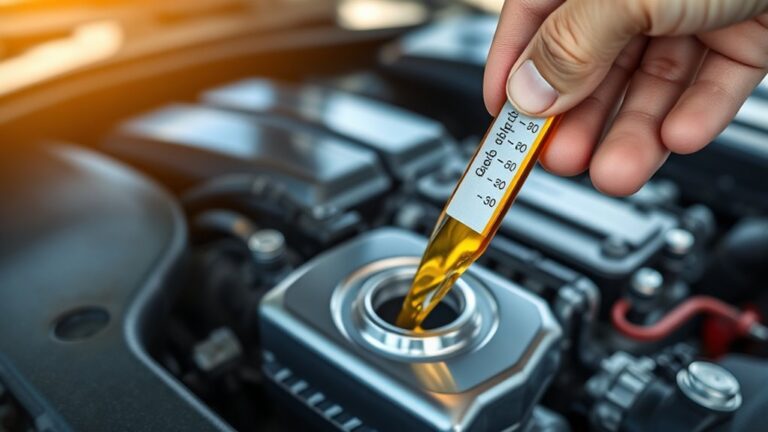
Use the dipstick for oil and visually check reservoirs for other fluids, topping them up if needed.
Next, perform a battery inspection. Look for corrosion on the terminals and ensure the connections are tight. If your battery appears swollen or leaks, it’s time to replace it.
Cold weather can reduce battery efficiency, so verifying its health before warming up your engine saves you from unexpected breakdowns. Taking these simple steps will prepare your car for a smooth start and help maintain its longevity.
Start the Engine and Let It Idle Briefly
Once you start the engine, let it idle for about 30 seconds to a minute to reach an ideal temperature. This brief warm-up helps protect your engine without wasting fuel. Plus, keeping the idling time short also improves your car’s fuel efficiency.
Optimal Idling Duration
Although modern engines don’t require long warm-up times, you should still let your car idle briefly after starting it. This short idling period ensures the engine oil circulates fully, protecting engine components from wear. Proper radiator maintenance also supports efficient heat distribution, preventing overheating during this phase.
To maximize your idling duration, consider these tips:
- Let your engine idle for about 30 seconds to 1 minute.
- Avoid prolonged idling; it wastes fuel and increases emissions.
- Monitor your engine oil level regularly for smooth lubrication.
- Keep your radiator clean and check coolant levels to maintain peak performance.
Engine Temperature Importance
Why does engine temperature matter when you start your car? Because your engine’s performance and longevity depend on it. When you start your engine, the temperature sensors monitor how warm it is, ensuring the engine cooling system activates properly.
If you don’t let your car idle briefly, engine parts won’t reach the ideal temperature, causing uneven expansion and increased wear. This can lead to inefficient lubrication and potential damage.
Allowing your engine to warm up helps the cooling system stabilize the temperature, preventing overheating or excessive friction. By giving your car a short moment to idle, you support best engine temperature, which protects components and maintains smooth operation.
It’s a simple step that keeps your engine running reliably every time you start it.
Fuel Efficiency Tips
How long should you let your engine idle to boost fuel efficiency? Generally, idling for 30 seconds to a minute is enough to allow the engine coolant to circulate and the oil to reach key components, including the spark plugs. This brief warm-up helps your engine run smoothly without wasting fuel.
To maximize fuel efficiency when starting your car:
- Avoid extended idling; it wastes fuel and increases emissions.
- Ensure your spark plugs are clean and functioning well.
- Use quality engine coolant to maintain optimal engine temperature.
- Drive gently for the first few minutes to let the engine adjust.
Following these tips helps your car perform better while saving fuel and protecting engine parts.
Avoid High RPMs During the First Few Minutes
When you start your car, resist the urge to rev the engine immediately, as high RPMs can cause unnecessary wear. Your engine oil is thicker when cold, so pushing the engine hard before the oil warms up prevents proper lubrication. This increased friction can lead to premature engine damage.
Avoid revving cold engines; thick oil limits lubrication, causing friction and potential early damage.
Likewise, cold spark plugs don’t fire as efficiently, which can cause misfires and rough idling if you accelerate aggressively too soon.
Instead, let your engine idle gently for a minute or two. This allows the engine oil to circulate fully and reach critical components, reducing wear on moving parts.
It also helps spark plugs reach ideal operating temperature, ensuring smoother combustion. By avoiding high RPMs during these first few minutes, you’ll extend your engine’s life and maintain better overall performance.
Taking this simple step protects your car’s essential components and sets the stage for a reliable drive.
Watch Your Dashboard to Monitor Engine Temperature
Although your engine may feel ready after a short warm-up, you should keep a close eye on your dashboard’s temperature gauge to verify it’s truly at a safe operating level before driving hard. Dashboard monitoring is essential because it gives you real-time feedback on your engine’s condition.
Here’s how to effectively use the temperature gauge:
- Check the needle position: It should settle near the middle, indicating normal temperature.
- Watch for rapid changes: Sudden spikes can signal overheating or coolant issues.
- Note warning lights: Don’t ignore any engine temperature warnings on your dashboard.
- Adjust your driving: If the temperature is low, continue warming up gently; if too high, stop and investigate.
Turn On the Heater to Warm Cabin and Aid Engine Warm-Up
Once your engine begins to warm up, go ahead and turn on the heater. This helps warm the cabin and also supports the engine’s temperature rising. Not only does it make your ride more comfortable, but it also helps heat circulate from the engine more efficiently. Using the heater wisely like this can actually speed up the warm-up process while keeping you nice and cozy.
Heater Benefits for Engine
Since your car’s heater draws warmth from the engine coolant, turning it on not only warms the cabin but also helps the engine reach its perfect temperature faster. Understanding heater benefits can improve your engine warming routine and vehicle performance.
Here’s why you should use the heater early on:
- Speeds up coolant circulation, enhancing engine warming efficiency.
- Prevents uneven engine temperature, reducing wear and tear.
- Helps avoid condensation inside the engine, preventing corrosion.
- Allows your engine to reach ideal performance sooner, improving fuel efficiency.
Cabin Warmth Importance
Why should you turn on your car’s heater right after starting the engine? Doing so helps improve your interior comfort quickly, making early rides more pleasant during cold weather.
When you activate the heater, warm air circulates inside the cabin, preventing the chill from lingering. This not only keeps you comfortable but also supports the engine’s warm-up process by drawing heat away from the coolant system more evenly.
Furthermore, if your car has seat heating, turning it on alongside the heater enhances comfort instantly without waiting for the entire cabin to warm.
Prioritizing cabin warmth by turning on the heater ensures you stay cozy while your engine reaches its ideal temperature, blending comfort with mechanical efficiency from the moment you start driving.
Efficient Warm-Up Tips
Although it might seem counterintuitive, turning on your car’s heater right after starting the engine helps both warm the cabin quickly and supports the engine’s warm-up process. This action redirects heat from the engine’s cooling system into the cabin, easing engine sound by stabilizing temperature.
To maximize efficiency:
- Turn on the heater immediately after ignition to circulate warm air.
- Keep an ear on the engine sound; unusual noises may indicate warm-up issues.
- Avoid high revs until the engine reaches ideal temperature.
- Regular radiator maintenance ensures proper coolant flow, improving warm-up speed.
Following these tips helps your engine reach operating temperature faster while keeping you comfortable inside.
Drive Gently Until Engine Reaches Operating Temperature
Once your engine is running, you should drive gently until it reaches its operating temperature. This allows the engine oil to circulate fully and lubricate all moving parts effectively.
The coolant mixture also warms up gradually, preventing overheating and maintaining peak engine performance. Avoid rapid acceleration or high RPMs during this period to reduce engine stress and wear.
Here’s a quick guide to what happens when you drive gently:
| Component | Benefit During Warm-Up |
|---|---|
| Engine Oil | Circulates smoothly, reducing friction |
| Coolant Mixture | Gradually heats to regulate temperature |
| Fuel Injection | Adjusts for peak combustion |
| Transmission | Warms for smooth shifting |
| Exhaust System | Reaches ideal temperature faster |
Skip Extended Idling to Save Fuel and Reduce Wear
You don’t actually need to let your car idle for ages to warm it up. Skipping that extended idling not only saves fuel but also reduces engine wear. So, once the engine is running smoothly, just start driving gently. It’s better for your car and helps you save in the long run.
Fuel Efficiency Benefits
Skipping extended idling can save you a surprising amount of fuel while protecting your engine from unnecessary wear. When you avoid letting your car idle for long periods, you boost fuel conservation and contribute to emissions reduction.
Here’s how it benefits you:
- Reduces fuel consumption by not wasting gas while stationary.
- Lowers harmful emissions, helping the environment.
- Keeps your engine running efficiently by reaching operating temperature faster during driving.
- Saves money on fuel costs over time without sacrificing performance.
Engine Wear Reduction
Reducing fuel consumption by avoiding extended idling also protects your engine from unnecessary wear. When you let your car idle for too long, engine oil doesn’t circulate efficiently, leading to increased friction and wear on components like spark plugs. This can shorten their lifespan and reduce engine performance.
Instead, start driving gently after about 30 seconds of warming up to keep everything lubricated and functioning smoothly.
| Aspect | Impact of Extended Idling |
|---|---|
| Engine Oil Circulation | Poor, causing increased friction |
| Spark Plug Life | Reduced, due to incomplete combustion |
| Fuel Usage | Higher, wasting resources |
Keep Up Regular Engine Tune-Ups for Smoother Warm-Ups
Although it might seem like a minor task, keeping up with regular engine tune-ups plays a crucial role in guaranteeing your car warms up smoothly and efficiently. By following your vehicle’s maintenance schedules, you help prevent issues that could delay reaching ideal engine temperature. Engine diagnostics during tune-ups catch problems early, improving overall engine performance and fuel efficiency.
Here are four key reasons to stay on top of tune-ups:
- Maximize combustion: Fresh spark plugs and clean filters ensure better fuel ignition for quicker warm-ups.
- Prevent buildup: Regular checks keep carbon deposits from affecting engine components.
- Guarantee sensor accuracy: Properly functioning sensors provide accurate data for efficient warming.
- Avoid costly repairs: Early detection through diagnostics reduces breakdown risks and prolongs engine life.
Stick to your recommended maintenance schedules, and your engine will warm up faster, run smoother, and last longer.
Frequently Asked Questions
Can Warming up My Engine Improve Fuel Efficiency?
Yes, warming up your engine can improve fuel consumption and boost engine performance, especially in cold weather. When you let your engine warm up, it reaches an ideal temperature, which helps fuel burn more efficiently. This reduces unnecessary fuel consumption and minimizes engine wear.
However, you don’t need to idle for long. Just a short warm-up period before driving gently will help maintain better fuel efficiency and overall engine health.
Is It Harmful to Warm up a Diesel Engine the Same Way?
It’s not harmful to warm up a diesel engine, but you’ll want to be careful. Diesel condensation can build up if you don’t let the engine reach proper temperature, causing fuel contamination.
Also, lubricant viscosity plays a key role; cold oil is thicker and doesn’t protect moving parts well. So, letting your diesel engine warm up briefly helps the oil thin out and reduces condensation issues, keeping your engine running smoothly and efficiently.
How Does Cold Weather Specifically Affect Engine Warm-Up Time?
Cold weather slows down your engine warm-up time because the engine block starts off much colder. So, it takes longer to reach ideal operating temperature.
Plus, battery performance drops in low temperatures, making it harder for your car to crank and warm up quickly. You’ll notice your engine needs more time to circulate fluids and build pressure.
Can Using Synthetic Oil Reduce Warm-Up Duration?
Think of synthetic oil as a well-trained athlete, ready to perform instantly. Yes, using synthetic oil can reduce your engine’s warm-up duration.
Its lower oil viscosity allows it to flow quickly, ensuring efficient engine lubrication right from startup. This means your engine parts face less friction and wear, warming up faster and running smoother in cold conditions.
Should I Warm up My Engine Differently in Electric or Hybrid Cars?
You don’t need to warm up electric or hybrid engines like traditional ones since they don’t rely on combustion. Instead, focus on battery maintenance by keeping your battery charged and avoiding extreme temperatures.
For cabin comfort, use the car’s climate control system, which works efficiently without needing the engine to warm up. This approach helps maintain battery life and ensures your cabin stays comfortable without unnecessary engine idling.
Conclusion
So, while your car might not be a diva demanding a lengthy warm-up ritual, giving it a few thoughtful minutes before you hit high speeds actually helps it perform better and last longer. Skipping those steps might save time now, but your engine will remind you later, probably with a costly repair bill.
Treat your car like the hardworking companion it is, not a drama queen, and enjoy smoother, safer rides every time. Warming up your car engine properly is a simple habit that pays off in better performance and longevity.