How to Clean Car Engines in 3 Easy Steps
Cleaning your car engine can feel like a daunting task. You want it to look great and run smoothly, but the fear of damaging delicate parts or making a mess holds many people back. If you’ve ever felt overwhelmed by the thought of tackling engine grime, you’re not alone.
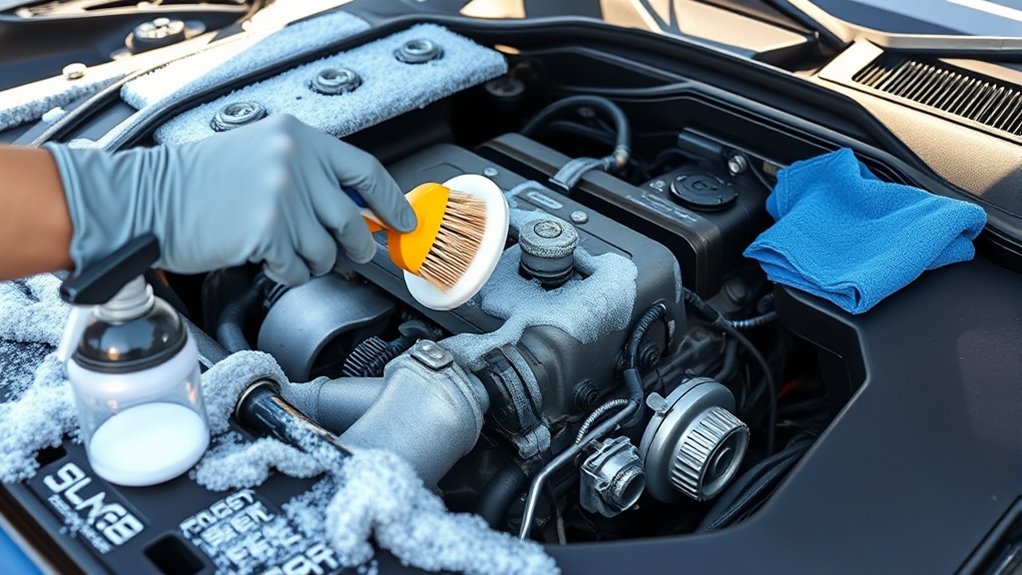
To clean your car engine in three easy steps, first make sure the engine is cool and cover sensitive parts like the alternator with plastic bags. Next, use a gentle mix of dish soap and warm water with a soft brush to scrub away grime, rinsing carefully with low-pressure water to avoid electrical damage.
Finally, dry the engine thoroughly using compressed air and apply an engine-specific protective spray to preserve its components.
Keep following to uncover more tips for a safe, effective clean.
Key Takeaways
- Ensure the engine is cool and cover sensitive parts with plastic bags before starting the cleaning process.
- Use a mixture of dish soap and warm water with a soft brush to gently clean greasy engine surfaces.
- Rinse the engine carefully with low-pressure water, avoiding electrical components to prevent damage.
- Dry the engine thoroughly using compressed air or a leaf blower, focusing on tight spots and electrical areas.
- Apply an engine-specific protective spray after drying to repel moisture and preserve rubber and metal parts.
Get Your Car Engine Ready and Gather Supplies
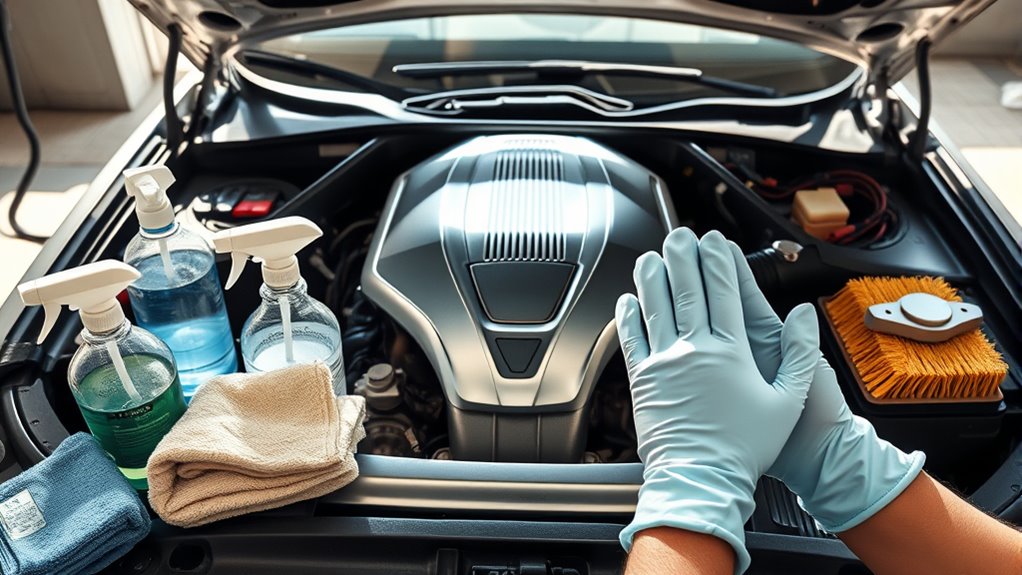
Before you start cleaning, make sure your engine is cool to avoid burns or damage. A hot engine increases the risk of overheating, and water or cleaning products can evaporate too quickly, making your efforts less effective.
Once cooled, inspect the engine bay closely for any signs of oil leaks. Oil leak detection is essential before cleaning because leaks can worsen if you don’t address them first.
Gather your supplies: gloves, a degreaser suitable for engines, a soft brush, microfiber cloths, and a plastic bag to cover sensitive components like the alternator and air intake. Having everything ready saves time and helps you clean efficiently without stopping midway.
Preparing properly not only protects your engine but also guarantees you spot issues early, preventing bigger problems later. By taking these steps, you’ll set yourself up for a safe and effective engine cleaning session.
Safely Clean Your Car Engine Using Household Products
Although professional degreasers are designed for engine cleaning, you can effectively use common household products like dish soap and baking soda to cut through grime without harsh chemicals. These chemical alternatives offer a safer, eco-friendly way to tackle engine degreasing at home. Here’s how to proceed:
- Mix warm water with a few drops of dish soap to create a gentle cleaning solution.
- Sprinkle baking soda on greasy spots to boost cleaning power and neutralize odors.
- Use a soft brush or sponge dipped in the soapy water to scrub the engine surfaces gently.
- Rinse carefully with a low-pressure water stream, avoiding electrical components.
Dry Your Engine and Apply Protection After Cleaning
Once you’ve rinsed off the cleaning solution, you’ll want to dry your engine thoroughly to prevent moisture from causing corrosion or electrical issues. Use compressed air or a leaf blower to force water out of tight spots, especially around electrical components and connectors.
Pay close attention to areas near the engine oil cap and cooling system hoses, as trapped moisture here can lead to problems. After drying, apply a protective spray designed for engines to repel moisture and dirt, helping preserve rubber parts and metal surfaces.
Avoid spraying directly on belts or the cooling system’s radiator fins to prevent damage. This protective layer also helps maintain your engine’s appearance and can extend the life of components by reducing wear.
Frequently Asked Questions
How Often Should I Clean My Car Engine?
You should clean your car engine every 12 to 18 months to prevent buildup of oil residue and grime. Regular engine degreasing helps keep your engine running efficiently and reduces the risk of damage.
If you notice excessive oil residue or dirt, you might want to clean it more often. Just be sure to use the right degreaser and avoid sensitive electrical components while cleaning to protect your engine’s performance.
Can Engine Cleaning Improve Fuel Efficiency?
Absolutely, cleaning your engine can boost both fuel efficiency and engine performance. Removing grime and grease lets your engine breathe better, helping it run smoother and consume fuel more efficiently.
When dirt and debris build up, they can cause your engine to work harder, wasting fuel. By regularly cleaning, you’re promoting peak performance and protecting your powerplant, which means you’ll save money at the pump while keeping your car in top condition.
Is It Safe to Use a Pressure Washer on My Engine?
Using a pressure washer on your engine isn’t always safe because high-pressure water can damage sensitive components. Instead, you should opt for steam cleaning or chemical degreasing to effectively remove grime without risking harm.
Steam cleaning loosens dirt gently, while chemical degreasing breaks down grease safely. If you do use water, keep the pressure low and avoid electrical parts to protect your engine’s integrity.
What Are the Signs My Engine Needs Cleaning?
If your engine looks like it’s auditioning for a dirt competition, that’s a clear sign it needs cleaning. When engine grime builds up, it’s not just ugly, it can hide oil leaks that scream for attention.
You’ll notice your car might smell funky or performance could drop. Don’t wait for your engine to start collecting household dust like a forgotten trophy; tackle the grime before it turns into a full-blown mess!
Can Engine Cleaning Prevent Mechanical Issues?
Yes, cleaning your engine can prevent mechanical issues by removing engine grime that traps heat and causes parts to wear out faster. When you keep grime off, you reduce the risk of corrosion, which can damage essential components and lead to costly repairs.
Regular cleaning helps maintain your engine’s efficiency and longevity, so you’ll avoid unexpected breakdowns and keep your car running smoothly for longer.
Conclusion
Now that you’ve given your engine a fresh start, you’ll feel the difference every time you turn the key. Just like giving your car a spa day, regular cleaning keeps it running smoothly and looking sharp.
Remember, a clean engine isn’t just about looks. It’s about extending your car’s life and performance. So, keep these easy steps in your toolkit, and your engine will thank you with every mile you drive.
Cleaning car engines regularly helps maintain efficiency and prevents costly repairs down the road. Make it a habit, and your car will stay in top shape for years to come.