How Does a Chainsaw File Work?
A dull chainsaw file can make sharpening feel slow, frustrating, and uncertain. You’re not alone—many people struggle to restore a clean, consistent edge without damaging the chain. The right chainsaw file can make the job faster and easier.
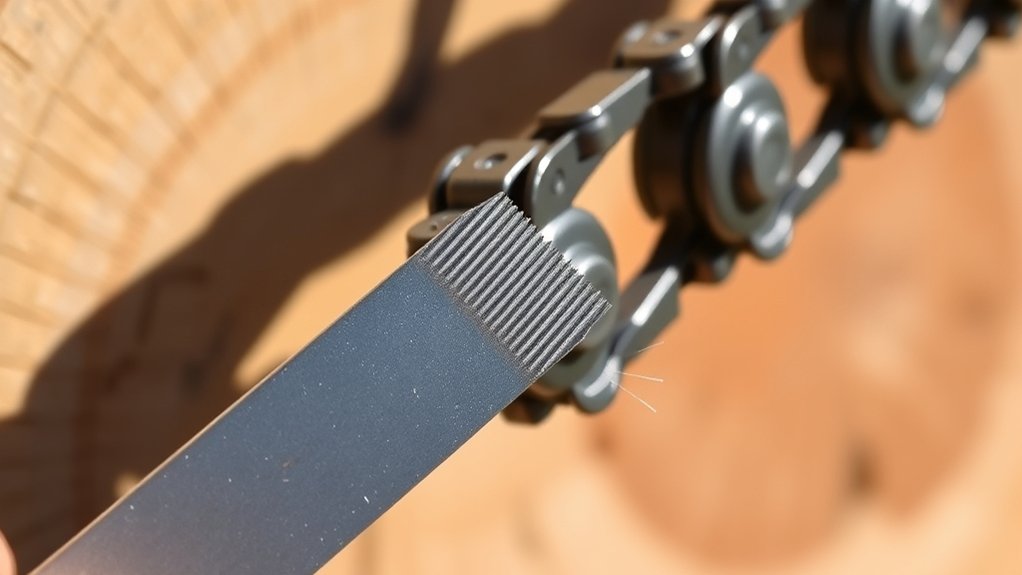
A chainsaw file works by scraping away tiny particles of worn metal from each cutter as you push it forward along the tooth’s curved gullet and edge. Use a correctly sized round file and maintain the manufacturer’s recommended angle to restore a sharp, consistent cutting edge.
Afterward, use a flat file and depth-gauge tool to adjust the rakers. Secure the saw, wear protection, and inspect each cutter for uniformity.
The following guidance explains the process and common mistakes.
Key Takeaways
- A chainsaw file uses abrasive ridges to remove tiny amounts of metal from each cutter’s edge and curved gullet.
- Round files sharpen cutter teeth, while flat files lower depth gauges to control how deeply cutters bite.
- Pushing the file forward at the manufacturer’s recommended angle restores a consistent, sharp cutting edge.
- Matching the file diameter to the chain’s pitch preserves the cutter’s correct shape and prevents weakened or dull edges.
- Consistent strokes, pressure, and cutter lengths produce smoother cuts, reduce saw strain, and extend chain life.
What Does a Chainsaw File Do?

A chainsaw file sharpens the cutter teeth on a chain by removing worn metal and restoring each tooth’s cutting edge. When you use the correct file size, you help each cutter regain a consistent shape, which supports smoother cutting and reduces strain on the saw.
Filing also lets you maintain the depth-gauge relationship that controls how aggressively the chain bites. You’ll notice better performance when the cutters remain even and properly aligned.
Before filing, secure the chain, switch off the engine, and wear suitable safety equipment. Follow essential safety precautions, including gloves and eye protection, and keep the saw stable during service.
A round file handles cutter maintenance, while a flat file can adjust depth gauges when your chain’s instructions allow it. These maintenance tools work together as part of routine chain care.
You don’t need to file after every use. Inspect the cutters regularly and sharpen them when cutting becomes slow, uneven, or produces fine dust instead of chips.
How Does a Chainsaw File Remove Metal?

A chainsaw file’s abrasive teeth scrape away tiny amounts of metal as you push it across each cutter. You control how much metal it removes by applying steady pressure and using consistent strokes. The filing angle also shapes the cutter and determines how sharp it becomes. Next, you’ll see how these factors work together during sharpening.
Abrasive Cutting Teeth
When you push a chainsaw file across a cutter’s edge, its abrasive teeth scrape away tiny metal particles rather than slicing through the steel like a knife. Each tooth acts as a miniature cutting point.
Its sharp ridges catch the cutter’s surface and lift out small chips as you apply steady pressure. The file’s round profile lets those ridges contact the curved gullet and cutting edge.
- Coarse teeth remove material quickly.
- Fine teeth leave a smoother surface.
- Clean grooves keep abrasive points exposed.
- Worn teeth reduce filing action.
During chain sharpening, you rely on these exposed points to abrade hardened steel effectively. Chips and residue can clog the grooves, so file maintenance helps preserve the file’s bite.
Keep the file dry, brush away debris, and replace it when its teeth feel smooth. This abrasive action creates the foundation for restoring the cutter’s edge.
Controlled Metal Removal
Those abrasive points remove metal in small, controlled strokes as you guide the file through the cutter’s gullet. During chain sharpening, each hardened point catches a tiny shaving from the cutter’s edge.
You control metal removal by applying steady, moderate pressure and making smooth, complete passes. The file’s ridges cut on the forward stroke, while you ease pressure as you return it.
This action gradually restores a crisp working edge without stripping away unnecessary material. A clean file removes metal more efficiently, so you won’t need excessive force or repeated passes.
Brush away filings regularly to keep the cutting surface visible and prevent debris from clogging the teeth. Work patiently, and you’ll preserve the cutter’s shape while removing only the dull, damaged material.
Consistent strokes also produce a uniform edge.
Filing Angle Effects
Filing angle determines where the file removes metal and how the cutter’s edge takes shape. As you hold the file, its filing angle guides metal removal across the cutter’s top plate and side plate.
A consistent angle creates a sharp, balanced edge; a changing angle leaves uneven surfaces and weak cutting performance.
- A steeper angle removes more material from the top plate, producing an aggressive edge.
- A shallower angle preserves more top-plate strength but may reduce cutting speed.
- A level file position helps maintain the intended cutter geometry.
- Excessive pressure can deepen the cut, shorten cutter life, and distort the angle.
You’ll get smoother chips and steadier cutting when you match the manufacturer’s recommended filing angle. Check each cutter against the first one, and don’t force the file.
Let its teeth cut gradually while you maintain the same motion and pressure.
Choose the Right Chainsaw File Size

Choosing the right chainsaw file size keeps each cutter sharp without altering its intended shape. Match the file’s diameter to your chain’s pitch, which you’ll find in the owner’s manual, on the packaging, or stamped near the guide bar.
Common sizes include 5/32 inch for 1/4-inch and 3/8-inch low-profile chains, 3/16 inch for .325-inch chains, and 7/32 inch for standard 3/8-inch chains. A 1/4-inch file typically suits .404-inch chains, but always verify the manufacturer’s specification.
An undersized file lowers the cutter’s top plate and creates a weak cutting edge. An oversized file leaves too much material, reducing sharpness and cutting performance.
Replace a worn file when it no longer maintains its original diameter. Before filing, set proper Chain tension so the cutters stay steady.
Follow basic Lubrication tips, too: clean the groove and confirm oil reaches the chain. Keep your file clean, dry, and stored safely between sharpening sessions.
Pick Round or Flat Files
Use a round file for sharpening the chain’s cutting teeth, matching its diameter to the chain pitch. Its curved surface restores the cutter’s top plate and side plate without flattening the tooth’s working profile. Choose a flat file for lowering depth gauges, which control how deeply each cutter enters the wood.
Use a properly sized round file for cutting teeth and a flat file for adjusting depth gauges.
Don’t substitute one file for the other; each serves a distinct maintenance task.
- Inspect the chain before filing for cracked, damaged, or excessively worn parts.
- Clean resin and debris from the cutters so the file cuts evenly.
- Rotate or replace a worn round file when its teeth stop removing metal.
- Store files dry and protected to support reliable file maintenance.
Good sharpening techniques depend on clean, properly sized tools. A round file that’s too large won’t shape the cutter correctly, while one that’s too small can create an uneven cutting edge.
Use the flat file only on depth gauges, checking their height with a depth-gauge guide. Keep both file types separate, clean, and ready for their specific jobs.
Your chain will cut more consistently, and you’ll avoid removing unnecessary metal during routine servicing.
Set the Right Filing Angle
With the correct round file in hand, set its angle to match the cutter’s recommended top-plate angle, typically marked on the chain or sharpening guide. Hold the file level, then align its handle and shaft with that guide.
A consistent angle helps each cutter form a clean, efficient edge during chain sharpening.
| Guide mark | Typical angle | Best reference |
|---|---|---|
| Standard | 30° | Chain stamp |
| Hardwood | 25° | Manufacturer |
| Softwood | 35° | Sharpening guide |
Keep the file’s horizontal position steady, and don’t tilt it sideways unless your chain’s instructions specify a different arrangement.
Check the depth-gauge design before filing. Some chains require a matching side-plate angle as well.
Wear gloves and eye protection, engage the chain brake, and secure the saw before positioning the file. These safety precautions prevent slips while you establish alignment.
Confirm the recommended angle in your owner’s manual, especially when replacing a chain. An incorrect setting can reduce cutting performance and increase kickback risk.
Your next step is filing each cutter consistently.
File Each Cutter Step by Step
Start with the cutter farthest from the saw body, and push the round file through it in one smooth stroke. Keep the file level, follow the marked angle, and apply steady pressure only on the forward stroke. Lift it on the return to protect the teeth.
Before filing, engage the chain brake, wear Safety gear, and secure the saw firmly. Clean debris from each cutter so the file contacts fresh metal.
Work around the chain in an organized pattern:
- File every cutter facing one direction first.
- Rotate the saw or move to the opposite side.
- Use the same number of strokes on each cutter.
- Check cutting edges for a consistent, sharp profile.
Count your strokes. Three to five usually removes enough dull metal, though damaged teeth may need more. Don’t force a small file or rock it sideways, as either action can change the cutter shape.
Afterward, wipe away filings and inspect your Chain lubrication system before cutting. Keep the chain properly lubricated during operation to reduce heat and wear.
Set Depth Gauges After Filing
After filing the cutters, check each depth gauge, or raker, because it controls how deeply the cutter enters the wood. If a gauge sits too high, the chain may cut slowly and produce fine dust. If it sits too low, the saw can grab aggressively, vibrate, and kick back.
Place a depth-gauge tool over the chain so its slot rests on the cutter’s top plate and the gauge. Use a flat file to lower only the portion that extends above the tool.
File in one direction, following the tool’s angle, and don’t remove material below its setting. Round the leading edge slightly with a few light strokes, then clear filings from the groove.
Before adjusting anything, stop the engine, disconnect the spark plug, and wear safety gear, including gloves and eye protection. Confirm proper Chain tension, too, because a loose chain can distort your measurements.
Replace the tool when its markings become difficult to read.
Check Cutter Sharpness and Consistency
Once the depth gauges are set, inspect the cutters for sharpness and consistency. Keep the chainsaw off, engage the chain brake, and wear appropriate safety precautions while checking each tooth.
A sharp cutter should have a clean, even edge that reflects light minimally. Compare every cutter with its neighboring teeth, watching for differences in length, angle, or damaged chrome.
- View the chain from above to compare cutter lengths.
- Feel only the cutting edge carefully, never with force.
- Check left- and right-facing cutters as matching pairs.
- Replace or professionally service teeth with cracks or missing material.
Run a fingernail lightly across the edge. A sharp cutter should catch rather than slide.
If one side contains shorter cutters, filing may produce uneven cutting and vibration. Use a file guide or gauge to confirm uniform angles and lengths.
Record your inspection in the maintenance schedule so you can monitor wear over time. Before reinstalling or testing the chain, confirm that every cutter appears consistent and secure.
Avoid Common Chainsaw Filing Mistakes
Avoiding common filing mistakes helps preserve a sharp, balanced chain and reduces cutting problems. Before filing, shut off the engine, engage the chain brake, and wear appropriate chainsaw safety gear. Secure the bar so it can’t move while you work.
Choose a round file that matches your chain’s specifications. A file that’s too large or small creates an incorrect cutter profile. Hold the file at the manufacturer’s recommended angle and keep the same height on every cutter.
Push the file forward with controlled strokes. Don’t saw back and forth or press downward excessively. File only on the forward stroke, then lift the file for the return.
Count your strokes and use similar pressure on each cutter to maintain consistency. Avoid filing tie straps, drive links, or depth gauges accidentally.
Keep your files clean and sharp, and organize your maintenance tools so you can work without distractions. Finally, inspect your results before lubricating and reinstalling the chain.
Know When to Replace the Chain
Even careful filing can’t restore a chain that’s excessively worn or damaged. During chainsaw maintenance, inspect it before every use and replace it when sharpening no longer produces clean, efficient cuts.
Don’t keep filing cutters below the manufacturer’s minimum length. Uneven or severely shortened teeth can make the saw pull, vibrate, or kick back.
Replace the chain if you notice:
- Cracked, bent, or missing cutters
- Stretched drive links or damaged tie straps
- A groove that won’t hold the chain securely
- Persistent smoke despite proper lubrication
Check the guide bar and sprocket, too, because worn components can quickly damage a new chain.
Follow your saw’s manual for the correct chain pitch, gauge, and drive-link count. If you’re uncertain, compare the chain with a new one or ask a qualified dealer.
Wear gloves and eye protection during inspection. Remove the spark-plug connection or battery before handling the chain.
These safety precautions help prevent accidental starts while you decide whether replacement is necessary.
Frequently Asked Questions
How Often Should I Sharpen My Chainsaw Chain?
Sharpen your chainsaw chain whenever you notice slower cutting, crooked cuts, increased vibration, or fine sawdust instead of coarse chips. For regular use, sharpen it after every few hours of cutting, or each time you refuel during demanding work.
Check Chain tension before filing, because a loose chain reduces accuracy. Maintain the manufacturer’s recommended Filing angle, and inspect cutters for damage.
Sharpen immediately after hitting dirt, rocks, or metal to restore safe, efficient cutting.
Can I Use a Chainsaw File on Other Cutting Tools?
Yes, you can use a chainsaw file on some other cutting tools, but compatibility matters. Think of it like using a key: it works only when the size and shape match.
For knives, axes, or garden shears, choose a file suited to the edge and metal. Under “Tool compatibility,” check diameter, cut, and hardness.
Consider “Alternative sharpening methods,” such as whetstones or sharpening rods, when a file removes too much material.
What Safety Gear Should I Wear While Filing a Chainsaw Chain?
Wear protective gloves and eye protection before filing a chainsaw chain. Secure the chainsaw firmly, switch off the engine, remove the battery or spark-plug connection, and engage the chain brake.
Wear sturdy, close-fitting clothing and slip-resistant footwear to protect against accidental contact and slips. Keep loose hair, jewelry, and sleeves away from the chain.
Work in a well-lit, stable area, and use hearing protection if the engine may run nearby during setup or inspection.
How Should I Clean and Store a Chainsaw File?
Wipe your chainsaw file clean after each use with a dry cloth or soft wire brush, removing filings and resin. Don’t wash it unless necessary; moisture can cause rust.
For effective chain maintenance, inspect the teeth and file’s surface for wear. Apply a light coat of rust-preventive oil before storage.
Your storage tips: keep the file dry, capped, and separated from tools where it won’t bend or get damaged.
Can Electric or Battery-Powered Chainsaws Use the Same Files?
Yes, you can use the same files for electric, battery-powered, and gas chainsaws, provided the chains share the same pitch and cutter size. Check your owner’s manual or match the file diameter to your chain’s specifications.
Apply consistent chain sharpening techniques, including correct angles and light, even strokes. Follow file maintenance tips by cleaning the file after use, preventing rust, and storing it dry.
Replace worn files for accurate sharpening and safer cutting.
Conclusion
A chainsaw file is a small tool with a big job: it restores your chain’s bite. When you choose the correct size, match the file to each cutter, and maintain consistent angles, you turn dull teeth into a balanced cutting team.
Don’t forget the depth gauges, or your chain may stumble instead of slice. Avoid shortcuts, inspect your work, and replace damaged chains.
With proper chainsaw filing, you’ll cut smoothly, safely, and efficiently every time.