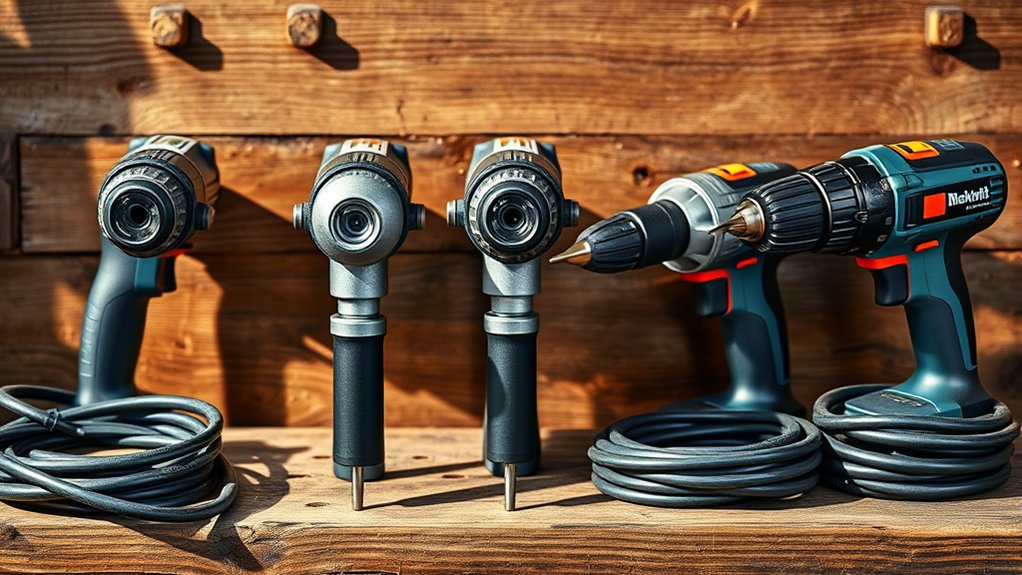
Top 5 Corded Power Tools for Heavy-Duty Jobs
Tackling demanding projects can be frustrating when your tools lack the power, durability, or control you need. You’re not alone—many people struggle to find corded power tools that can handle heavy-duty work without slowing them down.
For heavy-duty jobs, you’ll want five reliable corded tools: a 1/2-inch drill for high-torque drilling, a 7-1/4-inch circular saw for thick materials, a guarded grinder for cutting and metalwork, a variable-speed reciprocating saw for demolition, and durable extension cords with proper protection.
Choose models with 12- to 15-amp motors, sturdy gear assemblies, ergonomic handles, and safety features such as overload protection or electric brakes. Keep going to compare their power, capacity, and durability.
Key Takeaways
- Heavy-duty corded drills deliver powerful variable-speed performance, with 1/2-inch chucks, two-speed gearboxes, side handles, and overload protection.
- Corded circular saws handle thick materials using 7-1/4-inch blades, rigid shoes, bevel adjustments, depth stops, and effective safety features.
- Corded grinders excel at metalwork with durable motors, adjustable guards, spindle locks, soft starts, and task-specific abrasive discs.
- Corded reciprocating saws provide sustained demolition power, featuring variable speeds, tool-free blade changes, adjustable shoes, and comfortable grips.
- Compare 12- or 15-amp motors, cutting capacity, metal gearing, ergonomic controls, vibration reduction, warranties, and replaceable components.
Best Corded Drills for Heavy-Duty Jobs
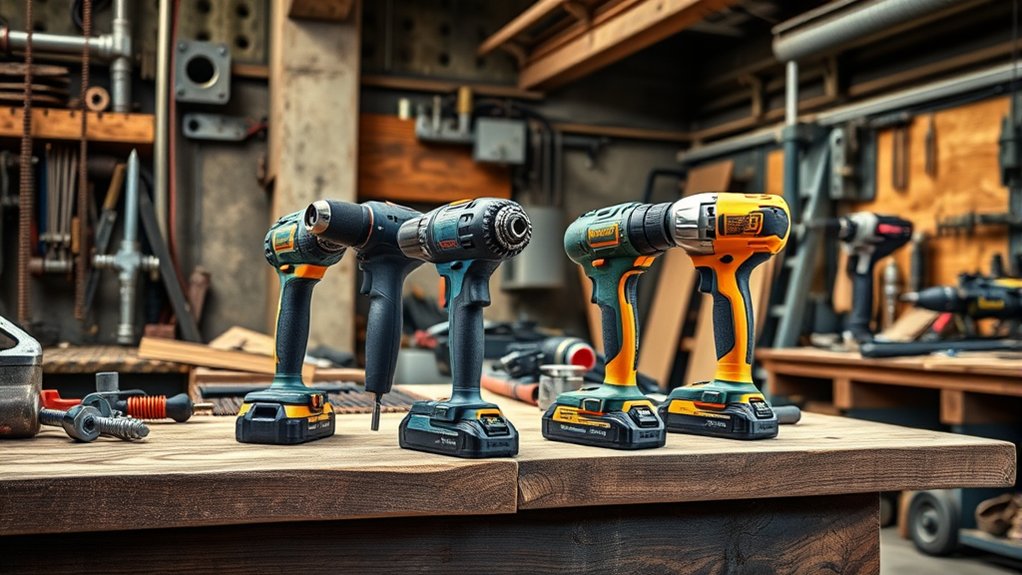
For heavy-duty drilling, choose a corded model with a powerful motor, variable-speed control, and a durable chuck that can handle demanding materials. You’ll get consistent power without waiting for batteries to recharge, making a corded drill a reliable choice for long projects.
Look for a 1/2-inch chuck if you regularly use large bits or hole saws. A side handle improves control and reduces wrist strain, while a keyed chuck delivers strong bit retention during demanding work.
Two-speed gearboxes let you select high torque for tough materials or higher speed for smaller holes. Overload protection can help prevent motor damage when you push the tool hard.
Although cordless convenience appeals to many users, a corded drill often delivers greater sustained performance. Choose a model with a lightweight design to reduce fatigue, and check its cord length before buying.
A balanced housing, comfortable grip, and responsive trigger will help you drill accurately through wood, metal, masonry, and composite materials.
Best Corded Circular Saws for Thick Materials
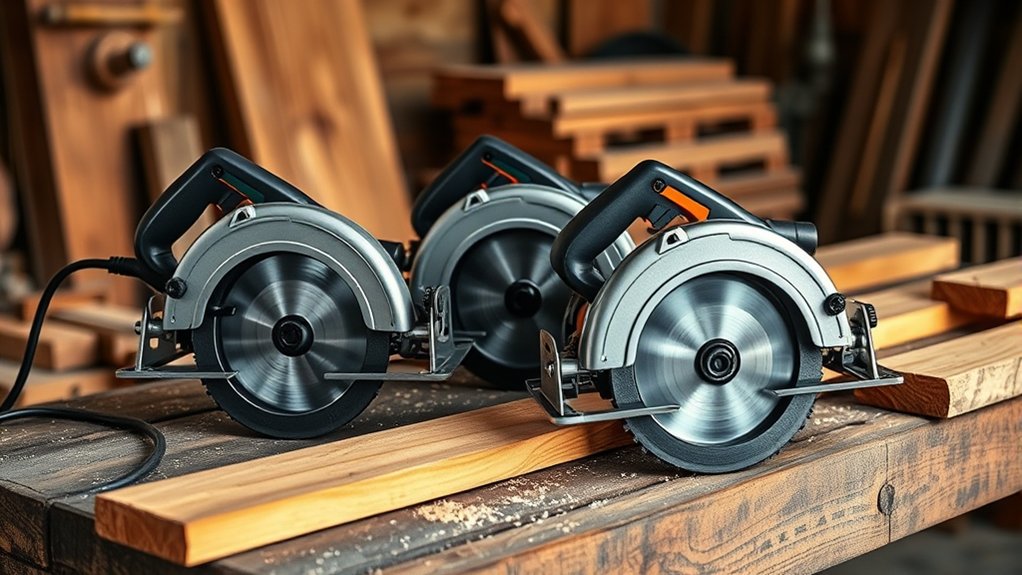
When thick lumber, sheet goods, or dense composites are on the cutting list, a corded circular saw delivers steady power without battery limits. Choose a high-powered model with a 7-1/4-inch or larger blade, enough cutting depth for your stock, and a durable motor that won’t bog down under load.
Prioritize blade accuracy when comparing saws. Look for a rigid shoe, clear sightlines, dependable bevel adjustments, and positive depth stops. These features help you follow marked lines and maintain consistent cuts through thick material. A dust port can improve visibility and reduce cleanup, especially indoors.
Safety features matter, too. An electric brake, blade guard, lockout switch, and comfortable trigger reduce risk during demanding cuts. Select a balanced saw with an ergonomic handle so you can control it confidently.
Use the correct blade for plywood, hardwood, or composites, secure your workpiece, and let the motor reach full speed before advancing steadily through the cut.
Best Corded Grinders for Metalwork
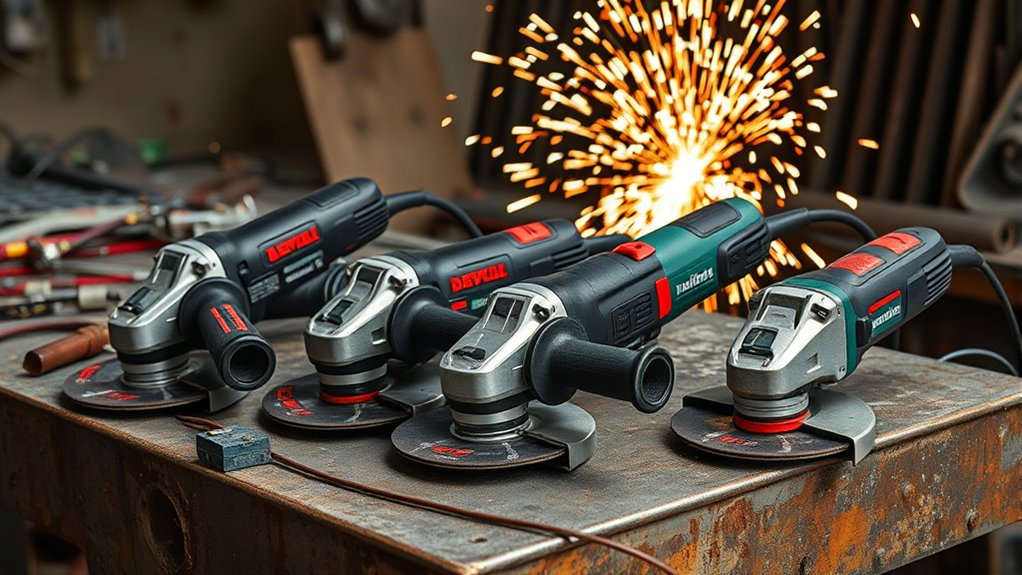
Choose a corded angle grinder with a powerful motor, a durable gearbox, and a disc size suited to your metalwork. For cutting thick steel, select a model with high amperage and consistent speed under load.
Choose a corded angle grinder with a powerful motor, durable gearbox, and disc size suited to your metalwork.
A 4½-inch grinder offers control for detailed work, while a 7-inch model removes material faster across larger surfaces. Look for safety features such as a paddle switch, spindle lock, adjustable guard, soft start, and overload protection.
You’ll work longer and more accurately with an ergonomic design, including a slim housing, rubberized grips, and a side handle that mounts on either side. Variable-speed control helps you polish, deburr, or grind without overheating delicate surfaces.
Match each task with the correct abrasive disc: cutting wheels for separation, grinding wheels for shaping, flap discs for blending, and wire wheels for rust removal.
Always wear eye and hearing protection, secure your workpiece, and let the wheel reach full speed before contact. Inspect discs before every use and replace damaged ones immediately.
Best Corded Reciprocating Saws for Demolition
A corded reciprocating saw gives you the sustained power needed to cut through lumber, metal pipe, drywall, and other demolition materials. For reliable jobsite performance, choose a model with a comfortable grip, tool-free blade changes, an adjustable shoe, and variable-speed control.
These features help you guide cuts through tight spaces and different materials without unnecessary strain. Match each blade to the task: use coarse teeth for wood, fine teeth for metal, and specialized blades for nail-embedded boards.
Safety precautions protect you during aggressive cutting. Wear eye, hearing, and respiratory protection, secure loose clothing, and inspect the work area for hidden wiring, plumbing, or fasteners.
Keep both hands on the saw, maintain stable footing, and disconnect power before changing blades.
Maintenance tips include cleaning dust from vents, checking the cord for damage, tightening loose components, and replacing worn blades promptly.
Store the saw dry, and let it cool after extended demolition sessions to preserve dependable operation.
Compare Power, Capacity, and Durability
Compare corded reciprocating saws by amperage, cutting capacity, and build quality to match the tool to your demolition workload. Choose a 12-amp model for routine renovation, or step up to 15 amps when you’ll cut thick lumber, pipe, or masonry continuously.
Check the stated cutting depth and stroke length. Greater capacity lets you finish faster with fewer repositioning stops.
- Power: Higher amperage sustains speed under heavy loads.
- Capacity: Long strokes and deep throats handle larger materials.
- Durability: Reinforced housings and metal gear assemblies withstand jobsite abuse.
- Control: Variable-speed triggers improve accuracy around finished surfaces.
- Comfort: An ergonomic design reduces hand fatigue during extended cuts.
Don’t judge performance by amperage alone. A balanced saw transfers power efficiently, while an energy-efficient tool produces less wasted heat during demanding sessions.
Look for a sealed switch, tool-free blade clamp, and replaceable brushes to simplify maintenance. Compare warranty coverage, vibration control, and cord quality, too.
The best saw combines sufficient power with manageable weight, dependable construction, and the capacity your demolition tasks actually require.
Frequently Asked Questions
Are Corded Power Tools Safer Than Cordless Models for Continuous Heavy-Duty Work?
Corded power tools aren’t automatically safer than cordless models for continuous heavy-duty work. You’ll avoid battery limitations, such as depleted cells, heat buildup, and charging interruptions, while gaining consistent power.
However, cords create mobility concerns, including trip hazards, accidental cuts, and limited reach. You’ll work most safely by using grounded outlets, residual-current protection, inspected cables, proper ventilation, and appropriate protective equipment.
Choose the model that best matches your workspace, task, and safety controls.
What Extension Cord Gauge Is Recommended for High-Powered Corded Tools?
For high-powered corded tools, choose a 12-gauge extension cord for runs up to 100 feet, and use 10-gauge for longer distances or tools drawing substantial current. Check your tool’s amperage and the cord’s rated capacity to guarantee power compatibility.
Extension gauge matters because thinner cords can overheat, reduce performance, or damage motors. Don’t use household light-duty cords; select a grounded, outdoor-rated cord matching your tool’s plug and electrical requirements.
How Should Corded Power Tools Be Maintained and Stored?
Maintain corded power tools by unplugging them before cleaning, inspecting cords for cuts, checking switches, tightening loose parts, and following the manufacturer’s lubrication schedule. Keep ventilation openings clear of dust, and replace damaged components promptly.
For effective cording power tools maintenance, don’t use frayed cords or bypass safety features. When storing corded tools, wipe them dry, coil cords loosely, protect blades, and place everything in a clean, dry cabinet away from moisture, heat, and children.
Can Corded Power Tools Be Used With Generators or Portable Power Stations?
Yes, you can run corded power tools from generators or portable power stations. Imagine finishing an urgent repair during an outage because your generator keeps your saw running.
Check generator compatibility first: match the tool’s wattage, starting surge, voltage, and frequency with the generator’s output. For power station usage, choose a model with sufficient continuous and peak wattage, pure sine-wave AC, and grounded protection.
Follow manufacturer instructions, and never overload either device.
What Protective Equipment Should Operators Wear When Using Corded Power Tools?
You should wear appropriate Personal protective equipment whenever you operate corded power tools. Protect your eyes with safety glasses or a face shield, and use hearing protection around loud equipment.
Wear a dust mask or respirator when cutting or sanding materials, plus sturdy, slip-resistant footwear. Add gloves suited to the task, avoiding loose clothing or jewelry.
Follow workplace safety protocols, inspect equipment first, and keep hair secured away from moving parts.
Conclusion
When you’re tackling heavy-duty work, the right corded tool keeps performance consistent from start to finish. Choose a drill for demanding holes, a circular saw for thick materials, a grinder for metalwork, or a reciprocating saw for demolition.
Compare each model’s power, cutting capacity, ergonomics, and durability before buying. Corded tools deliver uninterrupted runtime, which is especially valuable since construction equipment can consume thousands of watts under load.
Match the tool to your task, and you’ll work faster, safer, and with fewer interruptions. With the right corded power tools for heavy-duty jobs, you can handle demanding projects with confidence.