How to Clean Your Car Engine in 5 Easy Steps
How to Clean Your Car Engine can feel like a daunting task, and if you’re like many people, you might struggle to know where to start without causing damage. You’re not alone—keeping your engine looking clean while avoiding costly mistakes is a common challenge.
Luckily, with the right approach, you can make the process simple and effective.
To clean your car engine in five easy steps, first make sure the engine is cool, remove loose debris, and protect electrical parts with covers. Next, gather soft brushes, a water-based degreaser, and microfiber cloths. Then, loosen dirt with a brush before scrubbing grime gently, especially around oil caps. Rinse carefully using a gentle water stream, keeping electronics dry, and dry everything thoroughly.
Follow these steps, and you’ll reveal tips to make your engine shine safely and effectively.
How to Clean Your Car Engine Key Takeaways
- Ensure the engine is cool before you start. Remove any debris, tighten the oil cap, and cover electrical parts to protect them.
- Gather soft brushes, microfiber cloths, and a water-based engine degreaser. These tools will help you clean safely without damaging components.
- Use a soft brush or compressed air to remove loose dirt and leaves. Focus on clearing vents and surfaces for better cleaning results.
- Apply the degreaser gently with a brush, especially on greasy spots. Avoid scrubbing electrical parts too hard to prevent damage.
- Rinse carefully with a gentle stream of water. Then dry thoroughly with towels or compressed air, and allow the engine to air dry completely.
Get Your Car Engine Ready for Cleaning
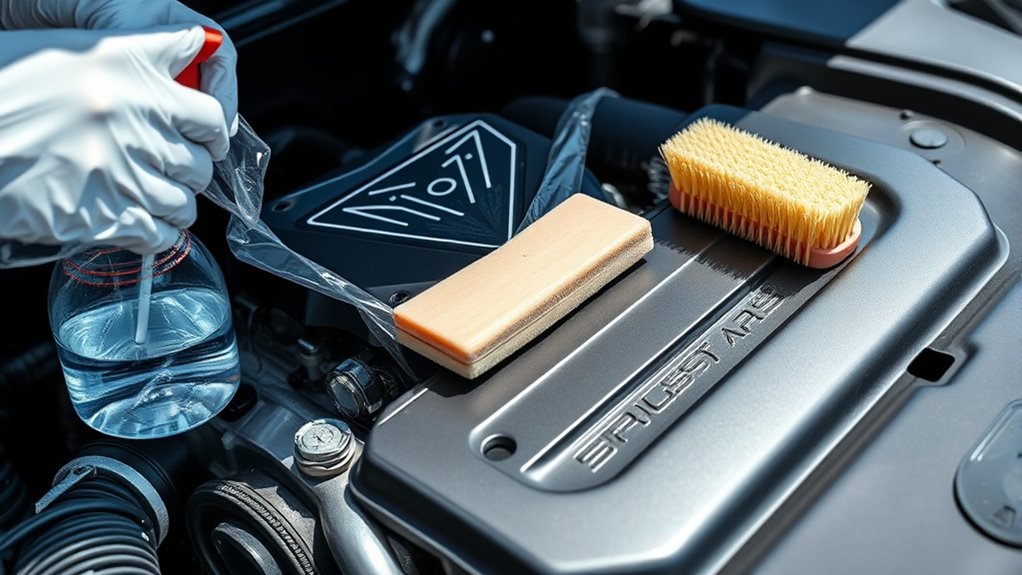
Before you begin cleaning, make sure your engine is cool to avoid burns and damage. Once cooled, remove any loose debris or leaves from the engine bay.
Always ensure your engine is cool before cleaning, then clear out any loose debris or leaves.
Check the engine oil cap and make sure it’s tightly sealed to prevent water from getting inside during cleaning. Next, inspect the battery for corrosion around the terminals. If you spot any corrosion, gently clean it off with a mixture of baking soda and water to prevent electrical issues.
Cover sensitive electrical components, like the battery and exposed wiring, with plastic bags or aluminum foil to keep them dry. Also, close the air intake and any open filters to avoid water intrusion.
Taking these steps will protect your engine’s essential parts and prepare it for a safe, effective cleaning. This way, you won’t cause damage or create problems like engine oil contamination or battery corrosion during the process.
Choose the Best Tools and Cleaners for Your Engine
When you’re ready to clean your engine, choosing the right tools and cleaners makes all the difference in achieving a thorough yet safe result. For effective engine detailing, you’ll want to gather basic supplies like soft brushes, microfiber cloths, and a spray bottle. These tools help you reach tight spots without causing damage.
Chemical selection is just as important. Pick a degreaser specifically designed for engines to break down grime without harming sensitive parts. Avoid harsh chemicals that can corrode metal or deteriorate rubber hoses. Water-based cleaners are a good choice for their safety and eco-friendliness.
Also, consider a plastic-safe protectant to restore shine after cleaning. By using the right combination of tools and carefully selected chemicals, you’ll not only improve your engine’s appearance but also protect its components. This approach guarantees your cleaning process is efficient and preserves your engine’s longevity.
Remove Loose Dirt and Debris Before Cleaning
Although it might seem simple, removing loose dirt and debris is an essential first step that prepares your engine for a deeper clean. Before you start, perform a thorough engine bay inspection to spot any fragile parts or exposed wiring.
Engine compartment safety is critical, so make sure the engine is cool and disconnected from the battery.
Here’s how to remove dirt and debris effectively:
- Use a soft brush or compressed air to dislodge loose dirt from the engine surface.
- Clear leaves and twigs from vents, crevices, and around the battery.
- Wipe down plastic and metal parts with a microfiber cloth to lift dust.
- Inspect again to confirm no debris remains that could interfere with cleaning.
Clean and Scrub Your Car Engine Properly
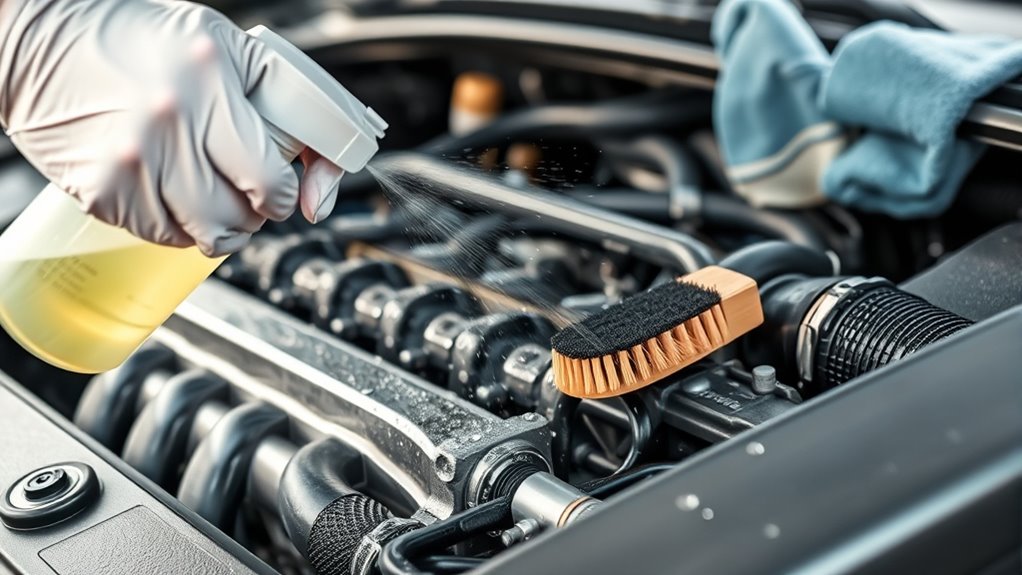
Since your engine is free of loose dirt, you can start cleaning and scrubbing it effectively without risking damage to sensitive parts. Use a soft brush and a degreaser designed for engines to gently scrub away grime, especially around the engine oil cap and cooling system components. Avoid harsh scrubbing near electrical parts.
Focus on areas where engine oil leaks or dust accumulates. Scrubbing helps prevent buildup that could interfere with the cooling system’s efficiency. Remember to work patiently and avoid applying too much pressure.
| Area to Clean | Recommended Tool |
|---|---|
| Engine oil cap area | Soft-bristle brush |
| Cooling system fins | Small detailing brush |
| General engine block | Microfiber cloth |
Rinse and Dry Your Engine to Avoid Damage
Before rinsing, make sure you’ve covered sensitive electrical components with plastic bags or waterproof covers to prevent damage. Once everything’s protected, you can safely rinse away the dirt and grime without risking engine overheating or making oil leaks worse.
Follow these steps to rinse and dry your engine properly:
- Use a gentle stream of water to rinse off soap and debris, avoiding high pressure that could force water into sensitive areas.
- Check for lingering soap spots and rinse again if needed to prevent residue buildup.
- Use a microfiber towel or compressed air to dry the engine surface thoroughly, paying special attention to electrical parts.
- Let your engine air dry completely before starting your car to prevent short circuits and reduce the risk of engine overheating.
Frequently Asked Questions
How Often Should I Clean My Car Engine?
You should clean your car engine every 1 to 2 years, depending on how often you drive and the conditions. Regular engine degreasing helps prevent grime buildup and keeps everything running smoothly.
Don’t forget battery maintenance during cleaning. Cover the battery terminals to avoid water damage. If you drive in dusty or muddy areas, you might need to clean it more often.
Staying consistent will extend your engine’s life and performance.
Can Engine Cleaning Improve Fuel Efficiency?
Yes, cleaning your engine can improve fuel efficiency by removing dirt and grime that hinder engine performance. When your engine runs cleaner, it operates more smoothly, helping fuel burn more efficiently.
This means you’ll get better mileage and reduce emissions. Plus, maintaining a clean engine prevents buildup that can cause overheating or wear. So, by keeping your engine clean, you’re actively boosting both fuel efficiency and overall engine performance.
Is It Safe to Use a Pressure Washer on All Engines?
You shouldn’t use a pressure washer on all engines. It’s like inviting a hurricane into your engine bay! Pressure washer risks include forcing water into sensitive electrical components, causing engine damage or corrosion.
If your engine isn’t designed to handle high-pressure water, you could end up with costly repairs. Instead, use gentle cleaning methods or cover essential parts before spraying.
Always check your car’s manual to avoid these risks and keep your engine safe.
What Precautions Should I Take After Cleaning the Engine?
After engine degreasing, you should avoid starting your car immediately to let everything dry thoroughly. Use chemical precautions by rinsing off any leftover degreaser to prevent damage.
Check electrical connections and cover sensitive parts next time to avoid moisture buildup. Wipe down surfaces to remove residue, and inspect for leaks. Taking these steps guarantees your engine stays clean without causing harm or corrosion.
Can Engine Cleaning Void My Car Warranty?
About 30% of warranty claims related to engine problems stem from improper cleaning. So, yes, engine cleaning can void your car warranty if it causes engine corrosion or electrical issues.
If water or cleaning agents seep into sensitive parts, manufacturers might reject warranty claims. To avoid this, you should always use gentle methods and avoid high-pressure sprays near electrical components. Taking care prevents costly damage and keeps your warranty intact.
Conclusion
So, now that you’re basically a car engine whisperer, don’t forget: your engine isn’t a swimming pool, so no cannonballs! Follow these steps, and you’ll avoid turning your car into a soggy, smokey mess.
Cleaning your engine isn’t rocket science, just a little elbow grease, patience, and a sprinkle of common sense. Who knew getting your hands dirty could make your car purr like a kitten instead of cough like a grumpy old man?
Remember, keeping your engine clean is key to maintaining its performance and longevity. With these tips, cleaning your car engine becomes an easy and rewarding task.