How to Check Engine Oil in Your Car in 7 Simple Steps
Checking your engine oil regularly is something many car owners struggle with, and if you’re one of them, you’re not alone. It can feel confusing or intimidating, especially if you aren’t sure what to look for or why it matters. But keeping an eye on your engine oil is essential to avoid costly repairs and keep your car running smoothly.
First, open your hood and locate the dipstick with the brightly colored handle and the oil cap labeled with the oil type. Make sure your engine is off, cooled, and parked on level ground.
Pull out the dipstick, wipe it clean, reinsert fully, then remove again to check the oil level and color.
Keep your oil within the recommended marks and assess its condition for any discoloration or contaminants. Follow these steps to maintain your engine’s health, with tips ahead to guide you further.
Key Takeaways
- Park the car on level ground, turn off the engine, and wait at least 10 minutes for the oil to settle and cool.
- Open the hood, locate the dipstick with a brightly colored handle, and carefully remove it.
- Wipe the dipstick clean with a cloth, reinsert it fully, then pull it out again to check the oil level.
- Make sure the oil level is between the minimum and maximum marks. Also, take a look at the oil’s color and condition.
- Finally, reinsert the dipstick securely, close the hood, and follow the vehicle manual for regular oil checks and maintenance.
Find Your Car’s Dipstick and Oil Cap
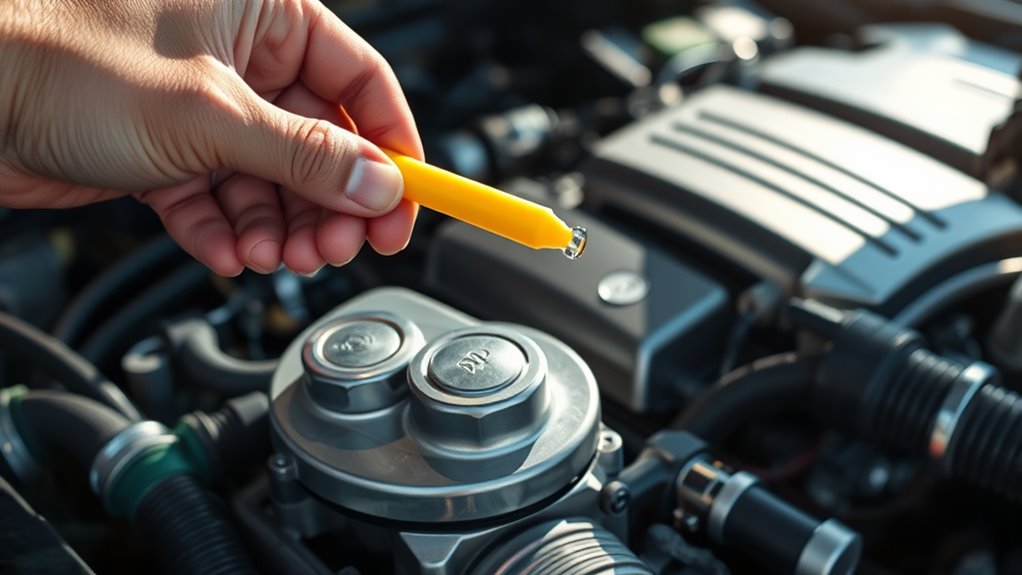
Before you check your engine oil, you’ll need to locate the dipstick and oil cap under the hood. Open the hood and look for a brightly colored handle, usually yellow or orange. That’s the dipstick. It’s designed to be easy to spot since you’ll use it regularly.
Locate the brightly colored dipstick under the hood before checking your engine oil level.
The oil cap is typically round with an oil can symbol on it and is often labeled with the recommended oil type. Make sure you’re aware of your engine compatibility before adding or checking oil, because using oil not suited for your engine can cause damage.
Always refer to your vehicle’s manual or the oil manufacturer’s guidelines to confirm the right oil type. Finding these parts quickly helps you maintain your car properly and prevents mistakes in oil selection.
Once you’ve identified the dipstick and oil cap, you’re ready to proceed with checking your engine oil level accurately.
Prepare Your Engine for an Accurate Oil Check
Although you can check your engine oil anytime, getting the most accurate reading means preparing your engine properly. First, make sure your engine is turned off and has cooled down for at least 10 minutes. This allows the engine temperature to drop, so the oil settles back into the oil pan.
Checking oil when the engine is hot can give you a falsely low reading because some oil remains circulating. Also, perform your check in a comfortable setting, like inside your car’s cabin or a shaded area, to maintain comfort, especially on extreme weather days.
Avoid checking oil immediately after driving long distances, as the engine will be too hot and may cause burns or inaccurate results. By preparing your engine this way, you guarantee a precise oil level measurement, helping you maintain your car’s performance and avoid potential damage.
Remove and Clean the Dipstick Properly
How exactly do you remove and clean the dipstick to get an accurate oil reading? First, locate the dipstick, usually marked with a bright handle near the oil filter. With the engine off and at a normal engine temperature, pull the dipstick out slowly to avoid spills.
Wipe it clean with a lint-free cloth or paper towel to remove any oil residue. This step is crucial because leftover oil can give you a false reading.
Once clean, reinsert the dipstick fully into its tube, ensuring it seats properly to avoid contamination. Pull it out again to check the oil level accurately.
Check the Oil Level and Color Carefully
Now that you’ve cleaned the dipstick, take a look at where the oil level sits between the indicators. If it’s too low or too high, that can cause problems. Then, check the oil’s color—clean oil should be amber. If it looks dark or gritty, it’s definitely time for a change. Keeping an eye on these signs helps your engine run smoothly.
Oil Level Indicators
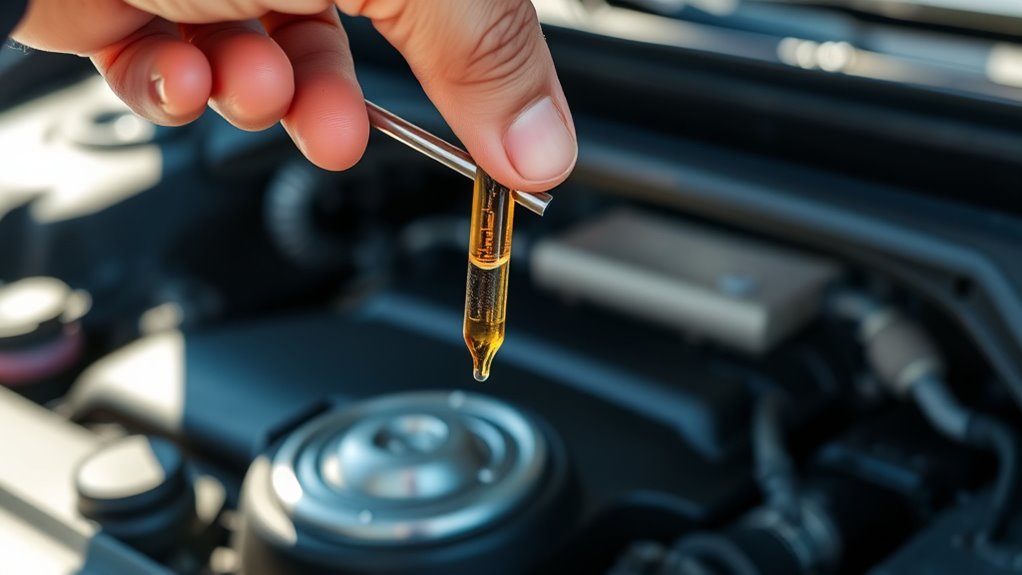
Where should you look to accurately assess your engine oil’s condition? Start with the oil level indicator, usually a dipstick marked with minimum and maximum lines. Pull it out, wipe it clean, reinsert fully, then remove again to check the oil level.
If it’s near or below the minimum mark, your engine may be experiencing excessive oil consumption, which needs attention. Proper oil filtration prevents contaminants from degrading performance, so maintaining the right oil level is essential.
Some modern cars also have electronic oil level sensors that display readings on the dashboard or infotainment screen. Always refer to your owner’s manual to understand your vehicle’s specific indicators.
Keeping a close eye on these oil level indicators helps prevent engine damage and guarantees your car runs smoothly.
Assessing Oil Color
Although checking the oil level is essential, you should also pay close attention to the oil’s color. It reveals important information about its condition. Fresh oil usually has a clear, amber hue, indicating good oil absorption and lubrication capacity.
However, as the oil ages, color degradation occurs due to heat, contaminants, and oxidation. Dark or black oil suggests it’s time for a change, as it may no longer protect your engine effectively. If you notice a milky or frothy appearance, it could indicate coolant mixing with the oil, a serious issue requiring immediate attention.
What Your Oil Level Tells You (Including Oil Condition)
Your oil level gives you a clear sign of how well your engine is running and if it needs more oil. It’s a simple check, but it tells you a lot about what’s going on under the hood.
Also, take a moment to look at the oil’s condition—its color and texture. This can help you spot potential issues early before they become bigger problems.
Oil Level Importance
Because engine oil lubricates and cools essential components, keeping the right oil level is important for your car’s performance and longevity. If your oil level is too low, parts won’t get enough lubrication, increasing friction and wear. Too much oil can cause pressure buildup and damage seals.
Monitoring oil consumption helps you spot leaks or engine issues early. Remember, your oil filter plays a key role by removing contaminants, so it affects how well your oil circulates and protects the engine.
Checking the oil level regularly guarantees the oil filter isn’t overwhelmed and the engine runs smoothly. Maintaining the proper oil level prevents costly repairs and keeps your car reliable, so don’t overlook this simple but essential task in your routine maintenance.
Assessing Oil Condition
How can you tell if your engine oil is still doing its job effectively? First, check the oil’s color and consistency on the dipstick. Fresh oil is amber and clear, while old oil looks dark and gritty, indicating contaminants that oil filtration hasn’t fully removed.
If the oil appears thick or sludgy, it’s time to change it to prevent engine wear. Maintaining clean oil supports proper lubrication, directly impacting engine longevity.
Also, notice if the oil level is consistently low, which might signal leaks or burning oil. Both are harmful over time.
Regularly assessing your oil condition helps you catch issues early, ensuring your engine runs smoothly and lasts longer. Don’t ignore these signs; healthy oil means a healthier engine.
How to Add Engine Oil Safely If Needed
If the oil level is low, you’ll need to add oil carefully to avoid overfilling. First, use the type recommended in your owner’s manual. Synthetic blends are often preferred for their durability and performance. Avoid mixing different oil types unless specified.
Remove the oil filler cap and slowly pour in small amounts, checking the dipstick frequently to monitor the level. Stop once it reaches the full mark. Overfilling can cause engine damage, so take your time.
After adding oil, securely replace the cap to prevent leaks. Remember, proper disposal of used oil is essential. Participate in oil recycling programs to protect the environment and comply with local regulations.
Never pour old oil down drains or on the ground. By adding oil correctly and responsibly, you help maintain your engine’s health and reduce environmental impact.
Track Your Oil Checks to Maintain Engine Health
Adding oil correctly is only part of keeping your engine in good shape; tracking your oil checks helps you stay ahead of potential issues. Each time you check your oil, jot down the date, mileage, and oil level. This record lets you spot trends like rapid oil loss or color changes, which could indicate problems with the oil filter or engine temperature fluctuations.
If your engine runs hotter than usual, the oil can break down faster, so frequent monitoring becomes vital. Also, keeping track guarantees you don’t miss timely oil changes or oil filter replacements, both essential for maintaining engine performance.
Frequently Asked Questions
How Often Should I Change My Engine Oil Completely?
You should change your engine oil based on oil change intervals recommended in your owner’s manual. Typically, synthetic oil lasts longer, around 7,500 to 10,000 miles, while conventional oil needs changing every 3,000 to 5,000 miles.
If you use synthetic, you can extend the time between changes, but don’t ignore signs like dirty oil or engine noise. Sticking to these intervals keeps your engine running smoothly and protects it from wear.
What Type of Engine Oil Is Best for My Car?
It just so happens that the best engine oil for your car depends on what the manufacturer recommends. You’ll want to choose synthetic oil for better performance and longer intervals between changes.
Pay close attention to oil viscosity. Those numbers like 5W-30 matter because they affect how the oil flows in different temperatures.
Check your owner’s manual to match the right synthetic oil viscosity, ensuring your engine runs smoothly and efficiently.
Can I Check Engine Oil With the Engine Running?
You shouldn’t check engine oil with the engine running because engine oil temperature will be high, affecting the accuracy of the reading. When the engine runs, oil viscosity changes, making the oil thinner and harder to measure properly.
For the best results, turn off your car and wait a few minutes to let the oil settle and cool slightly. This way, you’ll get a more accurate oil level and condition check.
What Are Signs of Engine Oil Leaks?
If you spot dark puddles beneath your car like spilled ink, that’s a clear sign of an oil leak. You might also notice a burning smell or smoke from the engine bay.
Oil leak causes often include worn gaskets or damaged seals. To catch leaks early, use leak detection methods like UV dye tests or simply inspect the engine for wet, oily spots.
Don’t ignore these signs; they’re your car’s way of waving a red flag.
How Does Engine Oil Affect Fuel Efficiency?
Engine oil affects fuel efficiency because its viscosity influences how smoothly your engine parts move. If the oil is too thick or too thin, it creates more friction, making your engine work harder and use more fuel.
Also, oil viscosity changes with engine temperature. When your engine’s hot, proper viscosity keeps everything lubricated efficiently. Using the right oil viscosity helps maintain ideal engine temperature and fuel economy, so you get better mileage.
Conclusion
Checking your engine oil regularly isn’t just a chore; it’s like giving your car a life-saving hug. By following these simple steps, you’ll guarantee your engine runs smoothly and avoid costly repairs that feel like they drain your wallet forever.
Keep track of your oil checks, and don’t hesitate to add oil when needed. With just a little attention, you’ll keep your car happy and healthy for miles to come.
Remember, knowing how to check engine oil in your car is key to maintaining its performance and longevity.