How to Fill Engine Oil in Your Car in 3 Easy Steps
If you’ve ever struggled with keeping your car’s engine running smoothly, you’re not alone. Many people find it confusing or intimidating to fill engine oil properly. But mastering this simple maintenance task can save you time, money, and prevent costly engine damage.
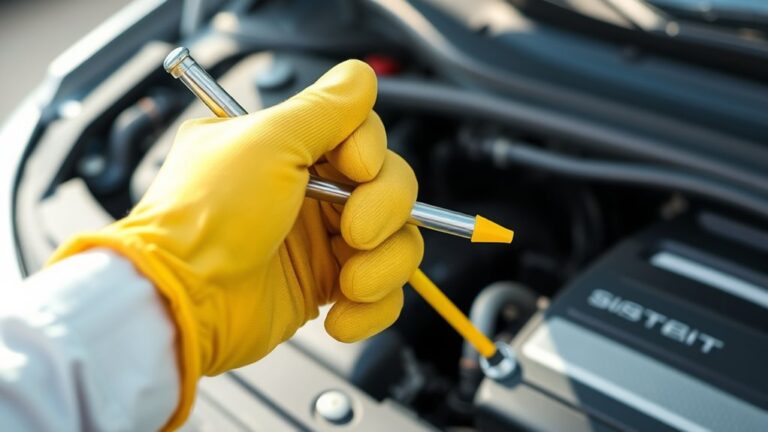
First, check your engine oil level by parking on a flat surface, turning off the engine, and using the dipstick to guarantee it’s below the minimum mark.
Next, pick the right oil type and viscosity based on your car manual, and gather tools like a funnel and rags.
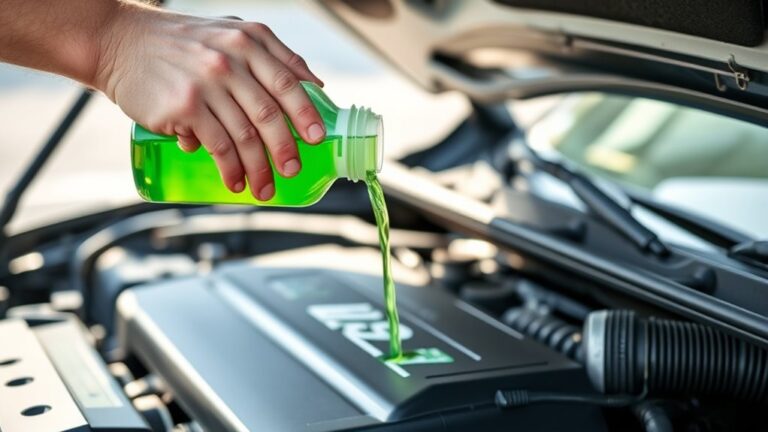
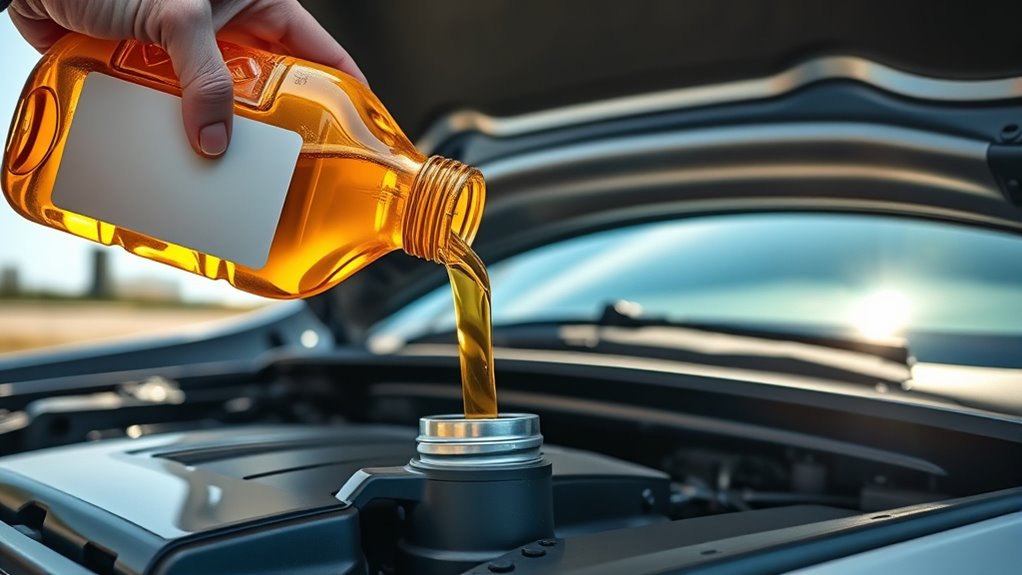
Finally, pour the oil slowly with a funnel, topping up until the level is correct.
Keep following these steps, and you’ll quickly master proper oil filling to protect your engine.
Key Takeaways
- Park the car on a level surface, turn off the engine, and wait a few minutes for the oil to settle.
- Remove the dipstick, wipe it clean, reinsert fully, then pull out to check the current oil level.
- Use a funnel to slowly pour the recommended oil type until the oil level reaches the proper mark on the dipstick.
- Securely replace the oil cap to prevent leaks and wipe any spilled oil around the engine area.
- Start the engine for a minute, then recheck the oil level with the dipstick to confirm it’s correctly filled.
Check Your Car’s Engine Oil Level
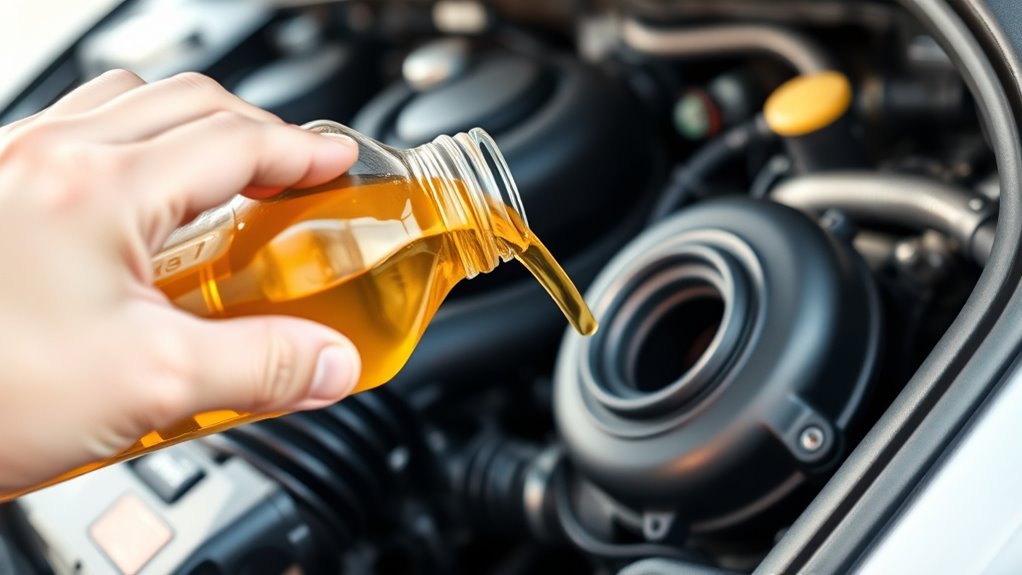
Before you add any oil, you’ll want to check your car’s engine oil level to make sure it actually needs topping up. Start by parking your car on a level surface and turning off the engine. Wait a few minutes for the oil to settle. Then, pull out the dipstick, wipe it clean, reinsert it fully, and pull it out again to check the oil level. If the oil is below the minimum mark, it’s time to add more.
Knowing the right engine oil types for your vehicle is essential, but before that, verifying the current oil level makes sure you don’t overfill. Also, keep in mind the oil filter importance. It helps trap contaminants, keeping the oil clean and your engine running smoothly. Regular checks prevent damage and maintain performance, so don’t skip this simple step before you decide to top up your engine oil.
Pick the Right Engine Oil and Tools
Once you’ve confirmed that your engine oil level is low, the next step is selecting the right oil and gathering the necessary tools. Start by checking your car’s manual to find the recommended oil viscosity. This guarantees your engine runs smoothly under various temperatures.
You’ll also need to decide between synthetic and mineral oil. Synthetic oil offers better performance and longevity, especially in extreme conditions. Mineral oil is more affordable but requires more frequent changes.
Next, gather the tools you’ll need: a clean funnel to avoid spills, a wrench if you plan to remove the oil cap carefully, and some rags for quick cleanups. Having these ready will make the oil filling process easier and cleaner.
Choosing the right oil and prepping properly not only protects your engine but also saves you time and hassle during maintenance.
Pour the Oil Safely and Wrap Up
Since you’ve gathered the right oil and tools, you can start pouring the oil carefully into the engine. Use a funnel to avoid spills and pour slowly to let the oil settle evenly. Remember to check the oil viscosity specified in your owner’s manual to guarantee peak performance and protection. Using the correct viscosity helps your engine run smoothly in different temperatures.
As you pour, keep an eye out for any unusual debris or discoloration in the oil, which could indicate engine issues. Many modern oils contain additives that improve engine cleanliness and reduce wear, so choosing the right type benefits your engine’s longevity.
Once you’ve added the recommended amount, replace the oil cap securely to prevent leaks. Wipe any spilled oil from the engine area. Finally, start the engine and let it run a minute, then check the dipstick to confirm the oil level is correct. You’re all set!
Frequently Asked Questions
How Often Should I Change My Car’s Engine Oil?
You should change your car’s engine oil every 3,000 to 5,000 miles, but always check your owner’s manual for specific recommendations. Using the right oil viscosity is essential for maximum engine performance. High-quality oil additives can extend oil life by reducing wear and keeping the engine clean.
If you drive in extreme conditions, consider changing oil more often to protect your engine and maintain efficiency.
What Are the Signs of Low Engine Oil?
Think of your engine oil as the lifeblood flowing through your car’s veins. When oil viscosity drops or oil contamination creeps in, it’s like the blood thickening or getting polluted.
You’ll notice warning lights, engine noise, or overheating. These are clear signs of low engine oil. If you feel your car’s performance lagging or see smoke from the exhaust, don’t ignore it.
Acting quickly protects your engine’s health and keeps it running smoothly.
Can I Mix Different Brands of Engine Oil?
You can mix different brands of engine oil, but you need to check brand compatibility first. Most oils meet industry standards, so mixing usually isn’t harmful if both oils have the same viscosity grade.
However, sticking to one brand guarantees maximum performance and protection. If you’re in a pinch, matching oil viscosity is more important than brand, but always top off with the recommended oil type for your car to avoid engine issues.
What Happens if I Overfill the Engine Oil?
If you overfill the engine oil, you risk causing oil foaming, which reduces lubrication and increases wear. Excess oil can also lead to increased pressure, potentially damaging seals and causing leaks.
Overfilled oil mixes with air, affecting oil viscosity and leading to poor engine performance. Plus, oil contamination becomes more likely as the crankshaft churns the oil excessively, degrading its protective properties.
Is Synthetic Oil Better Than Conventional Oil?
Yes, synthetic oil is generally better than conventional oil because it offers several synthetic advantages. You’ll benefit from improved engine protection, better performance in extreme temperatures, and longer oil change intervals.
Conventional limitations include faster breakdown and less resistance to sludge buildup. If you want your engine to run smoother and last longer, synthetic oil is usually the smarter choice, especially if you drive in harsh conditions or want to extend maintenance intervals.
Conclusion
Filling your car’s engine oil might seem tricky, but it’s easier than you think. Don’t worry about making a mess. Just imagine a clean, steady pour with no spills, like filling a glass of water at the sink.
By checking your oil level first and choosing the right type, you’ll keep your engine running smoothly. With these simple steps, you’ll save time and avoid costly repairs.
Giving your car the care it deserves is easy when you know how to fill engine oil in your car.