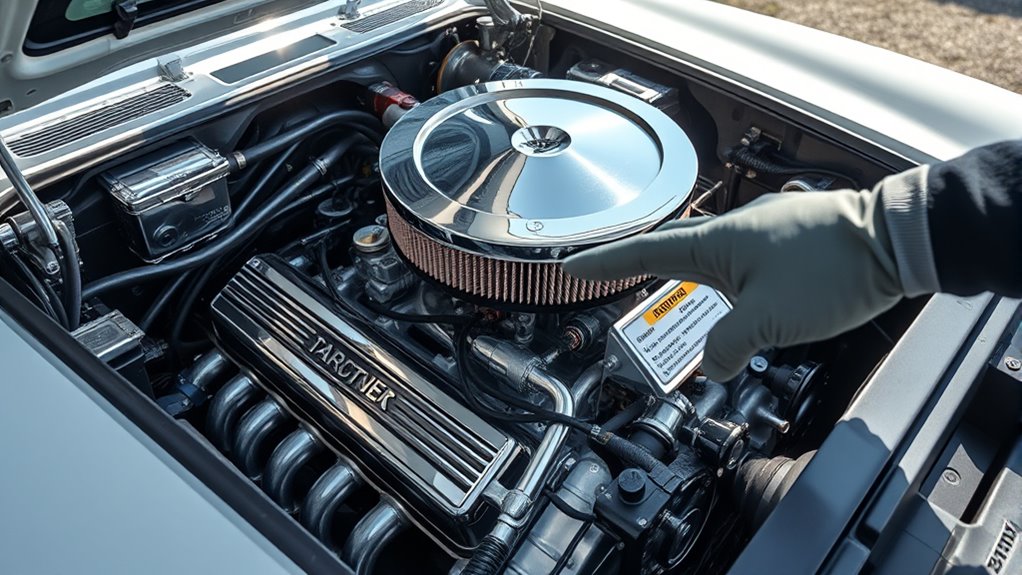
10 Steps to Know What Type of Engine My Car Has
Figuring out what type of engine your car has can feel overwhelming, especially if you’re not a car expert. You’re not alone—many people struggle with identifying engine details, which can make maintenance or upgrades confusing.
But understanding your engine is key to keeping your car running smoothly and making the right choices for repairs.
You can identify your car’s engine type by first locating its Engine Identification Number, usually stamped on the block, and checking emission labels under the hood.
Consult your owner’s manual for specs, then count cylinders to determine layout: inline, V, or flat.
Decode the engine code online or with a diagnostic scanner, and verify all details against manufacturer data.
If you want to guarantee proper maintenance or upgrades, understanding these steps will guide you further.
Key Takeaways
- Locate the Engine Identification Number (EIN) stamped on the engine block. This will help you identify your engine type and its specifications.
- Check emission labels under the hood. They usually show engine displacement, fuel type, and environmental compliance details.
- Consult the owner’s manual and manufacturer’s specs. These sources offer accurate engine information and recommended maintenance.
- Count cylinders and identify the engine layout by inspecting spark plugs or ignition coils under the hood.
- Use diagnostic scanners or ask a mechanic to retrieve detailed engine data. Then, verify this information against manufacturer specifications.
Locate Your Engine Identification Number
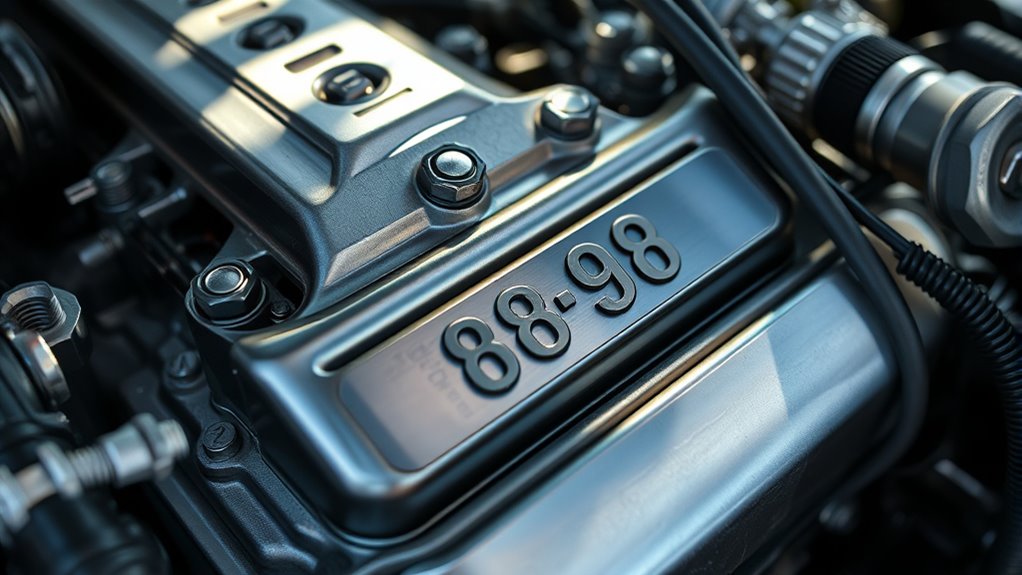
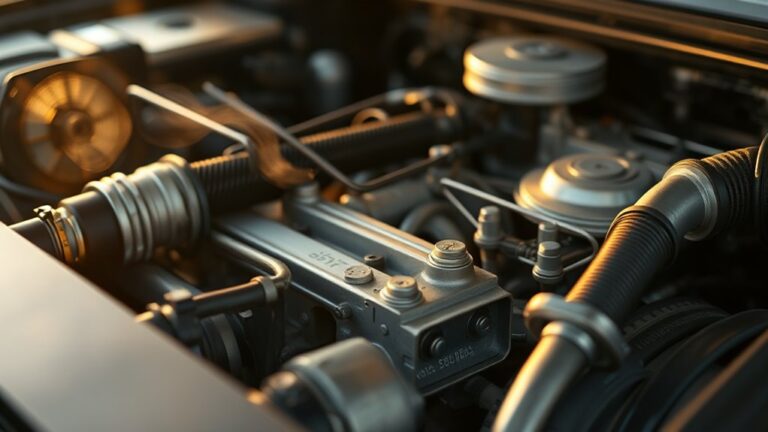
Where can you find your engine identification number? Typically, it’s stamped directly onto the engine block, often near the front or on the side, where it’s visible without too much hassle. You might need to remove a cover or look around the engine bay carefully.
This number is vital because it helps you verify your engine type accurately, which matters for engine maintenance and optimizing car performance. Knowing the exact engine model ensures you buy the right parts and schedule proper service intervals.
If you overlook this step, you risk using incompatible parts or missing important updates that keep your engine running smoothly. Take a flashlight and a rag to clean the area if it’s dirty. This will make the number easier to read.
Check the Owner’s Manual for Engine Details
Although locating your engine identification number is essential, you should also check your owner’s manual for detailed engine information. The manual provides specific data that helps you understand your engine’s needs and maintenance requirements.
Here’s how to use it effectively:
- Look up the engine specifications section to find exact engine type and displacement.
- Check recommended engine oil types and viscosity grades tailored for your engine.
- Review coolant levels and maintenance guidelines to keep your engine running cool and prevent overheating.
- Note any special instructions or warnings related to engine care and performance.
Find and Decode Your Engine Code
After checking your owner’s manual for engine details, the next step is to locate your engine code on the vehicle itself. This code, usually stamped on the engine block or found on a metal plate in the engine bay, provides specific information about your engine’s model and specs. You might find it near the front of the engine, close to the cylinder head, or on the firewall.
Once you’ve found the code, use your car manufacturer’s website or trusted online databases to decode it.
Understanding your engine code is crucial for effective engine maintenance because it helps you identify the exact parts and fluids your engine requires. It also plays a key role in optimizing car performance by ensuring you use compatible components during repairs or upgrades.
Identify Your Engine by Cylinder Count
One of the easiest ways to identify your engine type is by counting its cylinders. Knowing the cylinder count helps you understand your car’s performance, engine noise, and maintenance schedules. Here’s how to do it:
- Open the hood and locate the engine block. Cylinders are housed here.
- Count the spark plugs or ignition coils, as each cylinder has one.
- Listen to engine noise when running; more cylinders usually mean a smoother, quieter sound.
- Check your owner’s manual or engine label; it often lists the cylinder count directly.
Determine Your Engine Layout: Inline, V, or Flat
Counting your engine’s cylinders gives you a solid starting point, but understanding how those cylinders are arranged reveals even more about your engine’s design and performance. Your engine layout, whether inline, V, or flat, affects engine performance and maintenance schedules.
Inline engines have cylinders in a straight line, offering simplicity and easier maintenance. V engines arrange cylinders in two banks set at an angle, balancing power and compactness. Flat engines lay cylinders horizontally opposite each other, lowering the center of gravity for better handling.
Here’s a quick comparison:
| Engine Layout | Key Benefits |
|---|---|
| Inline | Simpler design, easier upkeep |
| V | Powerful, compact engine |
| Flat | Low center of gravity, balanced |
Knowing your engine layout helps you anticipate maintenance needs and understand how your car’s power is delivered. This insight ensures you optimize engine performance and keep up with the right service intervals.
Identify Your Engine’s Fuel Type
To figure out your engine’s fuel type, first see if it runs on gasoline, diesel, or maybe an alternative fuel like electricity or a hybrid system. You can usually spot this info right on the fuel cap or in your owner’s manual.
Knowing what kind of fuel your engine needs helps make sure it runs smoothly and stays compatible with how your car is designed. It’s a simple step that can save you from a lot of trouble down the road.
Common Fuel Types
How can you quickly tell what type of fuel your car’s engine uses? Knowing the common fuel types helps you understand your engine better, especially when considering fuel efficiency and engine noise. Here are four common fuel types you might encounter:
- Gasoline Most cars use this. It offers good fuel efficiency and moderate engine noise.
- Diesel Known for better fuel efficiency and louder engine noise compared to gasoline.
- Electric Runs on batteries, produces no engine noise, and has high energy efficiency.
- Hybrid Combines gasoline and electric power for improved fuel efficiency and quieter operation.
Recognizing these fuel types can help you make informed decisions about your car’s performance and maintenance needs.
Fuel Type Identification
Wondering how to pinpoint what type of fuel your car’s engine uses? Start by checking the fuel cap or owner’s manual, which often states the fuel type clearly. You can also notice differences in fuel efficiency and engine noise. Diesel engines tend to be louder but offer better fuel efficiency, while gasoline engines run quieter but may consume more fuel.
Here’s a quick guide to help you identify your engine’s fuel type:
| Fuel Type | Engine Noise | Fuel Efficiency |
|---|---|---|
| Gasoline | Quiet | Moderate |
| Diesel | Louder, deeper sound | High |
| Electric | Nearly silent | Very high |
Using these clues, you can confidently identify your engine’s fuel type and understand its performance better.
Engine Compatibility Factors
Identifying your engine’s fuel type sets the stage for understanding which fuels and components work best with your car. To guarantee engine compatibility, you need to consider several factors that directly affect performance and longevity.
- Fuel type: Whether it’s gasoline, diesel, or alternative fuel, use only what’s recommended for your engine to avoid damage.
- Engine oil: Choose the correct oil grade specified for your engine’s fuel type to maintain lubrication and reduce wear.
- Transmission fluid: Verify the compatibility of transmission fluid with your engine’s fuel system to ensure smooth gear shifts.
- Emission standards: Check if your engine meets local emission regulations, as fuel type often influences compliance.
Use Online Tools to Decode Engine Information
Several reliable online tools can help you quickly decode your car’s engine information using details like the VIN or engine code. By entering this data into these websites, you’ll instantly access specifics about your engine type, displacement, horsepower, and other critical features. This info is invaluable for proper engine maintenance, ensuring you use the right parts and fluids.
Using these tools also helps you understand how your engine impacts overall car performance. Knowing your engine’s exact specs lets you make informed decisions about upgrades or repairs, optimizing efficiency and power. Many tools are free and user-friendly, designed for anyone regardless of mechanical knowledge.
Make sure you have your VIN or engine code handy. You can find it on your vehicle registration or stamped on the engine block. With just a few clicks, you’ll gain detailed insights, making it easier to care for your engine and keep your car running smoothly.
Find Engine Emission Labels Under the Hood
Although it might seem tricky at first, you can quickly locate engine emission labels under the hood by checking around the engine bay, near the radiator support, or on the underside of the hood itself. These labels provide essential engine labeling information that helps you identify the engine type and its compliance with emission standards.
Here’s how to find and interpret them:
- Open the hood and look for a metal or sticker label, often white or silver.
- Check near the radiator support or firewall, common spots for emission labels.
- Read the label carefully; it lists engine displacement, fuel type, and emission standards.
- Use the emission standards info to understand your engine’s environmental compliance.
Finding these labels helps you confirm engine details quickly without guesswork. It makes it easier to know what type of engine your car has and how it meets emission regulations.
Ask a Mechanic or Use an Engine Diagnostic Scanner
If you’re not quite sure what type of engine you have, just ask a mechanic. They can give you quick, expert insight without any hassle. Or, if you want to get a bit more technical, you can use an engine diagnostic scanner. This tool pulls detailed information straight from your car’s computer. Either way, both options save you time and help you avoid all the guesswork.
Benefits of Asking Mechanics
You can quickly learn about your car’s engine by asking a mechanic or using an engine diagnostic scanner. When you choose to ask a mechanic, you gain personalized insights that help you understand your vehicle better. Here are four key benefits:
- Mechanics offer expert advice on engine maintenance tailored to your car’s specific needs.
- They can explain how your engine type affects overall car performance.
- You get immediate answers to any questions, helping you avoid costly mistakes.
- Mechanics may spot potential issues early, saving time and money in the long run.
Using Engine Diagnostic Scanners
Two main ways to identify your car’s engine type include asking a mechanic and using an engine diagnostic scanner. When you use a diagnostic scanner, you connect it to your car’s OBD-II port, usually located under the dashboard.
The scanner reads your vehicle’s computer system and provides detailed information about the engine type, model, and specifications. This tool helps you track engine performance and spot issues early, which is essential for effective engine maintenance.
Using a scanner is quick, accurate, and saves you a trip to the mechanic. Plus, it gives you valuable insights into your engine’s health, allowing you to make informed decisions about repairs or upgrades. It’s a smart move if you want to understand your car better.
Verify Your Engine Against Manufacturer Specs
Many car manufacturers provide detailed specifications for each engine model, making it easier for you to verify your engine’s details. To confirm your engine matches these specs, follow these steps:
Car manufacturers offer detailed engine specs, simplifying the verification of your engine’s exact details.
- Locate your car’s make, model, and year to find the correct manufacturer specs online or in your owner’s manual.
- Compare engine displacement, horsepower, and torque figures with your engine’s data, often found on the engine block or in diagnostic reports.
- Check for specific features like turbochargers or direct injection, which affect engine identification and performance upgrades compatibility.
- Use this info to guide your engine maintenance routine and assure any performance upgrades you consider are suitable for your engine type.
Frequently Asked Questions
How Often Should I Service My Car’s Engine?
You should service your car’s engine every 5,000 to 7,500 miles, depending on your vehicle and driving habits. Regular engine maintenance helps keep fuel consumption efficient and prevents costly repairs.
Check your owner’s manual for specific intervals, but don’t wait too long. Neglecting engine care can reduce performance and increase fuel costs. Staying on top of service guarantees your engine runs smoothly and saves you money in the long run.
What Are Common Signs of Engine Trouble?
You’ll notice common signs of engine trouble like unusual engine noise, which could signal worn components or low oil. Coolant leaks are another red flag, often showing as puddles under your car or a sweet smell. This indicates potential overheating issues.
You might also experience rough idling, reduced power, or warning lights on your dashboard. If you catch these early, you can avoid costly repairs and keep your engine running smoothly.
How Can I Improve My Engine’s Fuel Efficiency?
You can improve your engine’s fuel efficiency by regularly performing engine tuning to keep everything running smoothly. Make sure your spark plugs, air filters, and fuel injectors are clean and in good shape.
Using fuel additives can also help clean your fuel system and improve combustion, boosting mileage. Furthermore, avoid aggressive driving and keep your tires properly inflated to maximize efficiency.
These simple steps will help you get the most out of every gallon.
What Type of Oil Is Best for My Engine?
Choosing the best oil for your engine is like picking the right shoes for a marathon versus a casual walk. You’ll want to take into account oil viscosity. Thicker oils protect better in hot conditions, while thinner ones flow easily in cold.
Synthetic oils offer superior performance and last longer than conventional, but they cost more. If your engine demands high efficiency and protection, synthetic’s your best bet; otherwise, conventional oil might suffice.
How Do I Know if My Engine Needs a Rebuild?
You’ll know your engine needs a rebuild when you notice clear signs of wear like excessive smoke, knocking noises, or loss of power. If your engine’s oil consumption spikes or you find metal shavings in the oil, those are red flags too.
Pay attention to rough idling or frequent overheating. Ignoring these signs can lead to bigger problems, so consider an engine rebuild to restore performance before things get worse.
Conclusion
So, after all these steps, you’ll probably know your engine better than it knows itself. Who knew identifying your engine wasn’t just for mechanics or car geeks?
Turns out, cracking that code is less like rocket science and more like a treasure hunt under your hood. Next time someone asks about your engine, you’ll impress them with details they didn’t even know they cared about.
Who said engines are just noisy metal? Now you can confidently talk about what type of engine your car has and truly understand what’s powering your ride.