How to Clean a Car Engine Bay in 3 Easy Steps
Keeping your car engine bay clean can feel like a daunting task. If you’ve ever struggled with greasy buildup, stubborn dirt, or just didn’t know where to start, you’re not alone. Many people want a spotless engine bay but don’t have the right guidance or products to get the job done easily.
To clean your car engine bay in 3 easy steps, first make sure the engine is cool, disconnect the battery, and cover sensitive parts like wiring and the air intake.
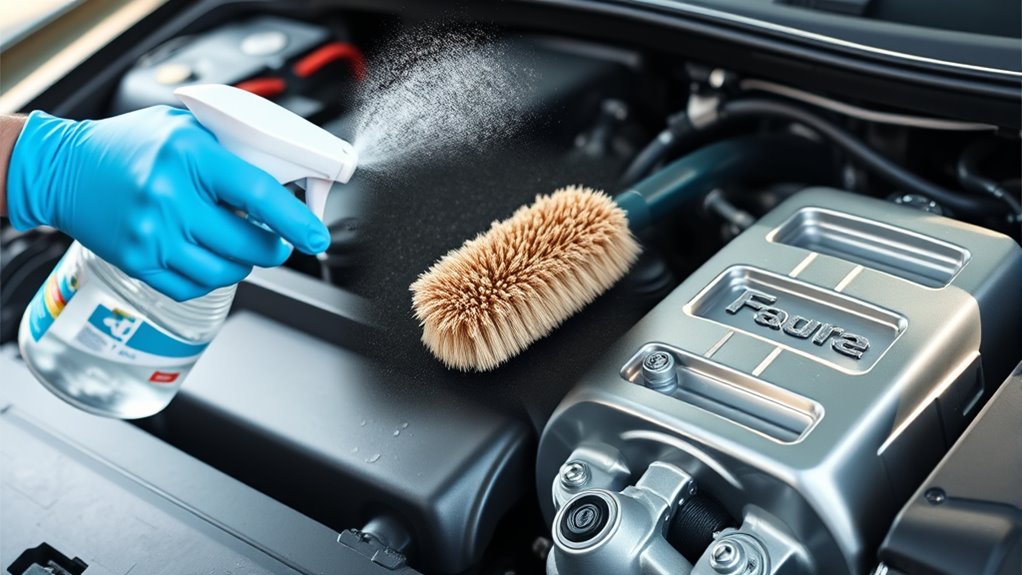
Next, apply a degreaser to greasy areas, scrub gently with a soft brush, and rinse carefully, avoiding electrical components.
Finally, dry thoroughly with a cloth or compressed air, then apply a protectant to hoses and plastics.
Follow these basics, and you’ll find helpful tips to keep your engine bay spotless and protected.
Key Takeaways
- Ensure the engine is cool and disconnect the battery to prevent burns and electrical shorts before starting.
- Cover sensitive components like the alternator and air intake with plastic or foil to protect them from water and chemicals.
- Apply a degreaser to greasy areas, let it sit, then gently scrub with a soft brush or microfiber cloth.
- Rinse carefully with low-pressure water or a damp cloth, avoiding electrical parts to prevent damage.
- Dry thoroughly using compressed air or a cloth, then apply a silicone-based protectant to hoses and plastics.
How to Safely Prepare Your Engine Bay for Cleaning
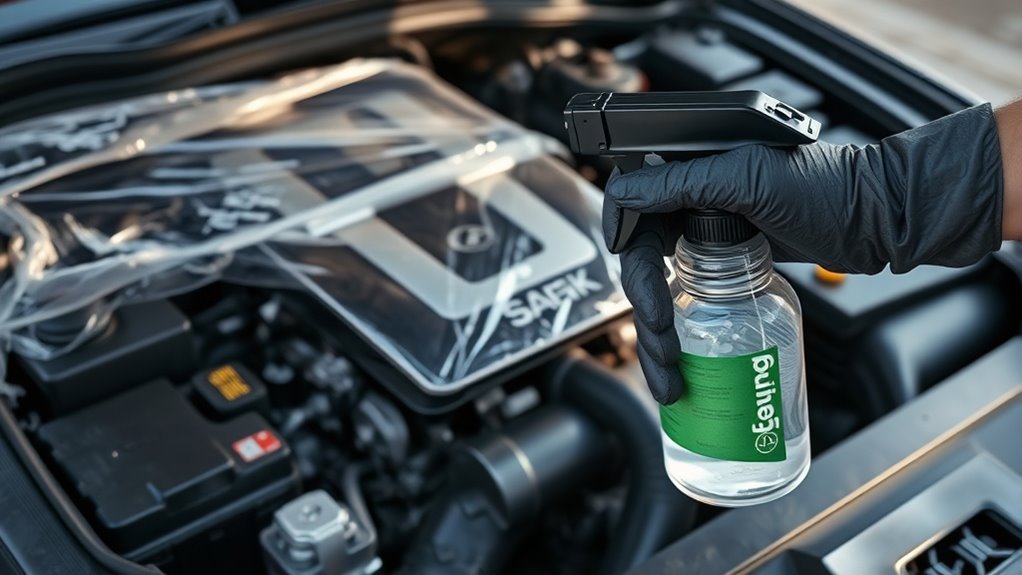
Before you begin cleaning your engine bay, you need to prepare it properly to avoid damaging any components. Start by ensuring the engine is completely cool; hot parts can cause burns and react unpredictably with chemical cleaning agents.
Disconnect the battery terminals to prevent electrical shorts during cleaning. Cover sensitive areas like the alternator, exposed wiring, and air intake with plastic bags or aluminum foil to protect them from water and chemicals.
Disconnect the battery and shield sensitive components to prevent electrical shorts and water damage during engine cleaning.
When selecting chemical cleaning agents, choose those specifically designed for engine bays to avoid corrosive damage. Always read the labels and follow the manufacturer’s safety instructions.
Work in a well-ventilated area and wear gloves and eye protection to keep yourself safe from harmful chemicals. By taking these engine bay safety steps, you’ll prevent damage to your vehicle and keep yourself safe throughout the cleaning process.
Proper preparation sets the stage for an effective and safe engine bay cleaning.
Cleaning Your Engine Bay: Tools and Step-by-Step Techniques
Now that your engine bay is properly prepped, you can gather the right tools and start cleaning. First, remove the engine cover carefully, as it often traps dirt underneath. Use a socket wrench or screwdriver depending on your car’s design.
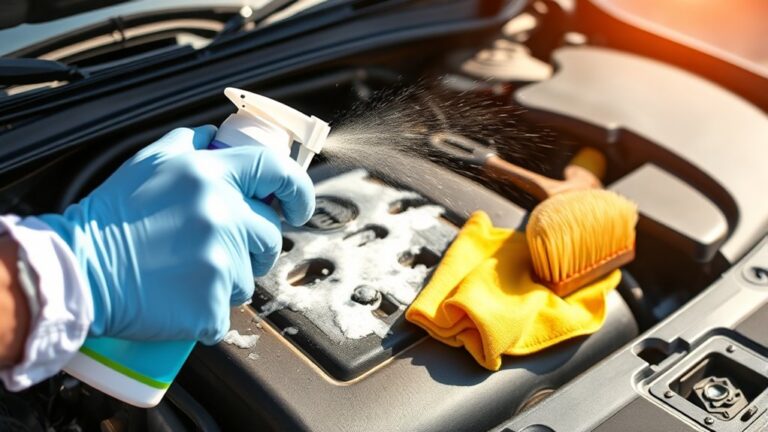
With the cover off, apply a quality degreaser to greasy areas, avoiding sensitive electrical parts. Let it sit for a few minutes to break down grime effectively. Use a soft brush or microfiber cloth to gently scrub the surfaces, focusing on stubborn spots.
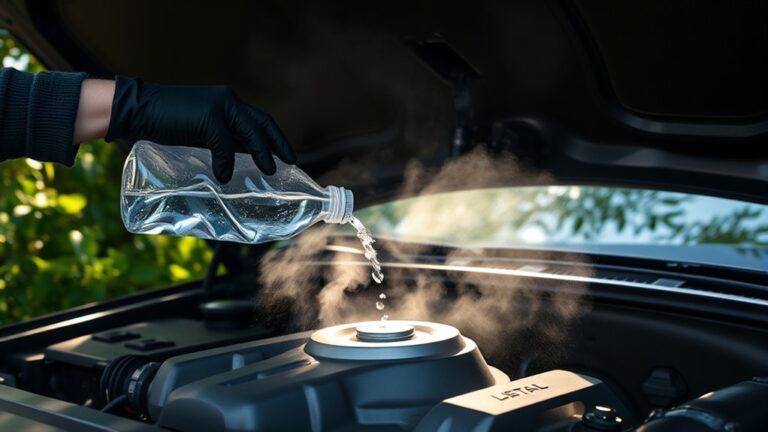
Rinse lightly with low-pressure water or a damp cloth, making sure water doesn’t pool near electrical components. Replace the engine cover once the cleaning is done. Throughout the process, wear gloves and eye protection for safety.
Dry and Protect Your Engine Bay After Cleaning
Once you’ve rinsed away the grime, drying your engine bay thoroughly is vital to prevent corrosion and electrical issues. Start by using compressed air or a leaf blower to remove excess water from hard-to-reach spots. Then, wipe down accessible surfaces with a microfiber cloth.
Make certain no moisture lingers near electrical components or connectors. For engine preservation, apply a silicone-based protectant or a specialized engine bay dressing to rubber hoses and plastic parts. This helps repel dirt and moisture, extending their lifespan.
Always prioritize chemical safety by choosing products designed specifically for engine bays and wearing gloves to protect your skin. Avoid harsh chemicals that can damage sensitive parts or paint. Finally, let your engine bay air dry completely before starting the car.
This careful drying and protection routine ensures your engine stays clean, functional, and well-preserved for the long haul.
Frequently Asked Questions
Can Cleaning the Engine Bay Improve Fuel Efficiency?
Yes, cleaning your engine bay can indirectly improve fuel efficiency by enhancing engine performance. When your engine is free from dirt and grime, it runs cooler and more efficiently. This reduces strain and helps components function properly, leading to better combustion and smoother operation.
While cleaning alone won’t drastically boost fuel economy, maintaining a clean engine bay supports overall performance, which can contribute to improved fuel efficiency over time.
How Often Should I Clean My Engine Bay?
Just like you wouldn’t skip your morning coffee, don’t neglect engine bay maintenance. You should clean your engine bay every 6 to 12 months, depending on your driving conditions.
If you often drive in dusty or wet environments, increase your cleaning frequency to prevent grime buildup and corrosion. Keeping a steady cleaning routine helps your engine run cooler and stay in top shape. So, it’s a smart habit to adopt for long-term vehicle health.
Are There Any Risks to Warranty When Cleaning the Engine Bay?
Yes, cleaning your engine bay can risk engine damage if done improperly, which might cause your warranty to be void. You should avoid high-pressure water directly on sensitive components and always disconnect the battery first.
Using the wrong cleaning products or soaking electrical parts can lead to problems. To protect your warranty, follow manufacturer guidelines or have a professional handle the cleaning to prevent any unintentional damage.
What Are Common Engine Bay Cleaning Mistakes to Avoid?
You should avoid common engine bay cleaning mistakes like using harsh chemicals that cause chemical damage to sensitive components. Don’t spray water directly on electrical parts to prevent electrical hazards, which can lead to shorts or corrosion.
Also, avoid cleaning a hot engine. This can damage parts and cause burns. Finally, don’t skip covering sensitive areas like the battery and air intake. Taking these precautions keeps your engine safe and clean.
Can Engine Bay Cleaning Prevent Overheating Issues?
Yes, cleaning your engine bay can help prevent overheating issues. When you remove dirt and grime from engine components, you improve airflow and allow the cooling system to work more efficiently.
Debris can block vents and trap heat, causing your engine to run hotter than it should. By keeping these parts clean, you guarantee the cooling system functions properly, reducing the risk of overheating and extending your engine’s lifespan.
Conclusion
Now that you know how to clean your engine bay in just three easy steps, you’re ready to keep your car running smoothly and looking sharp. Did you know that a clean engine can improve your vehicle’s performance by up to 10%?
Taking a little time to prepare, clean, and protect your engine bay not only boosts efficiency but also helps spot potential issues early. Give cleaning your engine bay a try—you’ll see the difference!