7 Easy Steps to Clean Your Car Engine
Keeping your car engine clean can feel like a daunting chore, and you’re definitely not alone if you find it tricky or overwhelming. Many people struggle with knowing where to start or worry about damaging sensitive parts.
The good news is, with the right approach, cleaning your engine doesn’t have to be complicated or stressful.
To clean your car engine in seven easy steps, first guarantee the engine is cool and remove loose debris. Then gather tools like degreaser, brushes, and microfiber cloths.
Cover sensitive parts such as the battery and wiring with plastic to protect them.
Apply degreaser, let it sit, scrub gently, and rinse carefully with low-pressure water.
Finally, dry the engine completely and inspect for any issues.
Follow these basics, and you’ll keep your engine running smoothly while learning how to take better care of it.
Key Takeaways
- Ensure the engine is cool and cover sensitive parts like the battery and wiring with waterproof materials before cleaning.
- Remove loose debris, apply degreaser evenly, and let it sit for 10 to 15 minutes to dissolve grease.
- Rinse the engine gently with low-pressure water, avoiding direct spray on electrical components.
- Dry the engine thoroughly using microfiber cloths or compressed air to prevent moisture buildup.
- Inspect for dirt, leaks, or damage. Then reconnect the battery and test the engine operation.
Prepare the Engine Bay for Cleaning
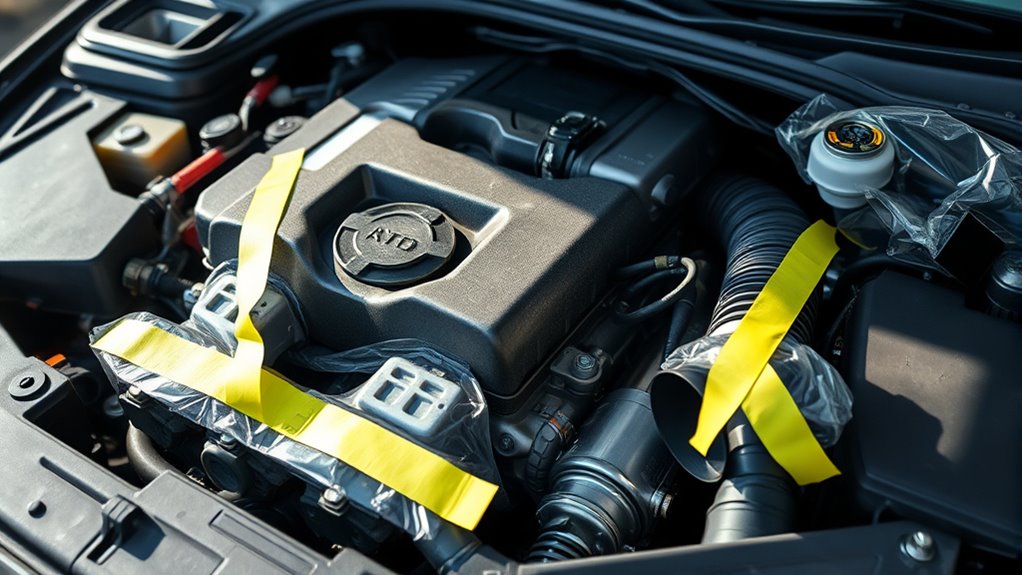
Before you plunge into cleaning, make sure the engine is completely cool to avoid burns or damage. Start by removing any loose debris like leaves or dirt from the engine bay.
Cover sensitive components such as the battery, exposed wiring, and the air intake to protect them from water. Pay special attention to sealing off the fuel system openings to prevent moisture from entering, which could cause serious issues.
Check the engine oil cap and ensure it’s tightly closed to avoid contamination. You’ll also want to unplug any sensors that might be vulnerable to water exposure.
Taking these precautions helps you avoid damaging critical parts and guarantees a safer cleaning process. Preparing your engine bay properly sets the stage for a thorough and effective clean without risking harm to essential systems like engine oil channels or the fuel system.
With everything prepped, you’re ready to move on to the next step confidently.
Gather the Right Tools for Cleaning Your Car Engine
Before you start cleaning, make sure you have the essential tools ready—things like brushes, degreasers, and microfiber cloths. Oh, and don’t forget your protective gear, like gloves and goggles, to keep yourself safe. Having everything prepared beforehand will make the whole process go a lot smoother and safer.
Essential Cleaning Tools
Although cleaning your car engine might seem intimidating, having the right tools makes the job much easier and more effective. Start with a quality degreaser to break down grime, especially around engine oil leaks. Use a soft-bristle brush to gently scrub areas without damaging components.
A spray bottle filled with water helps rinse off loosened dirt without flooding sensitive parts. Don’t forget microfiber cloths for wiping surfaces dry. You’ll also need a vacuum or compressed air to clean air filters, keeping them free from dust and debris.
Finally, a plastic scraper can remove stubborn dirt without scratching. With these essential cleaning tools on hand, you’ll tackle your engine cleaning confidently and efficiently, protecting crucial parts like engine oil reservoirs and air filters.
Protective Gear Needed
Why should you never skip wearing protective gear when cleaning your car engine? Because it shields you from harmful chemicals and debris. Always wear protective gloves to shield your hands from grease, solvents, and sharp edges. These gloves keep your skin safe and prevent irritation or injury.
Don’t forget safety goggles. They protect your eyes from splashes of cleaning fluids and dust particles. Even a small splash can cause serious eye damage.
Wearing these items guarantees you clean your engine safely and efficiently. Before you start, gather your protective gloves and safety goggles to avoid interruptions. Staying protected lets you focus on the task without risking your health. So, make protective gear a must-have part of your engine cleaning routine.
How to Protect Sensitive Engine Parts Before Cleaning
Before you start cleaning, it’s a good idea to cover all the electrical components to keep water from causing any damage. You can use plastic bags to protect sensitive parts like the battery and fuse box. Doing this will really help keep your engine safe while you’re cleaning it.
Cover Electrical Components
How can you protect your car’s electrical components while cleaning the engine? Start by identifying all sensitive parts like the battery, alternator, fuse box, and exposed wiring.
To maintain electrical system safety, cover these components with waterproof materials such as plastic wrap or specialized engine covers. This prevents water and cleaning solutions from causing shorts or corrosion.
Engine component protection is crucial because moisture can damage delicate connections and lead to costly repairs. Make sure the covers fit snugly and secure them with tape or clips to avoid slipping during cleaning.
Use Plastic Bags
Several sensitive engine parts require extra protection during cleaning, and using plastic bags is one of the simplest ways to shield them from moisture and debris. Before you start, grab some plastic bags and secure them over components like the air intake, distributor, and exposed wiring within the engine compartment.
Make sure the bags fit snugly and seal tightly with rubber bands or tape to prevent water from sneaking in. This step helps avoid damage and keeps your engine running smoothly after cleaning.
Apply Degreaser and Let It Soak
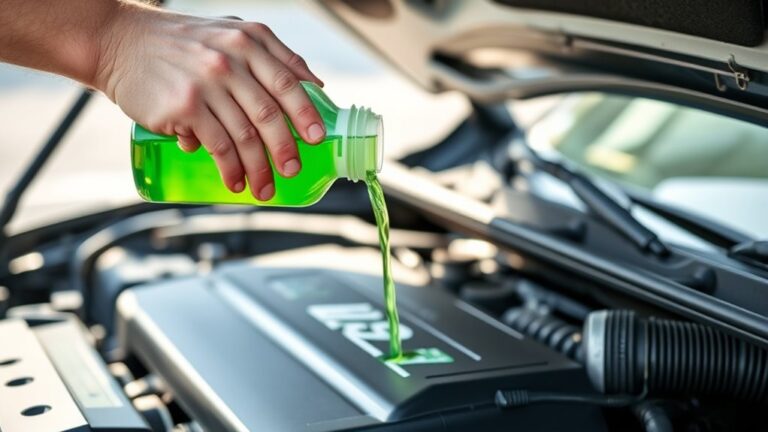
Why wait to tackle tough grime when you can apply a degreaser and let it do the hard work for you? Engine degreasing starts with spraying a quality degreaser evenly over the engine bay. Focus on greasy spots but cover all surfaces to maximize the soaking process.
Let it sit for 10–15 minutes; this soaking loosens dirt and oil, making later cleaning much easier.
Here’s a quick guide to help you through the application and soaking process:
| Step | Tip |
|---|---|
| Choose Degreaser | Pick a product safe for engines |
| Spray Evenly | Cover all dirty areas |
| Avoid Sensitive Parts | Protect sensors & wiring |
| Soak Time | Let degreaser sit 10–15 minutes |
| Inspect | Check if grime starts breaking down |
Scrub Away Engine Dirt and Grime Gently
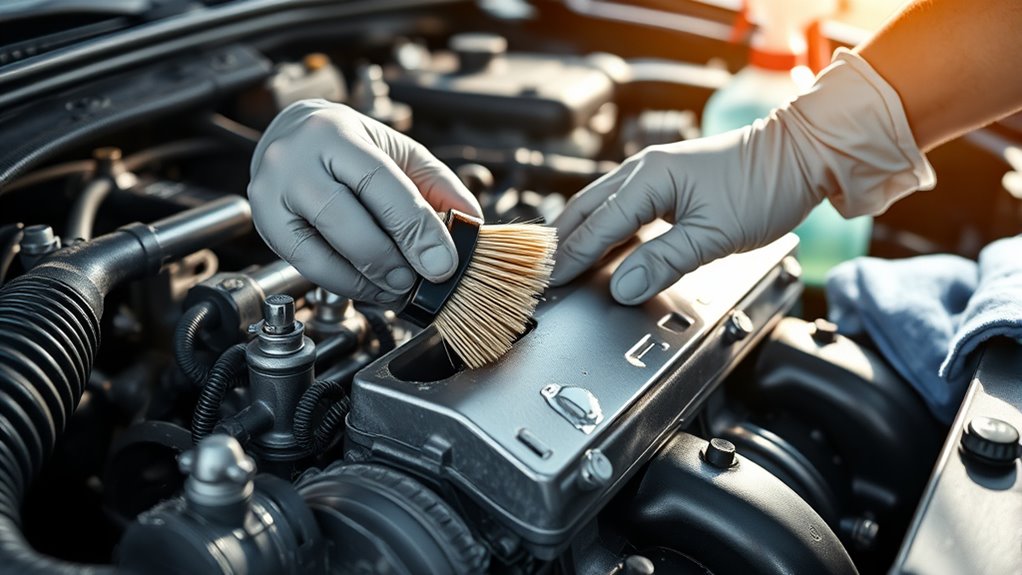
Once the degreaser has had time to work, you can start scrubbing away the loosened dirt and grime gently. Use a soft-bristle brush to avoid damaging any engine components while targeting stubborn engine grime. Focus on areas where dirt tends to build up, such as around the battery, valve covers, and hoses.
Be thorough but gentle to guarantee effective dirt removal without scratching surfaces. Don’t rush this step; careful scrubbing helps break down grease and grime that the degreaser has loosened.
If you notice particularly tough spots, apply a bit more degreaser and let it sit briefly before scrubbing again. Keep a microfiber cloth handy to wipe away loosened grime as you work, preventing it from resettling.
Rinse the Engine Safely
After scrubbing away the grime, it’s time to rinse the engine carefully to remove any remaining degreaser and dirt. First, make sure the engine temperature is cool to avoid damage or injury. Rinsing a hot engine can cause cracking or warping.
Next, use a gentle spray from a hose or a low-pressure washer to avoid forcing water into delicate components. Focus on areas where dirt and degreaser tend to accumulate, but avoid soaking electrical parts.
Use a gentle spray with low pressure, targeting dirt while keeping electrical parts dry.
Lastly, always prioritize chemical safety. Wear gloves and eye protection to prevent contact with leftover cleaning agents.
Follow these steps for a safe rinse:
- Confirm the engine temperature is cool before rinsing.
- Use low-pressure water to gently wash away residue.
- Protect yourself by wearing gloves and goggles to handle chemicals safely.
Dry and Inspect Your Engine After Cleaning
Although rinsing removes most dirt and degreaser, you’ll need to dry your engine thoroughly to prevent moisture damage and corrosion. First, verify the engine temperature has cooled completely before you start drying. This is a key safety precaution to avoid burns or cracking components.
Use a clean microfiber cloth or compressed air to remove excess water from all surfaces, especially around electrical connections and sensitive parts. Pay close attention to areas where water tends to collect.
After drying, inspect your engine carefully for any remaining dirt, leaks, or damaged hoses. Look for signs of wear or corrosion that cleaning might have revealed. If you spot anything unusual, address it promptly to maintain your engine’s health.
Taking these steps helps you avoid potential issues caused by trapped moisture and guarantees your engine stays in top condition. Always follow safety precautions throughout to protect yourself and your vehicle.
Frequently Asked Questions
How Often Should I Clean My Car Engine?
You should clean your car engine about once a year to keep it running smoothly. Regular cleaning helps prevent engine oil buildup and reduces battery corrosion, which can cause starting problems.
If you drive in dusty or muddy conditions, consider cleaning it more often. Just be careful around electrical components.
Keeping your engine clean not only improves performance but also makes it easier to spot leaks or other issues early on.
Can Engine Cleaning Improve Fuel Efficiency?
Yes, engine cleaning can improve fuel efficiency by removing dirt and grime that hinder engine performance. When you keep your engine clean, you promote better airflow and smoother operation, which leads to fuel savings.
Regular engine maintenance, including cleaning, helps your vehicle run more efficiently and can prevent costly repairs down the line. So, cleaning your engine isn’t just about looks; it directly supports better fuel economy and overall engine health.
Is It Safe to Use a Pressure Washer on My Engine?
You can use a pressure washer on your engine, but you need to be cautious about pressure washer safety to avoid damaging sensitive parts. Before engine degreasing, cover electrical components, air intake, and exposed wiring with plastic bags.
Use a low-pressure setting and keep the nozzle at least a foot away from the engine. Taking these precautions helps you clean effectively without causing harm to your engine’s delicate systems.
What Are the Signs of a Dirty Engine Affecting Performance?
You’ll notice your car struggles with poor acceleration or uneven idling when a dirty engine affects performance. Check your engine oil; it may look grimy or run low, which hampers lubrication.
Also, keep an eye on the coolant level. If it’s unusually low or contaminated, your engine might overheat. These signs indicate buildup or blockages that reduce efficiency.
Keeping these fluids clean and topped off helps your engine run smoothly.
Can I Clean My Engine Myself or Should I Hire a Professional?
You can definitely clean your engine yourself, just like a knight wielding a sword in modern times! The engine cleaning importance can’t be overstated. It helps maintain performance and longevity.
If you’re comfortable with DIY engine maintenance, grab some degreaser and a brush. Just be careful with electrical parts. However, if you’re unsure or your engine’s really grimy, hiring a professional guarantees a thorough, safe job without risking damage.
Conclusion
Now that you’ve mastered these seven easy steps, your engine will run smoother than a Model T on a freshly paved road. Regular cleaning not only keeps your engine looking sharp but also helps spot issues early, saving you headaches down the line.
Just remember to protect sensitive parts and rinse carefully. With a little care and these simple tips, your car’s heart will stay in top shape for miles to come.
Keep that engine purring with regular car engine cleaning!