How to Clean Car Engine Compartment in 3 Easy Steps
Cleaning your car’s engine compartment can feel like a daunting task. You want it to look spotless and run smoothly, but figuring out how to do it safely and effectively isn’t always easy. If you’ve struggled with grime buildup or worried about damaging sensitive parts, you’re not alone—many people face this challenge.
To clean your car engine compartment in three easy steps, first make sure the engine is cool, wear gloves, disconnect the battery, and cover sensitive parts to protect them.
Next, use a soft brush and an engine-specific degreaser to spray and loosen grime, then rinse gently with low-pressure water, avoiding electrical components.
Finally, dry thoroughly with a microfiber cloth or compressed air, check for moisture and corrosion, and address any issues. Keep going to uncover more helpful tips for a spotless, safe engine.
Key Takeaways
- Ensure the engine is cool and disconnect the battery before starting to avoid burns and electrical shorts.
- Cover sensitive parts like air intake and wiring with plastic bags to protect them from water and cleaning agents.
- Spray an engine-specific degreaser evenly on greasy areas and let it sit for a few minutes to loosen dirt.
- Rinse gently with low-pressure water, avoiding direct spray on electrical components to prevent damage.
- Dry thoroughly with microfiber cloths or compressed air, and inspect for moisture or corrosion before reconnecting the battery.
How to Safely Prepare Your Engine Compartment
Before you start cleaning, make sure your engine is cool to avoid burns or damage. Engine safety is your top priority, so don’t rush this step. Hot components can cause serious injuries or lead to cracking and warping if exposed to water too soon.
Next, put on protective gear like gloves and safety glasses to shield yourself from dirt, chemicals, and sharp parts. You’ll also want to disconnect the battery terminals to prevent electrical shorts during cleaning.
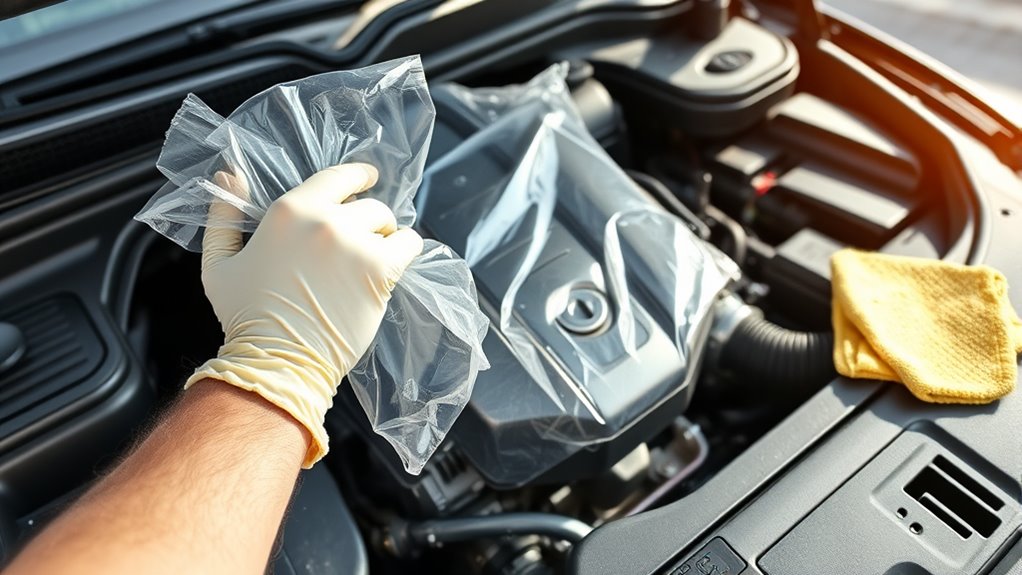
Cover sensitive parts such as the air intake, distributor, and exposed wiring with plastic bags and tape to keep water out. Check for any leaks or damaged hoses before you begin because they could get worse during cleaning.
Taking these safety precautions guarantees you protect both yourself and your vehicle, making the cleaning process safer and more effective. Following these steps helps you prepare your engine compartment properly without risking damage or injury.
Wash and Degrease Your Engine Compartment
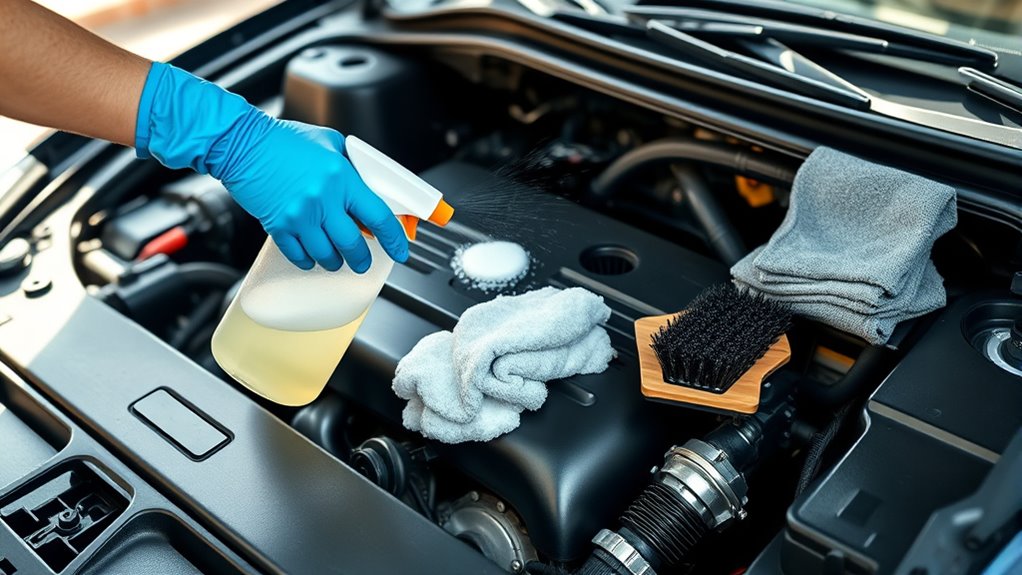
With your engine cool and protected, you can start washing and degreasing to remove built-up dirt, grime, and oil. Begin by selecting the right engine cleaning tools, such as a soft-bristle brush, microfiber cloths, and a spray bottle. Choose a quality degreaser designed specifically for engines.
Start with a cool engine and the right tools to safely remove grime and oil buildup.
Spray the degreaser evenly across the engine compartment, focusing on greasy or oily areas. Let it sit for a few minutes to break down stubborn buildup.
Next, use your brush to gently scrub surfaces, loosening dirt without damaging delicate components. Avoid harsh scrubbing near wiring or sensors.
After scrubbing, rinse the engine compartment with low-pressure water. Too much pressure can harm parts, so work carefully to avoid soaking electrical areas.
Dry Your Engine Compartment and Check for Problems
Once you’ve rinsed away the degreaser, start drying your engine compartment thoroughly to prevent moisture from causing electrical issues or corrosion. Use a microfiber cloth or compressed air to reach tight spaces, guaranteeing ideal engine compartment ventilation. Pay special attention to electrical components and connectors, as trapped moisture can cause shorts or damage.
Next, perform a battery corrosion inspection. Look for any white or blue powdery buildup on the battery terminals, which could affect performance. If you spot corrosion, clean it carefully with a mixture of baking soda and water, then dry the area completely.
Finally, double-check these key spots before closing up:
- Around the battery terminals for corrosion
- Wiring harnesses and connectors for trapped moisture
- Air intake and ventilation areas to ensure nothing’s clogged or wet
Taking these steps guarantees your engine stays clean, dry, and problem-free, helping your car run smoothly and safely.
Frequently Asked Questions
Can I Use a Pressure Washer on My Engine Compartment?
You can use a pressure washer on your engine compartment, but you need to be very careful to avoid engine damage. High-pressure water can force moisture into electrical components and sensitive areas, causing problems.
If you decide to use a pressure washer, keep the pressure low, avoid direct sprays on electrical parts, and cover exposed components. Taking these precautions helps protect your engine while still letting you clean effectively.
How Often Should I Clean My Car Engine Compartment?
You should clean your engine compartment every 12 to 18 months to keep it in good shape. Sticking to this engine cleaning frequency helps prevent grime buildup and detects leaks early.
Regular cleaning is a smart engine maintenance tip that improves performance and prolongs your engine’s life. However, if you drive in dusty or muddy conditions, consider cleaning it more often to maintain best engine health.
Will Cleaning the Engine Improve My Car’s Performance?
Yes, cleaning your engine can improve engine performance by preventing dirt and grime buildup that may cause overheating or damage. When you keep the engine compartment clean, you boost maintenance benefits like spotting leaks or worn parts early.
This proactive care helps your car run smoother and last longer. So, regular cleaning isn’t just about looks; it actively supports your engine’s efficiency and overall vehicle health.
What Products Are Best for Removing Stubborn Grease?
Looking to tackle stubborn grease effectively? You’ll want to use a powerful engine degreaser designed specifically for automotive use. These grease removers break down tough grime without harming your engine’s components.
Popular options like Simple Green or Meguiar’s Engine Cleaner offer excellent results. Just spray, let it sit, and rinse carefully.
Why settle for less when the right products make cleaning easier and protect your engine?
Is It Safe to Clean the Engine Compartment in Cold Weather?
Yes, you can do a winter wash on your engine compartment, but you need to take safety precautions. Cold weather can make plastic and rubber parts brittle, so avoid using high-pressure water or very hot cleaning solutions.
Make sure the engine is cool before starting, and dry everything thoroughly to prevent freezing or electrical issues. Taking these steps helps protect your engine while keeping it clean in cold conditions.
Conclusion
Now that you’ve tackled cleaning your engine compartment in just three easy steps, you’re no longer in the dark. Keeping your engine clean not only boosts performance but also helps you spot potential issues before they become headaches.
Just remember, a little elbow grease goes a long way. Regular care will keep your engine running smoothly and looking sharp.
So, roll up your sleeves and give your engine compartment the attention it deserves!