How Do You Get Rid of Mice in Your Car Engine?
If you’ve ever found signs of mice in your car engine, you know how frustrating and worrying it can be. You’re not alone—many people struggle with this pesky problem that can cause serious damage if left unchecked. Finding the right way to get rid of mice in your car engine is essential to protect your vehicle and keep it running smoothly.
To get rid of mice in your car engine, start by inspecting for droppings, chewed wires, and nesting materials. Remove all nests and clean the area thoroughly. Repair any wire damage promptly to avoid electrical issues.
Use natural repellents like peppermint oil and set humane traps in safe spots. Keep your engine bay clean and seal entry points to prevent return visits.
You can also investigate effective ways to protect your car long-term and when to call in professional help.
Key Takeaways
- Inspect the engine bay regularly for nests, droppings, and chewed wires to catch infestations early.
- Remove all nesting materials and debris. Clean the engine compartment thoroughly to eliminate hiding spots.
- Use natural repellents like peppermint oil or dryer sheets placed around the engine to discourage mice.
- Set snap or humane traps near wiring and insulation. Check and reset them daily while wearing gloves.
- Seal entry points with wire mesh, steel wool, or silicone sealant to prevent mice from getting into the engine.
Why Mice Nest in Your Car Engine (Including Weather and Location)

Why do mice choose your car engine as their nesting spot? Mice behavior shows they seek warm, sheltered places to build nests, especially during cold or wet weather. Your car engine provides the perfect environment, protected from predators and harsh elements.
Understanding their nesting habits helps you realize why they’re drawn to engine bays. They use soft materials like insulation or leaves to create cozy nests near the heat source your engine offers after running.
Location plays a vital role too. If you park near fields, wooded areas, or places with abundant food, mice are more likely to investigate your car. Their natural instinct to find safe, warm spots means your engine bay becomes an ideal nesting site.
How to Spot Signs of Mice in Your Engine Bay
Although mice are small, they leave clear signs when they’ve made your engine bay their home. You’ll want to check for chewed wires, insulation, or plastic parts. Mice gnaw to keep their teeth sharp.
Mice may be tiny, but their chewing leaves unmistakable damage in your engine bay.
Look for droppings around the engine compartment; they’re typically small, dark, and pellet-shaped. You might also spot nesting materials like shredded paper, fabric, or dry leaves tucked into tight spaces.
Pay attention to any unusual smells, like a strong ammonia scent, which can indicate urine. If your engine temperature fluctuates or your car runs hotter than usual, damaged wiring or blocked airflow due to nesting could be the cause.
Mice often build nests in warm spots, so after driving, inspect the engine bay once it cools down. Catching these signs early helps prevent costly damage and keeps your car running smoothly.
Quick Steps to Remove Mice From Your Engine
Before you start your engine, take a few quick steps to remove mice safely and effectively. Understanding mice behavior is key. They seek warmth and shelter, often nesting in your engine bay. To tackle this, follow these steps:
- Inspect and Clear: Look carefully for nests or droppings around the engine. Remove any nesting materials to discourage mice from staying.
- Use Natural Deterrents: Mice dislike strong smells like peppermint oil or dryer sheets. Place these in areas where mice hide to encourage them to leave without harming your vehicle.
- Perform Engine Maintenance: Regularly check wiring and hoses for damage caused by gnawing. Keeping your engine clean and well-maintained reduces hiding spots and makes your car less inviting.
Using Traps Safely in Your Engine Bay
Once you’ve cleared out nests and applied natural deterrents, traps can help catch any remaining mice lurking in your engine bay. For effective trap placement, focus on areas where you’ve noticed signs of mouse activity, like near wiring or insulation. Use small snap traps or humane catch traps designed for tight spaces.
When setting traps, prioritize engine safety. Avoid placing them near hot components or moving parts to prevent damage to both your car and the traps. Secure traps firmly to prevent them from shifting while driving.
Check traps daily to remove caught mice promptly and reset if necessary. Wearing gloves during handling reduces scent transfer, which can deter mice. Remember, using traps is a temporary measure; combining them with other prevention methods ensures long-term results.
Best Natural Repellents for Your Car Engine
You can keep mice away from your car engine using natural repellents like essential oils and herbs. Scents such as peppermint or lavender are especially effective. In fact, you can even make your own spray at home.
Let’s take a closer look at which options work best and how to apply them safely. It’s easier than you might think, and it’s a great way to protect your car without using harsh chemicals.
Essential Oils That Repel
Although mice are persistent, you can discourage them naturally by using essential oils known for their strong scents. Mice behavior heavily relies on scent detection, so these oils disrupt their ability to feel comfortable in your car engine. Here are three essential oils that work best:
- Peppermint oil. Its sharp, minty aroma is overwhelming to mice and masks familiar smells.
- Eucalyptus oil. The strong, camphor-like scent irritates their sensitive noses, deterring them from nesting.
- Lavender oil. While pleasant to humans, its potent fragrance confuses mice and keeps them away.
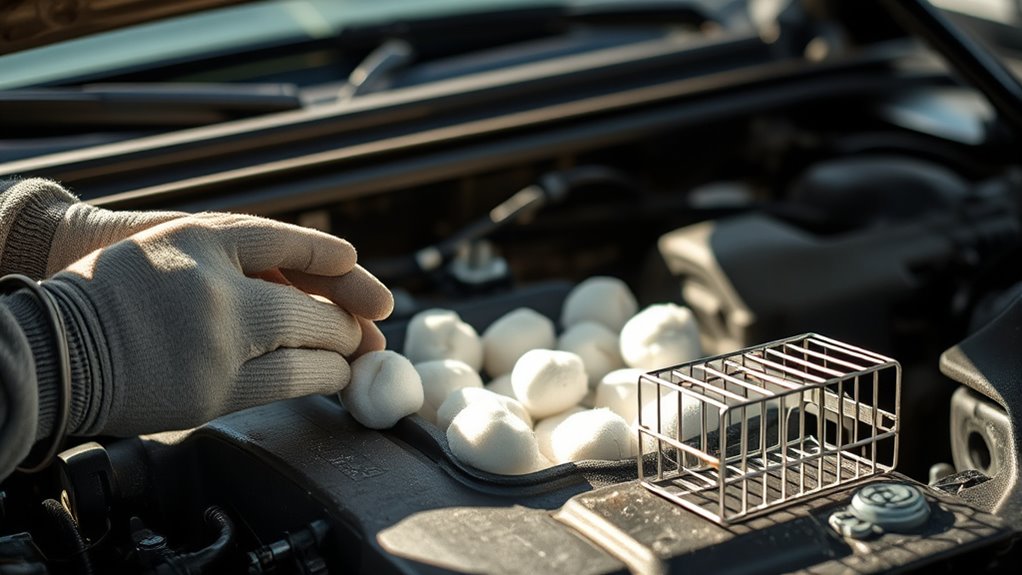
To use, soak cotton balls in any of these oils and place them around your engine compartment. Refresh the scent regularly to maintain effectiveness and keep your car mouse-free naturally.
Natural Herbs To Use
When mice invade your car engine, natural herbs provide an effective way to repel them without harsh chemicals. Understanding wildlife behavior helps you choose herbs that disrupt mice’s nesting instincts.
Peppermint, for example, emits a strong scent that mice find overwhelming, making it a popular choice for pest prevention. You can place dried peppermint leaves or sachets near your engine to create an uninviting environment.
Likewise, lavender and rosemary offer potent aromas that deter rodents naturally. These herbs not only mask the usual scents that attract mice but also signal danger to their sensitive noses.
Homemade Spray Recipes
Natural herbs like peppermint and lavender work well on their own, but combining their scents into a spray can boost their effectiveness against mice in your car engine. To protect your vehicle and ensure engine safety, try these homemade spray recipes as part of your car maintenance routine:
- Mix 10 drops of peppermint essential oil, 10 drops of lavender oil, and 1 cup of water in a spray bottle. Shake well before use.
- Combine 1 cup of vinegar, 10 drops of eucalyptus oil, and 1 cup of water. Vinegar’s strong smell deters rodents effectively.
- Blend 1 cup of rubbing alcohol with 15 drops of peppermint oil. This mixture evaporates quickly, leaving a lasting scent.
Spray these around the engine bay, avoiding direct contact with sensitive components. Reapply weekly for best results.
Cleaning Your Engine Bay and Repairing Mouse Damage
First, take a good look around your engine bay and check for any signs that mice have been there—things like chewed wires or little nests they might have built. Once you’ve spotted any trouble, go ahead and clean the engine components to get rid of dirt and droppings that could lead to problems down the road. After that, make sure to repair or replace any damaged wires so your car keeps running smoothly without any unexpected hiccups.
Inspecting for Damage
Before you repair any damage caused by mice, thoroughly clean your engine bay to remove nesting materials, droppings, and debris that could pose health risks or cause further damage. Understanding wildlife behavior helps you anticipate where damage might occur.
When inspecting for damage, focus on these critical areas:
- Wiring Harnesses: Check for chewed or frayed wires, which can disrupt your car’s electrical systems.
- Hoses and Belts: Look for bite marks or cracks that could lead to leaks or engine failure.
- Insulation and Plastic Components: Examine for nesting materials or gnawed parts that might affect heat shields or sensors.
Regular inspections as part of your car maintenance routine help catch problems early, ensuring your engine runs smoothly and preventing costly repairs later.
Cleaning Engine Components
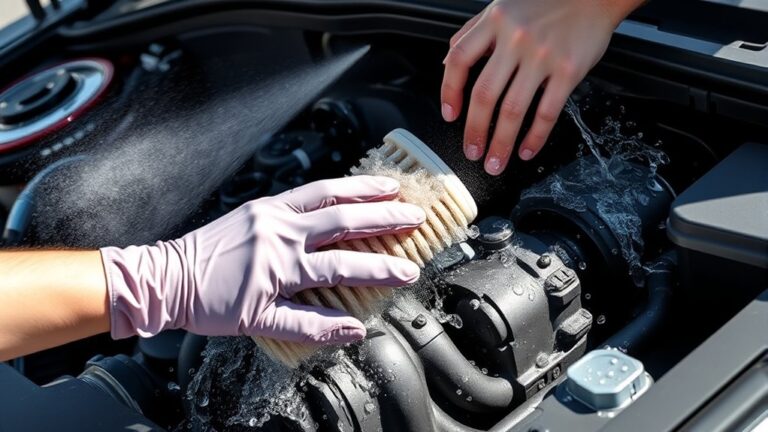
After identifying any damage caused by mice, you’ll want to thoroughly clean your engine bay to prevent further issues and make repairs easier. Start by removing debris like nesting material and droppings, which can block engine airflow and cause overheating.
Use a gentle cleaner and a soft brush to avoid damaging sensitive parts. Pay close attention to areas around the coolant system, as debris here can lead to leaks or reduced efficiency. Avoid spraying water directly on electrical components; instead, use a damp cloth to wipe them down.
Cleaning these components not only improves performance but also helps you spot hidden damage. Keeping the engine bay clean is essential for maintaining proper airflow and protecting critical systems from future infestations.
Repairing Chewed Wires
While cleaning your engine bay, you’ll likely notice chewed wires that need immediate attention to prevent electrical failures. Mice often gnaw on wires to keep their teeth sharp, a common rodent habit that can disrupt your vehicle’s electrical system.
To repair the damage, follow these steps:
- Inspect and identify all damaged wires by tracing their length to find every affected area.
- Strip the insulation carefully with a wire stripper, then twist and solder the wire ends to restore connectivity.
- Seal and protect the repair with heat shrink tubing or electrical tape to prevent future damage from rodent habits.
Addressing chewed wires promptly guarantees reliable engine performance and reduces costly repairs linked to rodent activity.
How to Keep Mice From Coming Back
Why do mice keep coming back to your car engine? It’s usually because your car interior or engine bay provides warmth, shelter, and sometimes food remnants. To keep them away, start by thoroughly cleaning your car interior. Remove any food crumbs or trash that might attract rodents.
Next, prioritize regular engine maintenance. Check for openings or gaps where mice can enter and seal them with wire mesh or foam. You should also park in well-lit, open areas instead of near bushes or piles of debris, which serve as hiding spots.
Using natural repellents like peppermint oil-soaked cotton balls around the engine compartment can deter mice, but refresh these frequently. Furthermore, consider placing ultrasonic deterrents designed for vehicles.
When to Call a Professional Pest Control Service
If you’ve tried DIY methods and still spot signs of mice in your car engine, it’s time to call a professional pest control service. Professionals have the expertise and tools to handle infestations effectively, ensuring your vehicle’s safety and performance. Here’s when you should reach out:
- Persistent Infestation: If mice keep returning despite your efforts, a professional can identify hidden nests and entry points you might miss.
- Damage Assessment: When you notice chewed wires or nesting materials in your engine, experts can safely handle engine cleaning and recommend repairs to prevent costly car maintenance issues.
- Health Concerns: Mice carry diseases and leave droppings that pose health risks. Professionals use safe, thorough methods to eliminate these hazards.
Calling a pest control service not only removes the immediate problem but also protects your car’s engine from future damage, keeping your vehicle in top shape.
Tips for Long-Term Protection Against Engine Mice
To keep mice from making a home in your car engine, it’s a good idea to check it regularly for any signs they might be around. You know, just a quick look can go a long way. Using natural repellents can also help keep them at bay without having to rely on harsh chemicals. Plus, they’re safer for you and the environment. And don’t forget—sealing up any entry points is key to blocking their access for good. Once those little openings are closed off, it’s much harder for mice to sneak in.
Regular Engine Inspections
Although mice can be persistent, you can keep them at bay by regularly inspecting your car engine. Routine checks are a vital part of engine maintenance and help spot early signs of rodent activity. Here’s what you should focus on:
- Look for nests or shredded vehicle insulation. Mice love using insulation for their nests, so any damage here is a red flag.
- Check wiring and hoses for chew marks. Rodents can cause costly damage by gnawing on these components.
- Inspect under the hood for droppings or urine stains. These indicate active mouse presence and should prompt immediate action.
Use Natural Repellents
Since mice are deterred by certain scents and substances, using natural repellents can effectively keep them away from your car engine over the long term. Essential oils like peppermint, eucalyptus, and citronella work well. Just soak cotton balls and place them around your engine bay or garage.
Regularly rejuvenating these scents helps maintain their effectiveness. Combining natural repellents with good garage organization reduces hiding spots and food sources, which supports your efforts.
Also, incorporating repellents into your car maintenance routine ensures continuous protection. Remember, natural options are safer for both you and your vehicle compared to chemical deterrents.
Seal Entry Points
Keeping natural repellents fresh and your garage organized helps deter mice, but you’ll also need to block their access points for lasting protection. Sealing mouse entry spots in your engine compartment is essential to prevent reinfestation.
Here’s how to do it effectively:
- Inspect the engine compartment thoroughly for gaps or holes where mice might squeeze through.
- Use steel wool or wire mesh to fill smaller holes; these materials are tough for mice to chew through.
- Apply high-quality silicone sealant or automotive-grade caulk around wires and pipes to close off remaining gaps.
Preventing Mice Damage Before It Happens
To protect your car engine from mice damage, you need to take proactive steps before rodents settle in. Understanding mice behavior helps you anticipate their moves. Mice seek warmth and shelter, especially in colder months, making your parked car an inviting spot.
Regular car maintenance plays a vital role in prevention. Start by keeping your engine bay clean and free of food crumbs or nesting materials. Avoid parking near dense brush or trash, as these areas attract rodents.
Use natural repellents like peppermint oil or commercial deterrents around your parking area to discourage visits. Inspect your vehicle frequently for signs of mice, such as droppings or chewed wires, and address issues immediately.
Frequently Asked Questions
Can Mice in My Engine Cause My Car to Fail an Emissions Test?
Yes, mice in your engine can cause your car to fail an emissions test. Their nests and droppings may clog air filters or damage wiring, which affects engine performance and emissions.
You should use rodent proofing techniques to prevent future infestations and perform thorough engine compartment cleaning to remove debris. Keeping your engine clean and protected helps maintain proper emissions and avoids costly repairs or test failures.
Are Certain Car Models More Prone to Mouse Infestations?
You should know that studies show up to 30% of rodents prefer certain vehicles. Car model susceptibility varies because engine compartment design plays a big role. Some models have cozier, warmer spaces that attract mice more.
If your car’s engine bay has tight nooks and less airflow, it’s more prone to infestations. So, you’ll want to check your specific model’s design and take precautions accordingly to keep mice away.
Can Engine Heat Alone Deter Mice From Nesting?
Engine heat alone won’t reliably stop mice from nesting because they often seek warmth, especially in colder weather. While your engine heats up during use, mice tend to nest when the car cools down and stays idle for long periods.
You can’t count on engine heat to deter their nesting behavior completely. Instead, take extra steps like sealing entry points and using repellents to keep mice away effectively.
Is It Safe to Drive Immediately After Removing Mice?
Jumping into your car right after getting rid of mice is usually safe, but don’t rush it like a bolt from the blue. After thorough car cleaning and pest prevention steps, give your engine a quick check for nests or damage first.
Driving immediately is fine if everything looks good, but if you spot chewed wires or debris, fix those before hitting the road. Taking these precautions keeps your ride smooth and worry-free.
Do Mice Cause Damage to Electric Vehicle Components?
Yes, mice can cause serious electrical damage to your electric vehicle components. They often chew on wires and insulation, leading to shorts or malfunctions.
Their nesting hazards, like shredded materials and debris, can block ventilation or cause overheating. You’ve got to inspect your car regularly and take steps to prevent rodents from making a home there, or you could face costly repairs and safety issues down the road.
Conclusion
Getting rid of mice in your car engine is essential to avoid costly damage. You’ve learned how to spot signs, safely remove them, and use natural repellents.
But why stop there? Taking proactive steps to keep mice away guarantees your engine stays safe and sound. With the right precautions and timely action, you can protect your car from these unwanted guests for good.
Isn’t peace of mind worth the effort when it comes to getting rid of mice in your car engine?