5 Tips to Keep Rats Out of Car Engines
Dealing with rats nesting in your car engine can be incredibly frustrating, and you’re definitely not alone. Many people struggle with this problem, especially in colder months when rodents seek warm places to hide.
If you’ve noticed chewed wires or strange smells, it’s a sign that these unwanted guests might be making your engine bay their home.
To keep rats out of your car engine, start by sealing all gaps with rodent-proof materials like steel wool to block their entry. Use natural repellents such as peppermint oil near the engine and tire wells to deter them.
Keep the area clean of food and debris that attract rodents. Regularly inspect your engine bay for chewed wires or damage, and watch for early signs like droppings or strange smells.
These simple steps protect your car and prevent costly repairs. There’s more helpful advice to uncover.
Key Takeaways
- Seal all gaps and openings around the engine with rodent-proof materials to prevent rat entry.
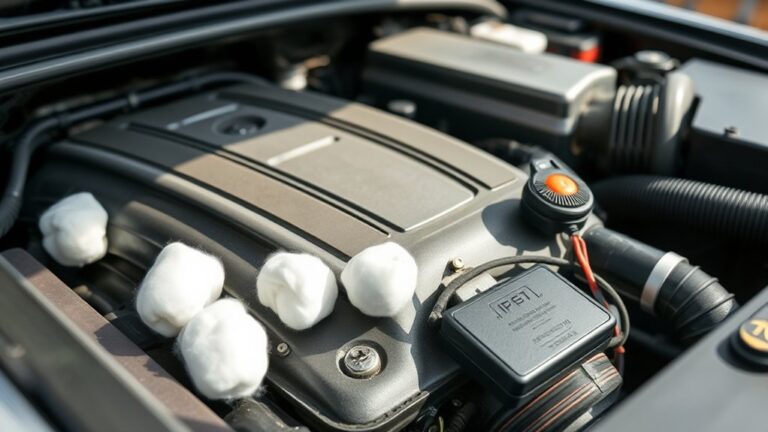
- Place natural repellents like peppermint oil-soaked cotton balls near the engine and tire wells.
- Keep the area around the car clean and free of food, debris, and clutter to reduce rodent attraction.
- Regularly inspect the engine bay for chewed wires, damaged hoses, and signs of rat activity.
- Detect early nesting signs such as droppings, shredded insulation, unusual smells, or scratching noises.
Seal Entry Points to Keep Rats Out of Your Car Engine
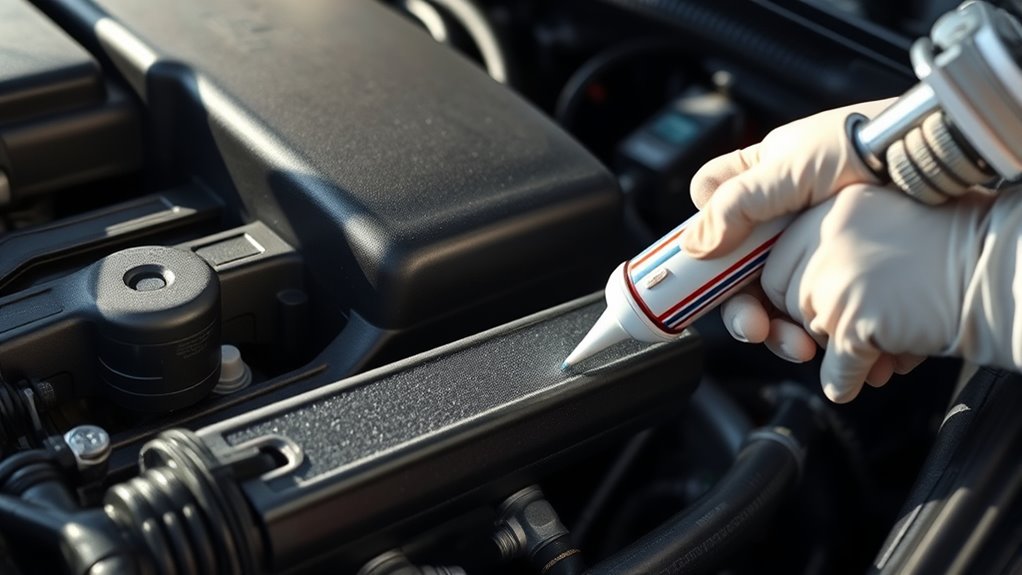
Before rats can cause damage, you need to prevent them from getting inside your car engine. Start by thoroughly inspecting your vehicle for any gaps or openings where rodents might sneak in. Using rodent proofing materials like steel wool or wire mesh, seal these entry points tightly. This barrier stops rats from finding a way in and nesting.
Next, check your engine insulation. Damaged or loose insulation invites rodents to chew through and make a cozy home. Replace worn insulation with rodent-resistant alternatives designed to withstand gnawing and block access. Proper engine insulation not only protects your car’s components but also discourages rodents from settling under the hood.
Use Natural Rat Repellents Near Your Vehicle
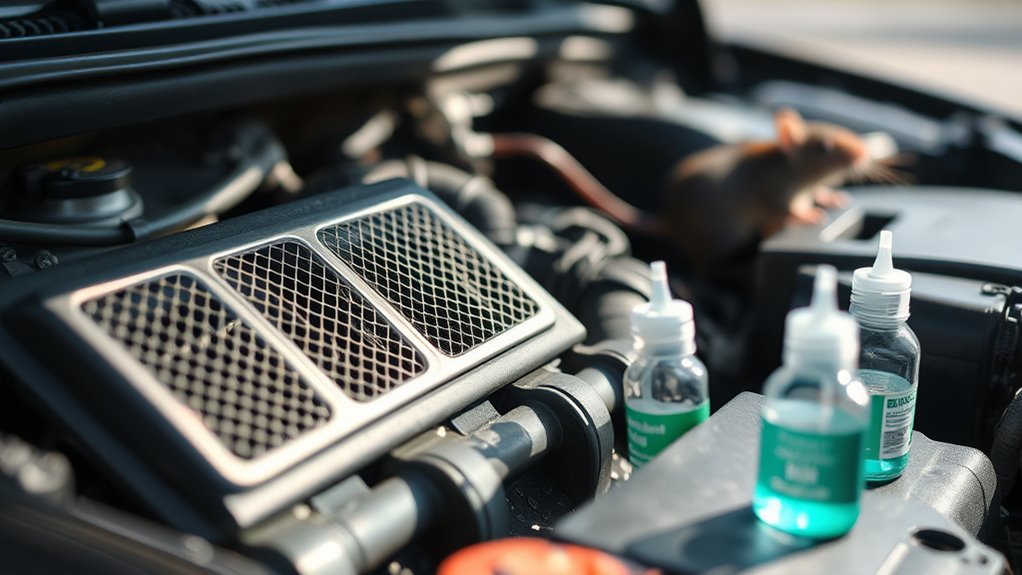
Sealing entry points and securing engine insulation are effective steps, but you can also take advantage of natural rat repellents to keep these pests at bay. Natural deterrents, such as peppermint oil, eucalyptus, or cloves, emit strong scents that rats find unpleasant. You can soak cotton balls in these oils and place them strategically around your vehicle, especially near the engine bay and tire wells. These scent repellents create an environment that discourages rats from nesting or chewing wires.
Additionally, planting herbs like mint or rosemary nearby acts as a natural barrier. These plants not only deter rodents but also boost the area’s appearance. Remember to refresh the scent repellents regularly to maintain their effectiveness. By using natural deterrents, you avoid harmful chemicals while protecting your car. This eco-friendly approach keeps your vehicle rat-free and safe without risking damage to your engine components or the environment.
Keep the Area Around Your Car Free of Food and Debris
Since rats are attracted to food and clutter, keeping the area around your car clean is essential to deter them. Regular car cleaning not only improves your vehicle’s appearance but also plays a vital role in pest prevention. Make sure to remove any food wrappers, spilled snacks, or pet food from your driveway or garage.
Fallen leaves, grass clippings, and other debris create perfect hiding spots for rats, so sweep and clear the area frequently. Avoid storing items like cardboard boxes or firewood near your car, as these can provide shelter for rodents.
Regularly Inspect Your Engine Bay for Rat Damage
Though rats often sneak into your engine bay when you’re not looking, you can catch early signs of damage by inspecting it regularly. Check for chewed wires or hoses, which can affect your engine temperature and cause overheating.
Pay special attention to the battery area for corrosion, as rats’ urine and nesting materials can accelerate it, leading to electrical problems.
Use this quick checklist during your inspection:
| Area Inspected | Possible Damage | Effect on Car |
|---|---|---|
| Wiring | Chewed or frayed wires | Engine temperature rise |
| Battery | Corrosion, loose cables | Battery failure |
| Hoses & Belts | Nibbled or cracked parts | Coolant leaks |
Spot Early Signs of Rats Nesting in Your Car Engine
If you want to prevent costly repairs, you need to spot early signs of rats nesting in your car engine before they cause serious damage. Start by checking for unusual smells like ammonia or urine, which indicate rats nesting nearby.
Look for small droppings or shredded materials such as insulation or fabric under the hood. Another sign is chewed wires or cables, a common early indicator of engine damage.
Listen for scratching or scurrying sounds when the engine is off, especially at night. Engine damage detection also involves inspecting belts and hoses for bite marks or fraying.
If you notice any of these signs, act quickly to avoid expensive repairs. Regularly performing these checks helps you catch rats nesting early, preventing their destructive behavior from escalating.
Frequently Asked Questions
Can Rats Cause Electrical Damage to My Car’s Engine?
Yes, rats can cause electrical damage to your car’s engine by chewing through wires and engine insulation. They often enter through rodent entry points like gaps in the hood seals or vents.
Once inside, they gnaw on wiring, which can lead to shorts, malfunctions, or even fires. You should regularly inspect and seal any rodent entry points and protect your engine insulation to keep your car safe from these costly repairs.
Are Ultrasonic Devices Effective in Repelling Rats From Cars?
Ultrasonic technology can help, but it’s not always foolproof in repelling rats from cars. These pest deterrents emit high-frequency sounds that annoy rodents, encouraging them to stay away. However, effectiveness varies depending on factors like sound range and how habituated rats are to the noise.
You shouldn’t rely solely on ultrasonic devices. Combining them with other methods, like sealing entry points and keeping the area clean, will boost your chances of keeping rats out.
How Long Does It Take for Rats to Build a Nest in an Engine?
It can take rats just a couple of days to build a nest in your engine, fast enough to make your head spin! Once they find rodent entry points, they waste no time gathering materials.
Nest building often starts within 48 hours, as they seek warmth and shelter. If you don’t act quickly, those little invaders can turn your engine bay into their cozy home before you even notice.
Can Insurance Cover Damages Caused by Rats in My Car?
Yes, insurance claims can sometimes cover damages caused by rats in your car, but it depends on your policy. You’ll want to check if your all-encompassing coverage includes animal damage.
When filing a claim, the process usually requires you to provide evidence like photos and a detailed report. Make sure you document everything thoroughly to improve your chances of approval during the claim process.
What Types of Cars Are Most Attractive to Rats?
Think of certain cars as cozy nests, inviting rodents like rats to settle in. Older vehicles with warm engines and hidden nooks often attract them the most.
You’ll want to focus on rodent proofing methods tailored to these vulnerable spots. Using smart car storage solutions, like sealed garages and deterrent sprays, can turn your car from a tempting den into an unwelcoming fortress, keeping those pesky invaders at bay.
Conclusion
So, unless you want your car engine to become a rat’s luxury condo, it’s time to act. Seal those entry points like Fort Knox and scatter natural repellents like you’re hosting a pest-free party. Keep your car’s surroundings cleaner than a whistle.
Don’t forget to play detective with regular inspections because nothing says “fun” like a rodent eviction notice. Follow these tips to keep rats out of car engines, or get ready to share your ride with furry freeloaders!