7 Tips to Keep Squirrels Out of Car Engines
Dealing with squirrels nesting in your car engine can be super frustrating. You’re not alone—many people struggle with these pesky critters causing damage and unexpected repairs. If you’ve been searching for effective ways to keep squirrels out of your car engine, you’re in the right place.
You can keep squirrels out of your car engine by parking away from trees and dense shrubs, especially in open or well-lit areas. Regularly clean your engine bay to remove any food crumbs or nesting materials.
Use natural repellents like peppermint oil or try ultrasonic devices that emit sounds squirrels dislike. Seal any gaps or openings where squirrels might enter, and avoid leaving food near your vehicle.
Combine these strategies for best results, and uncover more ways to protect your car effectively.
Key Takeaways
- Park vehicles in open, well-lit areas away from trees and dense vegetation. This helps reduce squirrel access.
- Regularly clean the engine bay and surrounding area to remove food residues, nesting materials, and debris.
- Seal engine compartment entry points using durable materials like metal mesh or automotive sealants. This blocks squirrel access effectively.
- Use natural repellents such as peppermint oil or ultrasonic devices near the parking spot to keep squirrels away.
- Avoid leaving food crumbs or wrappers near vehicles. Keep the surroundings tidy to discourage squirrels from approaching.
Why Do Squirrels Target Car Engines in Cold Months?
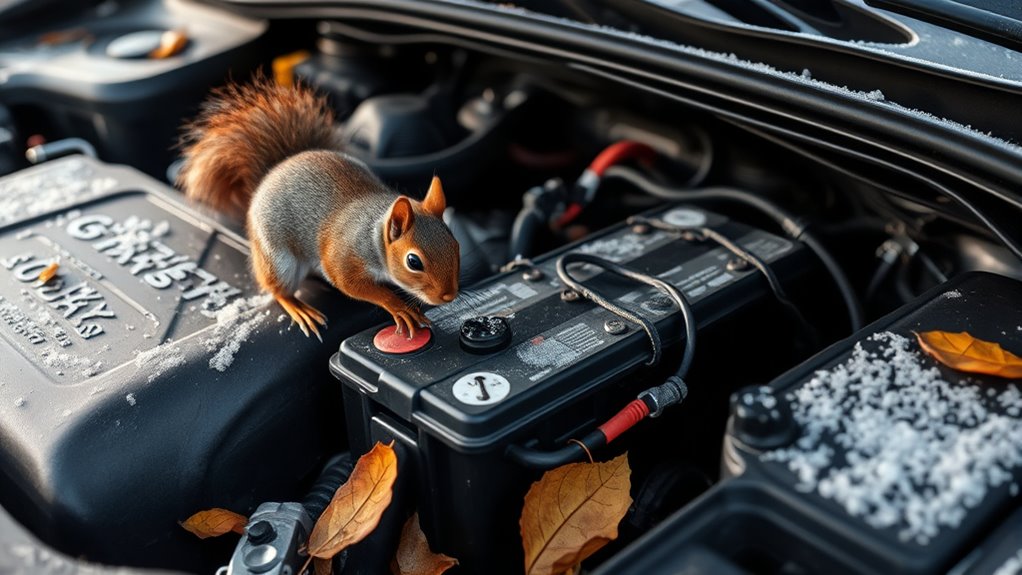
Because car engines provide warmth and shelter, squirrels often seek them out during cold months. If your car is parked near trees, especially those with abundant food sources like nuts or fruits, you’re more likely to attract these critters.
Squirrels use the engine compartment as a cozy refuge from freezing temperatures, especially when natural shelters become scarce. They’re drawn to areas where they can easily find food and stay protected.
When you park close to tree proximity, you unintentionally create a convenient highway for squirrels to access your vehicle. Their instinct to gather and store food also leads them to chew on wires and other components inside the engine, making your car a temporary nesting site.
How to Spot Squirrel Damage in Your Car Engine
If you notice your car struggling to start or hear unusual noises when the engine runs, you might be dealing with squirrel damage. Squirrels love to chew on wiring and hoses, which can cause serious issues like electrical shorts or fluid leaks. Check for frayed wires or bite marks around the engine bay.
Another sign is engine overheating, which can happen if squirrels damage the cooling system hoses or radiator. Keep an eye out for oil leaks too, as squirrels sometimes chew on oil lines, causing fluid to drip or pool under your car.
Inspect the engine compartment for nesting materials like twigs or leaves, which squirrels often bring inside. If you spot any of these signs, address them promptly to avoid costly repairs. Regularly checking your engine for these symptoms helps you catch squirrel damage early and keep your car running smoothly.
Car Cleaning Habits That Keep Squirrels Away
Noticing signs of squirrel damage means it’s time to take preventive action. One of the best ways to discourage squirrels from nesting in your engine is to maintain a clean car exterior and engine bay. Avoid leaving food crumbs or wrappers inside or near your vehicle, as squirrel feeding habits are triggered by easy access to food sources.
Regularly wash your car to remove any food residues or scents that might attract them. Additionally, clear away leaves, twigs, and other debris from your engine compartment since squirrels use these materials for urban nesting. Keeping your driveway and surrounding areas tidy reduces hiding spots and nesting materials, making your car less appealing.
Pay attention to parking spots near trees or shrubs where squirrels are more likely to nest. By adopting these cleaning habits, you’ll notably reduce the chances of squirrels setting up home in your car engine, protecting your vehicle from costly damage.
Natural Repellents to Prevent Squirrels in Your Engine
You can keep squirrels away by using natural repellents like essential oils and certain plants that they really don’t like. These plant-based options are not only safe but also super easy to use around your car. Plus, the best part is you can even make your own homemade repellents with simple ingredients you probably already have at home.
Essential Oils That Repel
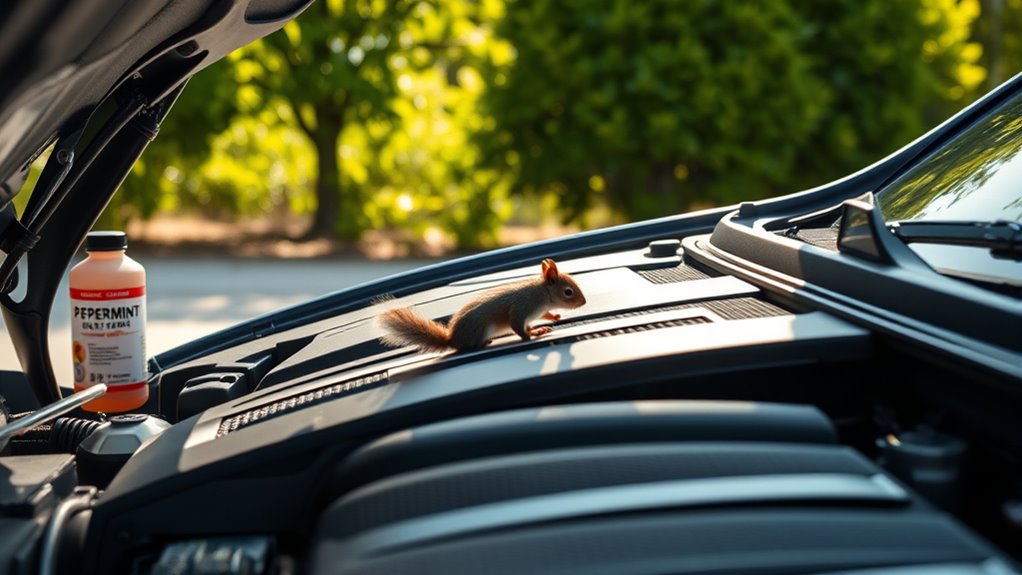
Since squirrels dislike strong scents, using essential oils can effectively keep them away from your car engine. You can use scent elimination by applying oils like peppermint or eucalyptus around the engine bay. For oil application, soak cotton balls with your chosen essential oil and place them near air vents or wiring, ensuring the scent lingers without damaging components.
Here’s a quick guide:
| Essential Oil | Scent Strength | Application Tips |
|---|---|---|
| Peppermint | Strong | Cotton balls near vents |
| Eucalyptus | Moderate | Dab on cloth, place nearby |
| Citronella | Strong | Use in small diffusers |
| Lavender | Mild | Combine with stronger oils |
| Tea Tree | Strong | Avoid direct engine contact |
Regular oil application helps maintain scent elimination, deterring squirrels naturally.
Plant-Based Deterrent Options
Several plant-based deterrents work effectively to keep squirrels out of your car engine. You can use strategic garden planting to discourage squirrels from venturing near your vehicle.
Plants like lavender, mint, and rosemary have scents squirrels dislike, so placing them around your driveway or garage can create a natural barrier. Furthermore, consider bird feeder placement carefully; positioning feeders away from your car reduces the chances of squirrels gathering nearby and seeking shelter under your hood.
Avoid planting nut-bearing trees close to your parking area, as they attract squirrels. By combining thoughtful garden planting with wise bird feeder placement, you create an environment that naturally deters squirrels, keeping your car engine safe without relying on chemicals or traps. This approach is eco-friendly and easy to maintain.
Homemade Repellent Recipes
While planting natural deterrents around your driveway helps keep squirrels at bay, sometimes a more direct approach is necessary. You can create effective DIY sprays and homemade traps using common household ingredients. These natural repellents not only protect your engine but are safe and eco-friendly.
Below is a table to help you choose the best option based on your needs:
| Repellent Type | Key Ingredients | Emotional Benefit |
|---|---|---|
| DIY Spray | Peppermint oil, water | Fresh scent, peace |
| Homemade Trap | Peanut butter, wire | Satisfaction, control |
| DIY Spray | Vinegar, garlic | Confidence, safety |
| Homemade Trap | Apple slices, mesh | Hope, effectiveness |
| DIY Spray | Cayenne pepper, water | Empowerment, relief |
Try these recipes to keep squirrels away from your car engine naturally.
How to Seal Entry Points to Keep Squirrels Out
First, take a good look around your engine compartment to find those common spots where squirrels might sneak in. Once you’ve spotted the gaps, go ahead and seal them up using durable materials like metal mesh or automotive-grade sealant. It’s a straightforward step, but it makes a big difference by creating a strong barrier that keeps those pesky critters out for good.
Identify Common Entry Points
Because squirrels are small and agile, they can squeeze through surprisingly tight spaces to access your car engine. To protect your vehicle, you need to identify common entry points where they might slip in.
Focus on areas around air filters and vents, which squirrels find appealing for nesting. Also, check openings near the motor oil cap and wiring harnesses where gaps may exist.
| Common Entry Points | Why Squirrels Target Them |
|---|---|
| Air filter housing | Offers shelter and warmth |
| Motor oil cap area | Provides dark, hidden access |
| Engine vents | Easy access to internal parts |
Spotting these spots helps you prioritize sealing before squirrels cause damage or leave nesting debris inside your engine bay.
Use Durable Seal Materials
When you’ve identified the spots squirrels use to enter your engine, sealing them with durable materials is essential to guarantee these critters stay out. Using durable sealants designed for automotive use assures that entry point prevention lasts through weather changes and vibrations.
Choose products like silicone or polyurethane sealants, which resist chewing and cracking. Avoid temporary fixes like tape or foam that squirrels can easily breach.
Before applying sealants, clean the area thoroughly to help the material adhere properly. Pay close attention to gaps around cables, hoses, and vents, common entry points squirrels exploit.
Safe Ultrasonic Devices That Repel Squirrels Effectively
Although squirrels can be persistent, you can protect your car engine without harming them by using safe ultrasonic devices designed to repel these critters. Ultrasonic technology emits high-frequency sounds that are inaudible to humans but uncomfortable for squirrels. By targeting their sensitive hearing, these devices disrupt squirrel behavior, making your engine area less appealing without causing any harm.
When choosing an ultrasonic repellent, look for models specifically tested for outdoor use and effective against squirrels. Place the device near your car engine or parking spot, ensuring the sound covers the entire area. Keep in mind that squirrels may become accustomed to constant noise, so using intermittent or motion-activated ultrasonic devices can increase effectiveness.
Parking Tips to Avoid Squirrel Visits and Damage
To reduce the chances of squirrels nesting in your car engine, you should choose your parking spots carefully. Opt for open, well-lit areas away from trees, bushes, or other places squirrels frequent. Parking under large trees or near dense vegetation invites squirrels to investigate your engine bay for shelter. Implementing smart parking strategies can notably deter these critters.
You should also avoid leaving your car parked for extended periods in squirrel-prone zones. Regularly moving your vehicle disrupts any nesting attempts and discourages squirrels from settling in. Furthermore, parking in a garage or enclosed space offers extra protection and is a top squirrel proofing tip.
Frequently Asked Questions
Can Squirrels Cause Damage to My Car’s Electrical System?
Yes, squirrels can cause serious damage to your car’s electrical system. When squirrels choose your engine bay for nesting, they often chew on wires and cables, leaving your engine chewed and vulnerable to shorts or failures.
This squirrel nesting habit can lead to costly repairs and unexpected breakdowns. You’ll want to inspect your engine regularly and take steps to deter squirrels so you don’t end up with chewed wires and a non-starting car.
Are There Any Chemicals to Avoid When Deterring Squirrels?
Yes, you should avoid chemical repellents that contain harsh toxins or pesticides. These can harm pets, wildlife, and the environment. Instead, stick to natural deterrents like peppermint oil, garlic, or predator urine, which are safer and still effective.
These natural options repel squirrels without causing damage or risk. Always read labels carefully to make certain any product you use is safe for your surroundings and won’t cause unintended harm.
How Often Should I Inspect My Car for Squirrel Activity?
You should inspect your car’s engine compartment at least once a week, especially during fall and winter when squirrels are more likely to build nests. Regular checks help you spot squirrel nesting early, preventing damage to wires and hoses.
If you notice debris or unusual signs, take action immediately. Staying consistent with inspections keeps your car safe and helps you avoid costly repairs caused by squirrels making a cozy home under your hood.
Do Squirrels Prefer Certain Car Models or Engine Types?
Squirrels don’t have strong car model preferences, but they often choose vehicles with engine types that provide warmth and shelter, like those with large, quiet engines. You’ll find they favor cars parked in shady, quiet areas regardless of model.
Can Pets Help Keep Squirrels Away From My Vehicle?
Pets provide powerful deterrents against pesky squirrel behavior. If you keep a dog or cat nearby, their natural presence can discourage squirrels from scurrying near your vehicle.
Dogs’ barking and cats’ curious prowling create a protective perimeter, signaling squirrels to steer clear. While not foolproof, your animal companions’ instincts help hinder squirrel visits.
This makes them effective, eco-friendly allies in managing these mischievous critters around your car.
Conclusion
By following these tips, you’ll keep squirrels out of your car engine like a locked door keeps out unwanted guests. Regular cleaning, sealing entry points, and using natural repellents or ultrasonic devices create a barrier squirrels won’t want to cross.
Plus, parking wisely during colder months adds extra protection. Stay proactive, and you’ll save yourself from costly repairs and frustration while keeping your engine safe and sound all year round.
Remember, keeping squirrels out of your car engine is key to avoiding damage and ensuring your vehicle runs smoothly.