How to Pull Engine Out of Car in 3 Simple Steps
If you’ve ever tried to pull an engine out of a car, you know it’s not the easiest task. Many people struggle with the process, feeling overwhelmed by all the steps and tools involved. You’re not alone—it can be tricky, but with the right guidance, it becomes much more manageable.
First, prepare your workspace by clearing clutter, securing the car on jack stands, and draining fluids.
Next, disconnect all engine components safely. Start with the battery, label wiring harnesses, and remove fuel lines, hoses, and sensors.
Finally, set up your engine hoist above the engine bay, attach lifting chains securely, and slowly lift the engine out, watching for any remaining connections.
Follow these steps, and you’ll understand how to handle the entire process smoothly and safely.
Key Takeaways
- Prepare the workspace, secure the car on jack stands, and drain all fluids safely.
- Disconnect the battery and label all wiring, hoses, and components before removal.
- Organize tools and remove exhaust, wiring harnesses, and engine connections carefully.
- Set up the engine hoist above the engine, attach lifting chains securely, and verify capacity.
- Lift the engine slowly, keeping it balanced, then swing and lower it onto a stable stand.
Get Your Car and Workspace Ready for Engine Removal
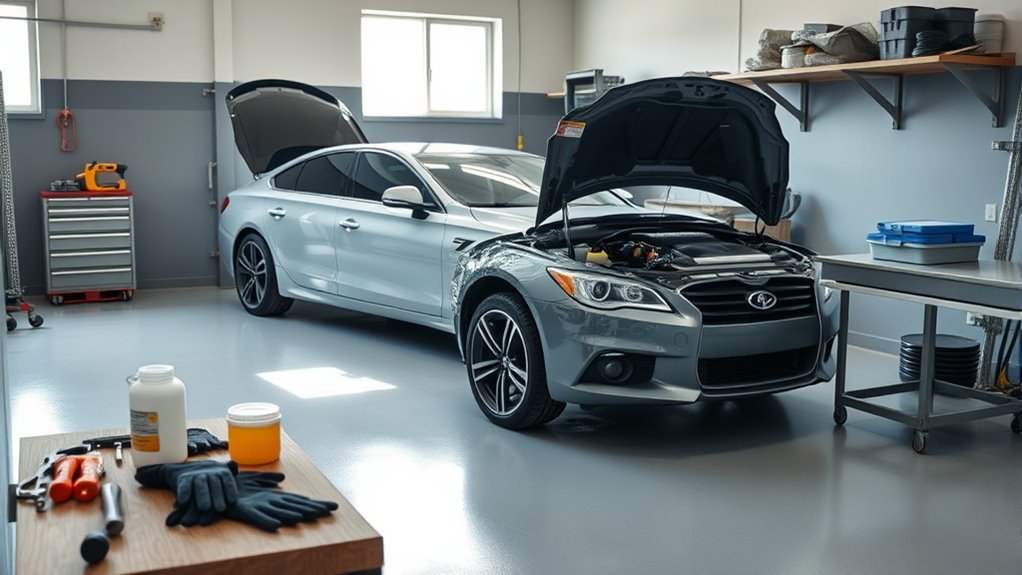
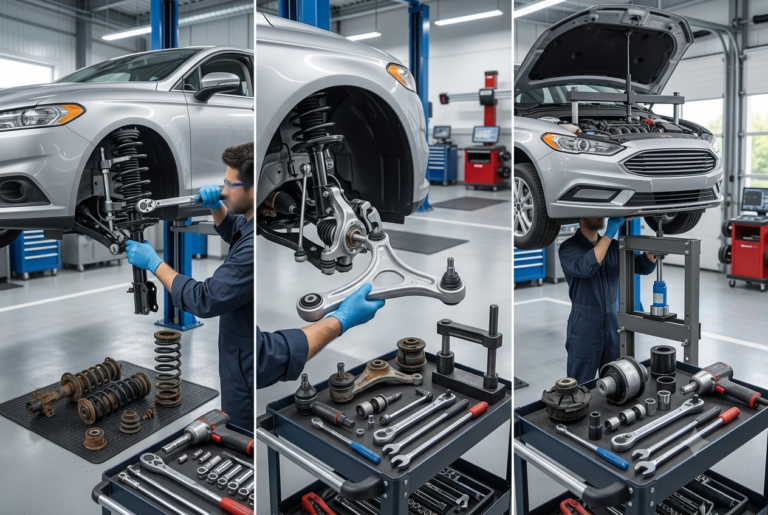
Before you begin pulling the engine out of your car, make sure your workspace is clean, well-lit, and organized. Clearing clutter and ensuring good lighting helps you spot potential hazards and keeps tools within reach.
Position your car on a flat surface and use jack stands to secure it safely. Next, focus on fluid drainage. Drain the engine oil, coolant, and transmission fluid to prevent spills during removal. Collect these fluids in appropriate containers for proper disposal.
Check the engine mounting points carefully. You’ll need to remove bolts holding the engine to the frame or subframe. Inspect these mounts for rust or damage to avoid surprises when detaching the engine.
Taking time to prepare your car and workspace properly not only keeps you safe but also makes the engine removal process smoother and faster. With these steps done, you’ll be ready to move on confidently to disconnecting engine components.
Safely Disconnect Engine Components and Prepare Tools
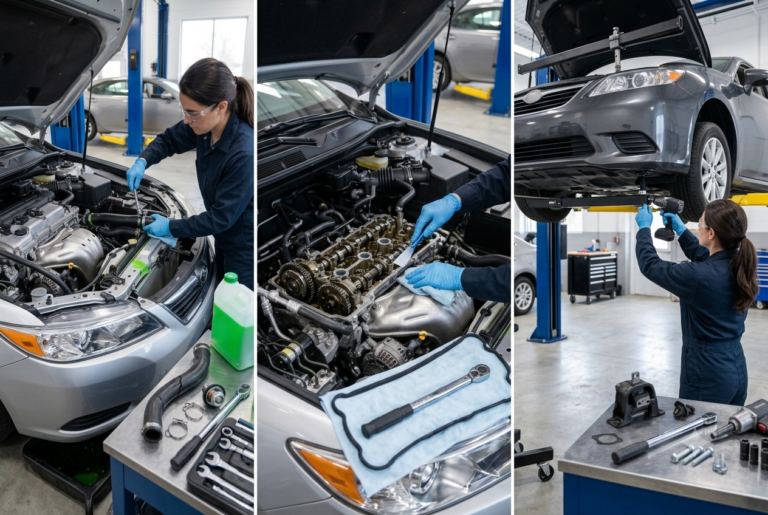
Once you’ve prepped your workspace and drained fluids, start by carefully disconnecting the engine components. Begin with the battery to prevent electrical shorts. Next, remove wiring harnesses and label each connector for easy reassembly.
Disconnect fuel lines cautiously, avoiding spills. Since you’ve already done the coolant drain, detach radiator hoses and any remaining coolant lines. Don’t forget to drain the engine oil fully before loosening oil lines or filters.
Remove the exhaust manifold bolts and separate the manifold from the engine. Detach throttle cables, vacuum lines, and any sensors attached to the engine.
Prepare all necessary tools like wrenches, sockets, screwdrivers, and pliers within reach to streamline the process. Using zip ties or labeled bags for bolts and small parts helps keep everything organized.
Taking these steps ensures you safely disconnect your engine without damage or confusion, setting you up perfectly for the next phase of pulling the engine out.
Lift the Engine Out Using an Engine Hoist
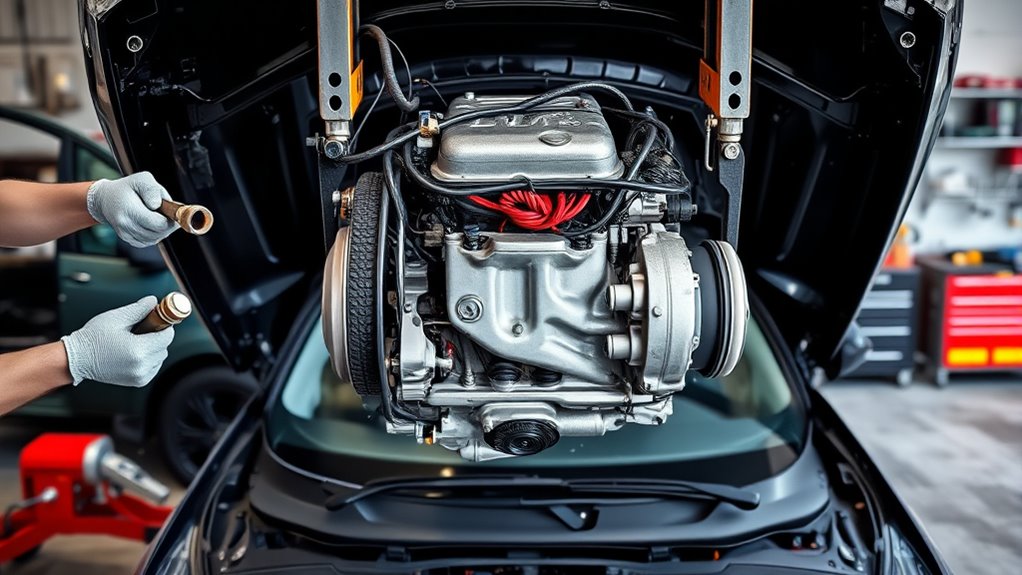
With all engine components safely disconnected and your tools organized, you’re ready to lift the engine out. First, position the engine hoist securely above the engine bay, making certain it’s rated to handle the engine weight. Attach the hoist chains or straps to the designated lifting points on the engine, double-checking each connection for security.
Remember, hoist safety is critical. Never exceed the hoist’s maximum capacity, and make sure the area is clear of obstacles and people.
Slowly pump the hoist handle to lift the engine, keeping it balanced as you go. Watch for any remaining connections or wires that might catch.
Once the engine clears the bay, carefully swing it out and lower it onto a stable engine stand or suitable surface. Taking your time here prevents accidents and ensures a smooth removal.
Following these steps with attention to engine weight and hoist safety will help you lift the engine out efficiently and safely.
Frequently Asked Questions
How Do I Know if My Engine Needs to Be Replaced?
You’ll know your engine needs replacement if engine diagnostics show severe issues like low compression, excessive oil consumption, or persistent knocking. Also, if your car frequently overheats or stalls, these are red flags.
Don’t ignore warning lights on the dashboard. Consider replacement costs too; sometimes fixing is pricier than replacing. Getting a professional diagnosis helps you decide whether repair or engine replacement is the smarter choice for your vehicle’s health.
What Safety Gear Should I Wear During Engine Removal?
You should wear protective gloves, safety goggles, and sturdy boots to keep yourself safe. Protective gloves shield your hands from sharp edges and hot surfaces. Safety goggles protect your eyes from debris and fluids.
Don’t forget a long-sleeve shirt and durable pants to guard your skin. Wearing a mask can help if fumes are present. Always gear up properly so you can work confidently and avoid injuries during engine removal.
Can I Remove an Engine Without an Engine Hoist?
You technically can remove an engine without an engine hoist, but it’s much harder and less safe. Without an engine hoist, you’ll struggle with proper engine alignment and risk damaging components or injuring yourself.
If you don’t have one, consider renting or borrowing an engine hoist to guarantee controlled lifting and accurate alignment during removal. It makes the job smoother and keeps you safer throughout the process.
How Long Does the Engine Removal Process Typically Take?
The engine removal process typically takes several hours, often between 4 to 8 hours, depending on your experience and tool requirements. If you have proper engine lifting equipment like an engine hoist, you’ll speed things up and work more safely.
Without the right tools, expect it to take longer and get more complicated. Preparing your workspace and having all necessary tools ready will help you finish the job efficiently.
What Should I Do if the Engine Is Stuck or Hard to Lift?
If the engine is stuck or hard to lift, don’t force it. Consider the engine weight and use proper lifting techniques to avoid injury or damage. Double-check all bolts, mounts, and connections are fully removed.
Try gently rocking the engine to loosen it, and use a hoist or engine crane with steady, even pressure. If it still won’t budge, inspect for hidden brackets or seize points before trying again.
Conclusion
Now that you’ve got the engine out, you’re holding the heart of your car in your hands. Remember, patience and preparation are your best friends throughout this process.
Just like peeling an onion, taking it step by step prevents tears and trouble. Keep your workspace organized, double-check connections, and don’t rush.
With these simple steps, you’ve cracked the code to engine removal and are ready for whatever repair or upgrade comes next!