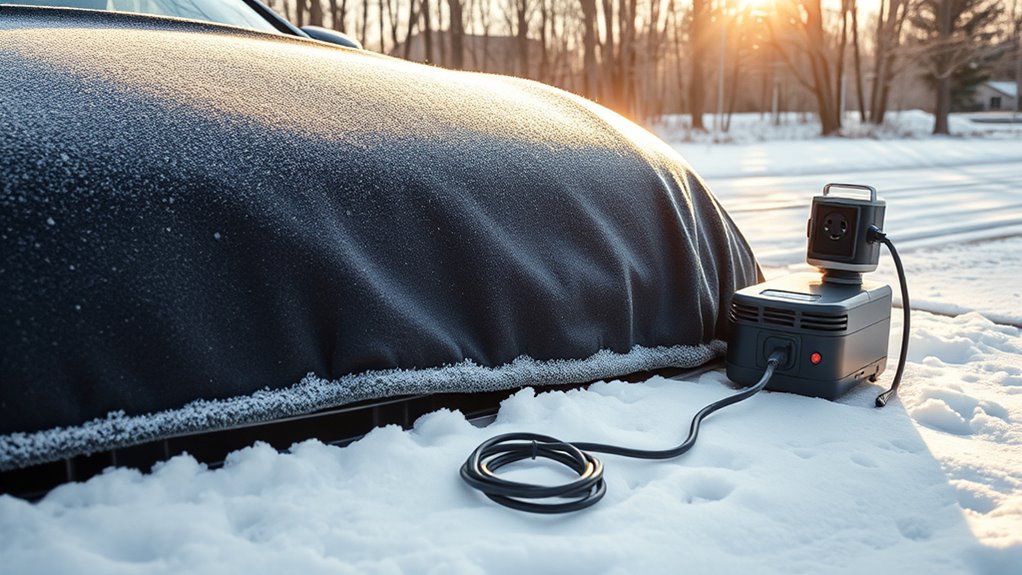
10 Tips to Keep Your Car Engine Warm in Winter
Struggling to keep your car engine warm during those freezing winter months? You’re not alone. Many drivers face the challenge of cold starts, sluggish performance, and potential engine damage when temperatures drop.
Luckily, there are simple steps you can take to protect your engine and keep it running smoothly all winter long.
To keep your car engine warm in winter, use an engine block heater a few hours before driving and let your engine idle for 30-60 seconds to circulate oil.
Choose low-viscosity, synthetic oil and maintain a proper 50/50 coolant-antifreeze mix.
Keep your battery charged, inspect belts and hoses, and park in a garage or cover your engine.
Avoid short trips to help your engine reach ideal temperature quickly.
These simple tips protect your engine and improve performance during cold months.
Key Takeaways
- Use an engine block heater by plugging it in a few hours before driving. This helps pre-warm the engine and reduce cold start wear.
- Let the engine idle for 30 seconds to 1 minute. This allows oil circulation and temperature stabilization before you start driving.
- Choose low-viscosity synthetic oils like 0W-20 or 5W-30. These keep the oil fluid and protect the engine in cold temperatures.
- Maintain a proper 50/50 coolant-to-antifreeze mix. This prevents freezing and overheating during winter conditions.
- Park your vehicle in a garage or use insulated engine covers. Doing this shields the engine from frost, ice, and moisture damage.
Why Keeping Your Car Engine Warm Matters in Winter
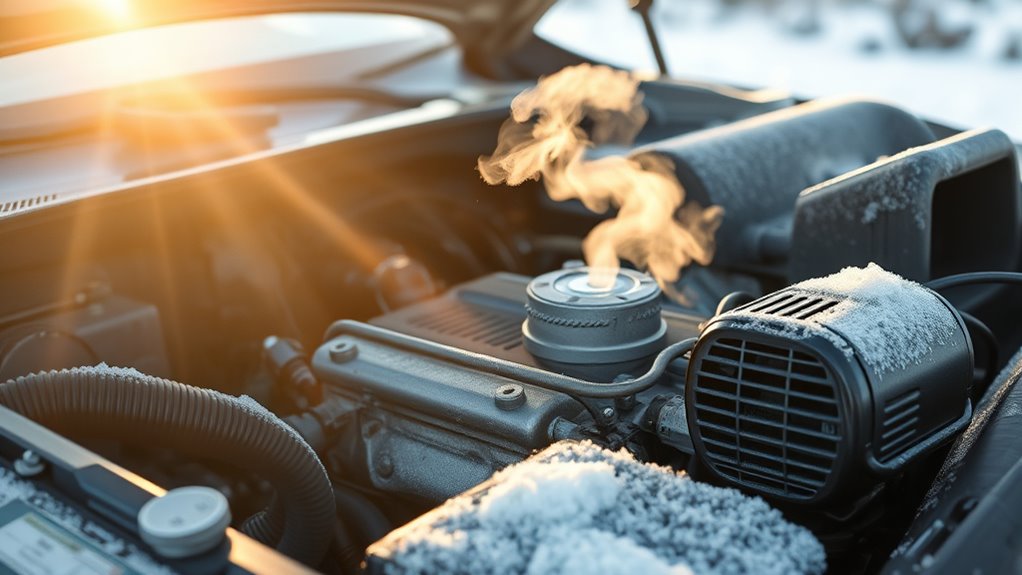
Although it might seem minor, keeping your car engine warm in winter is essential because cold engines run less efficiently and wear out faster. When your engine is cold, oil thickens and doesn’t lubricate parts as well. This leads to increased friction and faster wear. Proper engine temperature regulation helps maintain ideal performance, reducing the risk of damage over time.
You’ll also notice that a warm engine improves fuel efficiency, something you’ll appreciate during those cold months. Beyond performance, engine temperature regulation directly impacts winter driving safety. A warm engine ensures your heater blows warm air, your defroster works properly, and your battery performs at its best. All of these are necessary for safe winter trips.
Use an Engine Block Heater to Warm Your Engine
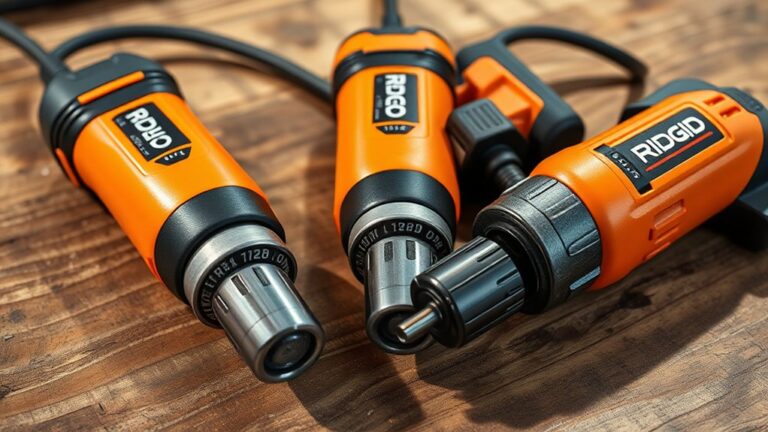
If you want to start your car smoothly on freezing mornings, using an engine block heater is one of the most effective solutions. Engine block heaters warm the engine coolant or oil, ensuring your engine reaches an ideal temperature before you even turn the key. This reduces wear and tear caused by cold starts and helps your car run more efficiently in harsh winter conditions.
To use an engine block heater, simply plug it into a nearby electrical outlet a few hours before you plan to drive. Many models come with timers so you can set it to start warming your engine just before you leave. Incorporating engine block heaters into your winter driving preparedness routine not only protects your engine but also improves fuel efficiency and reduces emissions. Investing in one is a smart move if you live in areas with consistently low temperatures.
Let Your Engine Warm Up Before Driving
Because cold engines experience increased friction, letting your engine warm up before driving helps reduce wear and tear. When you start your car in winter, the engine temperature is low, meaning oil is thicker and less effective at lubricating moving parts.
By allowing some idle time, about 30 seconds to a minute, you give the engine oil a chance to circulate and warm up, improving its protective qualities. Avoid long idling though; it wastes fuel and increases emissions without significant benefits.
Instead, a brief warm-up stabilizes engine temperature so your car runs more smoothly once you hit the road. This practice guarantees your engine components face less stress and operate efficiently in cold conditions.
Choose the Right Engine Oil for Cold Weather
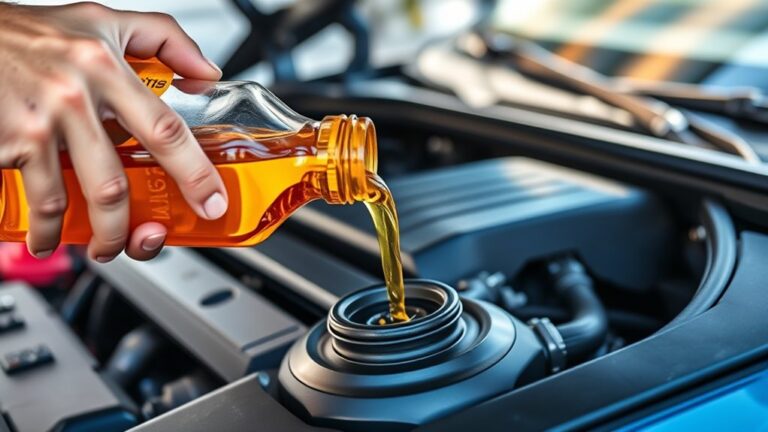
When temperatures drop, using the right engine oil becomes essential to keep your car running smoothly. Cold weather thickens oil, making it harder for the engine to turn over. That’s why you need to pay attention to oil viscosity, which is the thickness of the oil at different temperatures.
Look for oils with lower viscosity ratings for winter, like 0W-20 or 5W-30, because they flow better in cold conditions. Synthetic oils are your best bet in winter since they maintain their fluidity even in extreme cold. They reduce engine wear during startup and improve fuel efficiency.
If you stick with conventional oils, you risk sluggish engine performance and increased wear. Always check your owner’s manual for manufacturer recommendations on oil type and viscosity. By choosing the right engine oil, you’ll ensure smoother starts, better protection, and longer engine life throughout the winter months. Don’t let cold weather catch you unprepared.
Maintain Proper Coolant and Antifreeze Mix
You’ll want to keep your coolant and antifreeze mixed in the right ratio to protect your engine from freezing and overheating. Usually, a 50/50 mix does the trick. It helps lower the freezing point and raise the boiling point of the fluid.
Knowing this is pretty helpful because it means your engine stays warm and runs smoothly, especially during those cold winter months. So, keeping the right mix is a simple way to avoid trouble down the road.
Ideal Coolant Ratios
To keep your engine running smoothly in winter, maintaining the right coolant-to-antifreeze ratio is essential. Proper coolant mixing guarantees effective temperature regulation, preventing freezing and overheating.
Typically, a 50/50 mix of coolant and antifreeze offers balanced protection in most climates. However, if you face extreme cold, adjusting the ratio can help.
| Coolant | Antifreeze | Freezing Point Protection |
|---|---|---|
| 60% | 40% | -10°F (-23°C) |
| 50% | 50% | -34°F (-37°C) |
| 40% | 60% | -62°F (-52°C) |
Check your vehicle’s manual for exact recommendations. Using the right coolant ratio optimizes your engine’s temperature regulation, ensuring it stays warm and runs efficiently throughout winter.
Antifreeze Benefits Explained
Although maintaining the right coolant mixture is important, understanding the benefits of antifreeze helps you appreciate why this balance matters. Antifreeze formulation is designed not only to lower the freezing point of your engine coolant but also to prevent corrosion and overheating.
When you use the proper mix, you protect essential engine parts from rust and scale buildup, which extends coolant longevity and improves overall engine performance. Skipping or diluting antifreeze risks freezing in cold temperatures, leading to costly engine damage.
Add Winter Fuel Additives to Prevent Freezing
You’ll want to add winter fuel additives to keep your engine running smoothly when the temperatures drop below freezing. These additives help prevent your fuel from gelling or freezing up. If fuel lines get blocked, it can stall your engine, which nobody wants to deal with in the cold. Using these additives makes sure your car starts easily and stays warm all winter long.
Benefits of Fuel Additives
When cold weather hits, adding winter fuel additives can prevent your fuel from freezing and keep your engine running smoothly. These additives improve fuel efficiency by ensuring your engine burns fuel more completely, saving you money on gas during chilly months.
They also help reduce harmful emissions by promoting cleaner combustion, which benefits both your vehicle and the environment. Using fuel additives can protect your engine from damage caused by ice crystals or water buildup in the fuel system, extending its lifespan.
Plus, they help maintain consistent engine performance despite freezing temperatures. By incorporating winter fuel additives, you’re not just preventing freezing; you’re enhancing overall engine health, improving fuel economy, and contributing to emission reduction efforts during the harsh winter season.
How Additives Prevent Freezing
Fuel additives work by lowering the freezing point of the liquids in your fuel system, preventing ice crystals from forming and clogging essential components. When you add winter fuel additives, chemical reactions occur that modify the fuel’s molecular structure, helping it resist freezing.
This adjustment supports better temperature regulation within your engine, ensuring fuel flows smoothly even in extreme cold. Without these additives, moisture in the fuel can freeze, causing blockages that disrupt engine performance.
Keep Your Battery Charged and Check It Regularly
Although cold weather can be tough on your car’s engine, keeping your battery charged and checking it regularly prevents unexpected failures. Battery maintenance is essential during winter since low temperatures reduce battery capacity and make it harder to start your car. You should test your battery voltage with a multimeter or have a professional check it before the cold sets in.
Use proper charging techniques to keep your battery healthy. Avoid quick, high-voltage charging that can damage the battery; instead, opt for a slow and steady charge with a smart charger designed for automotive batteries. If you don’t drive your car often, consider using a trickle charger to maintain the battery’s charge level.
Also, clean the battery terminals and make sure connections are tight to prevent power loss. By staying proactive with battery maintenance and charging, you’ll reduce the risk of a dead battery and keep your engine running smoothly all winter long.
Inspect Engine Belts, Hoses, and Spark Plugs Before Winter
Since cold weather puts extra strain on your engine, you should inspect belts, hoses, and spark plugs before winter arrives. Start with an engine belt inspection to check for cracks, fraying, or signs of wear. A worn belt can slip or break in cold temperatures, leaving your engine vulnerable.
Next, examine the hoses for leaks, brittleness, or swelling. Cold weather can cause hoses to become stiff and prone to cracks, risking coolant leaks that could freeze and damage your engine.
Don’t overlook spark plug maintenance either. Spark plugs are essential for efficient combustion, and worn plugs can cause misfires or hard starts in chilly weather. Replace any that look corroded or have worn electrodes.
Keeping your belts, hoses, and spark plugs in top shape ensures your engine runs smoothly and stays warm throughout winter’s harsh conditions. Regular checks now can prevent costly breakdowns later.
Park in a Garage or Use an Engine Cover for Protection
Taking care of your engine’s belts, hoses, and spark plugs sets a solid foundation for winter readiness, but protecting your engine from the elements is just as important. One of the best ways to keep your engine warm is to park in a garage. Vehicle storage inside a garage shields your car from cold winds, frost, and ice buildup.
If your garage has good insulation, it maintains a more stable temperature, helping your engine stay warmer overnight.
If you don’t have access to a garage, consider using an engine cover. These covers provide an extra layer of insulation, protecting the engine from freezing temperatures and moisture. Just make sure the cover fits well and is designed for winter use to avoid trapping moisture, which can cause damage.
Avoid Short Trips to Keep Your Engine Warm
You’ll want to avoid short trips because your engine doesn’t get enough time to reach its ideal operating temperature. When you stop and start frequently, the engine stays cold, which can cause increased wear and reduced efficiency.
Keeping your engine warm during longer drives helps it run smoothly and last longer, especially in winter. So, try to combine errands or take longer routes when you can—it’s better for your engine in the long run.
Engine Warm-Up Benefits
Although short trips may seem convenient, they prevent your engine from reaching its ideal operating temperature. When you start your car, the cold start means the engine oil is thicker and less effective at lubricating moving parts.
Allowing your engine to warm up properly raises the engine temperature, ensuring oil flows smoothly and components wear less. This reduces strain on your engine, improving performance and fuel efficiency.
You’ll also cut down on emissions since a fully warmed engine burns fuel more cleanly. By avoiding short trips, you give your engine the time it needs to reach best warmth, extending its life and maintaining reliability during cold weather.
Taking a longer drive helps your engine work at peak efficiency and protects it from damage caused by frequent cold starts.
Impact Of Frequent Stops
When you frequently stop and start your car, the engine struggles to maintain its ideal temperature. Short trips prevent the engine from reaching and sustaining the warmth it needs to run efficiently.
This not only reduces fuel efficiency but also affects driving comfort, as your car may feel sluggish or less responsive. To keep your engine warm and operating smoothly during winter, try to combine errands into one longer trip instead of several short ones.
This approach allows the engine to warm up fully, improving fuel combustion and reducing wear. By minimizing frequent stops, you’ll enjoy better fuel efficiency and a more comfortable driving experience, while also prolonging your engine’s life during cold months.
Frequently Asked Questions
Can a Remote Starter Help Keep My Engine Warm?
Yes, a remote start can help keep your engine warm before you even step outside. When you use remote start, your car begins running while still parked, letting the engine warm up gradually.
This not only makes your drive more comfortable but also reduces engine wear caused by cold starts. Just remember to use it safely and follow local laws about idling.
Remote start is a convenient way to maintain engine warmth in cold weather.
How Does Tire Pressure Affect Engine Performance in Winter?
Think of your tires as the car’s handshake with the road. If it’s weak, your engine’s effort feels wasted. Tire pressure directly impacts winter performance by ensuring your car grips icy roads properly and runs efficiently.
Low tire pressure increases rolling resistance, making your engine work harder and consume more fuel. Keeping your tire pressure at the recommended level helps your engine perform smoothly, saves fuel, and boosts safety during those cold winter drives.
Is It Safe to Use a Space Heater Near My Parked Car?
It’s generally not safe to use a space heater near your parked car due to parking safety concerns. Improper heater placement can pose a fire hazard, especially near flammable materials like car fuel or tires.
Instead, focus on safer methods like using engine block heaters designed for vehicles. Always prioritize proper heater placement and follow manufacturer guidelines to avoid accidents and assure your car stays protected during cold weather.
Does Idling My Car Longer Improve Engine Warmth?
Idling your car for more than 30 seconds wastes fuel and emits unnecessary pollution, yet many think it warms the engine block faster. In reality, the engine block heats up gradually as you drive, not just by idling.
Cabin heating also improves only after the engine reaches operating temperature. So, instead of idling longer, start driving gently to warm your engine and cabin efficiently without wasting fuel or harming the environment.
What Are the Risks of Using Incorrect Antifreeze Types?
Using the wrong antifreeze can cause serious issues because antifreeze mixing with incompatible coolants can lead to chemical reactions that damage your engine. When you ignore coolant compatibility, you risk corrosion, clogging, and reduced cooling efficiency.
This can cause overheating or even engine failure. Always check your vehicle’s specifications to verify you use the correct antifreeze type and avoid mixing different kinds. This will help keep your engine running smoothly and protect its components.
Conclusion
Keeping your car engine warm in winter isn’t just a good idea; it’s like giving your vehicle a cozy blanket against the cold. By using an engine block heater, choosing the right oil, and parking smartly, you’ll avoid chilly starts and costly repairs.
Remember, a well-maintained engine runs smoother and lasts longer, even when winter bites hard. So, take these steps to keep your car running warm and ready, no matter the frost outside. Keeping your car engine warm in winter helps ensure your vehicle stays reliable and efficient all season long.