How to Put Air Conditioning in a Car in 5 Easy Steps
If you’ve ever been stuck in a sweltering car without air conditioning, you know how miserable the ride can get. You’re not alone—many people struggle with the heat and wish their vehicles had a reliable AC system. Luckily, installing air conditioning in your car is more doable than you might think, and it can make all the difference in your driving comfort.
To put air conditioning in your car, first gather essential tools and set up a clean workspace. Next, pick a compatible AC kit that matches your vehicle and refrigerant type. Then, mount the compressor carefully and connect suction and discharge hoses with airtight seals.
After that, wire the electrical components safely, disconnecting the battery and securing connections. Finally, recharge the system with refrigerant, test cooling performance, and troubleshoot any issues. Keep going to examine detailed installation tips and troubleshooting advice.
Key Takeaways
- Prepare a clean workspace and gather necessary tools like wrenches, vacuum pump, and refrigerant for safe and efficient installation.
- Select an AC kit compatible with your vehicle’s make, model, refrigerant type, and desired cooling features.
- Mount the compressor securely, then connect and seal suction and discharge hoses to prevent leaks.
- Follow wiring diagrams, disconnect the battery, and properly route and secure electrical connections with fuses for safety.
- Recharge refrigerant slowly via the low-pressure port, start the engine, test cooling, and troubleshoot any issues.
Essential Tools and Workspace Setup for Car AC Installation

Before you begin installing air conditioning in your car, you’ll need to gather the right tools and prepare a clean, well-lit workspace. This setup helps you work efficiently and safely. Make certain you have wrenches, screwdrivers, a vacuum pump, manifold gauges, and refrigerant on hand. These tools are essential for removing old components and installing the new AC system.
Pay special attention to car interior insulation during setup. Proper insulation improves cooling efficiency and reduces strain on your new system. Also, clear space around the ventilation system to ease maintenance and installation tasks. Good ventilation system maintenance ensures your AC runs smoothly and lasts longer.
Organize your tools within easy reach, and keep your workspace tidy to avoid losing small parts. With everything ready, you’ll save time and avoid frustration, making your car AC installation a smoother process.
How to Choose the Best Air Conditioning Kit for Your Car Model
With your tools organized and workspace ready, it’s time to select the right air conditioning kit tailored to your car model. Start by checking compatibility. Make sure the kit matches your vehicle’s make, model, and year. Different cars require specific components for proper fit and function.
Next, consider the climate control features you want. Some kits offer basic cooling, while others provide advanced temperature regulation and humidity control to improve comfort.
Consider whether you need simple cooling or advanced temperature and humidity control for enhanced comfort.
Pay close attention to the refrigerant types compatible with your car and the kit. Modern systems typically use R134a or R1234yf refrigerants, both eco-friendlier than older options. Choosing the correct refrigerant guarantees peak cooling performance and compliance with environmental regulations.
Also, review the kit’s included components, such as compressors, condensers, and hoses, to confirm they meet your car’s requirements. By carefully evaluating these factors, you’ll pick an air conditioning kit that delivers reliable, efficient cooling for your vehicle.
Install the Car AC Compressor and Connect the Hoses
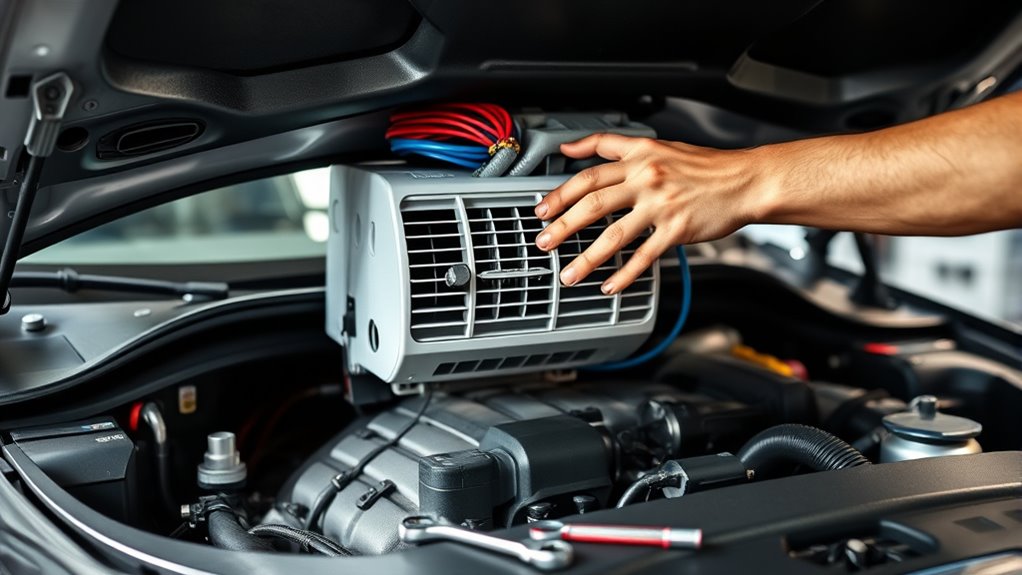
Although installing the car AC compressor can seem challenging, you can handle it step-by-step by securing the unit properly and connecting the hoses accurately. Start with compressor mounting by aligning the compressor with the mounting bracket holes. Use the appropriate bolts and tighten them firmly to avoid vibrations.
Next, focus on hose connection techniques: identify the suction and discharge hoses, then connect them securely to the corresponding compressor ports. Use clamps or O-rings to guarantee airtight seals, preventing leaks.
Here’s a quick guide to help you:
| Step | Details |
|---|---|
| Compressor Mounting | Align bracket, tighten bolts |
| Suction Hose | Connect to low-pressure port |
| Discharge Hose | Attach to high-pressure port |
| Sealing | Use clamps or O-rings |
| Final Check | Confirm no leaks or loose parts |
Wire Car AC Electrical Components Safely
Since the car AC system relies on electrical components to function properly, you’ll need to wire them carefully to avoid shorts or malfunctions. Start by reviewing the wiring diagrams specific to your car and AC kit; these will guide you in connecting each component correctly. Always disconnect the battery before handling wires to guarantee electrical safety.
Use the right gauge wires and secure all connections with insulated terminals or connectors to prevent accidental contact. Route wires away from heat sources and moving parts, fastening them with zip ties or clamps. Install a fuse or circuit breaker inline to protect the system from electrical faults.
Double-check that the compressor clutch, pressure switches, and fan relays are wired according to the diagrams. Finally, inspect all connections for tightness and proper insulation before reconnecting the battery. Taking these steps assures your car’s AC electrical system operates safely and reliably.
Recharge the Car AC System, Test, and Troubleshoot Common Issues
Before you recharge the car AC system, make certain you’ve sealed all connections and repaired any leaks; otherwise, the refrigerant won’t hold pressure. Begin by connecting the recharge kit to the low-pressure service port.
Monitor the system pressure carefully to avoid overcharging. Add refrigerant slowly until the pressure gauge shows the recommended level, matching your car’s specifications.
After recharging, start the engine and set the AC to the coldest setting. Check the air temperature from the vents to ensure proper cooling. If the system doesn’t cool effectively, inspect for common issues like clogged filters, faulty compressors, or electrical problems.
Low refrigerant level often indicates a leak, so test connections again. If you notice abnormal noises or inconsistent cooling, troubleshoot the compressor clutch and wiring.
Regularly testing and maintaining system pressure helps avoid costly repairs and keeps your AC running smoothly. Following these steps will ensure a properly recharged and functional car AC system.
Frequently Asked Questions
How Often Should I Service My Car’s Air Conditioning System?
You should service your car’s air conditioning system at least once a year to guarantee peak cooling performance. Regular check-ups help spot refrigerant leaks early, preventing costly repairs and keeping your AC running efficiently.
If you notice reduced cooling or strange noises, get it checked sooner. Staying proactive with maintenance keeps your system reliable and comfortable, especially during hot months when you rely on it most.
Can I Install Car AC Myself Without Prior Mechanical Experience?
You can attempt a DIY installation of car AC, but without prior mechanical experience, it’s challenging and risky. Car AC systems involve refrigerants, electrical components, and precise fittings that require specialized tools and knowledge.
If you’re not confident, you might damage parts or cause leaks. It’s better to consult a professional or gain some mechanical experience before trying a DIY installation to guarantee safety and proper functionality.
What Are the Environmental Impacts of Car AC Refrigerants?
Imagine a balloon slowly leaking air. That’s what refrigerant leaks do to our atmosphere. These leaks release harmful gases that contribute to global warming and ozone depletion.
You can reduce this impact by choosing eco-friendly alternatives like R-1234yf, which have a lower environmental footprint. Being mindful of refrigerant leaks and opting for greener options helps you protect the planet while staying cool in your car.
How Does Car AC Affect Fuel Efficiency?
Using your car’s AC increases fuel consumption because it puts extra load on the engine. When you turn on the AC, the compressor kicks in, which requires more power, lowering your fuel efficiency.
However, modern cars have improved AC efficiency, so the impact isn’t as drastic as before. To save fuel, you can use the AC moderately and rely on ventilation when possible, balancing comfort with better fuel consumption.
Are There Legal Restrictions on Car AC Refrigerants in My Area?
Think of refrigerant regulations like traffic laws for your car’s AC system. They keep everything running smoothly and safely.
Yes, you do have legal refrigerant use restrictions in your area, often set to protect the environment from harmful chemicals. You’ll want to check local and national guidelines before buying or installing refrigerants.
Using the wrong type could not only hurt the planet but also land you in hot water with the law.
Conclusion
Now that you’ve set up your workspace, chosen the right AC kit, installed the compressor, wired the electrical components, and recharged the system, you’re ready to enjoy cool comfort on every drive. You’ve learned to work smart, act carefully, and troubleshoot confidently.
Keep these steps in mind, tackle each task with focus, and turn your car into a revitalizing oasis. Stay cool, stay safe, and drive happy with your new air conditioning in a car!