Suspension Repair and Suspension Repair Cost: The Best Guide 2026
Introduction
Your car’s Suspension Repair system works quietly in the background of every drive, absorbing bumps, keeping your tires planted on the road, and ensuring your vehicle handles predictably during turns, braking, and acceleration. Most drivers don’t think much about suspension repair until something starts to feel noticeably off — a bouncier ride, a clunking noise over bumps, or a vehicle that seems to pull or dive unexpectedly. Understanding suspension repair, along with realistic car suspension repair cost expectations, helps you recognize problems early and make informed decisions rather than being caught off guard by an unexpected repair bill.
This guide covers everything you need to know, from the different types of suspension issues to comparing repair approaches, understanding typical suspension repair cost ranges, and avoiding the common mistakes that can turn a manageable repair into a bigger problem.
Why Suspension Repair Matters
Your suspension system does far more than just provide a smooth ride. It plays a direct role in vehicle safety, affecting braking distance, steering responsiveness, and overall vehicle stability, particularly during emergency maneuvers or in poor weather conditions. A worn or damaged suspension component can compromise tire contact with the road, leading to reduced traction, uneven tire wear, and a noticeably less predictable driving experience.
Beyond safety, ignoring suspension issues often leads to a cascade of secondary problems. A worn strut or shock, for example, can accelerate uneven tire wear, requiring premature tire replacement. A failing component in one area of the suspension can also place additional stress on neighboring parts, turning what might have been a single, moderate repair into a more extensive and costly job. Addressing suspension repair promptly, and understanding what drives car suspension repair cost, helps protect both your safety and your long-term vehicle maintenance budget.
Different Types of Suspension Repairs
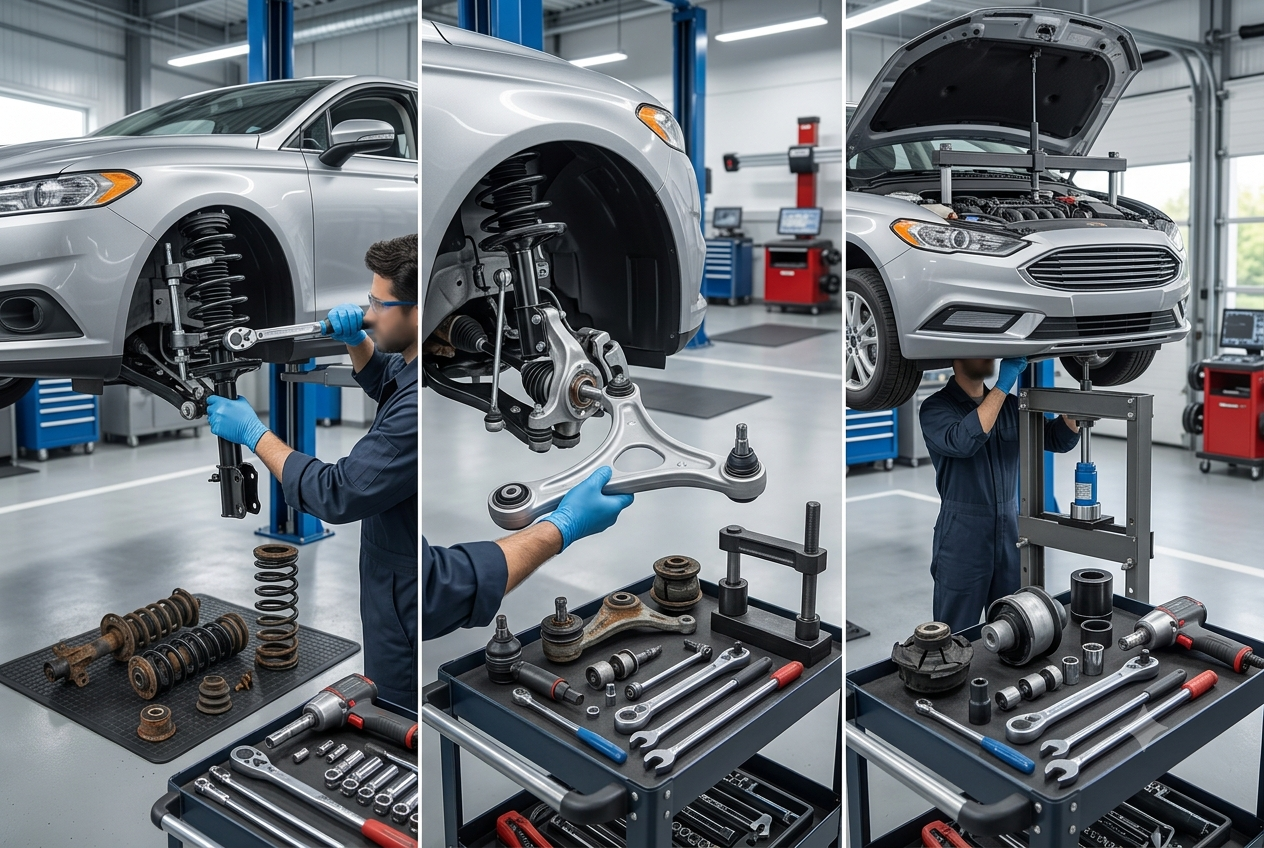
Suspension systems include numerous components, and issues can develop in any of them. Here are the most common types of suspension repair needs.
- Shock Absorber Replacement: Shocks control the rate at which your suspension compresses and rebounds, and worn shocks lead to excessive bouncing and reduced control.
- Strut Replacement: Struts combine a shock absorber with structural support for the vehicle’s suspension geometry, and their failure affects both ride comfort and alignment.
- Coil Spring Replacement: These springs support the vehicle’s weight and absorb road impacts; a broken or sagging spring can cause an uneven ride height and reduced handling stability.
- Control Arm Repair: Control arms connect the suspension to the vehicle frame, and worn bushings or ball joints within the control arm assembly are a common source of clunking noises and imprecise steering.
- Ball Joint Replacement: These pivot points allow suspension components to move while steering, and worn ball joints can create dangerous looseness in the steering and suspension system.
- Sway Bar Link Replacement: Sway bar links connect the stabilizer bar to the suspension, and worn links often produce clunking noises during turns or over uneven road surfaces.
- Bushing Replacement: Rubber or polyurethane bushings cushion various suspension connection points, and their degradation over time leads to increased noise and reduced precision in handling.
- Wheel Bearing Replacement: While technically part of the wheel assembly rather than the suspension itself, wheel bearings are closely related and commonly diagnosed alongside suspension issues due to similar symptoms.
- Air Suspension Repair: Found in certain higher-end and luxury vehicles, air suspension systems use air-filled bags instead of traditional springs, and they can develop leaks or compressor failures requiring specialized repair.
- Leaf Spring Repair: Common in trucks and some SUVs, leaf springs can crack, sag, or break, particularly in vehicles used for towing or hauling heavy loads.
- Alignment-Related Repairs: While not a component failure itself, suspension issues frequently require a follow-up wheel alignment to ensure proper tire wear and handling after repair.
Suspension Repair Comparison
Different suspension issues call for different repair approaches, each varying in complexity, labor requirements, and overall cost.
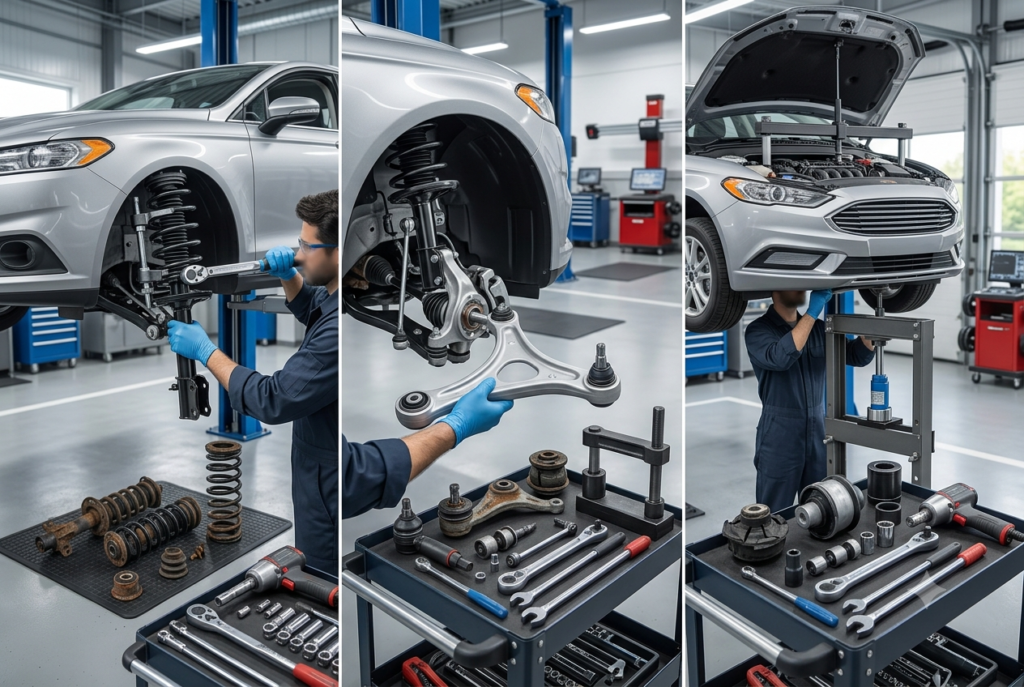
Shock and Strut Replacement: Generally a moderate-complexity repair, often performed as a pair (both front or both rear) to maintain even handling, involving removal of the old component and installation of a new assembly.
Spring Replacement: Often performed alongside strut replacement in a combined “strut assembly,” though springs can sometimes be replaced independently depending on the vehicle’s suspension design.
Control Arm and Ball Joint Repair: Typically involves more labor-intensive removal and reinstallation of suspension components, with alignment almost always required afterward to ensure proper wheel positioning.
Bushing Replacement: Can range from relatively simple to quite labor-intensive depending on the specific bushing’s location and whether it requires pressing out of an existing component.
Air Suspension Repair: Generally the most complex and costly category, given the specialized components and diagnostic tools required for these electronically controlled systems.
Suspension Repair Explained
Understanding how a typical suspension repair unfolds helps set realistic expectations for cost and time investment.
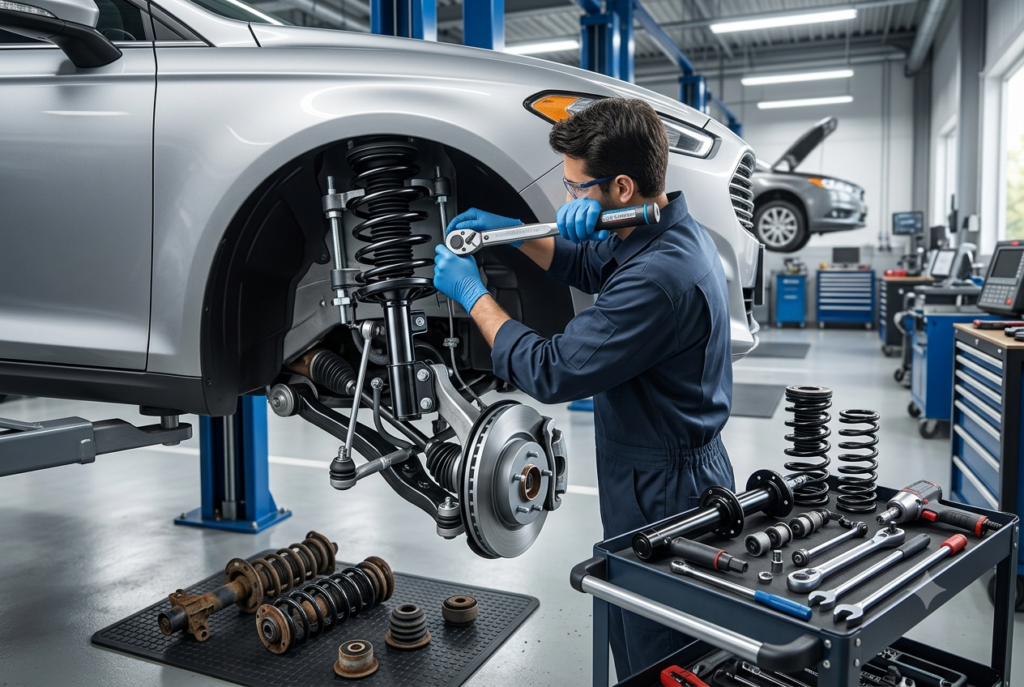
Diagnosis: A qualified technician typically begins with a visual inspection, checking for visible wear, leaking fluid (in the case of shocks or struts), or looseness in various suspension components. A test drive may also help identify specific noises or handling characteristics that point to a particular component.
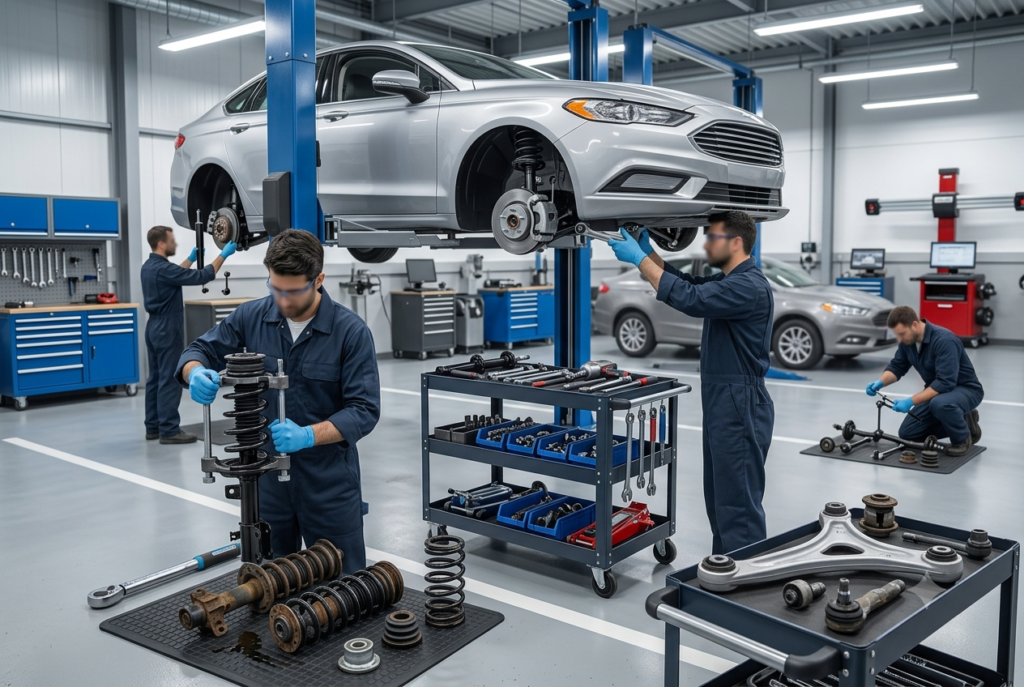
Component Removal and Replacement: Once the specific failed component is identified, the vehicle is typically raised, the wheel removed, and the damaged part unbolted and replaced with a new component matched to the vehicle’s specifications.
Torque and Reassembly: Suspension components must be properly torqued to manufacturer specifications during reassembly, since improper torque can lead to premature wear or, in more serious cases, component failure while driving.
Wheel Alignment: Following most suspension repairs, particularly those involving control arms, ball joints, or struts, a wheel alignment is typically necessary to ensure the vehicle’s wheels are properly angled, preventing uneven tire wear and maintaining predictable handling.
Pros & Cons of Each Repair Type
Shock and Strut Replacement
Pros: Directly addresses ride comfort and handling issues, with a relatively well-understood repair process across most vehicles.
Cons: Often recommended to be replaced in pairs, which can increase the overall cost compared to addressing a single failed component.
Control Arm and Ball Joint Repair
Pros: Resolves looseness and clunking noises that directly affect steering precision and safety.
Cons: More labor-intensive than shock or strut replacement, and typically requires a follow-up alignment, adding to the total repair cost.
Bushing Replacement
Pros: Often more affordable than replacing an entire component assembly, addressing noise and play without a full parts replacement.
Cons: Labor costs can still be significant if the bushing requires specialized pressing equipment to remove and install.
Air Suspension Repair
Pros: Restores the smooth, adjustable ride quality that air suspension systems are specifically designed to provide.
Cons: Among the most expensive suspension repairs due to specialized components, and some owners eventually choose to convert to a traditional coil spring system to avoid recurring air suspension costs.
Each Type Repair Tips
For Shocks and Struts: Always replace them in pairs (both front or both rear) even if only one side shows obvious symptoms, since uneven wear between two shocks or struts can create inconsistent handling.
For Control Arms and Ball Joints: Have your alignment checked immediately after this repair, since even small changes in suspension geometry can lead to uneven tire wear if left unaddressed.
For Bushings: If one bushing has failed due to age, consider having others of a similar age and type inspected at the same time, since they often wear at a similar rate.
For Air Suspension: Address small leaks promptly, since a slowly failing air suspension system tends to place additional strain on the compressor, potentially turning a moderate repair into a more costly compressor replacement.
Car Suspension Repair Cost Overview
Car suspension repair cost varies significantly based on the specific component, your vehicle’s make and model, and regional labor rates. Here’s a general breakdown:
- Shock absorber replacement (per pair): $250–$600
- Strut assembly replacement (per pair): $400–$900
- Coil spring replacement (per pair): $300–$700
- Control arm replacement (each): $200–$500
- Ball joint replacement (each): $150–$400
- Sway bar link replacement (each): $75–$200
- Bushing replacement (varies by location): $100–$350
- Wheel alignment (following repair): $75–$200
- Air suspension repair: $600–$1,800 depending on whether the issue involves a leak, compressor, or full air spring replacement
- Leaf spring replacement: $300–$800 per spring
Given this wide range, getting an accurate diagnosis before committing to a specific repair is essential, since suspension repair cost can vary dramatically depending on exactly which component has failed and how many related parts need attention.
Cleaning & Maintenance
While suspension components aren’t typically something drivers clean in the traditional sense, regular inspection and light maintenance can help extend their lifespan. Periodically inspect visible suspension components for leaking fluid, which often indicates a failing shock or strut. Keep the underside of your vehicle reasonably free of heavy dirt and road salt buildup, since accumulated grime and corrosion can accelerate wear on suspension components, particularly in regions with harsh winters. Have your alignment checked periodically, even without an obvious suspension issue, since proper alignment reduces unnecessary strain on suspension components and extends their overall lifespan. Address minor suspension noises promptly rather than waiting for them to worsen, since early diagnosis often means a more affordable, less extensive repair.
Common Mistakes to Avoid
Avoid replacing only one shock or strut when the opposite side is of similar age and mileage, since mismatched components can create inconsistent handling and accelerate wear on the newer part. Don’t skip a wheel alignment after suspension repairs that affect wheel geometry, since doing so can lead to rapid, uneven tire wear that negates much of the value of the repair itself. Avoid ignoring unusual noises like clunking or knocking over bumps, since these often indicate worn bushings or ball joints that will worsen and potentially affect steering control if left unaddressed.
Don’t assume the cheapest available parts are the best choice for safety-critical suspension components, since quality parts tend to offer better durability and more predictable performance. Finally, avoid choosing a repair shop without confirming they’ve properly diagnosed the specific failed component, since suspension symptoms can sometimes overlap between different possible causes.
FAQs
1. How do I know if my car needs suspension repair? Common signs include a bouncy or unstable ride, clunking noises over bumps, uneven tire wear, and the vehicle pulling to one side or diving excessively during braking.
2. How much does suspension repair cost on average? Costs vary significantly by component, ranging from under $200 for a single bushing or sway bar link to over $1,500 for more extensive repairs like air suspension issues.
3. Do shocks and struts really need to be replaced in pairs? Yes, most mechanics recommend replacing shocks or struts in pairs to maintain even, predictable handling on both sides of the vehicle.
4. How long do suspension components typically last? Shocks and struts typically last 50,000 to 100,000 miles, though this varies based on driving conditions, road quality, and vehicle usage.
5. Can bad suspension cause uneven tire wear? Yes, worn suspension components can affect wheel alignment and tire contact with the road, often leading to premature or uneven tire wear.
6. Is it safe to drive with a suspension problem? This depends on the severity of the issue; minor wear may be manageable short-term, but significant looseness, clunking, or instability should be addressed promptly for safety reasons.
7. Why do I need an alignment after suspension repair? Many suspension repairs affect the geometry of your wheels, and a proper alignment ensures they’re correctly angled to prevent uneven tire wear and maintain predictable handling.
8. What’s the difference between shocks and struts? Shocks are a standalone component that controls suspension movement, while struts combine a shock absorber with structural support integrated into the vehicle’s suspension design.
9. How much does it cost to replace a single ball joint? Individual ball joint replacement typically costs between $150 and $400, including parts and labor, though this varies by vehicle.
10. Can I drive on a broken coil spring? This is not recommended, since a broken spring can cause an uneven ride height, reduced handling stability, and in some cases, contact between suspension components that can cause further damage.
11. What causes suspension bushings to wear out? Age, road conditions, and general wear from constant movement and vibration absorption all contribute to bushing degradation over time.
12. Is air suspension repair more expensive than traditional suspension repair? Generally yes, due to the specialized components, electronic controls, and diagnostic tools required for air suspension systems compared to traditional coil spring setups.
13. How can I tell if a suspension noise is serious? While any unusual noise deserves attention, clunking during turns, knocking over every bump, or noises accompanied by noticeable handling changes typically indicate a more urgent issue requiring prompt diagnosis.
14. Does suspension repair affect my car’s alignment? Yes, many suspension repairs, particularly those involving control arms, ball joints, or struts, directly affect alignment and typically require a follow-up alignment service.
15. How often should I have my suspension inspected? Many mechanics recommend a suspension inspection at least once a year, or sooner if you notice any unusual ride quality, noise, or handling changes.
Conclusion
Understanding the range of suspension repair needs, along with realistic car suspension repair cost expectations, empowers you to address issues promptly rather than letting a manageable problem escalate into something more extensive and costly. Whether you’re dealing with worn shocks, a failing ball joint, or a more complex air suspension issue, prompt diagnosis and choosing a qualified repair shop are essential for restoring both ride comfort and, more importantly, the safety and handling predictability your suspension system is designed to provide.
By staying attentive to early warning signs and following good maintenance practices, you can minimize unexpected suspension repair cost surprises and keep your vehicle handling safely and smoothly for years to come.