7 Factors That Affect How Much It Costs to Replace a Car Engine
Dealing with a failing car engine can be stressful and expensive, and you’re definitely not alone if you’re worried about how much it will cost to replace it. Many people struggle with understanding what drives these costs and how to find the best option for their budget and needs.
You’ll find that your car’s make, model, and engine type play big roles in replacement costs, especially if it’s a rare or luxury vehicle.
Choosing between new, used, or rebuilt engines affects the price and durability.
Labor rates vary by location and mechanic expertise, while extra parts or necessary repairs can add up.
Warranties help lower out-of-pocket expenses, and when you schedule service also influences costs.
Keep exploring to uncover all the details behind these factors.
Key Takeaways
- The car’s make, model, and engine type significantly influence replacement costs because parts availability and complexity vary.
- Choosing between new, used, or rebuilt engines affects the price, warranty, and installation labor.
- Labor rates vary by location, mechanic expertise, and shop policies, which impacts total replacement expenses.
- Additional repairs and parts, such as belts or mounts, increase costs beyond the engine itself.
- Timing, scheduling, and urgency can raise or lower costs based on demand and mechanic availability.
How Your Car’s Make and Model Affect Engine Replacement Costs
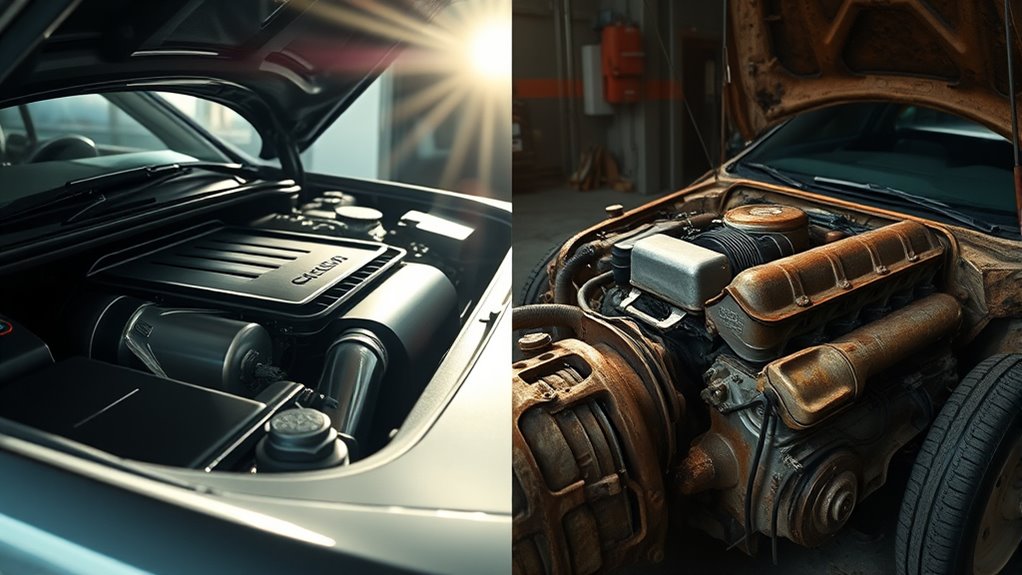
Because different car manufacturers design engines with unique specifications, your car’s make and model play a big role in determining the cost of an engine replacement. When your vehicle has a highly customized engine, finding compatible parts becomes more challenging and expensive.
Engine design varies by manufacturer, making engine replacement costs heavily dependent on your car’s make and model.
Engine customization often means specialized components or modifications that aren’t readily available, pushing up replacement costs. Furthermore, some luxury or rare models require engines that are pricier due to limited production or advanced technology.
Your car insurance might also influence the financial impact of an engine replacement. While most standard policies don’t cover engine failure caused by wear and tear, extensive or mechanical breakdown coverage could help offset costs.
Knowing how your car’s make and model affect these aspects helps you plan better. If you have a customized engine or a less common model, expect higher replacement expenses and check if your insurance offers relevant coverage to ease the financial burden.
Why Engine Type and Condition Matter for Replacement Prices
Since engines vary widely in design and wear, the type and condition of your engine considerably impact replacement costs. If your engine boasts high engine durability, it might cost more upfront, but it tends to last longer, potentially saving you money over time. Conversely, engines designed for better fuel efficiency often involve more complex technology, which can increase replacement expenses.
You’ll also want to deliberate the current state of your engine. An engine with minimal wear and well-maintained parts usually costs less to replace because fewer components need addressing. On the other hand, a severely worn or damaged engine may require extensive repairs or additional parts, driving up the price.
Understanding how your engine’s durability and fuel efficiency influence replacement helps you make informed decisions and budget accordingly. By focusing on these factors, you can better anticipate the total cost and avoid surprises during the replacement process.
Comparing New, Used, and Rebuilt Engines: What Costs More?
When deciding on an engine replacement, you’ll find that new, used, and rebuilt engines each come with distinct price tags and benefits. New engines typically cost the most but offer the greatest engine durability. They also come with warranties that give you peace of mind.
On the other hand, used engines are the cheapest option but may have unknown histories, leading to potential issues down the line. Rebuilt engines strike a balance in price and quality. They’re refurbished to meet certain standards, offering better durability than used engines but usually at a lower cost than new ones.
Replacement difficulty also varies. New engines often fit perfectly with minimal adjustments, reducing labor time. Used engines might require more effort to ensure compatibility and address wear. Rebuilt engines can be tricky if components differ from your original, sometimes increasing replacement difficulty. Understanding these factors helps you weigh upfront costs against long-term reliability and ease of installation.
Labor Rates: What Affects Engine Replacement Prices Near You?
Labor rates play a crucial role in determining the total cost of your engine replacement, and they can vary widely depending on where you live. In urban areas or regions with a higher cost of living, mechanics typically charge more per hour for engine repair. Conversely, rural or less populated areas often offer lower labor rates. The shop’s reputation and expertise also influence prices. Specialized technicians might charge a premium, but their efficiency can save you time and money overall.
When replacing your engine, labor costs are separate from spare parts, so understanding labor rates helps you budget accurately. Some shops charge a flat fee, while others bill hourly, which means the time taken for the job directly affects your bill. Before committing, ask for an estimate that clearly breaks down labor charges to avoid surprises. Knowing how labor rates fluctuate near you empowers you to make informed decisions and manage your engine replacement expenses wisely.
Extra Parts and Repairs That Add to Engine Replacement Costs
Although replacing your car’s engine is a major expense, you should be prepared for additional costs that come from extra parts and repairs. When your mechanic installs a new engine, they might uncover worn-out components like belts, hoses, or mounts that also need replacement. Skipping these can lead to bigger problems down the line.
If you’re interested in engine customization or aftermarket upgrades, expect the price to rise further. Specialized parts, performance enhancements, or custom fittings require more labor and higher-quality materials, which add to the overall cost.
Even routine repairs, such as fixing the cooling system or exhaust, can increase expenses during engine replacement. Being upfront about your preferences and asking for a detailed estimate helps you avoid surprises.
How Warranty Options Can Lower Your Engine Replacement Cost
Choosing the right warranty coverage can really help lower your engine replacement costs because it covers both parts and labor. It’s not just about having any warranty, though—the length of your warranty plays a big role too. A longer warranty means you’re protected for more time against those expensive repairs.
And here’s something that often gets overlooked: knowing how the claim process works. When you understand it, getting the help you need becomes quicker and less stressful. Plus, it helps you avoid unexpected out-of-pocket expenses. So, taking the time to pick the right warranty and learn the claim steps can save you a lot in the long run.
Types Of Warranty Coverage
Several types of warranty coverage can substantially reduce your engine replacement costs by covering parts, labor, or both. An engine warranty often includes different coverage options, such as powertrain warranties, which cover major components like the engine and transmission.
You might also find extended warranties that go beyond the manufacturer’s standard coverage, offering added protection for a longer time. Some warranties cover only parts, so you’ll pay labor costs separately, while others cover both parts and labor, saving you more.
Understanding your engine warranty’s specific coverage options helps you avoid unexpected expenses and choose the best plan for your needs. By selecting the right warranty, you can markedly lower the financial impact if your engine needs replacing.
Warranty Duration Impact
When you pick a warranty with a longer duration, you’ll reduce your chances of paying out of pocket for an engine replacement. An extended warranty increases your coverage duration, protecting you against costly repairs as your car ages. The longer the coverage, the less risk you bear for unexpected engine failures.
Here’s how warranty duration impacts your costs:
| Coverage Duration | Potential Savings |
|---|---|
| 1 year | Minimal savings |
| 3 years (Extended) | Moderate savings |
| 5+ years (Extended) | Maximum savings |
Claim Process Benefits
Although engine replacements can be costly, warranty options often simplify the claim process, saving you time and money. When your car needs engine diagnostics, a warranty can cover these essential checks, identifying the exact problem without extra charges. This reduces the risk of unnecessary repairs, which can drive up costs.
Additionally, if you file insurance claims, a warranty can streamline approval since many providers recognize covered repairs, accelerating the process. You won’t have to handle confusing paperwork or unexpected expenses, as warranties often cover parts and labor during the claim.
How Timing and Scheduling Impact Engine Replacement Costs
When you schedule your engine replacement during peak times, you might end up paying more because demand is higher. Plus, mechanic availability plays a role too—rush jobs or limited appointment slots often come with extra fees. So, if you plan ahead and avoid last-minute repairs, you can usually save some money on your engine replacement.
Peak vs Off-Peak Timing
Since demand fluctuates throughout the year, scheduling your engine replacement during off-peak times can save you a significant amount of money. During peak periods, shops often charge more due to higher demand and limited availability.
By choosing an off-peak season, you not only lower labor costs but might also find better deals on parts. Furthermore, off-peak timing allows mechanics to focus more on your vehicle, ensuring quality work.
Keep in mind that your engine replacement should meet current fuel efficiency and emissions standards, which can influence part selection and overall cost. Planning ahead and avoiding busy periods helps you manage expenses while ensuring your vehicle runs cleanly and efficiently after the replacement.
Timing your service smartly makes a real difference in cost and quality.
Mechanic Availability Impact
Because mechanic availability fluctuates, the timing and scheduling of your engine replacement can considerably affect the overall cost. If you schedule during busy periods when mechanics are in high demand, you might face higher labor rates or longer wait times.
Conversely, booking during slower times could save you money and get your car back on the road faster. Being flexible with replacement scheduling allows you to take advantage of better availability and potentially lower costs.
| Mechanic Availability | Impact on Cost |
|---|---|
| High demand | Increased labor rates |
| Low demand | Lower labor rates |
| Limited slots | Possible scheduling fees |
| Flexible scheduling | Potential discounts |
Understanding this helps you plan and reduce expenses effectively.
Urgency and Cost Variation
How quickly you need your engine replaced can considerably influence the overall cost. When you face high replacement urgency, mechanics may charge more for expedited service or prioritize your vehicle over others. This rush can lead to increased labor rates or additional fees.
On the other hand, if your engine’s durability has been compromised gradually, you might have more flexibility in scheduling, which can lower costs. Planning the replacement during regular hours without rush reduces expenses, as mechanics can work efficiently without charging premium rates.
Understanding your engine’s condition helps you gauge how urgent the replacement truly is. By balancing replacement urgency with engine durability, you can better manage timing and avoid unnecessary cost spikes, ensuring you get fair pricing for your engine replacement.
Frequently Asked Questions
How Long Does an Engine Replacement Typically Take?
An engine replacement typically takes about 8 to 15 hours, depending on the car’s make and model. During the replacement process, you’ll notice mechanics focus on engine repair details like disconnecting components and ensuring everything fits perfectly.
If your vehicle has a complex design, the engine repair might take longer. You can expect professionals to work efficiently, but be prepared for some variation in time based on your specific car and shop workload.
Can I Drive My Car Immediately After an Engine Replacement?
You wouldn’t jump into a boat before checking if the paddle fits, right? Likewise, you shouldn’t drive your car immediately after an engine replacement. First, make sure engine compatibility to avoid serious damage.
Also, check your insurance considerations. Some policies require inspections before covering the new engine. Once everything’s verified and your mechanic gives the green light, you can confidently hit the road without risking costly issues.
What Signs Indicate My Engine Needs Replacement?
You’ll notice signs like knocking sounds, excessive smoke, or frequent overheating that indicate your engine needs replacement. If your engine performance drops markedly or oil leaks persist, it’s time for an engine inspection.
Don’t wait too long. Early detection can save you money. Once you get an inspection, do a cost comparison between repairing versus replacing to make the best financial decision.
Is It Better to Replace the Engine or Buy a New Car?
Choosing between replacing your engine or buying a new car is like deciding whether to patch a worn sail or set a new one. If your engine warranty still covers repairs and replacement options are affordable, replacing might save you money.
But if your car has other issues or high mileage, buying new could be smarter. Consider costs, reliability, and how long you plan to keep your vehicle before deciding.
How Does Engine Replacement Affect My Car’s Resale Value?
Replacing your engine can boost engine longevity, which might help slow resale depreciation. However, buyers often worry about whether the replacement was done properly and might view the car as less reliable.
Conclusion
Replacing your car engine isn’t just about the part itself; it’s like steering your own Odyssey, where every decision shapes the journey and cost. From your car’s make and engine type to labor and timing, these factors guide your expenses.
By understanding them, you can avoid unexpected detours and arrive at a smoother, more affordable repair. Remember, knowledge is your compass in this engine replacement adventure. Keeping these factors in mind will help you manage how much it costs to replace a car engine.