How to Check Engine Oil in a Car in 10 Easy Steps
Checking your engine oil regularly is something many car owners struggle with, especially if you’re not sure where to start or what to look for. You’re not alone—keeping your engine in top shape can feel overwhelming, but it doesn’t have to be.
With a little guidance, you can easily master this essential maintenance task and save yourself time and money down the road.
To check your engine oil in 10 easy steps, park on level ground with a cool engine, then locate the dipstick, usually with a brightly colored handle. Pull it out smoothly, wipe it clean, reinsert fully, and pull it out again to check the oil level between “Add” and “Full” marks.
Add oil slowly if needed, waiting between additions. Use oil that meets your vehicle’s specs to protect your engine well.
Keep going to learn more tips on maintaining engine health.
Key Takeaways
- Park the car on level ground and ensure the engine is cool before checking the oil level for accurate readings.
- Locate the dipstick, usually with a brightly colored handle near the engine, and pull it out smoothly.
- Wipe the dipstick clean with a cloth, reinsert fully, then pull out again to check the oil level against the markings.
- Ensure the oil level is between the “Add” and “Full” marks. Add oil slowly if it’s below “Add,” and avoid overfilling.
- Check oil color and texture. Amber and slippery oil is good, while gritty or burnt-smelling oil indicates problems.
Getting Your Car Ready to Check the Engine Oil
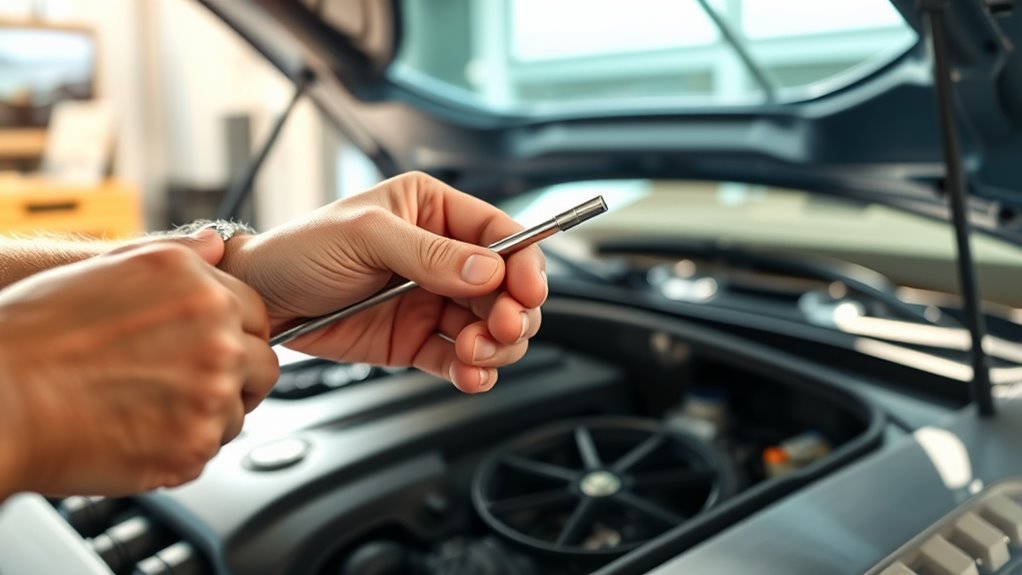
Before you check your engine oil, make sure your car is parked on a level surface and the engine is cool. This guarantees you get an accurate reading and avoid burns from a hot engine.
Park on level ground and let the engine cool for an accurate, safe oil check.
Once your car’s ready, you’ll want to think about the engine oil viscosity recommended for your vehicle. Using the correct viscosity helps your engine run smoothly and protects it from wear.
If it’s been a while since your last oil change, consider scheduling an oil filter replacement as well. A clean oil filter keeps contaminants out, which maintains oil quality and engine health.
Preparing your car properly lets you confidently assess your oil level and condition. This step is vital before you move on to actually locating the dipstick and checking the oil.
Taking these precautions saves you time and helps maintain your car’s performance over the long term.
Finding the Engine Oil Dipstick
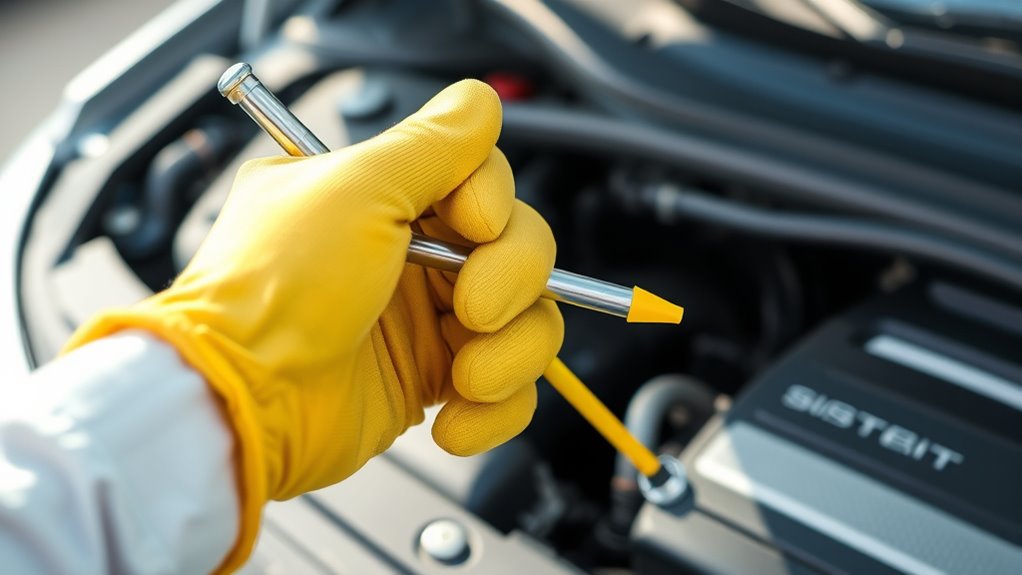
Although the engine oil dipstick might look different depending on your car’s make and model, you’ll usually find it near the engine block with a brightly colored handle, often yellow or orange, to help you spot it quickly. The dipstick is vital for checking your engine oil’s level and condition. This directly affects engine oil viscosity and overall performance.
Modern vehicles rely on advanced oil filtration systems to maintain oil cleanliness, but it’s still essential to monitor the oil yourself regularly. When searching for the dipstick, look for a thin metal rod with a ring or handle that you can pull out easily. It’s usually located towards the front or side of the engine, away from moving parts for safety.
If you have trouble spotting it, consult your owner’s manual for its exact location. Knowing where the dipstick is will make checking and maintaining proper engine oil viscosity straightforward, helping your engine run smoothly.
Removing and Cleaning the Dipstick Properly
Start by pulling the dipstick out slowly so you don’t spill any oil. Then, grab a clean cloth or a paper towel and wipe off all the oil from the dipstick. Doing this ensures you get an accurate reading when you check the oil level.
Proper Dipstick Removal
When you pull out the dipstick, you’ll want to do it smoothly and carefully to avoid splashing oil or contaminating the dipstick. Most dipsticks are made from metal or durable plastic, designed to withstand exposure to engine oil and heat. The dipstick material should resist bending so you get an accurate reading.
Since engine oil viscosity changes with temperature, it’s best to remove the dipstick when the engine is cool or after it’s been off for a few minutes. This ensures the oil’s thickness won’t cause misleading levels. Grip the dipstick firmly but gently, and pull it straight out to prevent any damage or oil dripping onto other engine parts. Proper removal helps maintain a clean dipstick and accurate oil level readings.
Cleaning Techniques for Dipstick
Before checking the oil level, you’ll need to wipe the dipstick clean to get an accurate reading. After removing the dipstick, grab a clean, lint-free cloth or paper towel and thoroughly wipe off all the oil. This step removes old oil residue that can give misleading results.
Make sure the engine temperature is within the recommended range, not too hot or cold, so the oil flows properly. Avoid touching the oil filter while cleaning to prevent contamination.
Once the dipstick is spotless, reinsert it fully, then pull it out again to check the current oil level. Proper cleaning ensures you get a precise measurement, helping maintain your engine’s health and preventing damage caused by incorrect oil levels.
How to Check the Oil Level Accurately
Before you check the oil level, make sure your car is parked on a flat surface and the engine is cool. This helps get the most accurate reading. Next, pull out the dipstick and wipe it clean—this clears off any old oil so you can see the true level. Then, pop the dipstick back in all the way and pull it out again to check where the oil sits against the marked indicators. That’s how you know if your oil level is just right.
Preparing the Car
To get an accurate oil level reading, you’ll need to prepare your car properly. Start by parking on a level surface and turning off the engine. Let the car sit for at least 10 minutes to allow the oil to settle in the oil pan. This guarantees you get a true measurement of the oil level.
While you’re at it, check your tire pressure and maintain it as recommended. Proper tire pressure improves fuel efficiency and overall vehicle performance, just like keeping the right oil level does.
Avoid checking the oil immediately after driving, since a warm engine causes oil to circulate and may give a false reading. Taking these preparation steps helps you monitor your engine’s health accurately and keep your car running smoothly.
Reading the Dipstick
How exactly do you read the dipstick to get an accurate oil level? First, make sure the engine temperature is moderate. A warm engine gives a better reading. Pull out the dipstick, wipe it clean, then reinsert it fully.
Pull it out again and check the oil level against the marked indicators. Pay attention to the oil viscosity. It should be smooth, not gritty or too thick.
The right viscosity guarantees proper engine lubrication.
| Reading | Oil Level | Action Needed |
|---|---|---|
| Below Min | Low | Add oil immediately |
| At Min | Minimum Safe | Monitor regularly |
| Between Marks | Ideal | No action needed |
| At Max | Full | Perfect level |
| Above Max | Too High | Drain excess oil |
This helps maintain your engine’s health and performance.
How to Read and Interpret Oil Level Markings on the Dipstick
When you pull out the dipstick, you’ll notice markings that indicate the oil level, usually labeled with “Full” and “Add” or similar terms. These markings help you understand if your engine has enough oil to protect vital components like the oil filter and maintain proper engine temperature. If the oil level is below the “Add” mark, it’s time to top up to avoid engine damage.
Here’s how to interpret the markings confidently:
- Oil between “Add” and “Full” means your engine oil level is safe.
- Oil below “Add” signals you need more oil immediately.
- Oil above “Full” can cause engine issues, so avoid overfilling.
- Check oil when the engine is cool to get an accurate reading.
How to Identify Healthy vs. Contaminated Engine Oil
You’ll want to keep an eye on your engine oil’s color, texture, and smell to catch any problems early. Healthy oil usually has a nice amber color and feels smooth. On the other hand, if your oil looks dark, gritty, or smells burnt, that’s a sign it might be contaminated. Noticing these little details can really help you figure out when it’s time for an oil change.
Oil Color Differences
Why does engine oil color matter? It’s a quick way to tell if your oil’s doing its job. Healthy engine oil is usually amber or light brown, showing that the oil viscosity and oil additives are working well to protect your engine.
When the oil darkens or turns black, it often means it’s carrying dirt or contaminants and losing effectiveness.
Watch out for these signs:
- Dark, murky oil that signals contamination
- Milky or frothy oil indicating coolant leaks
- Thick, tar-like oil suggesting breakdown of oil additives
- Clear, very thin oil that may mean low oil viscosity
Texture and Smell
How can you tell if your engine oil is still in good shape just by touch and scent? First, rub a small amount between your fingers. Healthy oil should feel smooth and slightly slippery due to balanced oil viscosity and effective oil additives.
If it’s gritty or feels thick and sticky, contaminants or metal particles may be present, signaling trouble. Next, give it a sniff. Good oil has a faint, neutral odor, while burnt or sour smells suggest overheating or chemical breakdown.
These signs mean the oil’s protective qualities are compromised. Checking texture and smell regularly helps you catch problems early, ensuring your engine runs smoothly and avoiding costly repairs. Always trust your senses alongside color and level checks for a complete oil health assessment.
How to Avoid Common Mistakes When Checking Engine Oil
Although checking your engine oil seems straightforward, many drivers make simple mistakes that can lead to inaccurate readings or even engine damage. To avoid this, be mindful of these common pitfalls.
First, don’t check the oil immediately after driving; the engine temperature should cool down to get a true level. Second, always wipe the dipstick clean before reinserting it to avoid confusing old oil residues with fresh oil levels.
Third, neglecting the oil filter can cause issues. Make sure it’s in good condition since a clogged filter affects oil flow and engine health. Finally, don’t rely solely on the dipstick reading. Watch for unusual engine noises or warning lights as additional indicators.
Here’s what to avoid:
- Checking oil with a hot engine
- Forgetting to clean the dipstick
- Ignoring the oil filter’s condition
- Overlooking other engine signs
When and How to Add Engine Oil Safely
Before adding engine oil, make sure the engine is cool and parked on a level surface. This helps get an accurate reading and prevents burns. Check your oil level using the dipstick, and if it’s below the minimum mark, it’s time to add oil.
Follow your car’s oil change schedule to keep the engine healthy and avoid overfilling. Use the recommended engine oil types for your vehicle to ensure proper lubrication.
Here’s a quick guide to adding engine oil safely:
| Step | Action | Tip |
|---|---|---|
| 1. Prepare | Locate oil filler cap | Clean around the cap |
| 2. Add oil | Pour slowly using a funnel | Add small amounts incrementally |
| 3. Check level | Wait a few minutes, recheck dipstick | Avoid overfilling |
| 4. Secure cap | Tighten oil filler cap | Double-check for leaks |
How to Choose the Right Engine Oil for Your Car
Choosing the right engine oil goes hand in hand with knowing when and how to add it. To keep your engine running smoothly, you need oil that matches your car’s specifications and usage conditions. Look for oils with the proper viscosity grade recommended by your manufacturer, and consider synthetic oils if you want better performance and longevity.
Selecting the right engine oil and adding it properly ensures optimal performance and engine longevity.
Engine oil additives also matter. They help reduce wear, prevent corrosion, and improve cleaning inside the engine.
When picking oil, keep these points in mind:
- Choose the correct viscosity for your climate and driving style
- Opt for oils with quality engine oil additives to protect your engine
- Use oils meeting industry certifications like API or ACEA
- Consider environmentally responsible options that support engine oil recycling
Selecting the right engine oil not only protects your car but also supports sustainability by promoting responsible engine oil recycling practices.
How Often You Should Check Your Engine Oil
Since engine oil keeps your car running smoothly, you should check its level regularly to avoid potential damage. Generally, it’s a good idea to check your engine oil at least once a month and before long trips. If you drive in harsh conditions, like extreme heat or dusty roads, check more often.
Regular checks help you spot leaks or oil deterioration early, preventing costly repairs.
Here’s a quick guide on how often to check your engine oil based on driving habits:
| Driving Condition | Check Frequency |
|---|---|
| Normal daily driving | Monthly |
| Long trips | Before each trip |
| Heavy traffic | Every 2 weeks |
| Harsh environments | Weekly |
| Older vehicles | Weekly |
Remember to handle engine oil disposal responsibly. Use proper engine oil recycling services to protect the environment and comply with local regulations.
Frequently Asked Questions
Can I Check Engine Oil Without a Dipstick?
You generally can’t check the oil level without a dipstick, but some newer cars offer a dipstick alternative. You might use the car’s electronic oil level sensor, which lets you check oil through the dashboard display or infotainment system.
If your car lacks both a dipstick and sensor, you’ll need a mechanic’s help. Always make certain the engine’s cool and on level ground for an accurate oil level reading.
What Causes Engine Oil to Burn Quickly?
Think of your engine oil as the lifeblood flowing through your car’s veins. It burns quickly when oil contamination sneaks in, like dirt or fuel diluting the mix, causing it to lose its strength.
Also, if the oil viscosity is off, too thin or too thick, it can’t protect your engine well, leading to faster burning. Keep an eye on these factors to make sure your oil lasts longer and keeps your engine healthy.
How Does Engine Oil Affect Fuel Efficiency?
Engine oil directly impacts your fuel efficiency because the right oil viscosity reduces friction inside the engine. When oil flows smoothly, it helps maintain ideal engine performance, allowing your engine to run more efficiently and use less fuel.
If the oil is too thick or too thin, it increases resistance, forcing your engine to work harder and burn more fuel. So, choosing the correct oil viscosity keeps your engine performing well and saves you money at the pump.
Can Old Engine Oil Damage My Car’s Engine?
You know what they say: “A stitch in time saves nine.” Yes, old engine oil can damage your car’s engine. Over time, engine oil viscosity breaks down, making it less effective at lubricating.
Plus, oil contamination builds up, causing sludge that clogs passages and increases wear. If you don’t change your oil regularly, your engine faces higher friction and overheating, which can lead to costly repairs down the road.
Keep that oil fresh!
Is Synthetic Oil Better for All Car Engines?
Synthetic oil isn’t always better for all car engines, but it does offer synthetic benefits like improved engine protection and cleaner performance. You’ll notice oil longevity is a key advantage since synthetic oils last longer and withstand higher temperatures.
However, some older engines or specific models might not require synthetic, so check your owner’s manual. If you want better protection and longer intervals between changes, synthetic oil’s usually a smart choice.
Conclusion
Keeping an eye on your engine oil isn’t just a chore; it’s a little act of kindness for your car’s heart. By following these simple steps, you’re gently ensuring your engine runs smoothly and avoids any unwanted surprises.
Remember, a well-loved engine is a happy engine. So, make checking your oil a regular habit, and your car will quietly thank you with reliable rides and fewer hiccups down the road. Checking engine oil in a car regularly is key to keeping everything running just right.