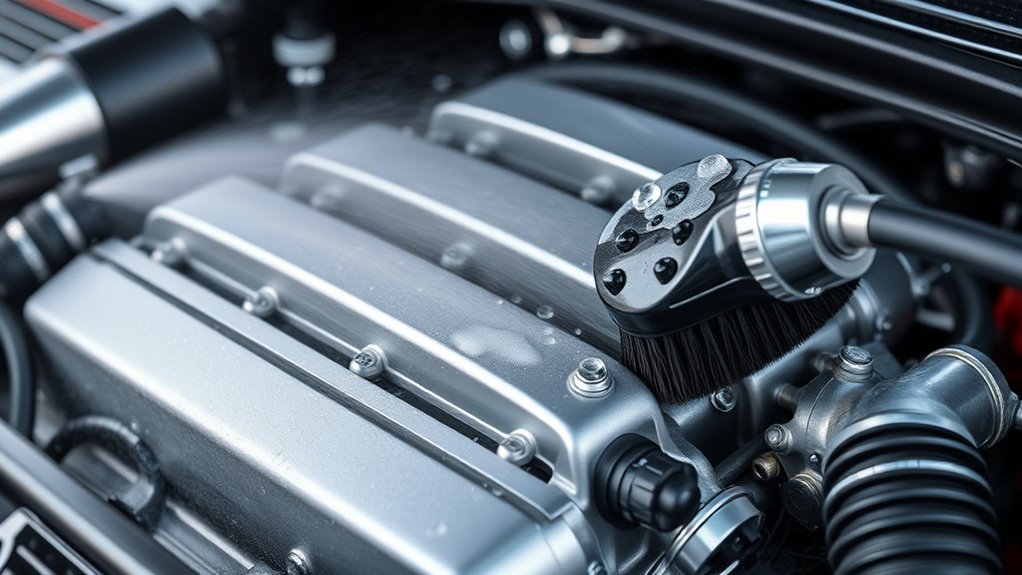
How to Wash Your Car Engine in 3 Easy Steps
How to Wash Your Car Engine? Washing your car engine can feel like a daunting task, and you’re not alone if you’ve been avoiding it. Many people struggle with the fear of damaging delicate parts or simply don’t know where to start. But keeping your engine clean is important for both performance and longevity, and with the right approach, it’s easier than you think.
To wash your car engine in three easy steps, first make sure the engine is cool and disconnect the battery, then cover sensitive parts like the air intake with plastic.
Next, spray a mixture of water and vinegar or dish soap on greasy areas, gently scrub with a soft brush, and rinse carefully to avoid electrical components.
Finally, dry thoroughly with a towel and compressed air, checking for any damage or loose parts. Keep going to uncover tips for a safer, more effective clean.
How to Wash Your Car Engine Key Takeaways
- Ensure the engine is cool and disconnect the negative, then positive battery terminals before starting.
- Cover sensitive parts like air intake and wiring with plastic or foil to protect from water damage.
- Spray a mixture of equal parts water and white vinegar or diluted dish soap on greasy areas and let it sit for 10-15 minutes.
- Gently scrub stubborn spots with a soft brush, avoiding electrical components. Then rinse lightly with water.
- Dry thoroughly using microfiber towels and compressed air. Finally, inspect for loose connections or damage before restarting.
Prepare Your Car Engine for Washing
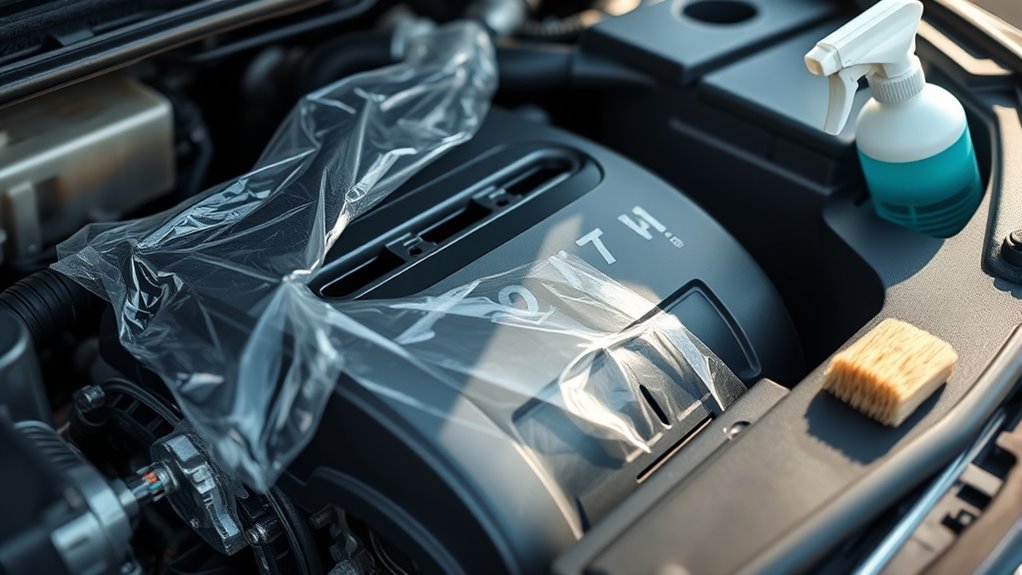
Before you start washing your car engine, make sure it’s cool to prevent burns and damage. Cooling down your engine is one of the most important safety precautions you need to follow during engine maintenance. Hot engine parts can cause serious injuries and may also warp or crack components when exposed to water too quickly.
Next, disconnect the battery terminals, starting with the negative terminal, to avoid electrical shorts. Cover sensitive parts like the air intake, distributor, and exposed wiring with plastic bags or aluminum foil to protect them from water damage. Remove any loose debris or leaves from the engine bay using a brush or compressed air.
Wash Your Car Engine With Household Products
Once your engine is prepped and protected, you can start cleaning it using common household products. Begin with engine degreasing by spraying a mixture of equal parts water and white vinegar or diluted dish soap onto greasy areas. Let it sit for 10-15 minutes to break down grime.
Use a soft brush to scrub stubborn spots gently, avoiding wires and sensitive components. For battery cleaning, mix baking soda with water to create a paste. Apply it to any corrosion on the battery terminals with an old toothbrush, then rinse carefully with water. This helps neutralize acid and improve battery performance.
After applying these household solutions, rinse the engine lightly with water, ensuring you don’t soak electrical parts. These simple, safe products effectively remove dirt and grease, giving your engine a cleaner look without harsh chemicals. Taking these steps guarantees your engine stays well-maintained using items you already have at home.
Dry and Inspect Your Car Engine After Washing
Although your engine may look clean after rinsing, you’ll need to dry it thoroughly to prevent moisture-related damage. Use a microfiber towel to gently pat down accessible surfaces and absorb excess water. For hard-to-reach areas, a compressed air blower works well to push moisture out of crevices. This step is vital in your post wash maintenance to avoid electrical issues and corrosion.
Once dry, inspect the engine bay carefully. Look for any loose connections, damaged wires, or signs of wear you might have missed before washing. Checking fluid levels and caps ensures everything is secure and functioning properly.
Following these engine cleaning tips helps maintain your engine’s performance and longevity. Taking time for careful drying and inspection after washing will keep your engine running smoothly and prevent costly repairs down the road.
Frequently Asked Questions
Can I Use a Pressure Washer on My Car Engine?
You can use pressure washing on your car engine, but you need to be very careful to protect engine safety. Too much pressure or direct spraying on sensitive components can cause damage.
It’s best to cover electrical parts and avoid soaking the engine. Using moderate pressure and keeping a safe distance helps prevent water from seeping into connectors.
Always prioritize engine safety to avoid costly repairs when pressure washing.
How Often Should I Wash My Car Engine?
You should wash your engine bay cleanliness every 6 to 12 months, depending on how often you drive and where you park. Regular engine grime removal prevents buildup that can cause damage or reduce performance.
If you drive in dusty or muddy conditions, consider cleaning it more frequently. Keeping your engine clean helps spot leaks early and maintain your car’s overall health, saving you money and hassle down the road.
Is It Safe to Wash an Engine With Electrical Components?
Think of your engine’s electrical components like a smartphone in the rain. Exposure to water can cause serious damage. Yes, you can wash an engine with electrical parts, but you must prioritize electrical safety to prevent water damage.
Cover sensitive areas with plastic bags and avoid high-pressure water directly on connections. Taking these precautions helps protect your engine’s electronics while keeping everything clean without risking shorts or corrosion.
What Are the Benefits of Washing My Car Engine Regularly?
Washing your engine regularly helps you spot leaks and wear early, saving you costly repairs. Engine cleaning removes dirt and grime that can trap moisture, so it aids in corrosion prevention.
By keeping your engine bay clean, you guarantee better performance and extend your engine’s life. Plus, a clean engine runs cooler, which improves efficiency.
Regular cleaning helps you maintain your car’s value and keeps it running smoothly.
Can Engine Washing Improve My Car’s Performance?
Yes, engine cleaning can give your car a noticeable performance boost. When you clean your engine, you remove dirt, grime, and debris that can cause overheating or interfere with moving parts. This helps your engine run cooler and more efficiently.
Conclusion
Washing your car engine might seem intimidating, but with the right prep, household products, and careful drying, it’s simple and effective. For example, Sarah, a busy mom, saved time and money by using this method, keeping her engine clean and running smoothly.
By following these three easy steps, you’ll protect your engine’s performance and extend its life. This shows that washing your car engine is a little care that goes a long way in maintaining your vehicle’s health.